The Colombian Connection: Feds say Baltimore man was trusted client of Colombian heroin traffickers

By Van Smith

Published by City Paper, Jan. 1, 2014

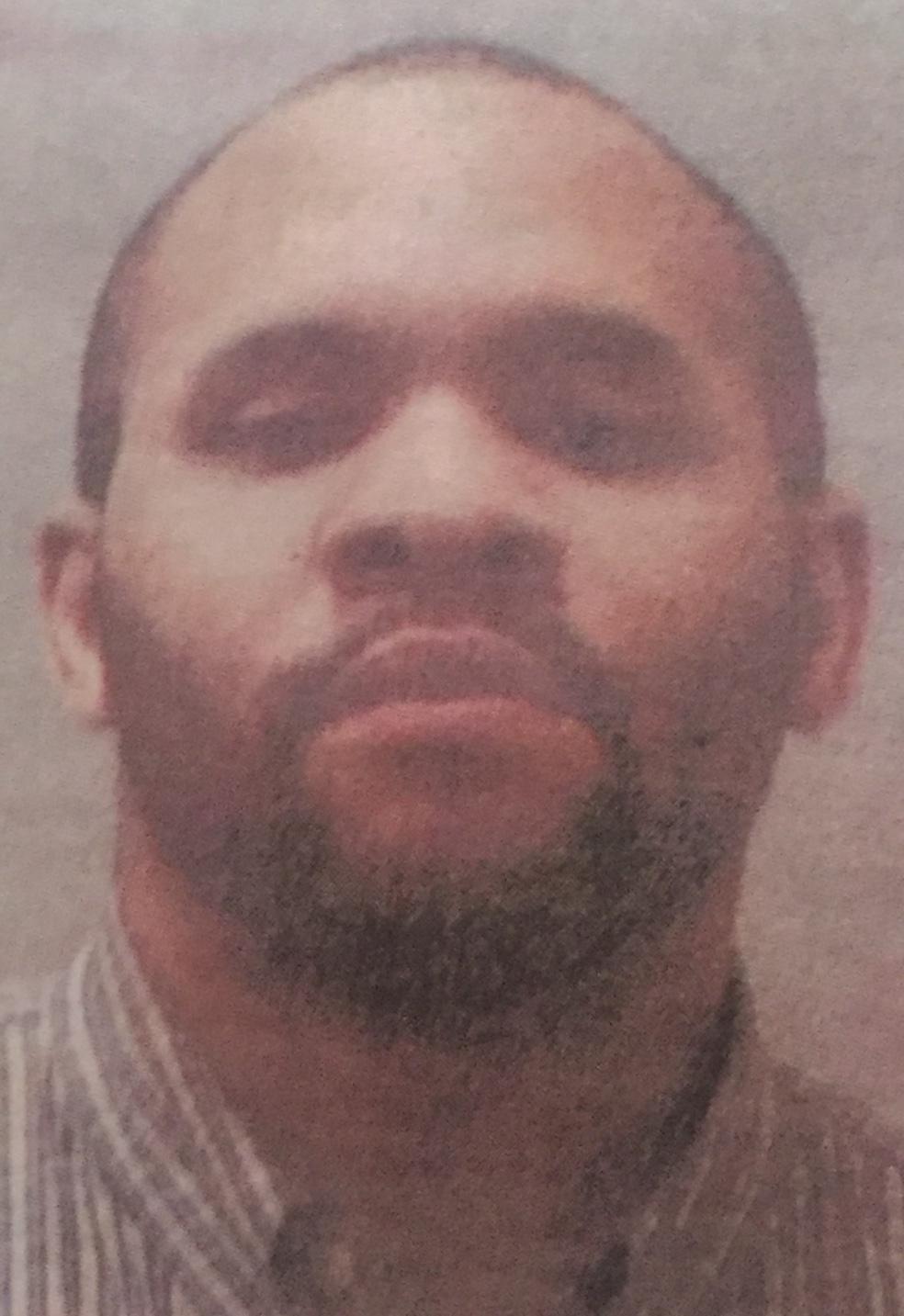
For nearly six years, Paul Eugene Sessomes of Baltimore was on the radar of U.S. Drug Enforcement Administration (DEA) agents in New York and Bogota, Colombia, who believed he was coordinating delivery of heroin proceeds on behalf of Colombians at the top of the supply chain. In December, those suspicions were unveiled in an indictment against Sessomes and three others in New York, where they face federal money-laundering conspiracy charges.

The two lead defendants in the case, Jorge Humberto Espitia Arciniegas and his nephew Carlos Andres Espitia Garcia, were arrested in Colombia in early December and are expected to be extradited, according to press coverage there. The other defendant, Marleny Amparo Torres, is a mother of two who lives in Stamford, Conn., and works as a nanny for a Darien, Conn. psychotherapist and her husband, the founder of a health care company, according to court records.

Sessomes, who is in his early 60s and has been previously arrested twice on drug charges that later were dismissed, pleaded not guilty to the charges when he was arraigned on Dec. 12 before New York U.S. District Judge Ramon Reyes Jr., and was ordered temporarily detained, with bond set at $125,000.

Meanwhile, on Dec. 6, federal authorities moved to take ownership of two Baltimore-area properties tied to Sessomes, claiming they are tied to his alleged drug-money transactions: a luxury condominium he owns at 414 Water St. in downtown Baltimore and a home on Jericho Road in Columbia which he co-owns with Juliet Branker.

Two of the prosecutors handling the cases involving Sessomes—Adrian Rosales in the New York criminal case and Darrin McCullough in the Maryland forfeiture lawsuit—work out of the U.S. Department of Justice (DOJ) headquarters in Washington, D.C., suggesting Sessomes’ alleged conduct has attracted attention at high levels of U.S. anti-drug efforts. Both work for DOJ’s Narcotic and Dangerous Drug Section, which, according to its website, targets “priority national and international drug trafficking groups.”

City Paper first wrote about Sessomes in a 2010 article detailing Baltimore cases in which targets are alleged to deal directly with foreign sources of drugs (“Direct Connections,” Mobtown Beat, March 3, 2010). At the time, the DEA had recently seized $535,200 in cash from two storage lockers leased by Sessomes, saying they were tied to Sessomes’ transactions with the Espitia heroin-trafficking organization, based in Colombia. The allegations in the storage-lockers search warrant mirror those in the recently filed forfeiture case, which adds new details indicating Sessomes was held in high esteem by his Colombian contacts.

Sessomes was Arciniegas’ “best client” at “selling ‘H,’” or heroin, and was “very ‘honest and good’ because Sessomes always maintained the money correctly and never tried to cheat” the Espitia organization, court documents state. A cooperating source told agents that, from 2006 to August 2008, he met Sessomes about a dozen times to pick up heroin proceeds of between $70,000 and $120,000, which he would pick up in Baltimore and deliver to New York for deposit into bank accounts.

DEA investigators have previously tied Sessomes to Thomas Corey Crosby, a convicted Baltimore heroin dealer who is currently in prison. In 2008, when Crosby was named in connection with, but never charged in, a 2007 federal drug case involving Fat Cats Variety store in Southwest Baltimore (“All the Emperor’s Men,” Mobtown Beat, Aug. 27, 2008), agents alleged Crosby laundered drug money through Westport Auto, Inc., a used-car business tied to Sessomes.

The defense attorney for Sessomes and Crosby at that time, James Gitomer, when asked by City Paper to comment about Sessomes’ current legal problems, responded with a “No thanks.” Sessomes’ court-appointed attorney in New York, John Michael Burke, did not respond to a request for comment.

Peter Carr, spokesperson for the U.S. Attorney’s Office in New York, responded to City Paper’s inquiries by stating that “at this stage of the case, we are unable to provide additional details beyond what is in public court documents,” and explained that DOJ Narcotic and Dangerous Drugs Section prosecutors “get involved in cases that are both multi-jurisdictional and international in scope.”

Court documents indicate that investigators’ interest in Sessomes—who court documents describe as a “member” of the Espitia organization who is “actively involved in its illegal activities”—began on April 4, 2008, when Arciniegas left on Sessomes’ phone a voicemail message that was intercepted by the DEA in Bogota, saying, “Good morning, Paulie, it’s Georgie, I have the good news very soon. I’ll call you very soon.”

Subsequently, as the DEA’s probe continued, agents concluded that two Espitia members, one in New York and the other in Miami, “were regularly traveling to the greater Baltimore area to collect narcotics proceeds from Sessomes,” court documents state. Both of those members, who later became cooperating sources for DEA’s investigation, allegedly went to Baltimore to collect $300,000 on Aug. 3, 2008—a transaction that became the core conduct charged in the money-laundering conspiracy indictment against Sessomes and his co-defendants.

About a month later, court documents state, agents watched as Sessomes met in Baltimore with two people—Diego Neira and Maria Espitia-Garcia—described as “known money launders [sic] for the Bogota, Columbia [sic] based Espitia heroin organization.”

The indictment was filed under seal on Aug. 1, almost exactly five years after the $300,000 transaction. Five years is the statute of limitations for most crimes charged under federal law, including conspiracy. The same day it was unsealed, on Dec. 6, Sessomes appeared before Maryland U.S. Magistrate Judge Susan Gauvey, who ordered him detained and committed to New York to face the indictment.

Rye Shills: A Short History of City Paper’s Long Obsession with Pikesville Rye

By Van Smith

Published by City Paper, Jan. 23, 2013

pikesvillerye

A text message lit up my phone in the middle of the night recently: a New York friend was at a pub in Edinburgh, Scotland, and wanted me to know that “they have a bottle of Pikesville Rye behind the counter.” How far the lowly have risen, for the self-styled “aristocrat of whiskeys,” distilled in Kentucky but based on an old Maryland process, to be stocked deep in the peaty heart of exalted single malts.

Even here in Baltimore, where rye traditions run deep, Pikesville Supreme Straight Rye Whiskey has proven at times a rare commodity. Certain joints and packies have reliably purveyed it for years, but most didn’t – and barkeeps and store-owners would even, at times, claim total ignorance of its very existence. That’s been changing of late, though. Just as rye generally has enjoyed a revival over the past 10 years or so, Pikesville, too, has re-emerged as an old faithful. And we here at Baltimore’s most Pikesville-Rye-promoting weekly will presume, however unscientifically, to take some credit for that.

For all practical purposes, written history today begins with online content, and City Paper‘s reveals an abnormal, against-the-grain obsession with Pikesville Rye. It started with Tom Scocca’s “You Gonna Eat That?” feature in 2000, which, along with other notable Maryland edibles (crab cakes, scrapple, etc.), established the nutritional values for rye . A year later, after the Ravens won the Super Bowl, David Dudley wrote in from Canada, where he was living at the time, that he celebrated by doing shots of Pikesville and spinning Kix albums.

Our Pikesville-promoting ways picked up steam in 2004, when an Eat feature about shad roe included a photograph of the dish – and in the frame, inexplicably, was a one-third empty bottle of Pikesville . More rational was its inclusion in a photograph for that year’s “Some Like it Hot” feature, about hot drinks, which recommended Pikesville for making hot toddies.

Starting in 2005, and continuing nearly unabated since, we’ve been hyping Pikesville Rye in Best of Baltimore awards:

2005’s Best Cheap Drink was a Pikesville Rye with a soda back at Mount Royal Tavern (hereinafter called, simply, “the Tavern”). Ditto in 2006, also at the Tavern, except substitute Natty Boh for the soda back. In 2008, a Pikesville Rye mention was included in Best Wi-Fi Spot, awarded to the Tavern , while Best Opportunity for Free Whiskey went to Alexander’s Tavern, where a shot of rye goes to anyone who puts a Dropkick Murphys song on the jukebox . Club Charles was dinged for not having Pikesville when it got Best Bar for Tourists in 2009, and in 2010 it got Best Bar, Station North, in part because Pikesville’s place behind the bar had been restored. In 2011, the Tavern got Best Cheap Drinks, with a nod to its low price for Pikesville, and Best Totally Disgusting Thing to do with a Natty Boh went to Windup Space’s “Kosher Boh,” a Pikesville Rye-involved concoction.

The Nose made much of the relative benefits of the Tavern and the Club Charles as Pikesville Rye purveyors in 2005 and 2007. In the first instance, we were shocked – shocked! – to find Club Charles out of the stuff on Christmas night, saying “we’d been tasting our favorite rye there since we had more pimples than wrinkles,” so “this news was drink-shattering,” then adding that we “huffed off to the Tavern, where they reliably serve Pikesville in topped-off rocks glasses-a neat feat if ever there was one, especially for the reddening Nose at closing time.” In 2007, by which time Club Charles had started stocking Pikesville Rye again, the Nose got into it with proprietor Joy Martin, who told us the high pricing is “because only you drink it,” adding that so few people buy it that “we have to toss” out bottles before they’re empty – “but the fruit flies seem to like the stuff.”

In the Holiday Guide, a bottle of Pikesville Rye has only been recommended as a gift once, in 2005, though in 2011, when touting a bottle of Sloop Betty wheat vodka, we declared that “we won’t be satisfied with the Maryland craft-booze scene until we get Pikesville Rye back in Pikesville.”

In 2009, an end-of-the-decade recollection of the year 2000 painted a picture of a Pikesville-Rye addled writer, obsessed with the shadow-economy figures who’d opened a car-chopping shop next door, and in 2010, four paragraphs of a seven-paragraph review of Frank DeFord’s book, Bliss, Remembered, were dedicated to deconstructing DeFord’s references to Pikesville Rye (his mistakes were duly forgiven).

Finally, in 2012, all of this shilling started to pay off. The City That Drinks celebrated Pikesville Rye, raising hopes that someday a rye will be distilled in Maryland again. Juice extolled rye generally as a Manhattan’s foundation, while dryly acknowledging Pikesville’s long-ago exit from Maryland. Topping it all off, Joe MacKeepacigarhandy, in a calendar write-up for the Beer, Bourbon, and BBQ Festival, boasted that “we’ve been imbibing Pikesville Rye for years and recommending it to anybody who will listen, and now ‘the hottest adult beverage in the market today’ will have its own special tasting area” at the festival.

Apparently, our work is done.

Holy War: Inside the Crusade to Kill Maryland’s New Marriage-Equality Law

By Van Smith

Published by City Paper, Oct. 3, 2012

logo

Maryland holds a special place in the legal history of same-sex marriage in America. In 1973, Maryland lawmakers reacted to marriage attempts by same-sex couples by enacting the nation’s first state law defining marriage as occurring between one man and one woman—what has since been dubbed the Defense of Marriage Act (DOMA), which became federal law in 1996.

This year, nearly two generations later, Maryland reversed course and passed the Civil Marriage Protection Act (CMPA), legalizing same-sex marriages. While public polls show it is increasingly popular nationwide and in Maryland, same-sex marriage is anathema to many for whom the Bible, which frowns on homosexuality, is “The Word,” setting God’s laws for all people. And for them, the National Organization for Marriage (NOM) is the best hope for keeping the biblical basis for marriage on the law books in Maryland and wherever else it is threatened.

Since forming in 2007 to back California’s Proposition 8, the successful constitutional-amendment referendum to end same-sex marriages there, NOM has been the driving force to keep gays and lesbians from gaining or maintaining the legal right to marry in America. With the passage of the CMPA in Maryland, NOM’s well-honed organizational prowess has come to the state in the form of the Maryland Marriage Alliance (MMA), on whose three-member board sits NOM’s executive director, Brian S. Brown.

MMA and NOM donated more than four-fifths of the money raised to support the highly successful petition drive that landed the CMPA on the Nov. 6 ballot as Question 6, which will decide whether the law survives. And MMA is the main group—joined by one other, Jump the Broom for Marriages (JBM)—registered to raise and spend campaign funds to defeat Question 6. The first campaign-finance reports of the ballot battle are due in October, so who’s raising and spending how much, and where the money’s coming from, remains to be seen.

In each of the 32 times same-sex marriage questions were on state ballots around the country, they have failed, and those opposed are determined to make sure that happens again this year in Maryland, as well as in the other three states—Maine, Minnesota, and Washington—that have ballot questions on the issue on Nov. 6.

The question is: How far will NOM, MMA, and JBM go in their attempt to kill the new law, given that polling shows a majority of Marylanders support gay marriage and a dwindling number oppose it?

The answer may never be entirely clear, since NOM goes to great lengths in its attempts to protect how it raises and spends money from public scrutiny. But based on NOM’s past conduct, its time-tested partnerships with anti-gay-marriage leaders in Maryland, and JBM’s ties to a Maryland political mover-and-shaker with scandal in his past, expect anti-gay-marriage tactics to get ugly in Maryland.

The ugliness has already shown its face in the rhetoric of NOM-tied preachers in Maryland. Perhaps the boldest statements have come from Bishop Harry R. Jackson Jr., of Hope Christian Church in Beltsville, where MMA Executive Director Derek McCoy is associate pastor. Jackson has linked gay marriage with “a Satanic plot to destroy our seed.”

Among longtime opponents of gay marriage in Maryland, such as state Del. Donald Dwyer (R-Anne Arundel County)—who has introduced legislation each year for nearly a decade that would make DOMA an amendment to the Maryland Constitution—and Michael Peroutka of the Institute on the Constitution (IOTC), a longtime Dwyer supporter, the use of venom against gays and lesbians is particularly overt.

In a February column on the IOTC’s web site, the American View, Peroutka praises Dwyer “valiantly fighting the desperate efforts of the sodomite lobby in Annapolis to redefine the God-given and God-ordained institution of marriage.” He then goes on to thank Dwyer for the way he testified against the CMPA, since it helped Peroutka realize something “that had eluded me.” That something was this, as memorialized in Dwyer’s written testimony:

“The reason why it is so desperately important to homosexuals to redefine marriage has little to do with ‘fairness’ and much to do with gaining access to straight, normal, decent Maryland children. . . . You see, homosexuals can’t reproduce. So they must recruit. The best place to recruit is in schools where they can have unfettered access to children. . . . Stripped of all its phony ‘fairness’ language, what is being pushed is nothing short of government-authorized perversion of Maryland children. It’s a license for child abuse.”

In August, Bishop Jackson echoed this point at Glenn Beck’s “Under God: Indivisible” conference in Texas, saying, in connection with the gay marriage issue, that “folks who cannot reproduce want to recruit your kids.”

After the CMPA passed in Annapolis, Peroutka wrote a column entitled “Maryland Legislature Commits Suicide.” In it, he concluded that “no earthly government body can redefine marriage any more than it can redefine the law of gravity” and that “no matter how much ink gets spilled on paper in Annapolis, no change has occurred in either the laws of gravity or the definition of marriage. . . . Until this Governor is impeached and until this legislature is recalled and replaced with citizens who know the law and the limits of civil jurisdiction, there is no reason to consider this a valid legislature or this a legitimate governor. Other than fear, I can think of no reason to further obey their dictates.”

In this environment among opponents of gay marriage, it was hardly surprising when Dennis Leatherman, pastor of the Mountain Lake Independent Baptist Church in Oakland, Md., said of gays during a May sermon: “Kill them all. Right? I will be very honest with you. My flesh kind of likes that idea.” Then he backed off, noting that such a notion “violates Scripture. It is wrong.”

On the other side of the marriage-equality question, potent backing for Question 6 has been found among prominent African-American pastors who agree with the Maryland NAACP, as well as its branches in Baltimore and Prince George’s County, that marriage equality is a civil rights issue. Many of them gathered to speak in support of Question 6 at a Sept. 21 press conference at the National Press Club in Washington, D.C.

The roster of African-American luminaries from churches across the country who came to the event included well-known names among the faithful, such as Dr. Otis Moss III, of Trinity United Church of Christ in Chicago; Dr. Amos C. Brown of the Third Baptist Church in San Francisco; Dr. Frederick D. Haynes III, of Friendship-West Baptist Church in Dallas; and Dr. Howard-John Wesley of Alfred Street Baptist Church in Alexandria, Va. Their arguments invoked the “equal protection under the law” clause of the 14th Amendment of the U.S. Constitution—the same clause that undergirded the legal arguments for civil rights causes that were so bitterly fought in U.S. history—and stressed the tradition of separation of church and state, pointing out that civil laws and religious tenets best not intermingle, including in questions of marriage.

All spoke passionately, with concise, tightly hewn moral and theological logic. The marquee name at the event was Rev. Al Sharpton, who delivered a short homily, pointing out that he’s been for same-sex marriage since 2003. But perhaps the tightest, most moving statement came from someone who may not be a household name: Dr. Brad R. Braxton of the Open Church in Baltimore.

“My support of marriage equality is an endorsement of justice and love,” Braxton began. “Marriage can be a moral good,” he continued, and “denying access to the fullness of that moral good on the basis of sexual orientation is politically unjust and morally inappropriate.” After acknowledging the diversity of views on the issue and emphasizing that they “need to be discussed and debated in a respectful manner,” Braxton said, “my enthusiastic support of this legislation is rooted in a sense of political justice.” He invoked the past, saying that “as an African-American Christian pastor and theologian, I feel a moral obligation to advocate for marriage equality” because “in this country’s history, African-Americans were once denied the right to marry and form families. As a descendent of people who were denied these rights, why would I want to deny gay and lesbian people these rights?”

Finally, Braxton spoke of the power and goodness of love. “Marriage equality is a celebration of love,” he said, and “in light of the hatred and hostility in our world, we should celebrate and protect the political right of two consenting adults to unite in love to form a family. Surely, relationships rooted in love, irrespective of one’s sexual orientation, strengthen the body politic and enhance the common good. If we genuinely want liberty and justice for all, then it is crucial for voters in Maryland to vote ‘Yes’ on Question 6 on this year’s ballot. A ‘Yes’ vote affirms that the small word—‘all’—is really big enough to include everyone.”

Other than engaging in the battle of words that marks any policy debate, opponents of same-sex marriage also employ litigation, which NOM has undertaken readily in other states—and which MMA has already put to use in Maryland.

Though only five years old, NOM has sued five times in federal court: in California, Maine, New York, Rhode Island, and Florida. Each time, it sought to overturn aspects of the states’ election laws in order to avoid campaign-finance reporting requirements, and each time, it failed. On its legal team for each case was James Bopp, the attorney who started the successful Citizens United lawsuit that prompted the U.S. Supreme Court decision that led to super PACs, which are allowed to raise unlimited amounts of money in politics.

So far, NOM and MMA have not attempted to undermine Maryland’s campaign-finance laws in the courts. But in August, MMA filed a lawsuit in Anne Arundel County Circuit Court, seeking to replace the ballot language of Question 6 and replace it with its own proposed language. In addition to MMA, the plaintiffs were its executive director and board member, Derek McCoy, and state Del. Emmett C. Burns (D-10th District), a Baltimore pastor. They withdrew their complaint in September, but what it says reveals much about how anti-Question 6 forces feel about the law they want overturned.

The approved ballot language for Question 6 reads:

Establishes that Maryland’s civil marriage laws allow gay and lesbian couples to obtain a civil marriage license, provided they are not otherwise prohibited from marrying; protects clergy from having to perform any particular marriage ceremony in violation of their religious beliefs; affirms that each religious faith has exclusive control over its own theological doctrine regarding who may marry within that faith; and provides that religious organizations and certain related entities are not required to provide goods, services, or benefits to an individual related to the celebration or promotion of marriage in violation of their religious beliefs.

Here is the language MMA proposed in its lawsuit:

Redefines marriage as between one man and one woman to allow gay and lesbian couples to marry; exposes clergy and certain non-profit charitable organizations which are not operated, supervised, or controlled by a religious organization to liability for refusing to perform same-sex marriage against their religious convictions; only provides limited exceptions to clergy from having to perform any particular marriage ceremony in violation of their religious beliefs; provides no protection for religious or other non-profit organizations that receive State and/or Federal funding for its programs from having to perform any particular marriage ceremony in violation of their religious beliefs; provides for a criminal charge of misdemeanor and on conviction is subject to a fine of up to $500.00.

The differences between the two are stark. The approved language emphasizes that clergy and religious organizations are explicitly protected from liability should they choose not to marry gay and lesbian couples. But the proposed MMA language says that’s not so, claiming that the law “exposes” clergy and others who perform marriage ceremony to liability, including criminal prosecution.

The only provisions for criminal penalties in the CMPA, though, pertain to individuals who marry their relatives. There is nothing in the law suggesting clergy or others who conduct marriage ceremonies are liable for anything, criminally or otherwise. That hasn’t stopped MMA from suggesting otherwise by using rhetorical devices designed to shed doubt on anything Question 6 supporters say.

On Sept. 23, after MMA dropped its lawsuit over the Question 6 language, McCoy took the stage at Manna Bible Baptist Church in Baltimore to speak about the law and MMA’s drive to defeat it. In the speech, which was posted on YouTube, McCoy admitted that the new law won’t penalize pastors and churches that don’t perform same-sex marriage ceremonies.

“What you’re going to hear is, ‘Well, that bill does not force pastors to marry anybody in their pulpits. It gives churches the free rein to do whatever they want to do. You don’t have to worry, this is only a civil marriage license.’ Most of the stuff you are going to hear on the other side, saying, ‘It’s not going to do this, and it’s not going to do this, this is civil marriage, and da-da-da,’” McCoy said, “I just want you to know, it’s just not true.”

Thus, when McCoy declared, “That is true, they will not come tomorrow and handcuff Pastor Gaines,” Manna’s leader, he had already gone to such great lengths to sow doubt about the other side’s veracity that his listeners may well believe that, in fact, something like that could happen if Question 6 passes. It’s a time-tested trick—when faced with opposing facts that are unassailable, undermine them with blanket assaults on the opponent’s honesty. When it works, believers take it as a matter of faith that the other side is simply wrong on every score.

City Paper attempted to reach McCoy for comment, but did not hear back from him by press time.

The anti-Question 6 forces in Maryland face formidable, well-heeled opponents. Four pro-Question 6 groups have formed: Freedom to Marry Maryland PAC, Human Rights Campaign National Marriage Fund, Marylanders for Marriage Equality, and Human Rights Campaign Maryland Families PAC. Their efforts are supported by Maryland’s NAACP, many prominent religious leaders of a variety of faiths, unions, and a healthy cross-section of the state’s political establishment, led by Maryland Governor Martin O’Malley. They also, in spirit at least, have the backing of President Barack Obama, who in May cited his Christian faith in announcing his support for allowing gays and lesbians to marry.

Even before Obama’s announcement, national public-opinion polling had been trending in favor of same-sex marriage, with majorities first appearing in 2010. Analysis of the results indicates that older, more religious, less educated residents of the South and Midwest are more likely to be opposed to legalizing same-sex marriage, while younger, less religious, more educated residents of the Northeast and West are more likely to be supportive. Also, support is more prevalent among women than men.

Obama’s opinion on the matter had dramatic consequences among Marylanders. In January, Gonzales Research and Marketing Strategies found that 49 percent of Marylanders supported legalizing same-sex marriages, while 47 percent opposed it, with a much larger margin among African-Americans, with 33 percent in favor and 60 percent opposed. In September, Gonzales found 51 percent would vote in favor of Question 6 and 43 percent would vote against, with 44 percent of African-Americans in favor and 52 percent opposed.

“Although a majority of black voters say they’ll vote against Question 6,” Gonzales’ poll summary states, “support is up from our January survey when only 33% favored same-sex marriage, suggesting public pronouncements in the interim from the President and others have had an ameliorative impact for proponents.”

In May, two weeks after Obama’s announcement, Public Policy Polling, a North Carolina firm, found even greater support. Fifty-seven percent said they would vote for Question 6, including 55 percent of African-Americans. As for intensity, 46 percent said they would vote yes on the ballot question and feel strongly about it, compared to 36 percent who said they would vote no and feel strongly about it.

“Maryland voters were already prepared to support marriage equality at the polls this fall even before President Obama’s announcement,” the firm’s summary states. “But now it appears the passage will come by a much stronger margin.”

McCoy, though, dismisses the polling. “Every poll is nothing but propaganda,” he said in May while announcing MMA’s successful petition drive. More dispassionate observers also doubt how well the results gauge how people will actually vote on Election Day. Richard Vatz, a Towson University communications professor, wrote in a letter to The Baltimore Sun in August that “five of the eight public polls conducted in the two months before California voters decided on Proposition 8” in 2008 “suggested that the measure would be defeated, perhaps by a wide margin. Instead, voters outlawed gay marriage, 53-47.” And in Maine in 2009, he continues, “most polls showed that voters favored same-sex marriage, in one case by double digits. But it was defeated, also 53-47.”

Vatz ventured to pose a reason why polling on same-sex marriage has so widely diverged from the results on Election Day: “Gay marriage is an issue in which polls don’t necessarily reflect what voters will actually do at the ballot because it is increasingly politically incorrect to oppose such nuptials.”

The national zeitgeist on same-sex marriage has indeed seemed to be shifting in its favor, which may make those who harbor doubts about opening up marriage to gays and lesbians keep their true feelings to themselves, so as not to seem politically incorrect, as Vatz suggests. Celebrity support has been growing, most recently evidenced by a New York fundraiser to help pass Maryland’s Question 6, hosted by O’Malley and attended by Hollywood stars like Susan Sarandon and John Waters, and political leaders across the partisan divide.

The cost of political incorrectness on marriage equality was made abundantly clear in the case of Emmett Burns, the Maryland state delegate who joined MMA’s lawsuit over the Question 6 ballot language. Shortly after Burns sent a letter in late August to Baltimore Ravens owner Steve Bisciotti, writing, “I find it inconceivable that one of your players, Mr. Brendon Ayanbadejo, would publicly endorse Same-Sex marriage, specifically, as a Raven [sic] football player,” he quickly backed off amid overwhelming negative public reaction—and may have unwittingly helped the supporters’ cause.

The star-studded appeal of the same-sex marriage cause doesn’t stymie the zealous drive of its opponents in Maryland, though. Other than NOM, the MMA is supported by the Maryland Family Alliance, a nonprofit chaired by McCoy, and the Maryland Catholic Conference (MCC), which does public-policy advocacy on behalf of the Catholic Church. MCC spokeswoman Kathy Dempsey told The Sun recently that “our campaign is not about raising millions and millions from Hollywood and Madison Avenue,” an apparent dig at the fundraising strategy of Question 6 supporters.

While the opponents may not get fat checks from national celebrities, they do have prodigious resources. NOM’s involvement brings not only money but strategy—including, as revealed earlier this year, attempts to divide the African-American and gay-and-lesbian communities. The idea, according to a NOM memo that turned up as part of one of its federal lawsuits to evade campaign-finance disclosures, is to “drive a wedge between gays and blacks—two key Democratic constituencies. Find, equip, energize, and connect African American spokespeople for marriage; develop a media campaign around their objections to marriage as a civil right; provoke the gay marriage base into responding by denouncing these spokesmen and women as bigots.”

NOM’s strategy has been put in play in Maryland. McCoy has been “equipped” by NOM with direct employment as executive director of MMA—a salary he apparently needs, given the $32,586 federal tax lien filed against him by the IRS in 2011 in Prince George’s County Circuit Court. Jackson, too, has financial reasons to be “energized” about NOM’s agenda. NOM gave $20,000 to Jackson’s High Impact Leadership Coalition, which, along with NOM, bankrolled Jackson’s Stand4MarriageDC, which unsuccessfully sought to put Washington, D.C.’s law legalizing same-sex marriage up for referendum. (Stand4Marriage’s other donor, with a token amount, was Chuck Donovan of the Family Research Council, a conservative Christian lobbying group that the Southern Poverty Law Center has dubbed an anti-gay hate group.)

Evidence abounds of a media campaign objecting to the idea of same-sex marriage as a civil right, the second part of NOM’s three-part wedge strategy, as McCoy, Jackson, Burns, and many other African-American pastors have regularly turned to this theme in their public speaking.

As for the third element of NOM’s strategy, McCoy claimed at his speech at Manna Bible Baptist Church that “I’ve been told that I’m a racist, a bigot, a hater—and I said, ‘Wow, I never knew in my life that I’d be called those things.’” He did not, however, say who the name-callers were or where and when they made such statements.

Whether Jump the Broom for Marriages is also part of NOM’s Maryland operations remains to be seen: October’s campaign-finance reports should clarify whether NOM’s supporting the effort. JBM’s approach, though, will likely reflect the hardball political tactics of longtime Maryland political operative Julius Henson, who—after his May election-law conviction over the 2010 robo-calls scandal involving former Maryland governor Robert Ehrlich’s gubernatorial campaign—told the Maryland Gazette he’d be helping JBM. The group’s signs bear the telltale purple-and-yellow color scheme of many of Henson’s campaigns in the past, and its leadership includes many former Henson clients, including Lisa Joi Stancil, a former Baltimore City State’s Attorney candidate, and Deborah Claridy, who ran for Baltimore City sheriff in 2010.

Despite the positive polling, political clout, and celebrity backing Question 6 supporters are getting, NOM and MMA will continue to mount a memorable, combative campaign. Their motivation, after all, comes from above—as McCoy pointed out at his Manna speech.

“When we are in the Kingdom,” McCoy said, whipping himself and his audience into a fury, “we are supposed to be the third team on the field. We have a different rule book. This rule book is the Word of God,” so “our obligation is to be . . . the team that says no, we play by a different set of rules.” Just like “the prophets [who] spoke to the kings” in the Bible “about what God said, and what was good and what was bad, and what was right and what was wrong,” McCoy exhorted Manna’s congregation to “believe we have a voice of authority, and we can declare and decree.” Referring obliquely to Question 6 supporters, he said, “I get what they’re saying over here, but God says it differently,” adding, “we cannot let this go down on our watch.”

If Question 6 fails, McCoy will have reason to believe his words were prophetic.

Miller’s Crossing: Anthony Jerome Miller Convicted in Redwood Trust Double Murders

By Van Smith

Published in City Paper, Mar. 21, 2007

IMG_7632

Just before 4 p.m. on March 15, as a Baltimore City Circuit Court jury was preparing to render its verdict in the double-murder case against Anthony Jerome Miller, prosecutor Sharon Holback turned to the victims’ family and friends, who were assembled in the courtroom, and said, “Let’s hope for something poetic with a verdict on the Ides of March.” The jurors did indeed hand down a poetic verdict, convicting Miller of two counts of second-degree murder, nearly four years after the April 2003 night when 22-year-old Sean Wisniewski and 31-year-old Jason Convertino were shot to death in Convertino’s Upper Fells Point apartment.

Judge Robert Kershaw, who presided over the nine-day trial, scheduled sentencing for June 8, and each murder count carries a maximum sentence of 30 years. But the jury also acquitted Miller of eight other charges arising from the state’s theory that he went to Convertino’s apartment intending to rob, shoot, and kill the victims. If they had believed the large body of evidence that the crime was premeditated, as the state contended, the jurors would have found Miller guilty of first-degree murder and the other felonies, and he’d be facing two life sentences–and then some.

Miller, 31, was charged last January, after Baltimore Police detective William Ritz took over the lapsed investigation as a cold case in late 2005. Ritz quickly developed evidence that included Miller’s DNA on a latex glove left at the murder scene, a map of the movements of Miller’s cell phone at the time of the crime, business records indicating Miller robbed Convertino, and testimony from Convertino’s next-door neighbor, who was first interviewed by police two and a half years after the slayings.

After the verdict, the two sides made the usual statements. “I believe my client was not guilty, and we’re going to continue to fight to prove his innocence,” said Miller’s attorney, Paul Polansky, who promised to file an appeal. State’s Attorney’s Office spokesman Joseph Sviatko said, “We’ll obviously ask for the maximum” sentence. Holback announced that she was “very happy” with the outcome.

But Convertino’s mother, Pam Morgan of Binghamton, N.Y., says she is disappointed that the jurors didn’t hand down convictions for first-degree murder, gun crimes, and robbery. “I guess I should be grateful for something,” Morgan says of the guilty findings the day after the verdict. “But how do they think the bullets got in the kids’ heads?”

The autopsy revealed that Convertino’s fatal back-of-the-head shot was accompanied by two others, one also to his head and the other to his right arm. Wisniewski died of a single gunshot to the head. A firearms expert testified that the bullets were fired from a .38- or a .357-caliber handgun.

Morgan sees Miller’s conviction as partial justice not only because the verdict wasn’t as comprehensive as she would have liked, but because she remains convinced that Miller did not act alone. She intends to pursue her theory that the killings were a conspiracy, as she has since shortly after the crime. “It’s not really over for me,” Morgan says. “I have to say I’ll definitely not be sitting back on this.”

Scott Henry, a prosecution witness and Wisniewski’s friend and employer, agrees that Miller’s prosecution addresses only a part of the crime’s complexity. “I hope this is only the beginning, because you and I both know there is a lot more to this [case],” Henry told City Paper after his hourlong testimony on March 6. Neither Wisniewski’s family nor the jurors could be reached for comment in time for this article.

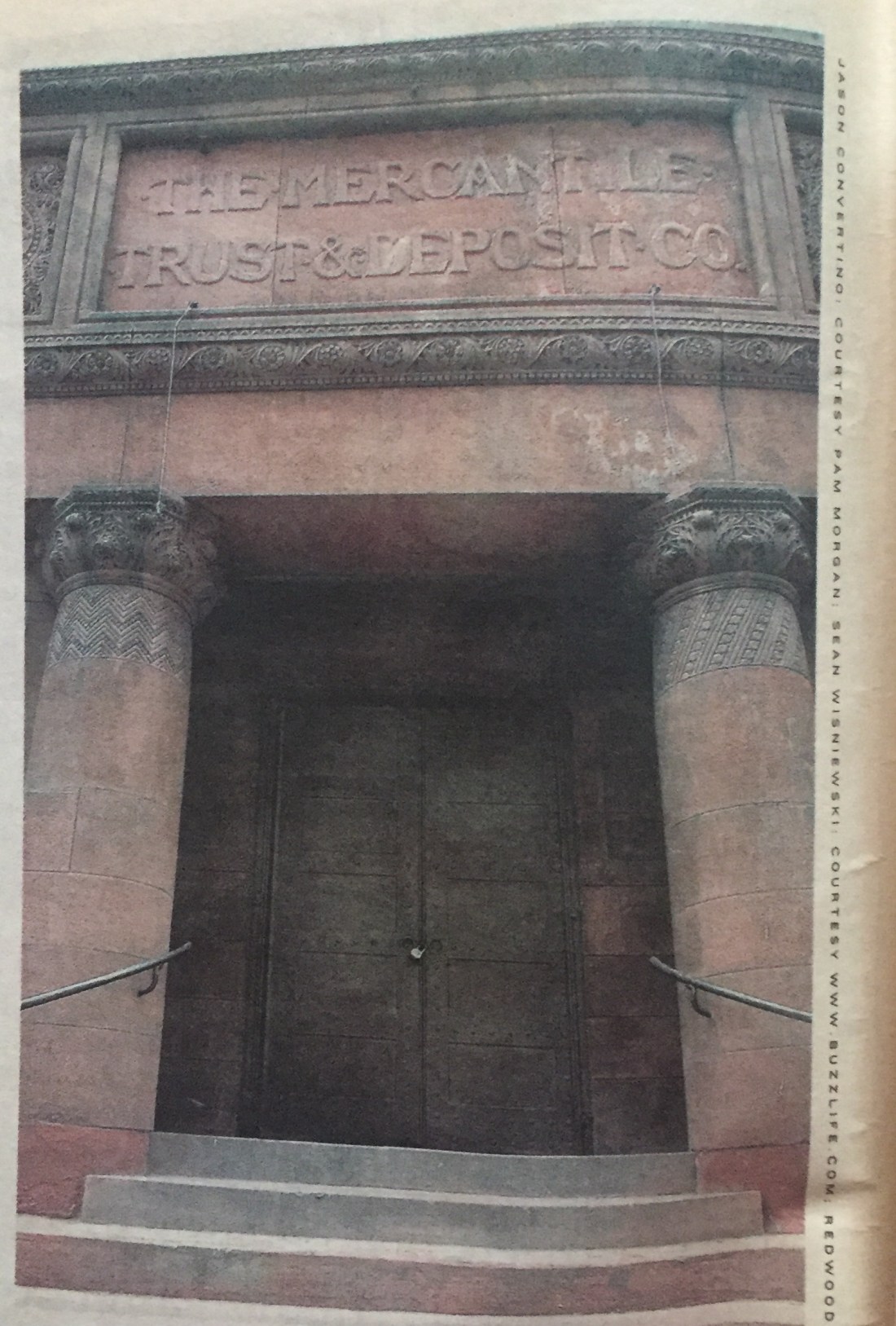
Trial testimony described the nightlife milieu in which the murders occurred. Wisniewski worked as Henry’s assistant and handled radio programming for Buzzlife Productions, a concert promoter based in Washington, D.C. At the time, Buzzlife held events on Saturday nights at Redwood Trust, the historic downtown bank-turned-nightclub where Convertino was general manager. Shortly before the murders, Miller had worked briefly at Redwood Trust on the security staff. Convertino worked for Redwood Trust owner Nicholas Piscatelli, but at the time of the murders he was arranging to leave Piscatelli and take the gigs he was booking at Redwood Trust to Bohager’s, another venue that has since closed.

The state’s case was that Miller was hardly employed, working itinerantly at a car wash and as a security guard at a car dealership, and was marrying Tarsha Fitzgerald, a successful older woman, so he needed money to pay for their honeymoon in Mexico. With greed as his motive, the state tried to prove that Miller gunned down Convertino (Wisniewski was simply in the wrong place at the wrong time), stole and pawned his laptop, and fraudulently used his credit card to pay the travel agency. Holback painted Miller as a cunning and deceptive charmer who fooled a lot of people, including Convertino and Fitzgerald. Holback described the latter as Miller’s “living victim.”

Polansky’s defense of Miller was composed solely of four character witnesses, including New Psalmist Baptist Church Bishop Walter Thomas, who testified that the defendant was a religious man who would never commit such atrocities. But Polansky also cross-examined the state’s witnesses in an effort to suggest a vague, alternate theory of the case to jurors: that Piscatelli, not Miller, had a motive to kill Convertino, who was in the process of taking high-profile hip-hop events away from the Redwood Trust. Investigators, Polansky stated in his closing argument, “rushed to judgment” in deciding early in the investigation that Miller was the killer, and suffered from “tunnel vision,” so they “didn’t look at Nick Piscatelli a little more carefully.”

Piscatelli testified as a prosecution witness for 45 minutes on the second day of the trial, March 6. Holback asked him to look at the jury and answer a series of questions about whether he killed Convertino, or had Miller kill him. Piscatelli repeatedly answered “no” to the questions. He also stated that he doesn’t know Miller: “I thought I might recognize him today,” Piscatelli said from the witness stand, “but I do not.” Piscatelli told City Paper for an article last year (“Late Discovery,” Mobtown Beat, Dec. 6) that Miller asked him for money to pay for the honeymoon, which Piscatelli declined to lend. “I didn’t really know” Miller, he said then.

“The truth is in the evidence,” Polansky said during the trial, arguing that “this was an execution” and “not a robbery at all,” and that “what happened here is that Jason Convertino crossed the wrong people.”

In addition, Polansky pointed out that Holback made Miller out to be “so slick, so smart,” yet at the same time the evidence against Miller attests to a remarkable level of stupidity. It’s as if Miller “wanted to get caught,” Polansky said, because he “leaves the only evidence that he was there . . . right on the dead man’s bed,” where the glove containing Miller’s DNA was recovered. The evidence also showed that Miller left his fingerprints all over the fruits of the alleged robbery by pawning the laptop at a shop Miller regularly patronized, producing his driver’s license to validate the transaction, and using Convertino’s credit card after the murders.

“Either Anthony Miller did it,” Polansky told jurors, “or somebody went to an awful lot of trouble to make you believe he did it.” Judging by the verdict, the jurors decided Miller did indeed do it–though they didn’t buy the state’s version of how the deed was done.

Late Discovery: A New Twist in the Redwood Trust Double-Murder Case

By Van Smith

Published in City Paper, Dec. 6, 2006

IMG_7624-2

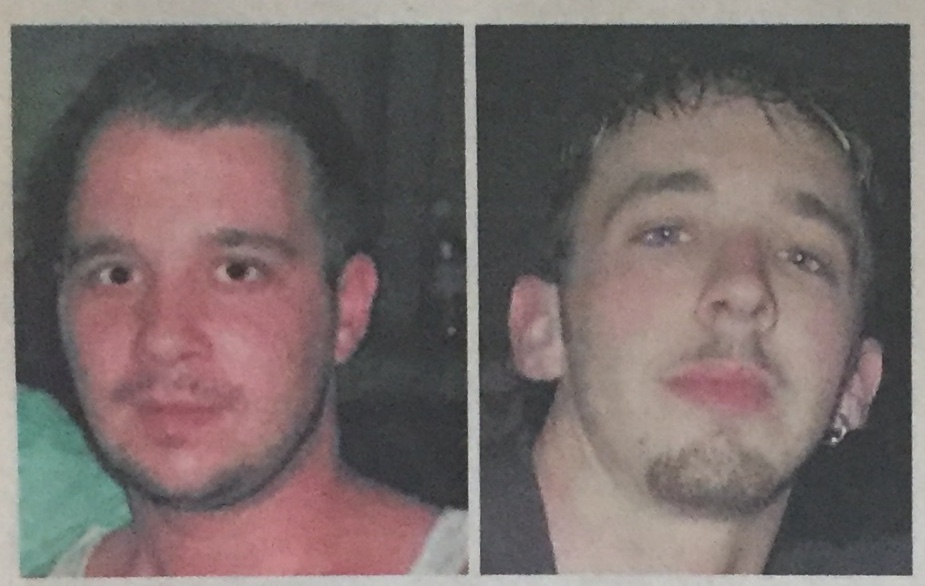
“I don’t know why they’re digging into my past,” remarks 56-year old Nicholas Argyros Piscatelli, a local developer and owner of the now-defunct downtown nightclub Redwood Trust. He’s on the phone with a reporter, commenting about the double-murder case involving the club’s former manager, Jason Convertino (pictured, above left), who was shot to death in April 2003 in Convertino’s Fells Point apartment, along with Sean Wisniewski (pictured, above right), who worked for Buzzlife, a nightlife promotions company that held events at Redwood Trust. Suspect Anthony Jerome Miller‘s trial in the case, which turns largely on the presence of DNA consistent with Miller’s found in latex gloves discovered at the crime scene, is scheduled to start in January. But Piscatelli is concerned about recent indications that the case is delving into the possibility that he had something to do with the crime.

“I see what they’re going to do, which is a shame,” Piscatelli continues, referring to Miller’s defense, mounted by attorney Paul Polansky. “Which is to cast doubt and get this guy off.” Neither Polansky nor prosecutor Sharon Holback will discuss the case, and there is no indication that information about Piscatelli will be used by either side at Miller’s trial.

Casting doubt to get people off is what criminal-defense attorneys do for a living, and part of that effort involves understanding the evidence that police and prosecutors gather to bring charges against their clients. In Miller’s case, the nature of that evidence had been limited for the most part to the DNA analysis–until recently, when a new prosecutor took over the case and, as the law requires, submitted to Polansky voluminous documentation about the lengthy investigative process that led to Miller’s indictment in January. Delays in “discovery,” as this process is called, in large part have been responsible for rescheduling the trial date, which was reset four times and is now scheduled to start Jan. 24, 2007.

In October, Polansky argued in court that the state’s discovery failures had been so severe that the charges should be dismissed. A judge disagreed, so the case is proceeding, and on Dec. 5 Miller’s request for a change in his no-bail status was denied. Meanwhile, the late-arriving discovery has fattened the case file with information stating, among other things, that Convertino’s mother was told shortly after the murders that Piscatelli ordered them.

On Oct. 27, Holback disclosed in a memorandum to the defense that “Pam Morgan [Convertino’s mother] has stated that an unknown man approached her at a benefit in Binghamton, New York, held for her son’s child shortly after his murder. The man advised her that Nick Piscatelli was behind her son’s murder, he covered his tracks and hired someone to kill him.” The memo does not indicate when Morgan shared this information with investigators, but she told City Paper during a Nov. 30 phone interview that the event was held in May 2003, just weeks after the murders.

“At the benefit, this guy comes up to me and he says he knows who was behind my son’s murder” Morgan recalls. “I didn’t know Nick [Piscatelli] at that point.” Since then, though, Morgan says she has kept in regular, friendly phone contact with Piscatelli.

“Oh boy! She said that?” Piscatelli says when informed of Morgan’s statement about the man’s visit to the Binghamton gathering. “That’s unfortunate. I’ve spoken to her several times, and she’s never mentioned anything like that to me. That’s certainly sad to hear. There has been no animosity between us.”

Over the phone from her home outside of Binghamton, Morgan describes the man who dropped Piscatelli’s name at the benefit as white, in his 30s, several inches shy of six feet tall, with “lightish hair,” of “medium build,” and “wearing a long coat, like a trench coat.”

“He came in, talked, and left,” she continues. “I was like, `Whoa!’ And that’s when I first started questioning the club, and had these theories [that Piscatelli might be involved]. And I also thought, did [the man] do it purposefully, to throw it off someone else by naming Nick? Because there is no evidence against Nick.”

Still, she says she’s fearful of Piscatelli, and now that her suspicions have been made public in Miller’s case file she says she will stop calling him. “That was my last call to him, probably in September,” Morgan recalls, when she says she discussed with Piscatelli items still in his possession that belonged to her son. (The Oct. 27 memo also discloses that Morgan told investigators that this reporter shared with her information about Piscatelli obtained through unnamed sources.)

Morgan’s statements are not the only ones mentioning Piscatelli in the discovery documents. A Nov. 9 discovery memo states that “a record of firearms owned and registered to Nicholas Piscatelli” was shared with the defense. Piscatelli reacts to this news by saying that “it was years ago–during the 1990s, or the 1980s–that I bought a couple of guns for hunting or target practice,” and asserts again that Polansky and Miller are “trying to use whatever they can to cast a shadow of a doubt.”

On Oct. 24, court documents also show prosecutor Holback shared with the defense “notes of detective’s interview of Carl Weaver (who is believed to be also known as Carl Curry)” that provide information about Weaver’s relationship with Piscatelli and “several other men,” including one that “obtained drugs for Nick Piscatelli.” Neither Weaver nor the two men whose names are mentioned could be located by City Paper in time for this article, and Piscatelli asserts he doesn’t know them. As for Weaver’s allegation about drugs, Piscatelli, who in the mid-1990s pleaded guilty to cocaine possession in Howard County, doesn’t directly respond but says that “there were no drugs in that club and no evidence of that going on.”

In fact, as City Paper has previously reported (“Club Trouble,” Mobtown Beat, June 11, 2003), evidence of drugs at the Redwood Trust does exist in the public record. In 2002, police executed a search-and-seizure warrant there and seized small amounts of cocaine and other drugs from the club. However, despite the evidence, the Baltimore City Liquor Board acquitted Redwood Trust of the resulting violations. “The fact [is] there were drugs there, obviously,” then-liquor board Chairman Leonard Skolnik said at the 2002 hearing.

In a November 2003 police report, Piscatelli stated that, while at the club, he was forced to sign a fraudulent promissory note for the sale of the nightclub business to another party, who, along with three armed men wearing masks, threatened Piscatelli and his business partner, Paul Chrzanowski, and asked them to sample “cocaine in a paper towel” (“Deadwood Bust,” Mobtown Beat, April 28, 2004). No criminal charges resulted from the incident, though competing lawsuits over the promissory note ended in October 2005, with Piscatelli winning a $1 million judgment against the buyer, Omar Haughton of Ellicott City.

Miller, meanwhile, worked for Redwood Trust, according to Piscatelli, who said prosecutors have asked him to produce Miller’s employment records. In court cases against him in the 1990s, Miller used an alias and three different dates of birth that today would place him in his mid-30s. One case, for murder in 1993, resulted in an assault conviction and two months of incarceration. Miller’s other conviction was for forgery in the mid-1990s, though he has dodged drug-conspiracy and other charges.

The state has accused Miller not only of murder in the Redwood Trust case but also armed robbery. This is apparently due to the fate of Convertino’s laptop computer, which court documents show Miller pawned the day after the bodies were found on April 16, 2003. Court records also indicate that Miller used Convertino’s credit card to pay for his honeymoon in Cancun, Mexico. Miller was first interviewed by detectives at Baltimore-Washington International Airport on May 14, 2003, when he and his wife, Tarsha Fitzgerald, returned from their honeymoon. During that interview, according to a detective’s notes contained in the court file, Miller described Convertino as a friend.

“Jay was a good guy,” the detective wrote of Miller’s statements at the airport. “Jay was willing to help anyone out at any time.”

Miller has consistently maintained his innocence and asserted his right to a speedy trial since his arraignment this past March. Until the trial, it’s anyone’s guess how Miller’s DNA was found in the gloves left at the murder scene, what Miller was doing with Convertino’s laptop, and how Miller came to use the victim’s credit card to pay for his honeymoon.

Piscatelli says Miller also asked him for honeymoon money, though he declined to lend it. “I didn’t really know [Miller],” Piscatelli says, “and didn’t really hire him” to work at Redwood Trust. That, he maintains, was Convertino’s decision.

Piscatelli is bewildered by indications that the case against Miller is developing to include information that suggests Piscatelli is being investigated in connection with the crime. “It’s a shame this thing is going in this direction,” he states ruefully. “I wouldn’t ever dream of doing anything like that. . . . I wouldn’t hurt a fly.”

Trying Time: Double-Murder Suspect Pleads Not Guilty

By Van Smith

Published by City Paper, March 22, 2006

IMG_7632

Pam Morgan drove to Baltimore from near Binghamton, N.Y., to attend the March 15 arraignment of the man she and city prosecutors believe murdered her son. Since April 16, 2003—the day the gunned-down bodies of her son, 31-year-old Jason Convertino, and Sean Wisniewski, 22, were found in a Fells Point apartment, about five days after the murders allegedly occurred—she has anticipated the day when a suspect would face reckoning for the crime.

That day is coming soon. Randallstown resident Anthony Jerome Miller, whose court records indicate he’s either 30, 33, or 35 years old, pleaded not guilty to the double-murder and related charges, after the indictments were read aloud to him as he stood before Baltimore Circuit Court Judge Shirley Watts. The case was then put on the court docket for trial starting June 19. The evidence against Miller includes DNA collected from latex gloves left at the crime scene. Miller and the victims were affiliated with the Redwood Trust nightclub downtown, which Convertino managed for owner Nicholas Piscatelli.

Outside the courtroom after the arraignment, Morgan, who had kept stoically dry-eyed during the proceeding, commented on how her son had tried to fight off his attacker. “Jason was a fighter, but look at Miller,” she said. Broad-shouldered and buff, Miller, according to court records, stands 5-foot-10 and weighs 225 pounds.

“I am so glad I came to see Miller,” Morgan wrote in an e-mail to City Paper the next day. “I said I didn’t know how I would react, and I really surprised myself. I felt a God-given strength all of a sudden, and felt like my son was standing right beside me. Strange, huh? I hope I’m that strong through the trial.”

Miller’s attorney, Paul Polansky, declined to comment on the case after the arraignment, other than to say his client is not guilty.

Polansky, standing with four of Miller’s friends and family members in the foyer outside the courtroom, also declined to discuss previous charges for which he represented Miller: a 1993 double-murder case in which Miller was found guilty of assault; the state declined to prosecute him on the murder charges. A request was made to the Baltimore City State’s Attorneys’ press office to speak with the prosecutor of that case, David Chiu. Chiu, however, was not available as of press time.

The court file for that 1993 case, retrieved from archives, paints a confusing picture. The police report describes not two victims but one: 28-year-old Joseph Earl Carter. Carter was found June 13, 1993, dead from a gunshot wound to the head, his body reposed in the middle of the 1800 block of Westwood Avenue in Sandtown-Winchester. A shot also was fired into Carter’s car, which struck another victim, Ramona Jones. According to the report, she “later pulled the deformed projectile from her hair (it did not penetrate the skin) and handed it to investigators.” Miller was identified by witnesses as being part of a group that had attacked Carter’s friend. Ultimately, though, it appears from the case file that the gunman was never arrested.

Miller’s wife, Tarsha Fitzgerald, was interviewed over the phone by City Paper on Feb. 19, and stated that “I will definitely sue if my name is mentioned” in an article about the Redwood Trust murders. She said that Miller, who turned himself in on a warrant in January, never expected to be detained on the charges, and that he’s a religious man “in second-year discipleship at church.” In May 2003, shortly after the killings, “police kicked the door in” at her previous Randallstown residence, Fitzgerald claimed, and “took Anthony’s clothes and boots,” but that the “paperwork disappeared” regarding the incident. After the police raid, she said, she sold the house, and she and Miller moved to another house she purchased in Randallstown. She sold that home, which is Miller’s address in the charging documents, shortly before Miller surrendered.

Redwood Bust: Suspect Indicted in 2003 Double Murder of Nightclubbers

By Van Smith

Published by City Paper, Feb. 22, 2006

IMG_7632

On Feb. 17, a Baltimore City grand jury indicted Anthony Jerome Miller (pictured) for the April 11, 2003, murder of Jason Michael Convertino and Sean Michael Mietus Wisniewski in Convertino’s Fells Point apartment at 1917 Gough St. Convertino, 31, was the manager of Redwood Trust, a downtown nightclub, and Wisniewski, 22, worked for Buzzlife, a Washington, D.C.-based entertainment company that held events at Redwood Trust on Saturday nights. Miller, who is being held without bail, turned himself in Jan. 23, four days after a warrant was issued for his arrest. His arraignment is scheduled for March 15.

Miller’s arrest was the first break in the case, which has remained shrouded in mystery since three of Wisniewski’s friends discovered the bodies on April 16, 2003. Convertino’s mother, Pam Morgan of Binghamton, N.Y., says that one of the initial homicide investigators “told me there was not any evidence at all. They [the perpetrators] covered all their tracks—that’s what he said about this. And I thought, Oh my god, no one’s going to be caught for this.” Since then, the case ended up in the hands of cold-case investigator William Ritz. “Thank God for Ritz,” Morgan says, “or we wouldn’t be where we are today.”

Attempts to reach Wisniewski’s father to comment for this article were unsuccessful. Redwood Trust owner Nicholas Argyros Piscatelli and Miller’s attorney, Paul Polansky, did not return messages. Ritz, reached by phone at the cold-case squad’s office Feb. 20, would not comment, since the case, he said, is still “in the early stages” of being investigated.

According to court records, the murder weapon was “a .38/.357 caliber handgun.” Wisniewski was killed by a single gunshot wound, court records show, and sources familiar with the case, who asked to remain unnamed, say it was delivered to his head. Convertino, court records reflect, died of multiple gunshot wounds. Sources close to the investigation say that two rounds were fired into Convertino’s head, and another was shot into his arm. Miller, according to some of these sources, worked at Redwood Trust during the time of the murders.

Court documents written by Ritz explain the case against Miller. On the day the bodies were discovered, a latex glove and a second partial latex glove were recovered from the apartment by crime-scene investigators. Shortly afterward, Ritz’s report continues, it was learned that Convertino’s laptop computer was missing. On May 12, 2003, investigators discovered that the computer had been pawned by Miller on April 17, 2003—the day after the bodies were found—at a pawnshop in Randallstown. Miller’s driver’s license was presented to the pawnshop during the transaction, and lists an address a few miles away, in the Rolling Ridge subdivision.

In March 2005—nearly two years after the murders—the police finished processing the physical evidence in the case, including the latex gloves, according to Ritz’s report. The gloves were found to contain skin cells inside of them. On Aug. 16, 2005, police collected blood from Miller to compare his DNA to the skin cells. The comparison was completed on Nov. 29, and the skin cells were found to be consistent with Miller’s DNA.

“[T]his investigator believes,” Ritz wrote in his report, “that the latex gloves found at the crime scene . . . [were] worn by the defendant as a precautionary measure so as not to leave any physical evidence . . . that would link him to the crimes of assault, armed robbery and premeditated murder of [the] victims.”

“With the gloves, it just amazes me that they didn’t do what they had to do earlier,” Morgan says. “They had them since the day the bodies were found.”

Morgan chalks it up to Miller’s “stupidity” that he left behind evidence, such as the gloves and driver’s license information, that could trace the crime back to him, as police allege.

Miller has had some run-ins with Baltimore police in the past. In a 1993 case, court records show, he faced two murder charges and an assault charge. Baltimore City State’s Attorney’s Office spokesman Joseph Sviatko says the state declined to prosecute him on the murder charges, but he was found guilty of assault in that case and received a one-year sentence, with 10 months suspended. In 1997, he was found guilty of forging a public document and received a $250 fine, a two-year suspended sentence, and 18 months of probation. Also in 1997, a drug-conspiracy case against him was shelved by prosecutors. In 1994, the state’s attorney declined to prosecute him on an assault charge and on a charge of playing dice. (In the 1994 dice case, Miller used an alias: Samuel Lester Miller. Sviatko says records show that Miller also used three different dates of birth: one in 1975, one in 1972, and one in 1970.)

Most recently, on Dec. 1, 2005, Miller was charged in Baltimore with providing unauthorized taxicab services. Court records show that the state’s attorney declined to prosecute the charge on Jan. 24, the day after he turned himself in on the murder charges.

Morgan says she believes that Miller, if he’s found guilty of the murders, did not act alone. She bases that on a conversation she had with the second set of detectives who handled the case, before Ritz took it over.

“They said that they felt from the scene that there were two people in the apartment,” Morgan recalls, stressing that the case is still under investigation, even though Miller is in custody and facing trial. The Baltimore City State’s Attorneys Office, Morgan says, told her Miller’s trial could start as soon as June, unless circumstances cause a delay.

Accidental Justice: Despite Foe’s Best Efforts, a Controversial Real-Estate Investor Gets Light Treatment in Drunk-Driving Case

By Van Smith

Published in City Paper, July 7, 2004

14498072186_eb60ca1e8b_b.jpg

Nicholas Piscatelli has made a few enemies, judging by his long history of Baltimore court battles. One of those enemies, Wayne Gioioso, recently went the extra mile to try to make Piscatelli feel a little pain.

The two are embroiled in a dispute over property in Hampden, but Piscatelli—who also owns the Redwood Trust building, the former downtown bank-cum-nightclub that has been at the center of a variety of controversies (Mobtown Beat, April 28, 2004; Mobtown Beat, June 11, 2003)—has a weak spot. He’s had a drunk-driving case—his second after a 1996 conviction—hanging over his head since his arrest in February 2003. So in the weeks leading up to his June 30 Baltimore City Circuit Court trial, Gioioso says he worked behind the scenes to make sure prosecutors were informed of what he believes are pertinent facts about Piscatelli’s driving record.

“I’m doing a background on him because he sued me,” Gioioso explained in an interview. “And I found out about numerous things Piscatelli’s involved in, and also this drunk-driving case. And I found out that he has another driver’s license in Virginia, even though his Maryland license has been restricted. The judge should know this, because if the judge restricts his Maryland license, it’s not going to affect his driving. If he gets pulled over, he’ll just produce his Virginia license, get his ticket, and go on his merry way.”

Which is exactly what Piscatelli did on Dec. 8, 2003, according to the state Motor Vehicle Administration records. That’s when he was pulled over in downtown Baltimore for not wearing a seat belt and gave the officer a Virginia license with a Springfield address. He subsequently failed to appear for a hearing on the seat-belt violation and failed to pay the $25 fine; his Virginia license is now suspended.

If Piscatelli had handed the officer his Maryland license, the officer might have noticed that it bore a 24-year alcohol restriction, banning him from having any amount of alcohol in his system while behind the wheel, and perhaps performed a field sobriety test.

In May 2003, Piscatelli had been found guilty in District Court of a drunk-driving charge arising from a Feb. 2, 2003, incident, in which, according to the state’s Criminal Justice Information System, Piscatelli’s 2001 BMW was involved in an accident at 2:16 a.m. and whoever was behind the wheel fled the scene. Fifteen hours later, after Baltimore police had caught up with Piscatelli, they administered a breathalyzer test showing he had a blood-alcohol reading of 0.07, just above the legal limit. Piscatelli faced three charges: leaving the scene of an accident, driving while under the influence of alcohol or drugs, and driving while impaired. The first two charges were dropped, and Piscatelli was convicted on the third, leading to the alcohol restriction on his license. In July 2003, the Circuit Court dismissed his subsequent appeal of that conviction.

The recent case was his second involving allegations of intoxicated driving. On Dec. 1, 1995, Howard County court records show, Piscatelli was pulled over on Interstate 70 at Route 32 after a police officer saw his car “swerving in its lane, crossing over the lines, and cutting off other vehicles.” He failed three field sobriety tests, and a search of his car turned up three vials, two of them containing cocaine. Piscatelli pleaded guilty to drug possession and driving under the influence and was granted probation before judgment. He has since tried twice unsuccessfully to have the convictions expunged.

Having previously informed the prosecutors about Piscatelli’s Virginia license—both over the phone, and with documents handed over to them just prior to trial—Gioioso says he attended a June 30 hearing on the charge stemming from the February 2003 arrest to see what would happen. But first off, he explains, he was confused as to why Piscatelli was getting another crack at the case after the conviction and dismissed appeal from last year. In February of this year—six months after the dismissal of his appeal—Piscatelli filed a motion to reinstate his appeal, which was granted in April by Circuit Court Judge Lynn Stewart. The argument for reopening the case was that the state has not properly notified Piscatelli of the hearing date last July. (Neither Piscatelli, his attorney Peter Prevas, nor the three prosecutors who handled the case would discuss the matter for this article.)

Gioioso, a longtime member of Baltimore County’s Judicial Nominating Commission who recently was made chairman by Gov. Robert Ehrlich, also said he spoke with Baltimore City State’s Attorney Patricia Jessamy about the case. Her spokesman, Joe Sviatko, told City Paper that “she’s not going to comment on this. But it all has been brought to the attention of the appropriate supervisors” in the State’s Attorneys Office.

“I even called MADD about this guy,” Gioioso fumed, referring to the anti-drunk-driving group Mothers Against Drunk Driving. “But they didn’t make it to the hearing.”

All Gioioso’s efforts came to naught, as he witnessed the state’s case against Piscatelli collapse into a plea deal.

“I am more than reluctant to even consider probation before judgment for this case,” declared Circuit Court Judge Martha Rasin as she dished out precisely that light punishment for Piscatelli’s crime. The reason: Prosecutors could not produce a record of the breathalyzer results. “Mainly because of the state of the evidence,” Rasin continued, “if it went to trial, it is likely that the state would not prevail. But this probation is just as real as if the evidence were overwhelming.” Piscatelli walked out of Rasin’s courtroom with his previous sentence overturned and replaced with a $200 fine, 18 months of supervised probation, an alcohol restriction on his Maryland driver’s license (of a length to be determined by the MVA, the judge specified), and orders to complete an alcohol counseling program.

When it all was said and done, Gioioso asked for an opportunity to address the judge in the courtroom, to which she responded shortly, “No, this is not an open forum.”

“I don’t think she would’ve ruled the way she did if she’d known” about Piscatelli’s Virginia license, Gioioso asserted after the proceedings were over. “And I think it was totally improper for the prosecutors not to advise the judge, since they had that information.”

Assistant State’s Attorney Roya Hanna, who handled the case before Rasin, had only this to say of Piscatelli’s Virginia license, as she stood in the courthouse hallway after the hearing was over: “But that has nothing to do with my case.”

Gioioso, though, is not done with it; he’s already contacted Virginia authorities. “I think they’ll find it interesting that Piscatelli, who already has a Maryland license, also has a Virginia license,” he says, adding that the commonwealth became famous for fake driver’s licenses after some of the Sept. 11 hijackers were found to have obtained Virginia licenses. “They apparently have a problem with that down there.”

Deadwood Bust: Redwood Trust Nightclub Deal Goes to the Courts

By Van Smith

Published by City Paper, Apr. 28, 2004

IMG_7630.jpg

The past year has been a tumultuous one for Nicholas Argyros Piscatelli, the real-estate investor and developer who’s spent millions since 1999 turning a historic downtown bank building into a high-end nightclub called Redwood Trust. In April 2003, in a crime that is still unsolved, the club’s manager and one of its regular patrons were gunned down execution-style in the manager’s rented Fells Point rowhouse. Then, in May, the 54-year-old Piscatelli was convicted of drunken driving and barred for 24 years from getting behind the wheel with any amount of alcohol in his system. In June, he filed plans with the city liquor board to sell the nightclub business to one of the club’s DJs for $350,000, but that deal fell through without explanation from either Piscatelli or the DJ, Leonard Kern.

Another buyer emerged in August 2003: Omar Haughton, a 20-year-old from Ellicott City, who slapped down $200,000 in cash toward the total (and greatly inflated) price tag of $1,145,000, signed a promissory note for the balance, and renamed the club the Mint. The transaction rapidly soured and is now in the courts, with Piscatelli and Haughton suing one another amid accusations of conspiracies, lies, and coercion with threats of armed violence.

Piscatelli’s company, Redwood Trust LLC, sued first. On Jan. 7, it asked the Baltimore City Circuit Court to order Haughton and his company, Trustville LLC, to pay Redwood $1,100,495–the sum of the unpaid balance for the purchase of the club, plus late charges and litigation costs. The next day, the court granted the order.

But a month later, on Feb. 9, Haughton asked the court to vacate the order, arguing that the promissory note he signed was superseded by another one for $75,000 that Piscatelli signed in November 2003. In fact, Haughton contended through his attorney, Mike Henderson, that both notes were “obtained by fraud” and should be voided, allowing Haughton and his company to defend themselves in court–and also to countersue.

In mid February, Piscatelli’s attorney, Scott Tinney, responded to Haughton’s claim by alleging that the $75,000 note “was signed under duress in that Mr. Haughton forced Nicholas Piscatelli . . . to sign . . . with at least three armed individuals present.”

Attached to Tinney’s response was an affidavit from Piscatelli.

“On November 20, 2003, at the request of Omar Haughton, Paul Chrzanowski [Piscatelli’s partner in Redwood Trust] and I went to the Redwood Trust to discuss the now past due note payment” owed by Haughton’s company to Piscatelli, the affidavit states. It continues to describe how, after Piscatelli and Chrzanowski took seats in Haughton’s office, “at least three masked individuals with guns entered the room and stood behind Mr. Chrzanowski and me. Mr. Haughton stated that I was now going to sign new documents for what he deemed the club to be really worth.”

Piscatelli’s affidavit says that the reason he signed the $75,000 note was because he “believed that if I did not sign . . . I would be subjected to bodily harm.”

The alleged incident was committed to a police report, which was not submitted in the court case but was obtained from the Baltimore Police Department by City Paper. It reflects that the events in question took place on Nov. 25, not on Nov. 20 as Piscatelli stated in his affidavit. At that time, according to the police report, Piscatelli told police that Haughton and three masked men–one with a 10-inch-by-4-inch knife, one with a semiautomatic handgun, and one with “cocaine in a paper towel”–threatened him and Chrzanowski with the weapons while asking them to sample the drugs. Piscatelli told the police he signed the new note when they “made a threat to kill” him, adding that they proceeded to take $500 cash and his Maryland driver’s license out of his wallet before sending him and Chrzanowski on their way.

“Omar [Haughton] says the police report is false,” Henderson said in a recent interview with City Paper. “The whole thing was a conspiracy to get Omar in [as the business owner], relieve him of his money, then kick him out. And that’s how it stands.”

Haughton’s company was evicted from the Redwood Trust property over the winter, and its assets were sold to Piscatelli’s company at an April 7 auction.

“Piscatelli now has $200,000 of Omar’s money and his club back,” Henderson notes.

Neither Tinney nor Piscatelli returned messages left at their offices for this article.

Haughton’s claim of fraud was sufficient for the court, which vacated its earlier judgment against him. Now, he is countersuing over the matter. On April 20, Haughton and Trustville filed suit alleging that Piscatelli, Chrzanowski, and their lawyer, Melvin Kodenski, conspired to keep Haughton in the dark about the club’s revenues, duping him into purchasing it at “a greatly inflated price.” According to the complaint, they then held Haughton to a promissory note and rent obligations “they knew could not be paid from operation of the business”–although they told him otherwise–with the ultimate goal of taking Haughton’s $200,000 deposit and “regaining the business and the premises.” Haughton seeks to recover approximately $350,000 from Piscatelli and his co-conspirators, plus $2 million in punitive damages from Piscatelli, Redwood Trust LLC, and Kodenski.

Haughton also claims damages of $2 million arising from the police reports about the masked men filed by Piscatelli and Chrzanowski, reports that Haughton contends they knew to be false.

“A search warrant was executed [and] no weapons or contraband were found,” the complaint asserts, adding that Haughton “subsequently met with the police and the State’s Attorney to respond to the allegations. No charges have been or are expected to be filed.”

Finally, Haughton seeks $350,000 and another $2 million in punitive damages from Kodenski for legal malpractice. The complaint alleges that Kodenski represented both Piscatelli and Haughton in the nightclub transaction but failed to provide meaningful “care and diligence in handling the purchase” on behalf of Haughton. Kodenski did not return messages left at his office for comment.

Henderson expects to take the case to a jury trial, which has been scheduled for next April.

Club Trouble: Redwood Trust for Sale After DWI Conviction of Owner, Murder of Manager

By Van Smith

Published by City Paper, June 11, 2003

IMG_7624-2

Nicholas Argyros Piscatelli, owner of the posh downtown nightclub Redwood Trust, plans to sell the business to one of the club’s DJS for $350,000, according to a transfer-of-ownership application filed at the Baltimore City Liquor Board on June 3. The transfer proposal comes a month after Piscatelli was convicted of drunk driving in Baltimore City District Court, and six weeks after Redwood Trust manager Jason Convertino was murdered in an execution-style double homicide at his rented Fells Point home. Piscatelli appealed his drunk-driving conviction, and the murders remain unsolved.

On May 2, Piscatelli pleaded not guilty to driving while impaired by alcohol before Baltimore District Court Judge Askew Gatewood. The judge found him guilty and handed him a 60-day suspended sentence, supervised probation for one year, a $200 fine, and a 24-year alcohol restriction on his driver’s license. According to court documents, the lengthy alcohol restriction means Piscatelli is “to not drive a motor vehicle after having consumed any amount of alcohol.” Piscatelli appealed the conviction to Baltimore Circuit Court on May 29. While a drunk-driving conviction on a liquor-license owner’s record doesn’t look good, it is not sufficient cause for losing one’s liquor license, according to Liquor Board deputy executive secretary Jane Schroeder. “The only thing that is an absolute bar [to holding a license] is a felony conviction,” she says.

The 55-year-old Piscatelli also has a prior criminal record. In Howard County in 1996, he pleaded guilty to the possession of cocaine and driving while under the influence of drugs and alcohol, and received probation. In the summer of 2001, Piscatelli sought twice to have his Howard County criminal record expunged and was denied both times.

As of press time, Piscatelli had not returned calls for comment. Attorney Peter Prevas is representing him on the drunk-driving appeal, and when asked if the conviction and the proposed Redwood Trust liquor-license transfer are related developments, he said, “I’m not aware of the transfer application, so I don’t know how to answer the question.” Melvin Kodenski, Redwood Trust’s Liquor Board attorney, declined to comment, saying, “Nick hasn’t authorized me to talk to anybody” about the pending application.

Other than Redwood Trust, Piscatelli has significant interests in Baltimore real estate. As he explained in a letter to the Liquor Board in 2000, he is a developer with a yen for investing in historic commercial properties–including the Jackson Towers in Bolton Hill and the Standard Oil building on St. Paul Place. One of his companies, American Dream Homes, won a contract in 2001 from the U.S. Department of Housing and Urban Development to handle listings of HUD-owned properties in Baltimore.

The murder of 31-year-old Redwood Trust manager Convertino (pictured, above left) was discovered on April 16, when three friends kicked in the door to his residence at 1917 Gough St. and found two dead bodies: Convertino’s and that of 22-year-old Sean Wisniewski (pictured, above right). A single bullet to the head had killed each. The crime has sent shock waves of concern through Baltimore’s nightlife community, and speculation as to the reason for the murders has been rife.

Convertino moved to Baltimore from Rockville last fall and, in addition to managing Redwood Trust, had recently started a nightlife promotions company called J. Michaels Entertainment. Previously, he had been owner or co-owner of several clubs in Binghamton, N.Y., according to press accounts there. Wisniewski, a Virginia resident, worked for Buzzlife, a nightlife promotions company based in Washington, D.C., that holds Saturday-night events at Redwood Trust.

Redwood Trust, housed in the historic Mercantile-Safe Deposit and Trust building on East Redwood Street downtown, has periodically been the subject of controversy since shortly after it opened in the fall of 2001. In December of that year, liquor inspectors raided the establishment for operating after 2 a.m., despite the fact that the city zoning board had given its approval for the club to remain open, alcohol-free, until 4 a.m. The early-morning raid, during which Redwood staff threatened and intimidated liquor inspectors, sparked a legal battle that still endures. The Maryland Court of Appeals heard arguments in March, but has yet to issue an opinion on whether Redwood has the right to host after-hours dancing.

In February 2002, Redwood Trust made headlines again, when Baltimore Ravens defensive end Michael McCrary told police he was assaulted by patrons at the club and suffered a cut to his nose that required stitches. Within days, the Baltimore homicide unit, which investigated the case because of McCrary’s high-profile status, executed a search-and-seizure warrant at Redwood. Backing the homicide unit were members of the police vice squad, which seized small quantities of cocaine and other drugs at various locations inside the club. As a result of the drug find, the Liquor Board charged the club with a narcotics violation, but found it not guilty.

“The fact [is] there were drugs there, obviously,” Liquor Board Commission Chairman Leonard Skolnik said at the June 6, 2002, hearing on the narcotics violation, according to a hearing transcript. “There’s no question. Even though, whatever you call it–it’s not guilty. There’s no way that we can hold the licensee responsible for some drugs that were on the floor. Obviously, you got to be careful, your people are careful, you got to make sure they understand people can’t use drugs in your establishment. That’s it.”

In addition to the controversies surrounding the club and its owner, there is also some question about who, exactly, owns the club. From Redwood Trust’s earliest beginnings in 2000, Piscatelli has represented himself to the Liquor Board as the sole owner of the club and the real estate where it operates. The reality, as reflected in press accounts, Liquor Board documents, and interviews, is that Piscatelli appears to have partners in both the nightclub and the property.

The company that owns the building, 200 East Redwood St. LLC, purchased it for $500,000 in May 2000 and reportedly sunk at least another $1 million in improvements–work that last year garnered a historic-preservation award from Baltimore Heritage, a local preservation-advocacy group. Press reports and records in the Liquor Board files, however, reflect at least one other partner in the real estate: Paul Chrzanowski. In several Liquor Board reports on the club, inspectors reported that Chrzanowski represented himself to them as the property owner.

Chrzanowski also holds the liquor license for Club 2314 on Boston Street in Canton (formerly Fusion and, before that, the Spot) and owns 1722 N. Charles St., which houses after-hours club 1722. In the fall of 2001, 29 patrons were arrested at 1722 and police seized 41 bags of cocaine, 183 doses of Ecstasy, and 82 small plastic bags of the club drug ketamine. Michael Kohl, who has worked as a manager of Redwood Trust, runs 1722.

Redwood Trust LLC is the company that owns the nightclub. Piscatelli has repeatedly claimed 100 percent ownership of the company in Liquor Board documents. A brief conversation with the proposed new owner, Redwood DJ Leonard Kern–who formerly worked as manager for Chrzanowski at 2314 Boston St.–reflects otherwise.

“I’m presently one of the owners there,” Kern told City Paper on June 3, even though the transfer of ownership has yet to be approved by the Liquor Board. “I filed to be added to the license,” and Piscatelli is to be “taken off the license,” he explained before cutting short the interview and saying he’d call back after conferring with his attorney.

In a June 5 follow-up interview, Kern said, “It’s really nobody’s business” who owns the club. The transfer application reflects that Kern has put $5,000 down on the $350,000 purchase price, and that he will lease the building for five years at $12,000 a month–twice the $6,000 monthly rent the business was paying previously. Kern’s attorney, Melvin Kodenski, told City Paper that “it’s probably better to talk to the principals” about the proposed sale of the club.

The Liquor Board’s Schroeder says applications for transfers are made “under penalty of perjury,” so ownership information provided in the application is presumed to be true.

“It was always my understanding that Piscatelli was the 100 percent shareholder,” she says. Information to the contrary “suggests that the person has lied” in the application, she says, and “we would follow up” to ascertain whether that in fact happened.

If it were determined that ownership of the club was misrepresented, the Liquor Board could charge the club with a violation and bring it before the board’s commission for a hearing. When asked about Kern, Schroeder says, “I don’t think he’s shown up as an owner prior” to the pending application.