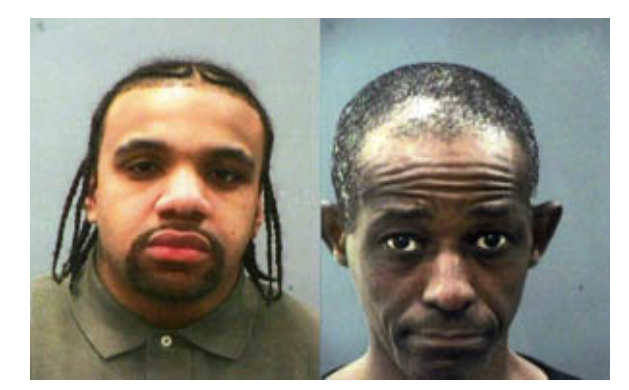
No Way, Lynae: Prison Guard’s Attempt to Plead Guilty in Cell-Phone Case Denied

By Van Smith

Published by City Paper, Dec. 10, 2009

Image-1

Warren Brown is highly exercised on Dec. 9, as he returns to the defense table from Baltimore City Circuit Court Judge David Young’s bench. “I’ll say for the record, your honor,” the criminal-defense attorney declares, “that the state can forget about any help from this young lady.”

Brown is referring to his client, 21-year-old former prison guard Lynae Chapman (pictured), who’s in court for her arraignment on misdemeanor charges that she helped procure a cell phone for an inmate—22-year-old murder suspect Ray Donald Lee, an alleged Black Guerrilla Family gangmember who is Chapman’s boyfriend and the father of her unborn child—at the Baltimore City Detention Center, where she worked until her Oct. 23 indictment (“A Big No-No,” Nov. 4). Chapman, as Brown makes clear, wants to plead guilty, but, due to whatever just transpired at a 10-minute bench conference, the judge won’t accept the plea, so Chapman’s case is going forward to a trial scheduled for Feb. 12.

“We’re prepared to plead guilty today,” Brown continues, “but she’s gonna be continually held [in detention] until the next trial date, and the state’ll come up with some reason to postpone. They’re coming up with a reason to postpone a guilty plea! Which, I mean, when have we not allowed individuals to plead guilty unless we have some issue with regard to their competency? The state acts as if they have a right to prohibit a person from pleading guilty! They have a factual basis for the court accepting the plea.

“Quite frankly, as the state knows,” Brown says, “it’s not a question of guilt or innocence. They’ve got a very, very, very, very good case against her. Absolutely. And so we don’t intend to go to trial. We want only to resolve this as soon as possible and take our lumps.” He adds that his client is not interested in pursuing a deal in exchange for pleading guilty: “I mean, no deals, all bets are off.”

The rationale behind the judge’s refusal to allow Chapman’s attempt to plead guilty presumably was discussed during the bench conference that immediately preceded Brown’s open-court diatribe. City Paper on Dec. 10 attempted to learn what was discussed by viewing the videotape of the proceeding at the court reporter’s office, as has often been done in the past. But under new rules instituted two months ago, the staff there explained, bench conferences are deleted from recordings of court proceedings prior to public viewing, so the discussion about Chapman’s case remains a secret between the state, the defense, and the judge.

The unusual twist is not the first odd turn in Chapman’s case. A strong indication that there’s more going on than meets the eye came from the spokesman for Chapman’s former employer, the Maryland Department of Public Safety and Correctional Services. Mark Vernarelli declined to comment on the case after her indictment, saying that to do so “would jeopardize other law-enforcement agencies’ investigations.” In addition, the court file of Chapman’s case is not available for public review at the clerk’s office—indeed, the case is not even listed on the on-line Maryland Judiciary Case Search, the main source of information about court cases. City Paper‘s reporting has been possible only via open-court proceedings for Chapman’s bail review and arraignment.

Also strange was the prosecutor’s behavior after Chapman’s arraignment hearing, during which Brown did virtually all of the on-the-record speaking. City Paper had been unable to hear her name when she stood to call the case, and, after the hearing was over, asked her to provide it. She repeatedly refused, suggesting that City Paper go look it up in the court file. When City Paper explained that the file in Chapman’s case is not publicly available, she again refused to identify herself. In a Dec. 10 e-mail, Baltimore City State’s Attorney spokesman Joseph Sviatko disclosed the prosecutor’s name: Nancy Olin.

At the end of the arraignment hearing, Brown does the only thing he can do: He pleads not guilty on behalf of his client and requests a jury trial. Chapman, with her hair pulled back tight in a bun, sits beside him and signs the necessary paperwork, struggling with her handcuffs to do so. She’s in full restraints—her ankles, wrists, and mid-section are chained—and her pregnant belly shows prominently through her gray Department of Corrections sweatsuit. “You gotta hold on, baby-doll,” Brown tells her, before she is escorted out of the courtroom.

“A Big No-No”: Judge sets $1 million bail for prison guard indicted for misconduct

By Van Smith

Published by City Paper, Nov. 4, 2009

Image-1

Lynae Chapman, a 21-year-old correctional officer for the Baltimore City Detention Center (BCDC), is obviously pregnant as she stands before Baltimore City Circuit Court Judge John Prevas on Oct. 27. The father of her unborn child, concedes Chapman’s defense attorney Lawrence Rosenberg, is 22-year-old murder suspect Ray Donald Lee, a Black Guerilla Family (BGF) gang member for whom Chapman (pictured) is accused of procuring a cell phone while he remains jailed pending trial. According to a court reporter’s video of the hearing, prosecutor Tonya LaPolla says that Chapman was indicted on Oct. 23, after a search of Lee’s cell turned up the cell phone and “numerous letters from” Chapman.

Though Chapman is charged with misdemeanors–obstruction of justice, two counts of misconduct in office, and delivering contraband–LaPolla points out that the misconduct charges are common-law crimes for which there is no maximum penalty, and asks for “at least $500,000 bail.” Prevas–saying “cell phones in a correctional setting are a big no-no”–sets it at $1 million, “secured by real-estate only, no corporate surety.”

Department of Public Safety and Correctional Services spokesman Mark Vernarelli’s statement about the case suggests that the charges against Chapman are part of larger, multi-agency probe. “At this point,” Vernarelli writes in an Oct. 26 e-mail sent in response to City Paper‘s questions, “the case is at a critical juncture, and to comment further would jeopardize other law-enforcement agencies investigations.” Though LaPolla told Judge Prevas that Chapman was fired the day she was indicted, Vernarelli says she’s been placed on administrative leave.

The issue of prison guards suspected of aiding inmates’ criminal conduct has attracted public attention this year. In April, federal indictments against two dozen alleged members of the BGF (“Black-Booked,” Feature, Aug. 5) named three correctional officers, who have since pleaded guilty to assisting BGF inmates with their alleged drug-dealing and extortion conspiracy. In early October, a federal judge ruled that inmate Tashma McFadden’s lawsuit, which alleges that prison guard Antonia Allison set him up for a beating and stabbing by inmate gang members, should go to a jury. Evidence in the case shows that, nearly three years ago, after Lt. Santiago Morales wrote confidential reports naming 16 guards suspected of gang ties, BCDC warden William Filbert ordered that such reports cease (“Ganging Up,” Mobtown Beat, Oct. 21).

During Chapman’s bail-review hearing, LaPolla lays out the state’s facts about Chapman’s conduct. The investigation “began with a homicide,” LaPolla explains, that occurred on Monday, June 29–the alleged murder-for-hire of 28-year-old Tavon Walker, who was shot just before 10 a.m. on the 2100 block of Brighton Street, near Carver Vocational-Technical High School. Ray Lee and his 26-year-old co-defendant, Quinard Henson, were indicted for killing Walker in early August.

“Ray Lee drove the shooter to the location, waited, and then drove the shooter away,” LaPolla says, recounting how Walker’s killing is alleged to have occurred. Chapman, she says, was the registered owner of the vehicle.

When Lee and Henson were brought in on the charges, LaPolla recounts, Lee “began yelling obscenities and threats” at Henson, “regarding whether or not [Henson] had given a statement to police, and he did this in the presence of detectives.”

After Lee’s cell at the detention center was searched on Sept. 29, turning up the cell phone, LaPolla continues, the phone’s log showed calls had been made between Chapman and Lee. A search warrant executed at Chapman’s home, in the Wakefield neighborhood near Leakin Park in West Baltimore, turned up a receipt for the Sept. 24 purchase of the phone found in Lee’s jail cell. Chapman, LaPolla says, then gave a taped statement to police in which “she admitted she had almost daily contact with Ray Lee while he was incarcerated” and that Lee’s “brother purchased the cell phone and gave it to her, and she then took it to another party and paid them to deliver it to Ray Lee, the homicide suspect.”

Lee has been charged for possessing the phone, as well as other contraband, as a result of the Sept. 29 search of his cell. Court records in that case say that Christopher Nickel, a detective sergeant with the Department of Public Safety and Correctional Services Internal Investigative Unit found “a cellular phone with charger that was secreted beneath a mattress” in Lee’s cell. The records indicate that he also found “hand fashioned ‘baggies,'” seven containing “loose tobacco” and 16 containing “a green/brown leafy matter” that Nickel recognized to be marijuana. The packaging, the case record continues, is “indicative of an intent to distribute” the tobacco and the marijuana, both of which are deemed contraband in the prison system.

At Chapman’s hearing, LaPolla tells Judge Prevas that “this is a very serious case,” arguing that the facts “weigh in favor of no bail or a very substantial bail.” Chapman, she continues, admitted to arranging the cell phone’s delivery to Lee, who is “a known BGF member,” just as discovery in the murder case against him was about to divulge whether or not his co-defendant made statements to police.

Chapman’s freedom, LaPolla argues, presents a risk “to the safety of any potential witnesses in the homicide case” against Lee.

“[Chapman] has chosen to affiliate herself with a known gangmember, a murder suspect who is an inmate at the detention center where she, until recently, worked–even at the risk of her job and her own freedom,” LaPolla concludes. “She will do absolutely anything to assist him.”

Rosenberg argues for a “reasonable bail” for Chapman, who he says “is surely not a flight risk,” and “I assume not a danger to anyone.” Pointing out that she has no prior criminal history, a high-school education, and a 2-year-old child, Rosenberg attempts to paint a picture of Chapman as a naïve young mother who was dating Lee–and pregnant by him–before he was arrested for the murder of Walker. She “cooperated with police” investigating her ties to Lee, Rosenberg says, adding that “her life is potentially ruined. She’s shamed herself, shamed everyone in her family.”

Prevas, in preparing to rule on the matter, calls Chapman’s charges “extremely serious.”

“If anything the state said is true, it appears that she would be enabling a dangerous [alleged] killer not only to try to avoid the consequences of the killing for which he’s been indicted, but also to attempt to subvert the trial,” he says, adding that if Chapman provided Lee with a cell phone or helped him get one, “that is a threat to society’s ability to be able to protect itself.”

In announcing Chapman’s $1 million bail, he says, “If she can’t even respect the rules of her job, she’s not going to stick around in Baltimore” to answer the charges.

Chapman’s arraignment is scheduled for Nov. 20.

Down for the Count: Defendants sentenced in Black Guerrilla Family case

By Van Smith

Nov. 25, 2009

IMG_7520

“What’s up, ma!” Marlow Bates (pictured) calls out to his mother seated in a courtroom gallery.

“Love you, too, Marlow,” she calls back, as Bates is led off by federal marshals to begin a 46-month sentence for his role in an alleged drug-dealing conspiracy led by the Black Guerrilla Family (BGF) prison gang (“Black-Booked,” Feature, 8/5/2009).

The mother-and-son exchange occurred on Nov. 17, after the 23-year-old Bates appeared before U.S. District Court Judge William Quarles to hear his sentence for his involvement in the conspiracy.

On Aug. 28, Bates pled guilty to being part of the conspiracy, and as part of his plea agreement, he admitted to being “determined to be engaged in the distribution of narcotics” on behalf of the BGF and its Maryland leader, veteran inmate Eric Brown, “inside the Maryland Correctional System and in Baltimore City.” He also admitted to conspiring to distribute “more than 40 grams, but less than 60 grams of heroin.”

Bates has been detained since April, and his stint in prison appears to have improved both his health and his outlook on life: In court, he is alert and smiling, and his hair is neatly cropped. This is in stark contrast to his booking photo, taken when he was arrested, in which he looks worn and haggard–a comparison Bates’ attorney, Christopher Davis, points out to the judge during the hearing.

“I’m astounded at how different he is than how he looks in the photo that appeared in the City Paper,” Davis says, eager to convince the judge that Bates “sees something very, very wrong with how his life has been going.”

Davis tells Quarles that Bates’ “chaotic upbringing” and “rocky road” as a youngster contributed to the circumstances that led to his arrest. The attorney contends that his client’s incarceration served as “a wake-up call” for the young man, who “entered a very early plea in this case, and has readily accepted responsibility.”

Bates was the second of seven BGF defendants to plead guilty, and the second to appear for sentencing. The first was Lakia Hatchett, who entered her guilty plea on Aug. 27 and received her sentence–18 months in prison, followed by two years of supervised release–on Nov. 13. Court records show that agents seized 10 grams of heroin and two scales when they searched Hatchett’s Charles Village apartment in April.

According to her plea agreement, the 29-year-old Hatchett was “a wholesale customer of heroin from Kevin Glasscho,” the accused leader of the BGF’s drug-dealing activities on the streets, and “conspired to distribute more than 20 grams” of the drug. A pre-sentence memorandum to Quarles emphasized Hatchett’s acceptance of responsibility, remorse, and cooperation with authorities, while making note of her 4.0 grade-point average in high school, her college coursework, and her employment history aiding the developmentally disabled.

When it comes time for Bates to speak for himself, he tells Quarles, “I just want to apologize.”

Assistant U.S. Attorney Clinton Fuchs recommends a prison sentence of 46-57 months for Bates–the amount suggested by the federal sentencing guidelines. Quarles rules that “the low of end of the guideline is appropriate” and orders Bates to prison for 46 months, followed by three years of supervised release, with conditions that he participate in drug-and-alcohol treatment and screening, along with training to receive his GED.

Afterward, outside the courtroom, Bates’ friends and family listen as Davis explains that the sentence is much better than the 30 to 40 years that others in the case are likely to face, should they be convicted by a jury.

Davis confirms, when asked by a reporter, that his client is the son of Marlow Bates, a famous drug-dealer in Baltimore’s crime annals, who is still serving a sentence that began in the 1980s.

“That did not help when he was arrested,” Davis says.

The elder Bates’ fame was elevated by the HBO series The Wire, which portrays a drug-dealing character named Marlo Stanfield. According to a 2006 City Paper interview with The Wire‘s David Simon, the character’s name is a composite of the elder Bates and Timirror Stanfield. Both were targets of Wire co-creator Ed Burns when he was a Baltimore Police detective.

In addition to Bates and Hatchett, five other BGF co-defendants have pleaded guilty, leaving 17 who remain headed for trial. A 22-year-old former prison guard, Asia Burrus, entered her guilty plea in September, admitting to helping the BGF’s prison-based drug conspiracy. Also in September, 41-year-old Darryl Dawayne Taylor (the son of BGF co-defendant Joe Taylor-Bey) admitted to helping move BGF drugs. In October, former prison guard Musheerah Habeebullah, 27, and former correctional employee Takevia Smith, 24, entered their pleas. And on Nov. 12, 26-year-old Terry Robe–another former prison guard who, according to a plea agreement, was caught trying to smuggle to cell phones into prison for Eric Brown–admitted her guilt.

Family Matters: Black Guerrilla Family prison-gang case nets four guilty pleas

By Van Smith

Published by City Paper, Sept. 30, 2009

IMG_7520-2

Four of the two-dozen alleged Black Guerrilla Family (BGF) prison-gang members indicted in Maryland federal court in April pleaded guilty recently before U.S. District Court Judge William Quarles. Lakia Hatchett was the first to do so, pleading on Aug. 27, followed by Marlow Bates (pictured on left) on Aug. 28, Darryl Dawayne Taylor on Sept. 9, and, most recently, former prison guard Asia Burrus, who pled on Sept. 16.

One of the BGF co-defendants remains a federal fugitive: 60-year-old Roosevelt Drummond (pictured on right), charged with robbery and drug-dealing.

The BGF indictments–one for a drug-dealing conspiracy headed by Kevin Glasscho, who is charged as the BGF drug distributor, and the other, led by imprisoned Maryland BGF leader Eric Brown, for drug dealing, robbery, and firearms–have heightened awareness of the extent to which an alleged prison gang can insinuate itself in civic life (“Black-Booked,” Feature, Aug. 5). The government’s case, as revealed thus far, paints a picture of Brown as a drug-dealing extortionist who doubles as a budding gang-interventionist with a book, a nonprofit, and the endorsements of local educators. Co-conspirators include a recently released murderer who worked as a public-school mentor for troubled students, a city wastewater technician who owns a clothing boutique, and an erstwhile bar owner and mortgage broker with separate federal bank-fraud and identity-theft charges against her. Mount Vernon, the midtown Baltimore neighborhood known for its cultural institutions and historic buildings, is the setting for some of Glasscho’s drug-dealing, according to court documents, and it’s where accused BGF heroin supplier Tyrone Dow operates a luxury-car detailing business.

The first to plead guilty in the Glasscho indictment was 29-year-old Lakia Hatchett, who Judge Quarles is set to sentence on Nov. 13. When Hatchett was arrested in April, agents searched her Charles Village apartment at 2735 St. Paul St. and seized a “bag containing brown powder” and two scales, court records show. Hatchett’s plea agreement, which reveals that the seized bag contained 10 grams of heroin, describes her as “a wholesale customer of heroin from Kevin Glasscho” and states that she “conspired to distribute more than 20 grams” of the drug.

Marlow Bates’ agreement states that he conspired with Brown and others to distribute heroin, and that Bates “was determined to be engaged in the distribution of narcotics,” both in the prison system and on Baltimore’s streets. The agreement puts the specific amount of heroin involved at 40 to 60 grams, much less than the multiple kilograms that often show up in federal cases. At his April 24 court hearing, Bates fist-bumped his attorney, Christie Needleman, when she arrived at the defense table, but when he pleaded guilty in late August, he had a different lawyer, Christopher Michael Davis. Bates’ state criminal record includes convictions in gun-and-drug cases. Bates, 23, is scheduled to be sentenced on Nov. 17.

Shortly after Bates, 41-year-old Darryl Dawayne Taylor, who is scheduled to receive his sentence on Dec. 19, pleaded as well. In court in April, assistant U.S. attorney Thomas Wallner explained that Taylor is the son of co-defendant Joe Taylor-Bey, who has spent more than 30 years in prison on a murder conviction. Taylor is accused of smuggling heroin into prison by putting it in balloons and “hiding it in his rear end, or in his cheeks,” Wallner said. According to Taylor’s guilty plea, he “was intercepted discussing and arranging transactions involving the wholesale distribution of heroin, and the smuggling of heroin into various prisons” on behalf of Glasscho. As in Hatchett’s case, Taylor admits to dealing in at least 20 grams of heroin.

Asia Burrus, a 22-year-old whose sentencing is scheduled for Dec. 7, admits to helping smuggle contraband into prison that “facilitated the distribution of narcotics inside the Maryland Correctional System” by Brown and others. She also admits she “was aware that Eric Brown was the leader” of the BGF in Maryland and “that the BGF is a violent, nationwide gang that has established a powerful presence within the Maryland Correctional System and on the streets of Baltimore City.” She was arrested in April at downtown Baltimore’s Maryland Transition Center, where she worked as a guard.

Meanwhile, on Sept. 3, a federal forfeiture case was filed against $4,659 in cash taken from Dow, and state prosecutors have already forfeited a 2005 Acura belonging to Glasscho. On Sept. 24, Glasscho’s girlfriend, BGF co-defendant Cassandra Adams, filed a motion to be severed from the case, claiming the evidence produced so far fails to put her in the conspiracy.

Black-Booked: The Black Guerrilla Family prison gang sought legitimacy, but got indictments

By Van Smith

Published in City Paper, Aug. 5, 2009

“I’m a responsible adult,” 41-year-old Avon Freeman says to Baltimore U.S. District Court Magistrate Judge James Bredar. The gold on his teeth glimmers as he speaks, his weak chin holding up a soul patch. He’s a two-time drug felon facing a new federal drug indictment, brought by a grand jury in April as part of the two conspiracy cases conducted by the U.S. Drug Enforcement Administration (DEA) in Maryland involving the Black Guerrilla Family (BGF) prison gang (“Guerrilla Warfare,” Mobtown Beat, April 22). Now it’s July 27, and Freeman, standing tall in his maroon prison jumpsuit, believes himself to be a safe bet for release. He’s being detained, pending an as-yet unscheduled trial, at downtown Baltimore’s Supermax prison facility, where he says he fears for his safety.

The particulars of Freeman’s fears are not made public, though Bredar, defense attorney Joseph Gigliotti, and Assistant U.S. Attorney Clinton Fuchs have discussed them already during an off-the-record bench conference. Danger signs from prison first cropped up in the case immediately after it was filed, though, when Fuchs’ colleague on the case, James Wallner, told a judge on Apr. 21 that the BGF had allegedly offered $10,000 for a “hit placed out on several correctional officers” and “all others involved in this investigation, and that would include prosecutors” (“BGF Offers $10,000 for Hits, Prosecutor Says,” The News Hole, April 23).

In open court, though, Gigliotti has said only that Freeman feels “endangered” by “conditions” at the Supermax, that “several of his co-defendants” also are housed there, and that “at a minimum,” Bredar should “put him in a halfway house, or at home with his sister under electronic monitoring.” The judge disagrees, but Freeman–against Judge Bredar’s adamant warning that it’s a “bad idea” and that “any statement you make could be used against you”–still wants to speak.

“I did have a job–I was working,” Freeman says of his days before his BGF arrest, and says of his family and friends, about 20 of whom are watching from the benches of the courtroom gallery, “I got the kids here, responsible adults here.” He declares he’s “not a flight risk” and says he “always come[s] to court when I’m told.” He stresses, “I am a responsible adult.”

Freeman’s doing what many people in his shoes do. He may be accused of being caught on wiretaps arranging drug transactions and of being witnessed by investigators participating in one. The prosecutor may say a raid of Freeman’s home turned up scales and $2,000 in alleged drug cash. But Freeman is still claiming to be a hard-working family man, a legitimate citizen, as safe and reliable as the next guy.

The details of the more than two dozen defendants indicted in the BGF case, filed against a Maryland offshoot of BGF’s national organization, suggest Freeman is not the only one among them who craves legitimacy. Information from court records, public documents, and the defendants’ court appearances over the past three months make some appear as “responsible adults” leading productive lives–or at least, like Freeman, as wanting to be seen that way.

Bredar sides with the government on the question of letting Freeman out of the Supermax. “There’s a high probability of conviction” based on the evidence against Freeman, Bredar says, adding that, given Freeman’s well-established criminal past, he poses a danger to society. So back Freeman goes to face his BGF fears. “I love you all,” he calls out to his 20-or-so family members and friends in the gallery, as U.S. marshals escort him out of the courtroom. “Love you, too,” some call back.


Take, for instance, Deitra Davenport. For 20 years, until her April arrest, the 37-year-old single mom worked as an administrator for a downtown Baltimore association management firm. Or 42-year-old Tyrone Dow, who with his brother has been running a car detailing shop on Lovegrove Street, behind Mount Vernon’s Belvedere Hotel, ostensibly for nearly as long. Mortgage broker and reported law student Tomeka Harris, 33, boasts of having toy drives and safe-sex events at her Belair Road bar, Club 410. Baltimore City wastewater technician Calvin Renard Robinson, 53 years old and a long-ago ex-con, owns a clothing boutique next to Hollins Market. Even 30-year-old Rainbow Lee Williams, a recently released murderer, managed to get a job working as a mentor for at-risk public-school youngsters.

The trappings of legitimacy are most elaborate, though, with Eric Marcell Brown, the lead defendant in the BGF prison-gang indictment. By the time the DEA started tapping his illegal prison cell phones in February, the 40-year-old inmate and author, who was nearing the end of a lengthy sentence for drug dealing, had teamed up with his wife, Davenport, to start a non-profit, Harambee Jamaa, which aims to promote peace and community betterment. His The Black Book: Empowering Black Families and Communities came out last year and, until the BGF indictments shut down the publishing operation, it was distributed to inmates and available to the public online from Dee Dat Publishing, a company formed by Brown and Davenport. Court documents indicate that at least 700 to 900 copies sold, at $15 or $20 a pop. The book has numerous co-authors, including Rainbow Williams.

According to the BGF case record, though, they’re all shams. Davenport, for instance, helps smuggle contraband into prison, prosecutors say, and serves as a “conduit of information” to support Brown’s violent, drug-dealing, extortion, and smuggling racket. The Black Book and Harambee Jamaa, the government’s version continues, are fronts for Brown’s ill-gotten BGF gains, which, thanks to complicit correctional employees, are derived from operating both in prisons and on the outside. As a result, the government contends, Brown appears to have had access to cigars, good liquor and Champagne, and high-end meals in his prison cell.

The alleged scheme has Dow supplying drugs to 46-year-old Kevin Glasscho, the lead defendant in the BGF drug-dealing indictment and the only one of the co-defendants who is named in both indictments. Freeman and Robinson, meanwhile, are accused of selling Glasscho’s drugs. Williams, the school mentor, is said to oversee the BGF’s street-level dealings for Brown, including violence. Harris is described as Brown’s girlfriend (even while her murder-convict husband, inmate Vernon Harris, is said by investigators to be helping Brown, too); among other things, she helps with the BGF finances. Most of the rest were inmates already, or accused drug dealers, smugglers, and armed robbers, except for the three corrections employees and one former employee who are accused as corrupt enablers, betraying public trust to help out in Brown and Glasscho’s criminal world. Only one, 59-year-old Roosevelt Drummond, accused of robbery and drug-dealing, remains at large.

Looking legit allows underworld players to insinuate themselves into the shadow economy, where the black market, lawful enterprise, and politics come together. Sometimes, though, people look legit simply because they are legit, even though they’re criminally charged. If that’s the case with any of the BGF co-defendants, they’re going to have their chance to prove it, just as the prosecutors will have theirs to prove otherwise. An adjudicated version of what happened with the BGF–be it at trial or in guilty pleas–eventually will substantiate who among them, if any, are “responsible adult[s].”


Glimpses of Brown’s leadership style are documented in the criminal evidence against him, including a conference call last Nov. 18 between Brown and two other inmates, “Comrade Doc” and Thomas Bailey, each on the line from different prisons.

“Listen, man, we [are] on the verge of big things,” Brown said, and Bailey assured him that “whatever you need me to do, man, I’m there.” “This positive movement that we are embarking upon now . . . is moving at a rapid pace,” Brown continued, and is “happening on almost every location.” He exhorted Bailey with a slogan, “Revolution is the only solution, brother,” and promised to send copies of his book, explaining how to use it as a classroom study guide.

The Black Book is a self-described “changing life styles living policy book” intended to help inmates, ex-cons, and their families navigate life successfully. Its ideological basis is rooted in the 1960s radical politics of BGF founder George Jackson, the inmate revolutionary in California who, until his death in 1971, pitched the same self-sufficient economic and social separatism that The Black Book preaches. Throughout, despite rhetorical calls for defiance against perceived oppression and injustice, it promotes what appears to be lawful behavior–with the notable exception of domestic abuse, given its instructions that the husband of a disobedient wife should “beat her lightly.”

The BGF is not mentioned by name in The Black Book, which instead refers to “The Family” (or “Jamaa,” the Swahili equivalent), explaining that it is not a “gang” but an “organization.” The back cover features printed kudos from local educators, including two-time Democratic candidate for Baltimore mayor Andrey Bundley, now a high-ranking Baltimore City public-schools official in charge of alternative-education programs. His blurb praises Brown for “not accepting the unhealthy traditions of street organizations aka gangs” and for trying “to guide his comrades toward truth, justice, freedom, and equality.”

Tyrone Powers, director of the Anne Arundel Community College’s Homeland Security and Criminal Justice Institute, and a former FBI agent, offers back-cover praise for The Black Book, describing it as an “extraordinary volume” and calling Brown and his co-authors “extraordinary insightful men and leaders.”

Powers says in a phone interview that he knows Brown “by going into the prison system as part of an effort to deal with three or four different gangs.” Powers is “totally unapologetic” about endorsing The Black Book.

“The gang problem is increasing,” Powers explains, “and we need to have direct contact with the people involved, or who have been involved. We need to be bringing the gang members together and tell them there’s no win in that, except for prison or the cemetery. Gang members can be influential in anti-gang efforts, and we have got to utilize them. Are we calling them saints? No, we are not. My objective is to reduce the violence, and I don’t think sterile academic programs work as well as engaging some of our young people, like Eric, as part of a program.”

In early May, nearly a month after Brown was indicted, Bundley explained his ties to the inmate to The Baltimore Sun. “I’ve seen [rival gangs] come together in one room and work on the lessons in The Black Book to get themselves together,” he was quoted as saying. “I know Eric Brown was a major player inside the prison doing that work. The quote on the back of the book is only about the work that I witnessed: no more, no less.”


The DEA’s original basis for tying Brown to BGF violence came from a confidential informant called “CS1” in court documents. A BGF member who’s seeking a reduced sentence, CS1 starting late last year gave a series of “debriefings” that lasted into early 2009. The investigators say in court records that CS1’s information has a track record of reliability, and the story checked out well enough to convince a grand jury to indict and a handful of judges to sign warrants as the case has progressed.

“BGF is extremely violent both inside and outside prison,” investigators recounted CS1 saying, “and is responsible for numerous crimes of violence and related crimes, including robbery, extortion, and murder for hire.” But “historically BGF has not been well-organized outside of prison,” CS1 asserted, and now the BGF “is attempting to change this within Baltimore, Maryland by becoming more organized and effective on the streets.” Brown “is coordinating and organizing BGF’s activities on the streets of Baltimore” and The Black Book “is a ploy by Brown to make BGF in Maryland appear to be a legitimate organization and not involved in criminal activity,” CS1 said, even though “Brown is a drug trafficker” and the BGF “funds its operations primarily by selling drugs.”

If CS1 is correct, then Brown is not as he was perceived by his supporters. Could it be that yet another purported peacemaker is actually prompting violence? It happened in Los Angeles last year, when a so-called “former” gangmember who headed a publicly funded non-profit called No Guns pleaded guilty to gun-running for the Mexican Mafia prison gang. It may have happened in Chicago last year, when two workers for the anti-violence group Ceasefire, which uses ex-gangmembers as street mediators, were charged in a 31-defendant gang prosecution.

Brown, with his book and his non-profit organization, wasn’t up and running at nearly the same scale as No Guns and Ceasefire, and there’s no evidence he was grant-funded. He was only just beginning to set up his self-financed positive vibe from inside his prison cell. But his is the same street-credibility pitch as in Los Angeles and Chicago: redeemed gangsters make effective gang-interventionists because the target audience will respect them more. Clearly, the approach has its risks, and Brown may end up being another example of that.

“It’s a dilemma,” Powers says of the question of how to prevent additional crimes from being committed by gang leaders who claim redemption and profess to work for reductions in gang-related violence and crime. “It has to be closely monitored.” As for Brown’s indictment, the lessons remain to be seen: “I don’t know if I can make it make sense,” Powers says.


For dramatic loss of legitimate appearances, Tomeka Harris may take the cake among the BGF co-defendants. She’s been on the ropes since late last year, when in December she caught federal bank-fraud and identity-theft charges in Maryland, in a case involving Green Dot prepaid debit cards that turned up later as the currency for the BGF’s prison-based economy. But from then until her April arrest in the BGF case, Harris had been out on conditional release–and making a good impression in public.

Media attention had been focused on Club 410, at 4509 Belair Road in Northeast Baltimore near Herring Run Park, because the police, having noted that violence was on the rise in its immediate vicinity, were trying to shut it down. At a March 26 hearing on the matter, Harris fought back, and The Sun‘s crime columnist, Peter Hermann, wrote that she “handled the case pretty well, calling into question some police accounts of the violence.” Herman described her as a “law student representing the owners,” and Sun reporter Justin Fenton, in his coverage, called her “the operator and manager” of the club. Not in the stories was the fact that she’s out on release, pending trial in a federal financial-fraud case in Baltimore.

Club 410’s liquor-board file lists as its licensees not Harris, but city employee Andrea Huff and public-schools employee Scott Brooks. Harris is referred to as its “owner” only in a March 3 police report, in which she “advised that she and her husband are the current owners of Club 410” and that “she has no dealings with the previous owners for several years.” Making matters murkier is the fact that “Andrea Huff,” whose name is on the liquor license is Harris’ alias in her BGF indictment. No wonder Sun writers were confused–Harris seems to have wanted it that way.

Harris made another public appearance before the BGF indictment came down in April. This time, it was in connection with John Zorzit, a local developer whose Nick’s Amusements, Inc., supplies “for amusement only” gaming devices to bars, taverns, restaurants, and other cash-oriented retail businesses around the region. The feds weren’t buying Zorzit’s non-gambling cover, though, and, based on a pattern of evidence that suggests he’s running a betting racket, in late January they filed a forfeiture suit and sought to seize as many of Zorzit’s assets as they could find. In the process, they raided his office on Harford Road, and there in the files were documents pertaining to Tomeka Harris and Club 410. Turns out, a Zorzit-controlled company owns Club 410, and ongoing lawsuits indicate Harris and Zorzit have had a falling out (“The 410 Factor,” Mobtown Beat, April 22).

Meanwhile, Harris still found the time to be Eric Brown’s girlfriend, according to the BGF court documents, in addition to helping the BGF smuggle, communicate, and arrange its finances. While her husband, alleged BGF member Vernon Harris (who has not been indicted in the BGF conspiracies), was in jail for murder, Tomeka Harris is said by investigators to have conducted “financial transactions involving ‘Green Dot’ cards on behalf of BGF members.” Court documents also say “one of her other business ventures was establishing bogus corporations for close associates so that they could obtain loans from banks in order to purchase high-priced items such as vehicles.”

Despite the vortex of drama that has been Harris’ life of late, she seems calm and collected at her first appearance in the BGF case on April 16. Her straight, highlighted hair hangs down the back of her black hoodie, heading south toward the tattoos peeking out from her low-hanging black hiphuggers; she’s wearing furry boots. She’s unflappable when a parole officer wonders about her claims of being a mortgage broker, when the conditions of her release in the fraud case don’t allow it.

But on June 4, a court hearing is called to try to untangle the various issues involved in Harris’ two federal indictments, and she comes undone. Her wig is gone, as are the boots and street clothes. She’s wringing her hands and holding her forehead as she talks with her lawyer, looking both exhausted and agitated. Finally, as the judge orders her detained pending trial, Harris starts crying.


The historic Belvedere Hotel has had its troubles over the years since is past glories, but it remains a highly visible symbol, like the Washington Monument, of the grandeur of Baltimore’s Mount Vernon neighborhood. Its presence in the BGF picture is a statement as to how far a prison gang’s reach may extend.

Club 410’s liquor board file contains records of 2007 drug raids carried out at Club 410 and Room 1111 at the Belvedere Hotel in Mount Vernon. The records state that evidence taken from Club 410 (a scale, razor blades, and a strainer, all with residue of suspected heroin) match evidence taken from the secure, controlled-access Belvedere Hotel condominium (a handgun, heroin residue, face masks, a heat sealer). That evidence was traced to a suspect, Michael Holman, with ties to both the Belvedere Hotel room and Club 410. Though it is unclear what, if any, ties the raids have to BGF’s currently indicted dealings, they call to mind instances in the BGF case where the Belvedere Hotel appears.

BGF court documents say Tyrone Dow, drug supplier for Kevin Glasscho’s BGF drug dealing conspiracy, “is the owner of Belvedere Detailers,” which is “located at 1014 Lovegrove Street” in Baltimore. A late-July visit there reveals that it is still operating, and that the property is right next to the rear entrance of the Belvedere Hotel parking garage.

In June 2008, Dow and his brother were highlighted in a Baltimore Examiner business article about the fortunes of Baltimore-area “garage-based premium car-wash services” during an economic downturn. Credited for Belvedere Detailers’ ongoing success is “client loyalty for the business,” which the article says Dow and his brother have operated “out of the same brick garage for more than 15 years.”

Public records of car-detailing shops operating at the Lovegrove Street location, though, don’t list Belvedere Detailers, despite the Examiner article’s claim that it’s been there for so long. In fact, no company by that name exists in Maryland’s corporate records. Instead, Mount Vernon Auto Spa LLC, headed by Hadith Demetrius Smith, has been operating there. Smith, court records show, was found guilty in Baltimore County of drug dealing in 2007, a conviction that brought additional time on a federal-drug dealing conviction from 2000, which itself violated a 1993 federal drug-dealing conviction in Washington, D.C.

City Paper‘s attempts to establish clear ties, if any exist, between Belvedere Detailers and Mount Vernon Car Wash, were unsuccessful. But the BGF investigators maintain in court records that Dow’s detailing shop at that location is tied to the prison gang’s narcotics dealings.

The Belvedere Hotel also figured in BGF investigators’ wiretap of a conversation between two BGF co-defendants, Glasscho and Darien Scipio, about a drug deal they were arranging to hold there on March 24, according to court documents.

“Yeah you gotta come down to the Belvedere Hotel, homey,” Glasscho told Scipio, who said, “Alright, I’m gonna call you when I’m close.” Just before they met there, though, Scipio called back and told Glasscho to “get the fuck away from there” because “it’s on the [police] scanner” that “the peoples is on you,” referring to law enforcers. The alleged drug deal was quickly aborted.

Glasscho, who has a 1981 murder conviction and drug-dealing and firearms convictions from the early 1990s, is accused of being the leader of a drug-trafficking operation that smuggled drugs into prison for the BGF. As the only BGF co-defendant named in both indictments, he alone bridges both the drug-dealing and the prison-gang conspiracies that the government alleges. The contention that Glasscho was a Belvedere Hotel habitu while dealing drugs for the BGF suggests that, until the indictments came down, the prison gang was becoming quite comfortable in mainstream Baltimore life.


CS1, when laying out the BGF leadership structure for DEA investigators in late 2008 and early 2009, gave special treatment to Rainbow Williams and Gregory Fitzgerald. Williams is “an extremely violent BGF member” who has “committed multiple murders” and “numerous assaults/stabbings while in prison,” CS1 contended, while Fitzgerald “has killed people in the past” and carried out “multiple stabbings on behalf of BGF while in prison.” CS1 wouldn’t actually say they were “Death Angels,” the alleged name for BGF hitmen whose identities “only certain people know,” pointing out as well that the BGF sometimes “will employ others to act as hitmen who may or may not be ‘Death Angels.'” Nonetheless, CS1 said Williams and Fitzgerald “are loyal to and take orders from” Eric Brown.

Fitzgerald was not indicted in the BGF case, and though recently released from prison on prior charges, he has since been arrested in a separate federal drug-dealing case. Williams’ fortunes, though, had been rising since he was released from prison last fall after serving out time for a murder conviction.

When Williams was named in the BGF prison-gang conspiracy, he had a job. As his lawyer, Gerald Ruter, explained in court on April 21, Williams was working for the nonprofit Partners in Progress Resource Center, a four-day-a-week gig for $1,200 a month he’d had since he left prison. Partners in Progress works with the city’s public-schools system at the Achievement Academy at Harbor City, located on Harford Road. Ruter told the judge he’d learned from Partners in Progress’ executive director, Bridget Alston-Smith (a major financial backer of Bundley’s political campaigns), that Williams “works on the campus itself as a mentor to individuals who have behavioral difficulties and is hands-on with all of the students.”

The contrast between Williams’ post-prison job, working with at-risk kids, and his alleged dealings as a top BGF leader is striking. In early April, for instance, he’s caught on the wiretap talking with Lance Walker, an alleged BGF member whose recent 40-year sentence on federal drug-dealing charges was compounded in July by a life sentence on state murder charges. Williams confides in Walker, telling him that rumors that Williams ordered the Apr. 1 stabbing murder of an inmate are putting him in danger with higher-ups in the BGF. The next day, Williams is again on the phone with an inmate, discussing how Williams is suspected of passing along Eric Brown’s order to hurt another inmate named “Coco.” Court documents also have Williams aiding in BGF’s smuggling operation and mediating beefs among BGF rivals.

And yet, Williams, with his job, was starting to appear legitimate. When law enforcers searched his apartment in April, Williams’ dedication to Brown’s cause was in evidence. Gang literature, “a large amount of mail to and from inmates,” photos of inmates and associates, and a “handwritten copy of the BGF constitution” were found, according to court documents. But they also found 38 rounds of .357 ammo. Now, Williams is back in jail, awaiting trial.


If proven right, either at trial or by guilty pleas, the accusations against the BGF in Maryland would mean not only that Brown’s legitimate-looking “movement” is a criminal sham. It would mean that the prison gang, while insinuating itself so effectively within the sprawling correctional system as to make a mockery of prison walls, was also able to embed itself in ordinary Baltimore life. If not for the indictments, should they be proved true, one can only imagine how long it could have lasted.

Calvin Robinson might have gone undetected. But the city waste-water worker, who owns real estate next to the Baltimore Police Department’s Western District station house and next to the city’s historic Hollins Market, where his In and Out Boutique clothing store continues to operate, instead was heard on the BGF wiretap talking with Glasscho about suspected drug deals. And he was observed conducting them. And when his house was raided, two guns turned up.

Robinson at least made a good show at legitimacy during court appearances in the BGF case, unlike Freeman’s performance before Judge Bredar. His lawyer played up Robinson’s city job, and even had his supervisor, Dorothy Harris, on hand in the courtroom to attest to his reliability at work. He looked poised and professional, with his clean-shaven head, trimmed mustache, and designer glasses. But just like Freeman, Robinson, who has drug convictions from the early 1990s, lost his plea to be released and was detained pending trial.

Of the 25 BGF defendants, five were granted conditional release. All of them women, they include three former prison guards, Davenport, suspected drug dealer Lakia Hatchett, and Cassandra Adams, who is Glasscho’s girlfriend and alleged accomplice. All were deemed sufficiently “responsible adults” to avoid being jailed before trial, so long as they continue to meet strict conditions. They, unlike the rest of their co-defendants, were found neither to be a threat to public safety nor a risk of flight, should they await trial outside of prison walls. Given the sprawling conspiracies, one can imagine why Freeman’s in fear at the Supermax–and why the released women should be breathing a sigh of relief.

The Black Book: Feds say prison gang’s self-improvement guide is a money-laundering recruitment tool

By Van Smith

Published by City Paper, May 27, 2009

IMG_7394

An overarching presence in the Black Guerilla Family (BGF) prison-gang conspiracies indicted in April by the U.S. Attorney’s Office in Maryland is not a person, but a book.

Entitled The Black Book: Empowering Black Families and Communities, the 122-page softbound publication is a revolutionary call for economic and political liberation for blacks. Eric Marcell Brown, a 40-year-old inmate of the Maryland correctional system, is the author of much of its contents, and he, along with his wife, Deitra Davenport (see “Family Portraits,” Mobtown Beat, May 27, 2009), last year incorporated Dee Dat Publishing to get The Black Book printed and distributed for sale.

Brown, Davenport, and 23 other co-defendants named in the two BGF indictments are accused of drug dealing, prison smuggling, violence, and extortion. Prosecutors say The Black Book served as a propaganda tool for gang recruitment while its sales also helped finance the BGF’s criminal activities.

The feds’ assertions about the nefarious functions of The Black Book, though, are considered over-the-top by at least one educator: Tyrone Powers, the director of Anne Arundel County Community College’s Homeland Security and Criminal Justice Institute and an advisory board member of the Maryland Department of Juvenile Services’ Thomas J.S. Waxter Children’s Center, a detention facility for young women. A former FBI agent and Maryland State Police trooper, Powers has a Ph.D. in sociology and justice from American University and hosts a radio show called “The Powers Report.”

The back cover of The Black Book has the following endorsement from Powers:

These are difficult days that require concrete, specific, effective solutions. This book provides that and more. If we want to win, to change our condition, our situation and the life chances of this generation, of our children and of our children’s children then we must read, analyze, think, learn and apply the lessons, concepts and practical solutions that are apart [sic] of this extraordinary volume written by four extraordinary insightful men and leaders.

Powers, in a mid-May phone interview, explains that “I met Eric [Brown] by going into the prison system as part of an effort to deal with three or four different gangs. Eric and others decided to put together this book, and it was all positive. I endorsed it because it could have some impact on the increasing gang problem, because people would read and understand this, as opposed to more academic writing that doesn’t connect with young people.

“I am totally unapologetic about endorsing this book and totally unapologetic about meeting Eric Brown,” Powers continues, “because it serves a positive purpose–to reduce the violence. This book is a means to that end. I don’t know anything about the financing end of it, and as for it being used for gang recruitment–I don’t know how it could be used for recruitment. It is all about building peace and tranquility.”

Also endorsing The Black Book on its back cover is former two-time Baltimore City mayoral candidate Andrey Bundley, a Baltimore City Public Schools administrator who oversees the city’s alternative education programs. “Kudos, to Eric Brown (E.B.) for not accepting the unhealthy traditions of street organizations aka gangs,” Bundley wrote. “He has availed his leadership capacity in Jamaa to guide his comrades toward truth, justice, freedom and equality.”

Jamaa, according to The Black Book, is a Swahili word for “family” that is defined as “an organization geared towards revitalizing our people and our hoods.” Brown and Davenport last year formed a non-profit organization called Harambee Jamaa Inc., which, according to its incorporation papers, intends “to education, invigorate and liberate our people from poverty, crime, and prison.”

“I’ve seen [rival gangs] come together in one room and work on the lessons in The Black Book to get themselves together,” Bundley told The Baltimore Sun in early May. “I know Eric Brown was a major player inside the prison doing that work. The quote on the back of the book is only about the work that I witnessed: no more, no less.”

The Black Book, according to its introduction, “is designed to make our people aware of the vision of Comrade George Jackson and the struggle that he lived and died for.” Jackson, a Black Panther Party member, founded the BGF as a Marxist prison gang in 1966, while serving time at San Quentin State Prison in California for an armed robbery conviction. Jackson was shot to death at San Quentin in 1971, in an incident that also left five others dead; Jackson was armed with a pistol when he was killed. At the time, he was awaiting trial on charges that he murdered a prison guard.

The four chapters of The Black Book include study guides and poems venerating a value system that seeks to uplift black communities, including incarcerated people. It invokes revolutionary ideals from the Black Power, Black Liberation, and Black Nationalism movements of the 1960s and melds them with instructions on how to live life. It calls itself a “living policy book,” and includes lessons on civics, economics, and gender roles. The book says, for instance, that a Jamaa woman is to be a “firearm expert,” who has “gun in hand, ready to take on all transgressors.” When a wife is disobedient, The Black Book says the husband first should “verbally reprimand her,” then “refuse to sleep with her,” “beat her lightly,” and “if these are not effective, the next step is divorce.”

During court proceedings in the BGF indictments, Assistant U.S. Attorney James Wallner has claimed that The Black Book generates profits used to underwrite BGF crimes. But Davenport’s defense attorney, Thomas Saunders, has questioned that contention. “There is no profit, considering what printing costs are,” Saunders said, adding that Davenport “used her own money” to get the book published and was not using it as a “front to funnel money” to the BGF.

Calvin Renard Robinson: City Wastewater Worker Accused of Selling BGF Drugs

By Van Smith

Published in City Paper, June 10, 2009

The phone rang at 6:59 a.m. on a Friday morning, just as 53-year-old Baltimore City wastewater plant technician Calvin Renard Robinson was heading for the shower, court records show. The March 20 call was from 46-year-old Kevin Glasscho, an ex-con now accused in Maryland as the Black Guerilla Family (BGF) prison gang’s heroin broker.

“You wanted a whole dollar or the half?” Glasscho asked. “Uh, it don’t matter,” Robinson answered, adding, “You can bring me the, um—bring it to me in two halves.” When Glasscho explained that it would be less work if he gave Robinson the “whole dollar.” Robinson agreed, and the two planned to meet after Robinson got out of the shower.

At the time, neither man knew that this exchange, and similarly cryptic phone calls this past spring between Robinson and Glasscho, was being recorded by law enforcers, who believed the men were using code to arrange drug deals. But in mid-April, the conversations wound up as part the evidence for two federal criminal conspiracy cases against 25 alleged members of the BGF. The gang is accused of a variety of crimes, including violence, drug-dealing, smuggling contraband, and extortion. Robinson, thanks to the intercepted phone conversations with Glasscho and the resulting surveillance, is charged with buying drugs wholesale from Glasscho.

At his first court appearances in April, Robinson had the unassuming look of the workaday bureaucrat he is, with his clean-shaven head, trimmed mustache, and glasses. Robinson’s defense attorney, Steven Wrobel, had on hand Robinson’s city Department of Public Works (DPW) supervisor, Dorothy Harris, ready to testify in support of letting Robinson go free pending trial. But the judge decided that Robinson, who has drug convictions dating from the early 1990s and was found with two handguns and ammunition when he was arrested April 15 in the BGF take-down (“Guerrilla Warfare,” Mobtown Beat, April 22, 2009), poses too much of a risk to public safety should he leave jail.

In addition to the guns—a Smith & Wesson .357 with six cartridges and a North American Arms .22 with four cartridges—court records show agents took from Robinson’s home three cell phones, a Blackberry mobile device, three sets of keys, and numerous photographs.

Robinson has owned his North Mount Street home—1102, right across Riggs Avenue from the Baltimore Police Department’s Western District station house—since 2000. Land records show his principal residence is not there, but south by about a dozen or so blocks, at 1223 Hollins St., a half-block west of Hollins Market. Robinson purchased the Hollins Street property in 2008; open for business there is the In and Out Boutique, the trade name for a clothing shore owned by Robinson’s company, Jo-Cal LLC.

Robinson’s In and Out Boutique opened on a block of Hollins Street that has long been known for drug-dealing activity (“Best Open-Air Drug Market,” Mobtown Beat, Sept. 16, 2003). In 2007 it was targeted in a major federal enforcement effort called Operation Smackdown, which closed down a $20,000 per day heroin operation there.

Deitra Davenport: Hardworking mom accused of being BGF “conduit”

By Van Smith

Published in City Paper, May 27, 2009

IMG_7519

Among the 25 inmates, ex-offenders, prison employees, and others indicted by a federal grand jury in Maryland in April as part of the Black Guerilla Family (BGF) prison-gang conspiracies (“Guerrilla Warfare,” Mobtown Beat, April 22, 2009), Deitra Davenport stands out.

She has no criminal history. She has worked at the same association-management firm for the past 20 years. She is a homeowner and the single mother of two children. The 37-year-old Davenport is the picture of an upstanding citizen. The accusations against the BGF of violence, drug-dealing, and prison smuggling clash with her squeaky-clean profile–a point that Davenport’s lawyer, Thomas Saunders, has emphasized in court repeatedly while seeking her conditional release pending trial.

Saunders says that Davenport is a “naïve, innocent party” in the BGF scheme. He says she was ensnared in a web of evidence devoid of signs that his client knew of illegal activities (except, perhaps, some smuggling of items, possibly tobacco, to BGF leader Eric Brown, though he’s quick to tell the judge during a hearing that “I’m not saying it’s true” that she even knew of this illicit activity). What began eight years ago as a pen-pal relationship between Davenport and Brown later blossomed into a Muslim form of marriage, Saunders says. He adds that Brown–if he is the criminal the government contends he is–duped Davenport, making her an unwitting player in the BGF’s allegedly criminal enterprise.

The government sees Davenport, whose nickname is “Sister D,” as a smuggler, the operator of a BGF front business that helped underwrite the gang’s operations, and an intermediary between Brown and other BGF members. Last year she and Brown published The Black Book, a handbook of BGF philosophy as part of a social movement called Jamaa (“jamaa” is a Swahili word for “family”). The book promotes economic and political self-empowerment for black communities and discusses how to confront the reality and legacy of widespread incarceration among black Americans. But law enforcers characterize it as a guidebook for gang behavior and say its sales–and therefore Davenport, as the book’s publisher–helped underwrite the violent, drug-dealing, prison-smuggling ways of the BGF in Maryland (see “The Black Book,” Mobtown Beat, May 27, 2009).

When Davenport first appeared in court on Apr. 16, she looked as out of her element as Saunders claims she is. Short and petite, with straight black hair and wearing a tidy black jacket, she did not fit in with the two other defendants next to her: 30-year-old convicted murderer Rainbow Lee Williams and 52-year-old Zachary Lee Norman, whose criminal record includes convictions for a murder conspiracy and armed robbery. But if court documents reflect the truth of the matter, Davenport knows Williams well enough to conspire with him to get contraband to Brown in prison.

At 6:15 in the morning on Apr. 16, as Davenport was being arrested, law enforcers who raided her Baltimore County home seized a .357 caliber handgun and a box of .38 caliber ammunition, according to court documents. Also seized were documents related to two companies started by Davenport and Brown: Dee Dat Publishing, which published The Black Book, and Harambee Jamaa Inc., a nonprofit that, according to its incorporation papers, was formed to “liberate our people from poverty, crime, and prison.”

During an intercepted phone conversation between Brown and Davenport, which court records say took place late at night on Feb. 26, Brown urged Davenport to “go to the firing range.” When Davenport asked “Why?” Brown told her, “bust that gun for a minute. You ain’t been out there in a while.” During court hearings, Assistant U.S. Attorney James Wallner brought this conversation up, while pointing out that The Black Book instructs women “to be proficient in the use of firearms.”

In other intercepted phone conversations, which took place in April, Brown and Davenport discussed smuggled champagne, vodka, and cigars. According to court documents, law enforcers also believe Davenport “is smuggling drugs” to Brown in prison.

After the indictments came down, Wallner announced in open court that the BGF had offered $10,000 for “hits” on correctional officers, investigators, and cooperators who helped make the case (“BGF Offers $10,000 for Hits, Prosecutor Says,” Mobtown Beat, April 23). In light of the offer, Wallner stressed Davenport’s role as a vector of BGF intelligence, suggesting that she may help get the word out that BGF money is on the table. “Davenport, because of her status as the conduit for all of the BGF,” Wallner said to the judge, “is the central location of communication among members and Eric Brown.”

The government’s take on Davenport came as a complete surprise to Davenport’s long-time employer, Thomas Shaner of the Baltimore-based association management firm, Joseph E. Shaner Company.

“To say that we are shocked, that’s just an understatement,” Shaner said in a May interview. “‘Sister D?’ Who the hell is this ‘Sister D?’

“She’s been a solid employee for 20 years,” Shaner said. “All I can guess is that she was naïve as hell and was manipulated by Eric [Brown]. I’ve never met Eric, and I was surprised to learn that Eric is in jail, and has always been in jail, even before she married him. Despite these charges, I still want to believe she’s the same person I’ve known for so long, who I considered a friend and sort of family. But people do crazy things for love.”

After debating for weeks in motions and hearings over Davenport’s detention, on May 12, Wallner and Saunders reached an agreement, and U.S. District Court magistrate judge Beth Gesner accepted it. Davenport is released to her home, where she will remain locked down pending trial, on electronic monitoring and with strict controls over her communications and conduct. In addition, Davenport’s sales of The Black Book will end and she is to have “no contact whatsoever with any inmates or codefendants,” Gesner says. The trial, which has yet to be scheduled, is estimated to last a month.

Eric Marcell Brown: Veteran Inmate Dubbed Drug-Dealing, Shot-Calling BGF Propagandist

By Van Smith

Published in City Paper, May 7, 2009

Like other Maryland prison inmates indicted in the Black Guerilla Family prison-gang conspiracy, Eric Marcell Brown hasn’t yet had his first court appearance on the charges, so he remains an unseen player in the case. But the wire-tap investigation of his activities from prison, which resulted in the Apr. 8 grand jury indictment in U.S. District Court in Baltimore, shows how the government views Brown: as the BGF’s top leader in Maryland, orchestrating its violent, corrupting operations with funds from selling drugs and The Black Book, his instructional tome about the BGF movement.

Brown doesn’t consider the BGF a “gang” at all, but an “organization”–a distinction to which The Black Book devotes a full chapter. The book’s 2008 publication put Brown’s abilities on display, revealing a knack for marketing and leadership. The law enforcers who came after Brown say his publishing venture has been successful, noting in court documents that upwards of 900 copies were sold, with proceeds going back to the organization. If so, The Black Book, which prescribes self-generated economic empowerment for blacks, especially ex-offenders, is a good example of what the book seeks to advance.

Yet the book also condemns drug dealing as a form of “genocide” and “chemical warfare,” so if the government is right about Brown, then he’s in direct conflict with his own tenets. The Black Book asserts that Brown, who at 40 years old is 15 years into a 25-year sentence on drug-dealing charges, has undergone a “transition” from his old ways, and encourages others to follow. Court documents filed in the BGF case make a farce of this assertion, but, as the government’s case against Brown is tested in court, a clearer picture may emerge of how he measures up to The Black Book‘s ideals.

According to court documents, one of the government’s informants in the BGF investigation said “The Black Book is a ploy by Brown to make BGF in Maryland appear to be a legitimate organization and not involved in criminal activity.” In fact, the informant explained, “Brown is a drug trafficker” and “BGF funds its operations primarily by selling drugs”-though The Black Book, too, is “making money.”

Brown’s cell-phone conversations were intercepted by investigators for months, and in the process, chatter was picked up that seemed to confirm that Brown was involved in drug dealing, along with violence, armed robbery, smuggling, and extortion. Some of the intercepted discussions, as recounted in the court records, were clear and easily interpreted. Others were vague, relying on investigators’ training and experience to conclude that nefarious doings were afoot.

One of the recorded conversations showcases Brown’s grasp of the rhetoric of radical change. “Listen, man, we are on the verge of very big things, man,” Brown said during a three-way call last November with two other BGF members, who were inmates in different Maryland prisons. “This positive movement that we are embarking upon now, right, is moving at a rapid pace, right. It’s happening on almost every location” in the prison system. “Revolution is the only solution, brother,” he exhorted.

Investigators contend that Brown’s hold on the reins of the BGF took it further, so that it now stands accused of “operating in every, single prison facility in the entire state,” as assistant U.S. attorney James Wallner put it in court in April. What’s more, the movement Brown leads has populist appeal outside of prisons, as suggested by an Apr. 13 meeting in Druid Hill Park, where, according to court documents, about 100 BGF members and supporters gathered as The Black Book and BGF t-shirts were distributed.

Randolph Edison: With hard time already under his belt, “Uncle Rudy” accused as violent BGF leader

By Van Smith

Published in City Paper, May 5, 2009

IMG_7518

With the slow gait of the aged, 51-year-old Randolph “Uncle Rudy” Edison shuffles into a federal courtroom in Baltimore on April 22 to face charges that he helped commit violent crimes for the Black Guerilla Family prison gang in Maryland. The wear and tear of a lengthy prison stint he served in the 1990s and early 2000s (with an extra year tacked on in 2000 for assaulting a Department of Corrections employee), appears to have taken its toll on him.

In 2007, Edison was out of jail and back on the streets, and he racked up new charges–loitering, drug possession (including a state case brought in January)–that show him residing in Dundalk, where he’d been living before his 1993 murder sentence was imposed. Edison’s world-weary air in the courtroom reveals little, if any, worry about the future – except, perhaps, when it comes to getting his twice-a-day insulin shots for diabetes, something for his high blood pressure, and a doctor to take a look at the abscess on his hand.

Nonetheless, the feds have evidence portraying Edison as a plugged-in leader of the BGF, working energetically on the outside for imprisoned BGF ringleader Eric Brown.

On March 13, BGF court documents show, Edison and two other BGF co-defendants-52-year-old Zachary Norman and 59-year-old Roosevelt Drummond-were in a car that was pulled over by police in Baltimore City. Drummond had a gun and was arrested; also taken from the car were handcuffs, rubber gloves, and a mask.

Hours later, Brown used a cell phone to call Edison, initiating a conversation that was intercepted by investigators. “We just had some bad luck man,” Edison told Brown, according to court documents. “We was in the car, yeah and they pulled us over, right. You know we gonna do something, but the coon that was setting the whole degree up, he’s the rat. He set all us up.” Edison explained that Drummond had a gun, adding, “Just lucky I ain’t carry that thing,” to which Brown responded, “that’s the last thing you need boy.”

Investigators concluded from this conversation that Edison was reporting to Brown what happened with the police while he and his co-defendants were “en route to commit a drug-related armed robbery,” according to court documents.

Edison had no lawyer for his first appearance in court, but two days later, on April 24, Richard Bittner is appointed to him. After asking around the courtroom for Edison’s sister, who’s not there, and meeting briefly with an older gentleman who says he’s Edison’s friend, Bittner decides not to fight the prosecutor’s request that Edison remain in jail until after the trial. U.S. District Court magistrate judge Beth Gesner orders Edison detained, reminding him that if he chooses, he can later request a hearing over whether or not he can be conditionally released.