Prove It: Judge Still Not Satisfied That Drug-Dealer’s Mercedes Is Drug-Related Property

By Van Smith

Published by City Paper, Oct. 8, 2013

Maryland U.S. District judge Paul Grimm spent more than 15 years as a federal magistrate judge before being elevated to his current perch in 2012. That’s a lot of time to gain a nuanced understanding of the rules of evidence that must be met before law enforcers can lawfully seize or search property – one of a magistrate’s key bailiwicks.

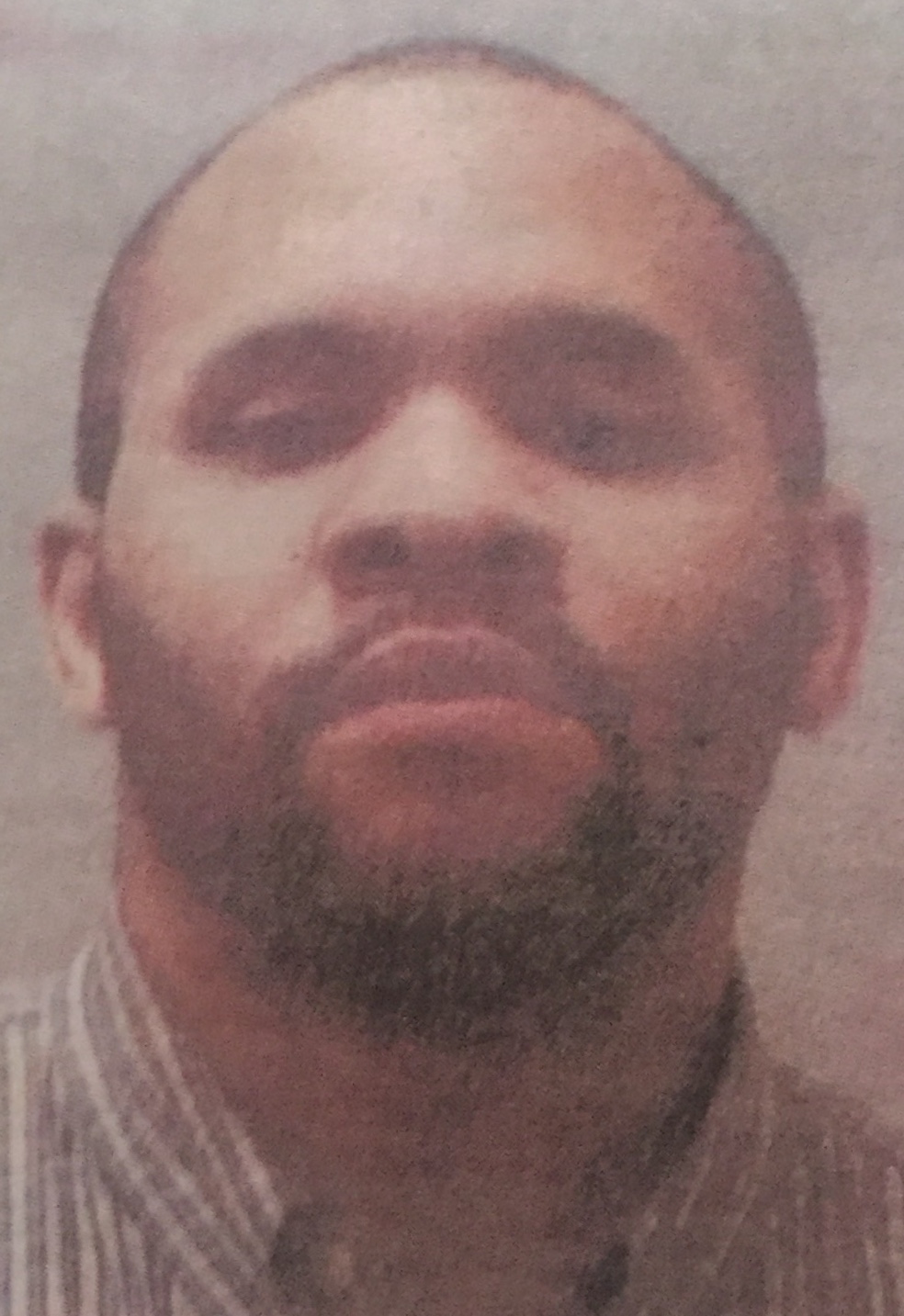
So now that Grimm is a district judge with a docket that includes civil proceedings, called forfeitures, in which the government seeks to keep criminally derived property it has seized, he has a sensitive nose for the required legal thresholds – and in one case this year, he’s twice cited a dearth of evidence in denying the government’s move to keep convicted drug-dealer John Edward Butler Jr.’s 2003 Mercedes Benz CL500.

Butler was a St. Mary’s County drug dealer who pleaded guilty in a large federal cocaine conspiracy, and in 2011, the government filed a forfeiture case to keep his seized Mercedes. Grimm’s second denial, issued on Oct. 2, was in response to the government’s motion for reconsideration of his first, which was handed down in July. What’s clear from the second is that Grimm’s patience with the government’s arguments is wearing quite thin.

Grimm recapped his July decision by explaining that, “although the Government had shown that” Butler purchased the Mercedes from Gaunzie Hart for $4,000 up front, with the promise of another $9,500 over time, and that “the vehicle was seized in front of a location” that Butler used for drug-dealing, “the Government had not shown that Mr. Butler’s payment to Ms. Hart was proceeds from drug transactions” or that Butler “drove the Mercedes to and from the drug distribution location or that he drove it to distribute drugs, rather than to visit his mother.”

“Significantly,” Grimm continues, “the Government has not alleged that the Mercedes was Mr. Butler’s only vehicle at the time or that he never visited his mother’s residence without engaging in cocaine distribution. If either were the case, then I could reasonably believe that, on at least some of the occasions that Mr. Butler drove the Mercedes to his mother’s residence, he drove it there to engage in drug trafficking.”

Grimm aimed stinging criticism at the prosecutor in the case, assistant U.S. attorney Stefan Cassella – who, as CP has noted before, is considered the nation’s top asset-forfeiture prosecutor, having written a 950-page book on the intricacies of seizing and forfeiting criminally derived property.

In essence, Grimm accuses Cassella of making disingenuous pleadings in the case of Butler’s Mercedes because his arguments ignored the court’s contrary position in prior forfeiture cases Cassella had brought since he was hired in 2009 by Maryland U.S. Attorney Rod Rosenstein.

“While I do not find Counsel’s failure to disclose this history of directly contrary rulings to be a violation of his duty of candor to the Court,” Grimm wrote, “it comes uncomfortably close.”

In order for the government to keep Butler’s Mercedes, Grimm explained, Cassella will need to put on the record enough detailed evidence to support a reasonable belief that “at trial, the Government will be able to prove the nexus between the Mercedes and Mr. Butler’s criminal activity by a preponderance of the evidence.”

Cassella had argued that this threshold could be sidestepped because, despite the fact that all the required public notifications had been made about the impending forfeiture of Butler’s Mercedes, no one came forward with a timely and legitimate court claim to it. Grimm acknowledged that Cassella, citing precedents in various districts, had found “some instances” in which that was sufficient to grant forfeiture – but he implied that Cassella was again being disingenuous by leaving out important elements of the cited cases that cut the other way.

“It appears that the Government has cited these cases selectively to support the proposition that I should reconsider my denial,” Grimm wrote, adding that “far more significant is what the Government has omitted from its discussion of the cited cases.” Looking at them “in their entireties,” Grimm continued, “supports the conclusion reached here, that, at least in this district and perhaps more broadly, the Government has the obligation to provide sufficient facts to support a reasonable belief that the Government will be able to demonstrate a substantial connection between the defendant property and the alleged criminal conduct by a preponderance of the evidence at trial.”

Grimm has invited Cassella, again, to present such facts. Absent that, though, it’s looking like Butler may someday be able to drive his Mercedes to his mother’s house again. Either way, given Grimm’s stern admonishments, it’s a safe bet that the U.S. Attorney’s Office in Maryland will be seeking to tighten up its evidence in future forfeiture cases – and certainly so in cases that come before Grimm, whose name must seem especially poetic these days to Cassella.

Rather than life in prison, 51 months is sought for Baltimore cocaine trafficker and money launderer George Frink

By Van Smith

Published by City Paper, July 29, 2014

After being caught red-handed with kilograms of cocaine, and after bank records showed him repeatedly laundering money, prosecutors last fall said George Sylvester Frink, Jr. of Baltimore was looking at a maximum sentence of life in prison. Now, though, under the terms of a guilty-plea agreement filed on July 25, Frink is likely to get just 51 months at his sentencing hearing, scheduled for Oct. 31, for his part in a vast, sophisticated conspiracy that law enforcers say was responsible for bringing in as much as 3,000 kilograms of coke from California.

The alleged leader of the scheme in Baltimore, body builder Gerald Lamont Jones, has not been charged with any crimes. But court documents in Frink’s case and in a civil suit, in which the government seeks to take title to numerous pieces of real estate, describe Jones as a sophisticated high-volume drug trafficker and prolific money launderer whose criminal conduct remained hidden behind his legitimate business pursuits. Jones, a real-estate and construction entrepreneur, also owns a Gold’s Gym in Owings Mills and Rami Bros., a chain of Baltimore car dealerships that trades under the name Pimlico Motors. Frink, according to court records, was employed by Golds Gym and Pimlico Motors, in addition to having his own real-estate company, GSF Enterprises.

Jones and Frink came to law enforcers’ attention as a result of a high-volume California coke-conspiracy case with glitzy Hollywood ties involving Baltimore natives Charles Dwight Ransom, Jr., Darrin Ebron, Ricky James Brascom, and others, who used private jets to move drugs and money across the country. Indicted in 2011, the case resulted in convictions for all three Baltimoreans, though Ransom is not yet sentenced, while the conspiracy’s alleged leader – Heriberto “Eddie” Lopez, with whom law enforcers say Jones had dealings – remains a fugitive.

Since Frink’s arrest last fall, when he was found with 14 kilograms of cocaine in front of Jones’ Pikesville office, Pimlico Motors has fallen into hard times financially, being sued successfully by a bank, while some of Jones’ real estate, including 141 acres of land in Reisterstown that is one of the assets the federal government is seeking to forfeit, has fallen into foreclosure. Frink, meanwhile, on July 14 filed for bankruptcy protection, listing nearly $500,000 in assets and nearly $1.2 million in liabilities.

Jones and the government have been engaged in settlement discussions in the forfeiture case, according to July 16 letter filed in court by assistant U.S. attorney Richard Kay, who wrote that “our discussions are now including criminal implications and a potential global resolution.” In other words, charges against Jones may still be coming.

Frink’s case, though, has been resolved already. Among the factors weighing for his light treatment is the U.S. Department of Justice’s support of anticipated changes to federal drug-sentencing guidelines by the United States Sentencing Commission, which are expected to result in the early release of tens of thousands of federal inmates around the country in coming years. The Maryland U.S. Attorney’s Office in recent months has been agreeing not to oppose downward departures from the sentencing guidelines for drug defendants, including Frink, based on how the guidelines are expected to change.

To get a sense of how lenient Frink’s anticipated punishment is, consider how some repeat low-level drug-offenders have been treated in federal court in Maryland. One, Barry Green — a low-level, non-violent repeat drug offender in Baltimore — in 2011 got more than a dozen years in prison for possessing three vials of cocaine and $214 in cash. While Green was a hand-to-hand dealer in the streets of Baltimore, Frink was caught up in a sophisticated, cross-country conspiracy involving the movement of hundreds of kilos of coke and millions of dollars in cash in airplanes and trucks.  While Frink’s admitted role was a fraction of the overall scheme — he’s copped to 14 kilograms of coke and laundering nearly $100,000 — his punishment is likely to be a fraction of Green’s.


Missing Evidence: Possibly Exculpatory Documents Not Given to Defense Team in Child Rapist/Murderer Case

By Van Smith

Published in City Paper, Aug. 6, 2008

“Absolutely not,” Sandra Goldthorpe says when asked if she’s seen an annotated, front-and-back diagram of a human form, describing the head-to-knee external injuries to 4-year-old Ja’niya Ebony Williams’ body, as observed by the Baltimore medical examiner at her autopsy on June 24, 2006. “That would have been useful to have from the get-go,” she says, because it shows that “there are way too many bruises on her for what Ronald confessed to doing.”

Goldthorpe is talking about her client, Ronald Albert Hinton*, who is serving a life sentence, plus 25 years, for raping and murdering Williams. A Baltimore City jury decided in May that Hinton’s false-confession defense and the prosecutors’ flawed DNA evidence at trial did not raise reasonable doubts about his guilt. Hinton, who was Williams’ baby sitter and had just turned 15 when the child was killed, maintains his innocence and has filed an appeal.

Goldthorpe and her law partner, Janice Bledsoe, are in their downtown law office on July 30, looking at Baltimore Police Department (BPD) records of the investigation that led to Hinton’s conviction. City Paper‘s recent feature article about the case (“Puzzling Evidence,” Feature, July 30) was based largely on these documents, and showed how Hinton’s jury was not privy to available evidence that some of Williams’ many injuries–including bite marks that Hinton confessed to giving her–were described as “old” or “faded” at the time of the June 21, 2006, incident that led to her death several days later. But Hinton’s lawyers say they haven’t seen some of the documents before, which they would have liked to use for his defense at trial since doubts about his guilt could be raised by the existence of prior injuries at the hands of others.

“That’s the first I have heard of that,” Bledsoe says, when shown a detective’s notes of efforts to compare the bite marks on Williams’ body to Hinton’s teeth. BPD homicide detective Todd Corriveau, who attended Williams’ autopsy, had the medical examiner prepare to-scale photographs of the marks with the hope of comparing them to molds of Hinton’s teeth. Corriveau’s notes show that on June 28, 2006, he conferred with an expert, University of Maryland forensic dentist Warren Tewes, who told him a comparison could not be made because the marks lacked the necessary definition.

“I would have called up Tewes,” Goldthorpe says, especially in light of the fact that Corriveau’s notes say that “Tewes provided general, basic information regarding the bite marks on the victim’s skin that may or may not be of relevance” at trial, and that “details” of that information were not included in the notes. “I would want to know more about that,” Goldthorpe says. “And we didn’t get the to-scale photographs of the bite marks, which would have been very helpful” Bledsoe says.

“In fact, I had never seen any of Corriveau’s notes concerning the autopsy,” which showed that the detective described “faded” bite marks on Williams’ buttocks. “I would have wanted to ask him about that when he was on the stand,” Bledsoe says, adding that “I’m a little concerned about [Corriveau] saying [in his notes] there were prior bite marks and then [prosecutors Joanne Stanton and Temmi Rollock] not giving that [information] to us.”

Baltimore City State’s Attorney’s Office spokeswoman Margaret Burns says “prosecutors followed the law and complied with Maryland’s discovery rules and disclosed all evidence” to Hinton’s defense attorneys. Though the office has what’s called an “open file policy,” in which defense attorneys have access to everything the prosecution has, it has nonetheless long been criticized for failures to provide exculpatory information. Bledsoe, in fact, is representing another Baltimore defendant, Kenneth Perry, who won a new murder trial because of the state’s failure to provide exculpatory evidence at his first trial when he was convicted in 2001.

Bledsoe is hesitant to argue, based on what documents she knows she did not have at trial, that Stanton and Rollock failed to provide her with exculpatory evidence, as required. “Is it exculpatory? It’s right on the line,” she asserts. “It might be a cumulative thing,” in which, taken altogether, documentation not provided to the defense could have been used to persuade the jury to have reasonable doubts about Hinton’s guilt.

Hinton confessed to biting Williams, for instance, but the jury knew that DNA recovered from the bite wounds did not come from Hinton; in fact, female DNA was recovered from bite marks on the upper thigh. Thus, the dental expert’s conclusions about the size of the bite marks, as documented in Corriveau’s to-scale photographs, may have been useful to the defense in further suggesting to the jury that Hinton could not have bitten Williams, despite his confession. But Hinton’s lawyers didn’t know about the dental expert, so they didn’t know to explore the possibilities of what he might say in front of a jury.

City Paper attempted to contact Tewes to ask him what he told Corriveau about the photographs of the bite marks. E-mails including detailed questions sent to him and the University of Maryland Dental School media office got no response, and neither did multiple phone messages.

Bledsoe acknowledges that the prosecutors did provide her with some documentation of older injuries on Williams’ body that the jury never saw because she was frustrated in her efforts to elicit corroborating testimony.

“I’m trying to be self-critical,” she says. Bledsoe, despite her evidentiary frustrations, emphasized the prior injury theory in her closing arguments at trial.

In particular, Bledsoe’s files contain documentation that the doctor who cared for Williams at the hospital observed “old bites on chest, and left thigh,” and that one of the medics at the scene of the incident noted “bruises were older” than indicated by Hinton’s interpretation of what injured her–that she had just fallen off the bed.

The doctor’s observations appeared in the search-warrant application in the case that was filed before Hinton’s confession, but not in the one filed afterward, perhaps, Bledsoe suggests, “because his confession was not consistent with old bruises and bite marks,” so the phrase was omitted from the second application. The medic’s comment, Bledsoe continues, were contained in a transcript that was provided to the defense after the start of the trial, so she missed it in the rush to prepare.

Goldthorpe takes a phone call while Bledsoe continues to go through City Paper‘s documents from the BPD files. It’s Steven Drizin calling for Bledsoe. Goldthorpe takes a message: Drizin is the legal director of the Center on Wrongful Convictions at Northwestern University School of Law in Chicago, and he has just read the City Paperarticle about Hinton.

Drizin specializes in juvenile false confessions. As of press time, Drizin and Bledsoe had not yet had the opportunity to discuss the case. But Hinton’s mother, Francine Toney, who is convinced by the DNA evidence that her son falsely confessed, says any attention to the case by a specialist such as Drizin “is hope, and we need hope.”

*Ronald Hinton is the son of the late Baltimore Police Department trainee Sean Hinton , whose body in 1992 was found floating off Manhattan with his wrists tied in front of him by the drawstrings of his jacket, and whose death was ruled a suicide despite allegations of police corruption immediately prior.

On the Rocks: Baltimore businessmen in federal crosshairs for massive cocaine conspiracy

By Van Smith

Published in City Paper, Dec. 18, 2013

image

Gerald Lamont Jones of Randallstown is a “self-made entreprenuer [sic] who clearly understands hard work, commitment, and discipline,” according to his bodybuilding website, joethebodybuilder.com (pictured). But if federal authorities are correct in the allegations they’ve recently disclosed about Jones, who owns Gold’s Gym in Owings Mills, the Pimlico Motors chain of auto dealerships, and JBL Construction, among other companies, then his entrepreneurial success has a secret ingredient: large-scale cocaine trafficking.

Jones has not been publicly charged with any crimes and has no prior criminal record in Maryland. But on Oct. 28, just days before Jones took second place at the International Drug Free Athletics bodybuilding championships in Ontario, one of his employees, George Sylvester Frink Jr., was charged in Maryland U.S. District Court with possessing 15 kilograms of cocaine while in the parking lot of the nerve center of Jones’ business affairs, a small Pikesville office building at 8 Church Lane.

In the ensuing weeks, more details emerged in Frink’s case, including court documents implicating Jones. A search-and-seizure warrant affidavit signed Oct. 25 by DEA special agent Robert Blanchard and docketed in the court record on Nov. 12 says that a California drug organization’s cocaine shipments to Jones and others came in 24 shipments of between 50 and 60 kilograms of cocaine, 10 shipments of between 50 and 120 kilos, a 150-kilo shipment, and a 200-kilo shipment. That means that, if Blanchard’s affidavit is to be believed, Jones and others—the affidavit suggests the bulk of it was bound for Jones—received between 2,050 and 2,990 kilograms of cocaine, eye-popping amounts whose wholesale value comes to about $60 million to $90 million.

The probe is being conducted by DEA and the Internal Revenue Service’s Criminal Investigation Division. Part of Blanchard’s 21-page affidavit—which supported an application for a warrant to raid two properties associated with Frink, including 8 Church Lane—describes alleged patterns of money laundering in records of Jones’ personal and business banking accounts, which showed 380 cash deposits totaling more than $2.6 million between 2008 and 2012.

Attempts to reach Jones by phone and email were unsuccessful, as were efforts to determine whether he is represented by a criminal defense attorney. Jones’ civil attorney, Diane Leigh Davison, who manages legal aspects of many of his business dealings, wrote in an email to City Paper that “I have no comment as I know nothing about any of these allegations.”

Blanchard’s affidavit dubs Jones’ alleged California suppliers the “Lopez-Brascom DTO,” short for drug-trafficking organization, and notes its members were indicted in California in 2010. City Paper covered the case (“Bringing It Back Home,” Mobtown Beat, Feb. 2, 2011), since it involved Baltimore-bound cocaine and three defendants—Ricky James Brascom, Charles Dwight Ransom Jr., and Darrin Ebron—who originally hailed from Baltimore.

In that case, which involved shipments of 400 kilograms of cocaine and more than $4 million in cash during a six-week period, DEA wiretaps recorded conversations between Brascom and his alleged girlfriend, the actress and singer Drew Sidora Jordan, while Ebron—a star-tied fashion designer and deejay who performed at Eddie Murphy and Tracey Edmonds’ 2008 wedding on the island of Bora Bora—claimed his wiretapped conversations were not about drugs but about music-industry work he was doing for Brascom and Ransom’s company, Behind Da Scenes Entertainment, which produced the rapper Paypa.

At the time, City Paper determined that Behind Da Scenes was actually Jones’ company and that Jones had given two pieces of Baltimore real estate to Ransom in 2007. When reached for comment, Davison said Jones had “has no involvement in or awareness of” the allegations in the “unfortunate” California indictment and explained that “the real estate transactions have no relation to the recent allegations,” adding that Jones “has always tried to assist and mentor family and friends in business, and tried to do the same for his former college fraternity brother, Charles Ransom.”

While Ebron—convicted and currently in prison, set to be released in 2017—and Brascom—with a 2019 release date—met the same fate, Ransom escaped from a South Carolina jail shortly after the indictment and remained on the lam until his arrest in California in March. He pleaded guilty in September and is scheduled to be sentenced in January. The indicted head of the DTO Heriberto Lopez remains a fugitive, according to Blanchard’s affidavit.

The investigation into Frink and Jones began in October and November 2010—just as the California indictment was handed down—when a “cooperating defendant” that Blanchard’s affidavit calls “CS1” told DEA agents that he or she “routinely got kilograms of cocaine” from a man named Paul Alexander at “On the Rocks” bar on Liberty Road in Randallstown, and that Frink, who owned the place and was Alexander’s cocaine partner, would be present at the meetings. According to business records, Frink’s bar was actually On the Roxx, located in the Randallstown Plaza Shopping Center.

CS1’s information paled in comparison to that provided by CS2, a “cooperating source” interviewed by DEA agents in February 2011, according to Blanchard’s affidavit. The Lopez-Brascom DTO brought hundreds of kilos per month from California to Maryland, CS2 explained, and in 2008, shortly after CS2 introduced Ransom to Lopez, Jones flew to California to meet with them. Ransom told CS2 that Jones was his “partner in the cocaine distribution business.”

When the scheme got up and running in 2008, the affidavit continues, Jones allegedly received 10 shipments of 50 to 120 kilograms of cocaine hidden in secret compartments in cars that Jones and Ransom had provided to Brascom and Lopez. The coke-laden cars would then be placed on “tractor-trailer auto-carriers that were destined for Baltimore,” the affidavit states, and once the coke was sold, the cars’ secret compartments would be filled with cash for shipment back to Brascom and Lopez in California. Then the cross-country circuit would begin again.

But in May 2009, the affidavit continues, after law enforcers stopped a Honda Ridgeline being transported from California to Pimlico Motors’ Liberty Road location and seized cocaine, the DTO switched up, opting instead to ship the coke hidden amidst legitimate cargo carried by tractor-trailers.

Other than information provided by the two cooperators, much of Blanchard’s affidavit is filled with observations gleaned from surveillance, which circumstantially links Jones to criminal conduct—if the agents’ conclusions based on what they saw were accurate.

They noted, for instance, that on July 2 Jones moved items from one vehicle to a minivan in the parking lot of 8 Church Lane, and concluded that “Jones was moving bundles of cash into the minivan, preparing it for transportation out of state to purchase more kilograms of cocaine,” since “Jones and his coconspirators in the drug business have a long history of moving drugs and money in this fashion.”

While Jones has not been charged, Frink is facing a maximum sentence of life in prison, according to the prosecutor on the case, Assistant U.S. Attorney Richard Kay, speaking at a Nov. 21 court hearing. Frink had initially been ordered detained pending trial, but at the hearing he won supervised release after his attorney, Kenneth Ravenell, pointed out that what the government had called Frink’s lies—about his employment at Gold’s Gym, for instance, and where he resided—were, in fact, true.

“You were given information that was not accurate,” Ravenell told U.S. Magistrate Judge Beth Gesner at the hearing, “by a less than stellar investigation.”

Jones must be hoping the same is true of the affidavit calling him a high-volume cocaine trafficker.

The Colombian Connection: Feds say Baltimore man was trusted client of Colombian heroin traffickers

By Van Smith

Published by City Paper, Jan. 1, 2014

For nearly six years, Paul Eugene Sessomes of Baltimore was on the radar of U.S. Drug Enforcement Administration (DEA) agents in New York and Bogota, Colombia, who believed he was coordinating delivery of heroin proceeds on behalf of Colombians at the top of the supply chain. In December, those suspicions were unveiled in an indictment against Sessomes and three others in New York, where they face federal money-laundering conspiracy charges.

The two lead defendants in the case, Jorge Humberto Espitia Arciniegas and his nephew Carlos Andres Espitia Garcia, were arrested in Colombia in early December and are expected to be extradited, according to press coverage there. The other defendant, Marleny Amparo Torres, is a mother of two who lives in Stamford, Conn., and works as a nanny for a Darien, Conn. psychotherapist and her husband, the founder of a health care company, according to court records.

Sessomes, who is in his early 60s and has been previously arrested twice on drug charges that later were dismissed, pleaded not guilty to the charges when he was arraigned on Dec. 12 before New York U.S. District Judge Ramon Reyes Jr., and was ordered temporarily detained, with bond set at $125,000.

Meanwhile, on Dec. 6, federal authorities moved to take ownership of two Baltimore-area properties tied to Sessomes, claiming they are tied to his alleged drug-money transactions: a luxury condominium he owns at 414 Water St. in downtown Baltimore and a home on Jericho Road in Columbia which he co-owns with Juliet Branker.

Two of the prosecutors handling the cases involving Sessomes—Adrian Rosales in the New York criminal case and Darrin McCullough in the Maryland forfeiture lawsuit—work out of the U.S. Department of Justice (DOJ) headquarters in Washington, D.C., suggesting Sessomes’ alleged conduct has attracted attention at high levels of U.S. anti-drug efforts. Both work for DOJ’s Narcotic and Dangerous Drug Section, which, according to its website, targets “priority national and international drug trafficking groups.”

City Paper first wrote about Sessomes in a 2010 article detailing Baltimore cases in which targets are alleged to deal directly with foreign sources of drugs (“Direct Connections,” Mobtown Beat, March 3, 2010). At the time, the DEA had recently seized $535,200 in cash from two storage lockers leased by Sessomes, saying they were tied to Sessomes’ transactions with the Espitia heroin-trafficking organization, based in Colombia. The allegations in the storage-lockers search warrant mirror those in the recently filed forfeiture case, which adds new details indicating Sessomes was held in high esteem by his Colombian contacts.

Sessomes was Arciniegas’ “best client” at “selling ‘H,’” or heroin, and was “very ‘honest and good’ because Sessomes always maintained the money correctly and never tried to cheat” the Espitia organization, court documents state. A cooperating source told agents that, from 2006 to August 2008, he met Sessomes about a dozen times to pick up heroin proceeds of between $70,000 and $120,000, which he would pick up in Baltimore and deliver to New York for deposit into bank accounts.

DEA investigators have previously tied Sessomes to Thomas Corey Crosby, a convicted Baltimore heroin dealer who is currently in prison. In 2008, when Crosby was named in connection with, but never charged in, a 2007 federal drug case involving Fat Cats Variety store in Southwest Baltimore (“All the Emperor’s Men,” Mobtown Beat, Aug. 27, 2008), agents alleged Crosby laundered drug money through Westport Auto, Inc., a used-car business tied to Sessomes.

The defense attorney for Sessomes and Crosby at that time, James Gitomer, when asked by City Paper to comment about Sessomes’ current legal problems, responded with a “No thanks.” Sessomes’ court-appointed attorney in New York, John Michael Burke, did not respond to a request for comment.

Peter Carr, spokesperson for the U.S. Attorney’s Office in New York, responded to City Paper’s inquiries by stating that “at this stage of the case, we are unable to provide additional details beyond what is in public court documents,” and explained that DOJ Narcotic and Dangerous Drugs Section prosecutors “get involved in cases that are both multi-jurisdictional and international in scope.”

Court documents indicate that investigators’ interest in Sessomes—who court documents describe as a “member” of the Espitia organization who is “actively involved in its illegal activities”—began on April 4, 2008, when Arciniegas left on Sessomes’ phone a voicemail message that was intercepted by the DEA in Bogota, saying, “Good morning, Paulie, it’s Georgie, I have the good news very soon. I’ll call you very soon.”

Subsequently, as the DEA’s probe continued, agents concluded that two Espitia members, one in New York and the other in Miami, “were regularly traveling to the greater Baltimore area to collect narcotics proceeds from Sessomes,” court documents state. Both of those members, who later became cooperating sources for DEA’s investigation, allegedly went to Baltimore to collect $300,000 on Aug. 3, 2008—a transaction that became the core conduct charged in the money-laundering conspiracy indictment against Sessomes and his co-defendants.

About a month later, court documents state, agents watched as Sessomes met in Baltimore with two people—Diego Neira and Maria Espitia-Garcia—described as “known money launders [sic] for the Bogota, Columbia [sic] based Espitia heroin organization.”

The indictment was filed under seal on Aug. 1, almost exactly five years after the $300,000 transaction. Five years is the statute of limitations for most crimes charged under federal law, including conspiracy. The same day it was unsealed, on Dec. 6, Sessomes appeared before Maryland U.S. Magistrate Judge Susan Gauvey, who ordered him detained and committed to New York to face the indictment.

Miller’s Crossing: Anthony Jerome Miller Convicted in Redwood Trust Double Murders

By Van Smith

Published in City Paper, Mar. 21, 2007

IMG_7632

Just before 4 p.m. on March 15, as a Baltimore City Circuit Court jury was preparing to render its verdict in the double-murder case against Anthony Jerome Miller, prosecutor Sharon Holback turned to the victims’ family and friends, who were assembled in the courtroom, and said, “Let’s hope for something poetic with a verdict on the Ides of March.” The jurors did indeed hand down a poetic verdict, convicting Miller of two counts of second-degree murder, nearly four years after the April 2003 night when 22-year-old Sean Wisniewski and 31-year-old Jason Convertino were shot to death in Convertino’s Upper Fells Point apartment.

Judge Robert Kershaw, who presided over the nine-day trial, scheduled sentencing for June 8, and each murder count carries a maximum sentence of 30 years. But the jury also acquitted Miller of eight other charges arising from the state’s theory that he went to Convertino’s apartment intending to rob, shoot, and kill the victims. If they had believed the large body of evidence that the crime was premeditated, as the state contended, the jurors would have found Miller guilty of first-degree murder and the other felonies, and he’d be facing two life sentences–and then some.

Miller, 31, was charged last January, after Baltimore Police detective William Ritz took over the lapsed investigation as a cold case in late 2005. Ritz quickly developed evidence that included Miller’s DNA on a latex glove left at the murder scene, a map of the movements of Miller’s cell phone at the time of the crime, business records indicating Miller robbed Convertino, and testimony from Convertino’s next-door neighbor, who was first interviewed by police two and a half years after the slayings.

After the verdict, the two sides made the usual statements. “I believe my client was not guilty, and we’re going to continue to fight to prove his innocence,” said Miller’s attorney, Paul Polansky, who promised to file an appeal. State’s Attorney’s Office spokesman Joseph Sviatko said, “We’ll obviously ask for the maximum” sentence. Holback announced that she was “very happy” with the outcome.

But Convertino’s mother, Pam Morgan of Binghamton, N.Y., says she is disappointed that the jurors didn’t hand down convictions for first-degree murder, gun crimes, and robbery. “I guess I should be grateful for something,” Morgan says of the guilty findings the day after the verdict. “But how do they think the bullets got in the kids’ heads?”

The autopsy revealed that Convertino’s fatal back-of-the-head shot was accompanied by two others, one also to his head and the other to his right arm. Wisniewski died of a single gunshot to the head. A firearms expert testified that the bullets were fired from a .38- or a .357-caliber handgun.

Morgan sees Miller’s conviction as partial justice not only because the verdict wasn’t as comprehensive as she would have liked, but because she remains convinced that Miller did not act alone. She intends to pursue her theory that the killings were a conspiracy, as she has since shortly after the crime. “It’s not really over for me,” Morgan says. “I have to say I’ll definitely not be sitting back on this.”

Scott Henry, a prosecution witness and Wisniewski’s friend and employer, agrees that Miller’s prosecution addresses only a part of the crime’s complexity. “I hope this is only the beginning, because you and I both know there is a lot more to this [case],” Henry told City Paper after his hourlong testimony on March 6. Neither Wisniewski’s family nor the jurors could be reached for comment in time for this article.

Trial testimony described the nightlife milieu in which the murders occurred. Wisniewski worked as Henry’s assistant and handled radio programming for Buzzlife Productions, a concert promoter based in Washington, D.C. At the time, Buzzlife held events on Saturday nights at Redwood Trust, the historic downtown bank-turned-nightclub where Convertino was general manager. Shortly before the murders, Miller had worked briefly at Redwood Trust on the security staff. Convertino worked for Redwood Trust owner Nicholas Piscatelli, but at the time of the murders he was arranging to leave Piscatelli and take the gigs he was booking at Redwood Trust to Bohager’s, another venue that has since closed.

The state’s case was that Miller was hardly employed, working itinerantly at a car wash and as a security guard at a car dealership, and was marrying Tarsha Fitzgerald, a successful older woman, so he needed money to pay for their honeymoon in Mexico. With greed as his motive, the state tried to prove that Miller gunned down Convertino (Wisniewski was simply in the wrong place at the wrong time), stole and pawned his laptop, and fraudulently used his credit card to pay the travel agency. Holback painted Miller as a cunning and deceptive charmer who fooled a lot of people, including Convertino and Fitzgerald. Holback described the latter as Miller’s “living victim.”

Polansky’s defense of Miller was composed solely of four character witnesses, including New Psalmist Baptist Church Bishop Walter Thomas, who testified that the defendant was a religious man who would never commit such atrocities. But Polansky also cross-examined the state’s witnesses in an effort to suggest a vague, alternate theory of the case to jurors: that Piscatelli, not Miller, had a motive to kill Convertino, who was in the process of taking high-profile hip-hop events away from the Redwood Trust. Investigators, Polansky stated in his closing argument, “rushed to judgment” in deciding early in the investigation that Miller was the killer, and suffered from “tunnel vision,” so they “didn’t look at Nick Piscatelli a little more carefully.”

Piscatelli testified as a prosecution witness for 45 minutes on the second day of the trial, March 6. Holback asked him to look at the jury and answer a series of questions about whether he killed Convertino, or had Miller kill him. Piscatelli repeatedly answered “no” to the questions. He also stated that he doesn’t know Miller: “I thought I might recognize him today,” Piscatelli said from the witness stand, “but I do not.” Piscatelli told City Paper for an article last year (“Late Discovery,” Mobtown Beat, Dec. 6) that Miller asked him for money to pay for the honeymoon, which Piscatelli declined to lend. “I didn’t really know” Miller, he said then.

“The truth is in the evidence,” Polansky said during the trial, arguing that “this was an execution” and “not a robbery at all,” and that “what happened here is that Jason Convertino crossed the wrong people.”

In addition, Polansky pointed out that Holback made Miller out to be “so slick, so smart,” yet at the same time the evidence against Miller attests to a remarkable level of stupidity. It’s as if Miller “wanted to get caught,” Polansky said, because he “leaves the only evidence that he was there . . . right on the dead man’s bed,” where the glove containing Miller’s DNA was recovered. The evidence also showed that Miller left his fingerprints all over the fruits of the alleged robbery by pawning the laptop at a shop Miller regularly patronized, producing his driver’s license to validate the transaction, and using Convertino’s credit card after the murders.

“Either Anthony Miller did it,” Polansky told jurors, “or somebody went to an awful lot of trouble to make you believe he did it.” Judging by the verdict, the jurors decided Miller did indeed do it–though they didn’t buy the state’s version of how the deed was done.

Late Discovery: A New Twist in the Redwood Trust Double-Murder Case

By Van Smith

Published in City Paper, Dec. 6, 2006

IMG_7624-2

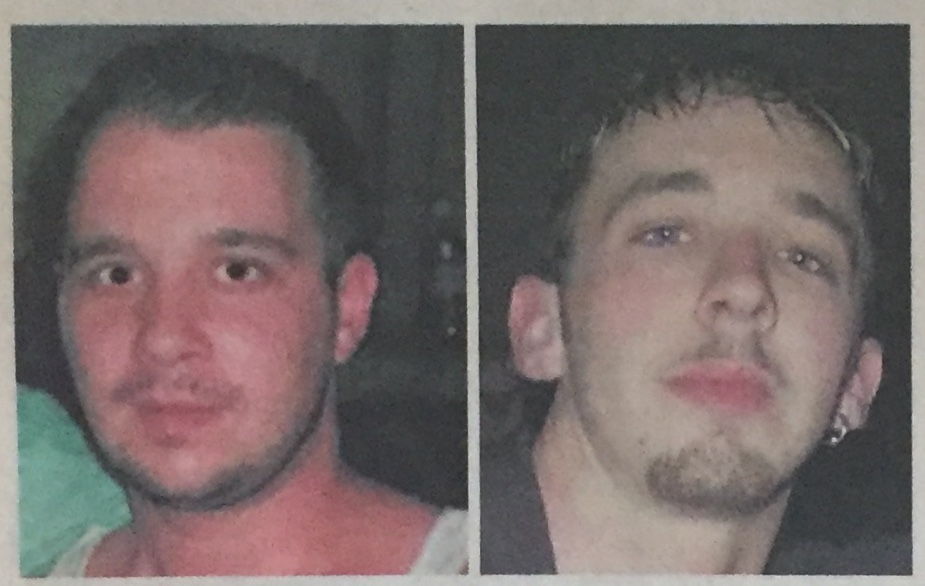
“I don’t know why they’re digging into my past,” remarks 56-year old Nicholas Argyros Piscatelli, a local developer and owner of the now-defunct downtown nightclub Redwood Trust. He’s on the phone with a reporter, commenting about the double-murder case involving the club’s former manager, Jason Convertino (pictured, above left), who was shot to death in April 2003 in Convertino’s Fells Point apartment, along with Sean Wisniewski (pictured, above right), who worked for Buzzlife, a nightlife promotions company that held events at Redwood Trust. Suspect Anthony Jerome Miller‘s trial in the case, which turns largely on the presence of DNA consistent with Miller’s found in latex gloves discovered at the crime scene, is scheduled to start in January. But Piscatelli is concerned about recent indications that the case is delving into the possibility that he had something to do with the crime.

“I see what they’re going to do, which is a shame,” Piscatelli continues, referring to Miller’s defense, mounted by attorney Paul Polansky. “Which is to cast doubt and get this guy off.” Neither Polansky nor prosecutor Sharon Holback will discuss the case, and there is no indication that information about Piscatelli will be used by either side at Miller’s trial.

Casting doubt to get people off is what criminal-defense attorneys do for a living, and part of that effort involves understanding the evidence that police and prosecutors gather to bring charges against their clients. In Miller’s case, the nature of that evidence had been limited for the most part to the DNA analysis–until recently, when a new prosecutor took over the case and, as the law requires, submitted to Polansky voluminous documentation about the lengthy investigative process that led to Miller’s indictment in January. Delays in “discovery,” as this process is called, in large part have been responsible for rescheduling the trial date, which was reset four times and is now scheduled to start Jan. 24, 2007.

In October, Polansky argued in court that the state’s discovery failures had been so severe that the charges should be dismissed. A judge disagreed, so the case is proceeding, and on Dec. 5 Miller’s request for a change in his no-bail status was denied. Meanwhile, the late-arriving discovery has fattened the case file with information stating, among other things, that Convertino’s mother was told shortly after the murders that Piscatelli ordered them.

On Oct. 27, Holback disclosed in a memorandum to the defense that “Pam Morgan [Convertino’s mother] has stated that an unknown man approached her at a benefit in Binghamton, New York, held for her son’s child shortly after his murder. The man advised her that Nick Piscatelli was behind her son’s murder, he covered his tracks and hired someone to kill him.” The memo does not indicate when Morgan shared this information with investigators, but she told City Paper during a Nov. 30 phone interview that the event was held in May 2003, just weeks after the murders.

“At the benefit, this guy comes up to me and he says he knows who was behind my son’s murder” Morgan recalls. “I didn’t know Nick [Piscatelli] at that point.” Since then, though, Morgan says she has kept in regular, friendly phone contact with Piscatelli.

“Oh boy! She said that?” Piscatelli says when informed of Morgan’s statement about the man’s visit to the Binghamton gathering. “That’s unfortunate. I’ve spoken to her several times, and she’s never mentioned anything like that to me. That’s certainly sad to hear. There has been no animosity between us.”

Over the phone from her home outside of Binghamton, Morgan describes the man who dropped Piscatelli’s name at the benefit as white, in his 30s, several inches shy of six feet tall, with “lightish hair,” of “medium build,” and “wearing a long coat, like a trench coat.”

“He came in, talked, and left,” she continues. “I was like, `Whoa!’ And that’s when I first started questioning the club, and had these theories [that Piscatelli might be involved]. And I also thought, did [the man] do it purposefully, to throw it off someone else by naming Nick? Because there is no evidence against Nick.”

Still, she says she’s fearful of Piscatelli, and now that her suspicions have been made public in Miller’s case file she says she will stop calling him. “That was my last call to him, probably in September,” Morgan recalls, when she says she discussed with Piscatelli items still in his possession that belonged to her son. (The Oct. 27 memo also discloses that Morgan told investigators that this reporter shared with her information about Piscatelli obtained through unnamed sources.)

Morgan’s statements are not the only ones mentioning Piscatelli in the discovery documents. A Nov. 9 discovery memo states that “a record of firearms owned and registered to Nicholas Piscatelli” was shared with the defense. Piscatelli reacts to this news by saying that “it was years ago–during the 1990s, or the 1980s–that I bought a couple of guns for hunting or target practice,” and asserts again that Polansky and Miller are “trying to use whatever they can to cast a shadow of a doubt.”

On Oct. 24, court documents also show prosecutor Holback shared with the defense “notes of detective’s interview of Carl Weaver (who is believed to be also known as Carl Curry)” that provide information about Weaver’s relationship with Piscatelli and “several other men,” including one that “obtained drugs for Nick Piscatelli.” Neither Weaver nor the two men whose names are mentioned could be located by City Paper in time for this article, and Piscatelli asserts he doesn’t know them. As for Weaver’s allegation about drugs, Piscatelli, who in the mid-1990s pleaded guilty to cocaine possession in Howard County, doesn’t directly respond but says that “there were no drugs in that club and no evidence of that going on.”

In fact, as City Paper has previously reported (“Club Trouble,” Mobtown Beat, June 11, 2003), evidence of drugs at the Redwood Trust does exist in the public record. In 2002, police executed a search-and-seizure warrant there and seized small amounts of cocaine and other drugs from the club. However, despite the evidence, the Baltimore City Liquor Board acquitted Redwood Trust of the resulting violations. “The fact [is] there were drugs there, obviously,” then-liquor board Chairman Leonard Skolnik said at the 2002 hearing.

In a November 2003 police report, Piscatelli stated that, while at the club, he was forced to sign a fraudulent promissory note for the sale of the nightclub business to another party, who, along with three armed men wearing masks, threatened Piscatelli and his business partner, Paul Chrzanowski, and asked them to sample “cocaine in a paper towel” (“Deadwood Bust,” Mobtown Beat, April 28, 2004). No criminal charges resulted from the incident, though competing lawsuits over the promissory note ended in October 2005, with Piscatelli winning a $1 million judgment against the buyer, Omar Haughton of Ellicott City.

Miller, meanwhile, worked for Redwood Trust, according to Piscatelli, who said prosecutors have asked him to produce Miller’s employment records. In court cases against him in the 1990s, Miller used an alias and three different dates of birth that today would place him in his mid-30s. One case, for murder in 1993, resulted in an assault conviction and two months of incarceration. Miller’s other conviction was for forgery in the mid-1990s, though he has dodged drug-conspiracy and other charges.

The state has accused Miller not only of murder in the Redwood Trust case but also armed robbery. This is apparently due to the fate of Convertino’s laptop computer, which court documents show Miller pawned the day after the bodies were found on April 16, 2003. Court records also indicate that Miller used Convertino’s credit card to pay for his honeymoon in Cancun, Mexico. Miller was first interviewed by detectives at Baltimore-Washington International Airport on May 14, 2003, when he and his wife, Tarsha Fitzgerald, returned from their honeymoon. During that interview, according to a detective’s notes contained in the court file, Miller described Convertino as a friend.

“Jay was a good guy,” the detective wrote of Miller’s statements at the airport. “Jay was willing to help anyone out at any time.”

Miller has consistently maintained his innocence and asserted his right to a speedy trial since his arraignment this past March. Until the trial, it’s anyone’s guess how Miller’s DNA was found in the gloves left at the murder scene, what Miller was doing with Convertino’s laptop, and how Miller came to use the victim’s credit card to pay for his honeymoon.

Piscatelli says Miller also asked him for honeymoon money, though he declined to lend it. “I didn’t really know [Miller],” Piscatelli says, “and didn’t really hire him” to work at Redwood Trust. That, he maintains, was Convertino’s decision.

Piscatelli is bewildered by indications that the case against Miller is developing to include information that suggests Piscatelli is being investigated in connection with the crime. “It’s a shame this thing is going in this direction,” he states ruefully. “I wouldn’t ever dream of doing anything like that. . . . I wouldn’t hurt a fly.”

Trying Time: Double-Murder Suspect Pleads Not Guilty

By Van Smith

Published by City Paper, March 22, 2006

IMG_7632

Pam Morgan drove to Baltimore from near Binghamton, N.Y., to attend the March 15 arraignment of the man she and city prosecutors believe murdered her son. Since April 16, 2003—the day the gunned-down bodies of her son, 31-year-old Jason Convertino, and Sean Wisniewski, 22, were found in a Fells Point apartment, about five days after the murders allegedly occurred—she has anticipated the day when a suspect would face reckoning for the crime.

That day is coming soon. Randallstown resident Anthony Jerome Miller, whose court records indicate he’s either 30, 33, or 35 years old, pleaded not guilty to the double-murder and related charges, after the indictments were read aloud to him as he stood before Baltimore Circuit Court Judge Shirley Watts. The case was then put on the court docket for trial starting June 19. The evidence against Miller includes DNA collected from latex gloves left at the crime scene. Miller and the victims were affiliated with the Redwood Trust nightclub downtown, which Convertino managed for owner Nicholas Piscatelli.

Outside the courtroom after the arraignment, Morgan, who had kept stoically dry-eyed during the proceeding, commented on how her son had tried to fight off his attacker. “Jason was a fighter, but look at Miller,” she said. Broad-shouldered and buff, Miller, according to court records, stands 5-foot-10 and weighs 225 pounds.

“I am so glad I came to see Miller,” Morgan wrote in an e-mail to City Paper the next day. “I said I didn’t know how I would react, and I really surprised myself. I felt a God-given strength all of a sudden, and felt like my son was standing right beside me. Strange, huh? I hope I’m that strong through the trial.”

Miller’s attorney, Paul Polansky, declined to comment on the case after the arraignment, other than to say his client is not guilty.

Polansky, standing with four of Miller’s friends and family members in the foyer outside the courtroom, also declined to discuss previous charges for which he represented Miller: a 1993 double-murder case in which Miller was found guilty of assault; the state declined to prosecute him on the murder charges. A request was made to the Baltimore City State’s Attorneys’ press office to speak with the prosecutor of that case, David Chiu. Chiu, however, was not available as of press time.

The court file for that 1993 case, retrieved from archives, paints a confusing picture. The police report describes not two victims but one: 28-year-old Joseph Earl Carter. Carter was found June 13, 1993, dead from a gunshot wound to the head, his body reposed in the middle of the 1800 block of Westwood Avenue in Sandtown-Winchester. A shot also was fired into Carter’s car, which struck another victim, Ramona Jones. According to the report, she “later pulled the deformed projectile from her hair (it did not penetrate the skin) and handed it to investigators.” Miller was identified by witnesses as being part of a group that had attacked Carter’s friend. Ultimately, though, it appears from the case file that the gunman was never arrested.

Miller’s wife, Tarsha Fitzgerald, was interviewed over the phone by City Paper on Feb. 19, and stated that “I will definitely sue if my name is mentioned” in an article about the Redwood Trust murders. She said that Miller, who turned himself in on a warrant in January, never expected to be detained on the charges, and that he’s a religious man “in second-year discipleship at church.” In May 2003, shortly after the killings, “police kicked the door in” at her previous Randallstown residence, Fitzgerald claimed, and “took Anthony’s clothes and boots,” but that the “paperwork disappeared” regarding the incident. After the police raid, she said, she sold the house, and she and Miller moved to another house she purchased in Randallstown. She sold that home, which is Miller’s address in the charging documents, shortly before Miller surrendered.

Redwood Bust: Suspect Indicted in 2003 Double Murder of Nightclubbers

By Van Smith

Published by City Paper, Feb. 22, 2006

IMG_7632

On Feb. 17, a Baltimore City grand jury indicted Anthony Jerome Miller (pictured) for the April 11, 2003, murder of Jason Michael Convertino and Sean Michael Mietus Wisniewski in Convertino’s Fells Point apartment at 1917 Gough St. Convertino, 31, was the manager of Redwood Trust, a downtown nightclub, and Wisniewski, 22, worked for Buzzlife, a Washington, D.C.-based entertainment company that held events at Redwood Trust on Saturday nights. Miller, who is being held without bail, turned himself in Jan. 23, four days after a warrant was issued for his arrest. His arraignment is scheduled for March 15.

Miller’s arrest was the first break in the case, which has remained shrouded in mystery since three of Wisniewski’s friends discovered the bodies on April 16, 2003. Convertino’s mother, Pam Morgan of Binghamton, N.Y., says that one of the initial homicide investigators “told me there was not any evidence at all. They [the perpetrators] covered all their tracks—that’s what he said about this. And I thought, Oh my god, no one’s going to be caught for this.” Since then, the case ended up in the hands of cold-case investigator William Ritz. “Thank God for Ritz,” Morgan says, “or we wouldn’t be where we are today.”

Attempts to reach Wisniewski’s father to comment for this article were unsuccessful. Redwood Trust owner Nicholas Argyros Piscatelli and Miller’s attorney, Paul Polansky, did not return messages. Ritz, reached by phone at the cold-case squad’s office Feb. 20, would not comment, since the case, he said, is still “in the early stages” of being investigated.

According to court records, the murder weapon was “a .38/.357 caliber handgun.” Wisniewski was killed by a single gunshot wound, court records show, and sources familiar with the case, who asked to remain unnamed, say it was delivered to his head. Convertino, court records reflect, died of multiple gunshot wounds. Sources close to the investigation say that two rounds were fired into Convertino’s head, and another was shot into his arm. Miller, according to some of these sources, worked at Redwood Trust during the time of the murders.

Court documents written by Ritz explain the case against Miller. On the day the bodies were discovered, a latex glove and a second partial latex glove were recovered from the apartment by crime-scene investigators. Shortly afterward, Ritz’s report continues, it was learned that Convertino’s laptop computer was missing. On May 12, 2003, investigators discovered that the computer had been pawned by Miller on April 17, 2003—the day after the bodies were found—at a pawnshop in Randallstown. Miller’s driver’s license was presented to the pawnshop during the transaction, and lists an address a few miles away, in the Rolling Ridge subdivision.

In March 2005—nearly two years after the murders—the police finished processing the physical evidence in the case, including the latex gloves, according to Ritz’s report. The gloves were found to contain skin cells inside of them. On Aug. 16, 2005, police collected blood from Miller to compare his DNA to the skin cells. The comparison was completed on Nov. 29, and the skin cells were found to be consistent with Miller’s DNA.

“[T]his investigator believes,” Ritz wrote in his report, “that the latex gloves found at the crime scene . . . [were] worn by the defendant as a precautionary measure so as not to leave any physical evidence . . . that would link him to the crimes of assault, armed robbery and premeditated murder of [the] victims.”

“With the gloves, it just amazes me that they didn’t do what they had to do earlier,” Morgan says. “They had them since the day the bodies were found.”

Morgan chalks it up to Miller’s “stupidity” that he left behind evidence, such as the gloves and driver’s license information, that could trace the crime back to him, as police allege.

Miller has had some run-ins with Baltimore police in the past. In a 1993 case, court records show, he faced two murder charges and an assault charge. Baltimore City State’s Attorney’s Office spokesman Joseph Sviatko says the state declined to prosecute him on the murder charges, but he was found guilty of assault in that case and received a one-year sentence, with 10 months suspended. In 1997, he was found guilty of forging a public document and received a $250 fine, a two-year suspended sentence, and 18 months of probation. Also in 1997, a drug-conspiracy case against him was shelved by prosecutors. In 1994, the state’s attorney declined to prosecute him on an assault charge and on a charge of playing dice. (In the 1994 dice case, Miller used an alias: Samuel Lester Miller. Sviatko says records show that Miller also used three different dates of birth: one in 1975, one in 1972, and one in 1970.)

Most recently, on Dec. 1, 2005, Miller was charged in Baltimore with providing unauthorized taxicab services. Court records show that the state’s attorney declined to prosecute the charge on Jan. 24, the day after he turned himself in on the murder charges.

Morgan says she believes that Miller, if he’s found guilty of the murders, did not act alone. She bases that on a conversation she had with the second set of detectives who handled the case, before Ritz took it over.

“They said that they felt from the scene that there were two people in the apartment,” Morgan recalls, stressing that the case is still under investigation, even though Miller is in custody and facing trial. The Baltimore City State’s Attorneys Office, Morgan says, told her Miller’s trial could start as soon as June, unless circumstances cause a delay.

Accidental Justice: Despite Foe’s Best Efforts, a Controversial Real-Estate Investor Gets Light Treatment in Drunk-Driving Case

By Van Smith

Published in City Paper, July 7, 2004

14498072186_eb60ca1e8b_b.jpg

Nicholas Piscatelli has made a few enemies, judging by his long history of Baltimore court battles. One of those enemies, Wayne Gioioso, recently went the extra mile to try to make Piscatelli feel a little pain.

The two are embroiled in a dispute over property in Hampden, but Piscatelli—who also owns the Redwood Trust building, the former downtown bank-cum-nightclub that has been at the center of a variety of controversies (Mobtown Beat, April 28, 2004; Mobtown Beat, June 11, 2003)—has a weak spot. He’s had a drunk-driving case—his second after a 1996 conviction—hanging over his head since his arrest in February 2003. So in the weeks leading up to his June 30 Baltimore City Circuit Court trial, Gioioso says he worked behind the scenes to make sure prosecutors were informed of what he believes are pertinent facts about Piscatelli’s driving record.

“I’m doing a background on him because he sued me,” Gioioso explained in an interview. “And I found out about numerous things Piscatelli’s involved in, and also this drunk-driving case. And I found out that he has another driver’s license in Virginia, even though his Maryland license has been restricted. The judge should know this, because if the judge restricts his Maryland license, it’s not going to affect his driving. If he gets pulled over, he’ll just produce his Virginia license, get his ticket, and go on his merry way.”

Which is exactly what Piscatelli did on Dec. 8, 2003, according to the state Motor Vehicle Administration records. That’s when he was pulled over in downtown Baltimore for not wearing a seat belt and gave the officer a Virginia license with a Springfield address. He subsequently failed to appear for a hearing on the seat-belt violation and failed to pay the $25 fine; his Virginia license is now suspended.

If Piscatelli had handed the officer his Maryland license, the officer might have noticed that it bore a 24-year alcohol restriction, banning him from having any amount of alcohol in his system while behind the wheel, and perhaps performed a field sobriety test.

In May 2003, Piscatelli had been found guilty in District Court of a drunk-driving charge arising from a Feb. 2, 2003, incident, in which, according to the state’s Criminal Justice Information System, Piscatelli’s 2001 BMW was involved in an accident at 2:16 a.m. and whoever was behind the wheel fled the scene. Fifteen hours later, after Baltimore police had caught up with Piscatelli, they administered a breathalyzer test showing he had a blood-alcohol reading of 0.07, just above the legal limit. Piscatelli faced three charges: leaving the scene of an accident, driving while under the influence of alcohol or drugs, and driving while impaired. The first two charges were dropped, and Piscatelli was convicted on the third, leading to the alcohol restriction on his license. In July 2003, the Circuit Court dismissed his subsequent appeal of that conviction.

The recent case was his second involving allegations of intoxicated driving. On Dec. 1, 1995, Howard County court records show, Piscatelli was pulled over on Interstate 70 at Route 32 after a police officer saw his car “swerving in its lane, crossing over the lines, and cutting off other vehicles.” He failed three field sobriety tests, and a search of his car turned up three vials, two of them containing cocaine. Piscatelli pleaded guilty to drug possession and driving under the influence and was granted probation before judgment. He has since tried twice unsuccessfully to have the convictions expunged.

Having previously informed the prosecutors about Piscatelli’s Virginia license—both over the phone, and with documents handed over to them just prior to trial—Gioioso says he attended a June 30 hearing on the charge stemming from the February 2003 arrest to see what would happen. But first off, he explains, he was confused as to why Piscatelli was getting another crack at the case after the conviction and dismissed appeal from last year. In February of this year—six months after the dismissal of his appeal—Piscatelli filed a motion to reinstate his appeal, which was granted in April by Circuit Court Judge Lynn Stewart. The argument for reopening the case was that the state has not properly notified Piscatelli of the hearing date last July. (Neither Piscatelli, his attorney Peter Prevas, nor the three prosecutors who handled the case would discuss the matter for this article.)

Gioioso, a longtime member of Baltimore County’s Judicial Nominating Commission who recently was made chairman by Gov. Robert Ehrlich, also said he spoke with Baltimore City State’s Attorney Patricia Jessamy about the case. Her spokesman, Joe Sviatko, told City Paper that “she’s not going to comment on this. But it all has been brought to the attention of the appropriate supervisors” in the State’s Attorneys Office.

“I even called MADD about this guy,” Gioioso fumed, referring to the anti-drunk-driving group Mothers Against Drunk Driving. “But they didn’t make it to the hearing.”

All Gioioso’s efforts came to naught, as he witnessed the state’s case against Piscatelli collapse into a plea deal.

“I am more than reluctant to even consider probation before judgment for this case,” declared Circuit Court Judge Martha Rasin as she dished out precisely that light punishment for Piscatelli’s crime. The reason: Prosecutors could not produce a record of the breathalyzer results. “Mainly because of the state of the evidence,” Rasin continued, “if it went to trial, it is likely that the state would not prevail. But this probation is just as real as if the evidence were overwhelming.” Piscatelli walked out of Rasin’s courtroom with his previous sentence overturned and replaced with a $200 fine, 18 months of supervised probation, an alcohol restriction on his Maryland driver’s license (of a length to be determined by the MVA, the judge specified), and orders to complete an alcohol counseling program.

When it all was said and done, Gioioso asked for an opportunity to address the judge in the courtroom, to which she responded shortly, “No, this is not an open forum.”

“I don’t think she would’ve ruled the way she did if she’d known” about Piscatelli’s Virginia license, Gioioso asserted after the proceedings were over. “And I think it was totally improper for the prosecutors not to advise the judge, since they had that information.”

Assistant State’s Attorney Roya Hanna, who handled the case before Rasin, had only this to say of Piscatelli’s Virginia license, as she stood in the courthouse hallway after the hearing was over: “But that has nothing to do with my case.”

Gioioso, though, is not done with it; he’s already contacted Virginia authorities. “I think they’ll find it interesting that Piscatelli, who already has a Maryland license, also has a Virginia license,” he says, adding that the commonwealth became famous for fake driver’s licenses after some of the Sept. 11 hijackers were found to have obtained Virginia licenses. “They apparently have a problem with that down there.”