

… for the frog-hatching kit that has yielded 21 healthy, fast-growing tadpoles that now require a 20-gallon tank to grow up in and are likely to live 10 years as hungry frogs. I mean it — thanks!
… for the frog-hatching kit that has yielded 21 healthy, fast-growing tadpoles that now require a 20-gallon tank to grow up in and are likely to live 10 years as hungry frogs. I mean it — thanks!
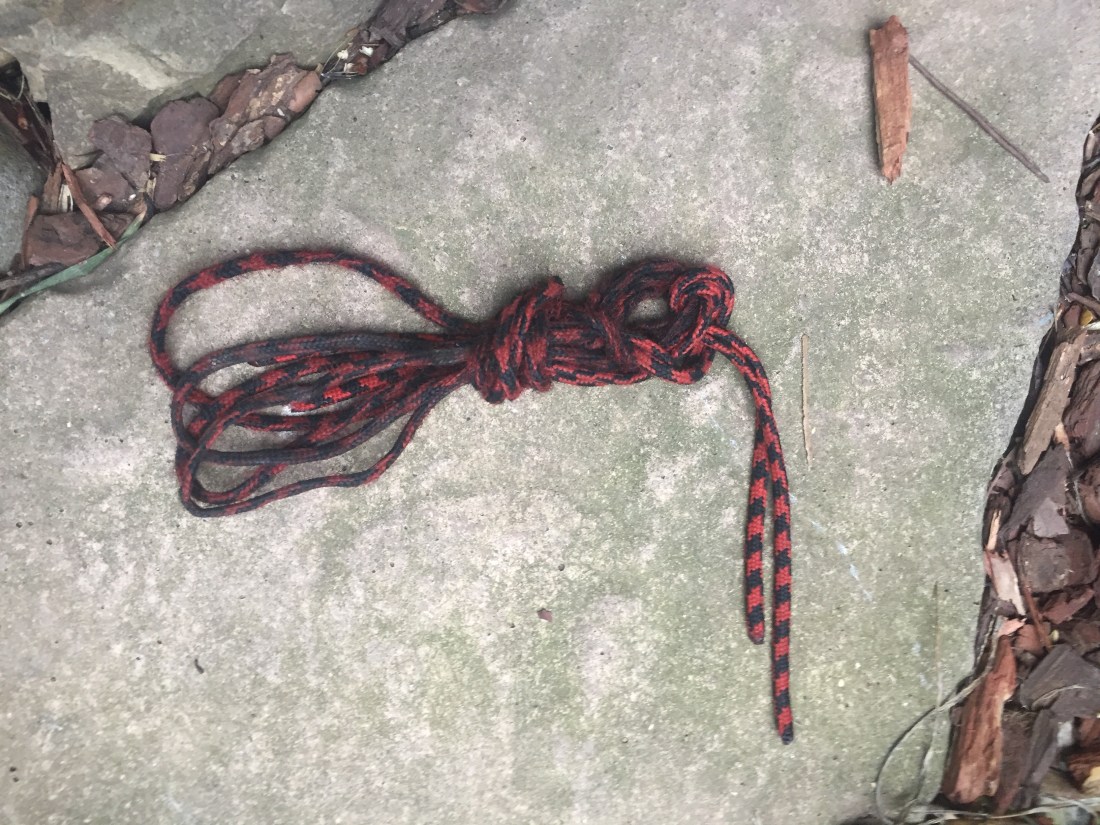
… the retirement of my longest-serving pair of bootlaces, which have graced every pair of Timberlands and Redwings I’ve had since 1978, when I purchased them – they are actually lengths of line – from a parachute-and-hang-gliding supply store in Stevenson, Md.


By Van Smith
Published in City Paper, Apr. 9, 2014
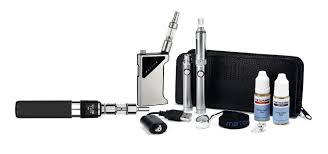
Image from http://vaping360.com/what-is-vaping/
Recently, I started huffing vapors produced by heating up compounds used in some types of antifreeze. If swallowed, the liquid I’m vaporizing can be poisonous, even fatal, especially to children. No one yet knows what the long-term health effects of inhaling this stuff will be, yet it is cheap, widely available, glamorized in advertisements, and almost completely unregulated by the authorities. In some major cities, all of Arkansas, New Jersey, North Dakota, and Utah, and a growing list of towns and counties, it’s illegal to huff this stuff wherever it’s illegal to smoke tobacco.
So why am I using it? It sounds strange, even counterintuitive perhaps, but I’m using it to improve my health.
It is called “vaping,” and the devices I’m using to “vape” are called electronic cigarettes or “e-cigs,” whose rechargeable batteries heat up “e-juice” to release vapors I inhale. The flavored e-juice I use in my new e-cigs contains nicotine, though not all e-juices do. The more I’ve vaped, the fewer cigarettes I’ve been smoking. My smoke-weary lungs have been feeling increasingly better as a result, though my decades-long nicotine addiction continues-for now.
The e-cig industry was hatched in China about a decade ago, and arrived in the U.S. in the mid-2000s. Its remarkably rapid growth has been happening so fast, it’s hard to track, but Wells Fargo Securities, in a series of recent reports put out by its “Tobacco Talk” survey team, now estimates it to be a $2.2 billion industry. The team predicts that it will reach $10 billion by 2017, and that by 2023, one of the biggest tobacco companies, Reynolds American, will realize $5.2 billion in e-cig revenue, compared to $3.1 billion it will reap from peddling traditional cigarettes.
Big bankers, in other words, are banking on the idea that e-cigs will be bigger than cigarettes within a decade. In Maryland, scores of retail vape stores and online e-cig businesses have sprung up in the past year, while three have opened in Baltimore City since last summer, with a fourth scheduled to open this month.
I followed e-cig media coverage for more than a year before making the leap. Navigating the rabbit hole of e-cig information is dizzying, as one is see-sawed from scary messages (Its ingredients are used in antifreeze! E-juice kills babies!) to rational claims that the technology reduces harm among cigarette smokers. While many questions remain about the long-term effects of inhaling the vapors from e-juice’s ingredients-propylene glycol (PG), vegetable glycerin (VG), and the flavorings infused in them-the ingredients themselves are common and approved as safe for use in food by the U.S. Food and Drug Administration (FDA). Both PG and VG are used in antifreezes designed to reduce harm from accidental ingestion, such as those used in machinery involved in food production. Nicotine, meanwhile, is a powerful and addictive stimulant that can be highly toxic, so the recent rise in reported poisonings from e-juice has prompted a media frenzy-and the widespread use of child-proof caps by e-juice makers and warnings by industry leaders that users should take smart, responsible steps to ensure e-juice doesn’t get ingested by children and pets.
The Centers for Disease Control and Prevention (CDC) on April 4 issued a press release saying that there have been 2,405 e-cig nicotine-poisoning calls to poison centers from September 2010, when there was one call, to February 2014, when there were 215, and more than half of them pertained to kids under 5 years old. To put this in context, though, poison control centers got more that 20,000 calls in 2012 alone about people poisoned by ingesting fluoride toothpaste, and almost all of them involved children 5 or younger.
Inhaled e-cig vapors have been shown in studies to have trace amounts of some harmful compounds-formaldehyde and acrolein, in particular-at levels far below those found in smoke from burning tobacco. As a review of such studies by Drexel University public health professor Igor Burstyn concluded last summer, “no evidence” currently exists that vaping exposes users to contaminants “that would warrant health concerns by the standards that are used to ensure safety of workplaces,” and “exposures of bystanders are likely to be orders of magnitude less, and thus pose no apparent concern.”
The FDA intends to regulate e-cigs by deeming them tobacco products under the Family Smoking Prevention and Tobacco Control Act of 2009, but the nine-step process of doing so is currently stuck on step four, as the White House Office of Management and Budget reviews whatever the FDA is currently proposing. In the meantime, the FDA says in a statement emailed to City Paper that “further research is needed to assess the potential public health benefits and risks of electronic cigarettes.”
The public-health community is divided on the issue. Some revered medical institutions, like the Mayo Clinic in Minnesota, advise against using e-cigs; Mayo says on its web site that “until more is known about the potential risks, the safe play is to say no to electronic cigarettes,” while pointing those who want to quit smoking to the “many FDA-approved medications that have been shown to be safe and effective for this purpose.” Other public-health experts see great promise in e-cigs as a safer alternative to smoking that can help people quit, often more effectively than other FDA-approved options.
Burstyn, in a recent interview with City Paper, says, “If all smokers switched to vaping, it would be the equivalent of them quitting, and it would change the world for the better, in my opinion.” He adds that “all serious scientists are pretty much in agreement that e-cigarettes are the way to go,” while public health professionals who say otherwise “are doing harm, clearly-every time a smoker doesn’t switch to e-cigarettes because of their advice. It’s smoking! One of the most harmful things we do, and so widespread. Their opposition to e-cigs is ideology, it’s not science, and in the end you need to listen to the quality of their arguments and use your own brain.”
In January in the Journal of the American Medical Association, an opinion piece by David Abrams of the Schroeder Institute for Tobacco Research and Policy Studies at the Johns Hopkins Bloomberg School of Public Health aired the same concerns about the risk of ideology trumping science in the public health community’s reception of e-cigs.
“If e-cigarettes represent the new frontier,” Abrams wrote, “tobacco control experts must be open to new strategies. Statements based on ideology and insufficient evidence could prevent the use of this opportunity before it becomes established as part of harm reduction strategy.” Regulatory overreach, he suggested, “might support the established tobacco industry, whose rapid entry into the marketplace and history of making potentially misleading claims of harm reduction could promote poly-use of all their tobacco products, and thus perpetuate sales of conventional cigarettes well into the next century rather than speed their obsolescence.” He added that “independent manufacturers of e-cigarettes could compete with tobacco companies and make the cigarette obsolete, just as digital cameras made film obsolete”-a prospect he calls “an extraordinary opportunity to end the cigarette century well before the 100th anniversary” of the first 1964 U.S. Surgeon General’s Report on smoking and health.
The controversy over the relative risks of e-cig versus cigarette use “makes no sense to me,” adds Michael Siegel, a physician and public health professor at Boston University. “I’d rather have people use a safer product than a dangerous one,” he tells City Paper in a recent phone interview, adding, “there’s no question [e-cigs are] safer than smoking.” He estimates that e-cigs are currently “saving maybe thousands or tens of thousands of lives” of people who are quitting smoking by using them, and adds that “it’s quite shocking to me, actually, when public-health advocates don’t applaud people quitting in this way. It’s the most promising innovation in my 25-year career.”
The just-released 2014 U.S. Surgeon General’s Report generally withholds judgment on e-cigs but allows that they are likely to be helpful as cigarette use-which the report blames for nearly 21 million premature deaths since 1964, and which, according to the CDC, was down from 42.4 percent of adults in 1965 to almost 18.1 percent in 2012-continues to be stamped out. “The promotion of electronic cigarettes,” the report states, “is much more likely to be beneficial in an environment where the appeal, accessibility, promotion, and use of cigarettes are being rapidly reduced.”
Convinced that vaping wasn’t going to kill me faster than cigarettes, and might actually prolong my life if I could successfully replace cigarettes with e-cigs, on Feb. 16 I went to the Vapory (thevapory.net), Baltimore’s first bricks-and-mortar “vape” shop on Preston Street in Midtown, and paid $57.46, taxes included, for a starter kit and two bottles of tobacco-flavored e-juice.

The Vapory is in the basement of 19 W. Preston St., so customers step down from the sidewalk to enter the small shop. Its aquamarine walls are crowded with framed prints of old art. Arrayed on nearly all available surfaces are curios: Victorian statuary, skulls, a small bronze of William Donald Schaefer, and figurines of the RCA dog, a caped Robin, and the Super Mario Brothers. The wares for sale-vaping devices, some of them strikingly similar in appearance to the hyposprays made famous by Star Trek’s Dr. Leonard H. “Bones” McCoy, plus accoutrements like carrying cases and colorful tips and tanks, plus rows and rows of e-juice bottles-are in glass display cases. A small table and a couple of chairs are set up for sampling different flavors of e-juices. As if one needed to get more comfortable in this calm, cluttered, bohemian environment, there are two couches in the corner to settle into.
“All out of Thug Juice, but I’m getting more soon,” the Vapory’s owner, 49-year-old Adam Fordham, tells a customer. Flavored with grape, watermelon, and menthol, Thug Juice is one of Fordham’s best-selling e-juices, he says. Made by Bellingham, Wash.-based Mt. Baker Vapor, it’s one of the two brands he carries, the other being Richmond, Va.-based Avail Vapor.
Fordham, a heavyset dandy of a man with a shock of swept-back greying blond hair, used to be an incorrigible smoker. “I was two packs a day for 29 years,” he says, “and I was never going to quit, because I enjoyed it that much.” He first tried vaping, he says, “so I could smoke and drink at a bar,” and “I was very surprised that it replicated” smoking so well. Then “cheapness kicked in,” he continues, as “I saw how much money I was saving. And that’s what really did it for me-especially for someone who never had any intention of quitting smoking. So when that last carton of Marlboros had run out, I didn’t buy any more. And now I’m nearing my one-year anniversary of no cigarettes. I’ve had four drags since, and I couldn’t stand it.”
Fordham opened the Vapory on July 27, 2013, after a long career in what he calls “materials management and supply operations. My first job was as a stockboy at Woolworth’s, and I hardly ever left that. I did it for University of Maryland, did it for Johns Hopkins, and then I was working for a hospital that closed, so I was actually unemployed when I opened the shop. No one was answering my resumes, but I had a short little severance, and I saw how the business was growing, so I thought if I could find a decent space, I could open in time to be the first one in the city.”
The kit Fordham sold to me was manufactured by Shenzhen, China-based Innokin Technology Co. and included two rechargeable batteries, a USB cable and plug for recharging them, and five “cartomizers” that you fill with e-juice and screw into the sleek, black batteries. The cartomizers are clear tanks topped by form-fitting tips and wicks inside them that carry the e-juice to the battery, which, when you push a button to turn it on, vaporizes the e-juice, allowing you to inhale the fumes through the tip. When the cartomizer runs low on e-juice, you add more from the bottles.
The nicotine content of the 25 milliliters (ml) of e-juice I bought from the Vapory-18 milligrams (mg) per ml-means it is the nicotine-equivalent of approximately 375 cigarettes, since each cigarette delivers about 1.2 mg of nicotine (an admittedly rough estimate). Thus, for a little less than $60, I purchased the ability to vape about the same amount of nicotine as I would take in by smoking almost 19 packs of cigarettes costing about $7.50 each-or $140, give or take a few bucks.
This was clearly a huge bargain compared to smoking cigarettes, and the potential savings grew eye-popping as the weeks passed. In March, I went to Bmore Vapes (bmorevapes.com) on Light Street in Federal Hill-the second vape shop to open in the city-and purchased three 10-ml bottles of e-juice containing 24 mg/ml of nicotine, flavored to taste like rum, whiskey, and honey-infused tobacco. Their higher nicotine concentration means each bottle contains the nicotine-equivalent of 10 packs of cigarettes. The three bottles cost about $15, potentially replacing about $225 worth of smokes.
I added to my e-juice collection at Gypsy Vape (gypsy-vape.com), a recently opened shop just inside the Beltway on Route 40 West, by buying three 12-mg nicotine bottles flavored to taste like spiced tobacco, rum, and caramel coffee. Then I returned to the Vapory to buy three more cartomizers for another $15, so I could have eight cartomizers to match my eight flavors.
All told, I’ve spent a little over $100 to become a well-stocked vaper-and my e-juice supplies, which look likely to last me for months to come, contain the same amount of nicotine as roughly 1,275 cigarettes, or about 64 packs, which would have cost me in the neighborhood of $500.
I’m about six weeks into vaping now, and I’m still buying and smoking cigarettes. But the amount I’m smoking has regularly decreased as I’ve come to enjoy vaping more and more to satisfy my need for nicotine. Whereas I used to smoke a half-pack a day, usually a little more, I recently re-upped after taking five days to go through a pack. So I’m at about four cigarettes a day: one in the morning, two during the day, and one before bed. That’s puts me within reach of quitting entirely-which I now intend to do, since, unlike ever before in my long smoking career, it seems like a reasonably obtainable goal.
When I tell Fordham I’m still smoking, albeit less and less, he tries to encourage me by gently shaming me. “What’s the point?” he says. “Segue, dude, you gotta segue.”
Stories about customers who’ve successfully quit smoking start flowing out of Fordham. “I have one guy, he smoked as much as me,” he recalls. “He came in on my second day in business, and he hasn’t smoked since, and since then people come in because they know Larry quit.”
Asked to describe the demographics of his shop’s customers, Fordham says: “It’s like smoking, there’s hardly a demographic because it’s everybody-all races, walks of life.” And he’s clearly satisfied with the sociability of his new career. “I’ve definitely met a fascinating bunch of people since I started this,” he says, before telling an anecdote to illustrate the unlikely camaraderie that arises among those in the vape culture.
“I had one customer who was in here, a University of Baltimore law student,” Fordham recalls. “Then in came this artist who does drag once in a while, these MICA students, and there was a PhD candidate at Hopkins. They all came in about the same time, and everyone’s just really talking about vaping.”
“The UB student,” Fordham continues, “after everyone else left, he was like, ‘You know, I don’t think in any other social situation we would have had a conversation, even if we were in the same bar as each other, which is unlikely. But we’re all talking about this vape, and it’s completely different from the normal crowd I would have met. And these are all people who have started vaping and quit smoking, and almost every one of them is surprised, because they’ve all tried to quit before, and nothing ever worked. And when it works for them, they are very supportive of everybody else.'”
The most prevalent types of e-cigs, known as “cigalikes,” are sold at convenience stores and gas stations, with brand names like blu, NJoy, and Blaze, often in either disposable or rechargeable models. They cost about $5 to $10 each for disposables, or $20 to $70 for rechargeable kits, and offer fewer varieties of flavors, often packaged in cartridges rather than e-juice bottles for use in refillable cartomizers. So cigalikes are more expensive to use over time than the e-cigs sold at vape stores, which cater to those looking to customize their vaping experience with a variety of higher-powered technology and nearly limitless flavor options.
Despite the higher cost over time of disposables and fewer choices, some cigalike users have found them quite useful for quitting smoking. “I was a smoker for ten-plus years,” explains Adam Sahhar, captain of Urban Pirates, which runs playful excursions on the faux-pirate ship Fearless out of Fells Point. “Most days I would smoke a whole pack of cigarettes,” he continues, and “when I decided that I could no longer justify the cost, smell, and harm to my body anymore, I decided to try the blu disposable brand, to work my way off smoking. I stopped smoking cigarettes altogether within a week and have not lit up in over a month.” He adds that using blus “is cheaper and has saved me over $100 in one month.”
Sahhar’s experience with cigalikes may have once been more common than mine, involving cartomizers and a host of tasty flavors. But vape culture centered on what is purveyed online and at vape stores rather than cigalikes from convenience stores is a growing phenomenon. The Wells Fargo Securities team in late March estimated that roughly 60 percent of all e-cig sales is happening in this hard-to-track segment of the economy, and puts the number of vape stores in the U.S. at about 5,000.
In Maryland, the Legal Resource Center for Public Health Policy at the University of Maryland School of Law has tried to keep tabs on the growth of vape shops. Its deputy director, William Tilburg, says, “I don’t have a comprehensive list,” but “the list we have” amounts to “32 bricks-and-mortar shops around the state.”
City Paper‘s attempt to create a list based on new business filings at the Maryland Department of Assessments & Taxation (MDAT), where anyone starting a business goes to file incorporation or trade-name application papers, is also incomplete by necessity. But it indicates that the vape-shop explosion in the Free State is remarkably active-and that Tilburg’s crew has some catching up to do.
Joining the parade of newly forming Maryland vape businesses in March were the Vape Shop in Sykesville, the Vapor Kingdom in Glen Burnie, MD Vapor in Thurmont, Vaperista in Easton, the Vapor Vault in White Plains, Vapor Trails in Hagerstown, Vapeculture in Gaithersburg, Vape Puffin Stuff in Cheltenham, Vape Jungle in Owings Mills, and DC Vapor and Vapor VII in Germantown. In February, there was Gypsy Vape, Vape Exchange in Germantown, Vapor Worldwide in Bethesda, The Vapepad in Odenton, and Vapin Time in College Park. And in January came the Vaper’s Knoll in Pasadena, All Day Vapors in Reisterstown, Vapor-Tek in Elkridge, Vapestore USA in Essex, Vaper-Café Timonium, Vapor Gators in Stevensville, and Vaporrise USA in Hagerstown.
That’s 23 new vaping enterprises in Maryland since the beginning of the year, and is likely not the complete picture. In Baltimore City, for instance, sisters Margee Brooks and Monica Schubel opened Mystic Vape (mystic-vape.com) earlier this year on Falls Road in Hampden, becoming the city’s third vape shop. “These shops are popping up all over,” says Brooks, who was attracted to the prospect of opening one by Schubel, who quit smoking by using e-cigs. “I knew nothing about it before then,” Brooks continues, “but I came into this business saying, you know what, financially this is going to work. I believe in it.”
A fourth city vape shop, District Charm Vapory, is set to open on Washington Boulevard in Pigtown on April 11, according to an email from Rachel Alexander, who co-owns the business with Laura Greeley.
The pace appears to be picking up, since City Paper‘s MDAT business-filings search counted over 30 new vape businesses forming in Maryland in all of 2013. Last year’s new arrivals included the Vapor Hut in Oakland, the Vape Vine and Mean Street Vapor in Glen Burnie, Vape Bros in Ellicott City, the Vape Lounge in Bel Air, Vaping Apes in Forestville, Vape Social in Rockville, Great White Vape in Arnold, Vapor Jacks in Silver Spring, Vape Daddy in Damascus, and Vaporiot in Dundalk.
Clearly, Maryland’s vape scene is burgeoning as customers look for more choice and convenience. To Fordham, what he’s been seeing among his growing customer base is surprising: “It’s the closest thing to religious converts that I can think of.” He’s also surprised at his own transformation: “I never thought I’d be, like, turned into an advocate, you know, some kind of activist or something. I just didn’t see that coming.”

“I never wanted to be an activist in my life, for anything. For anything. It never even crossed my mind,” says 43-year-old Ron Ward, an attorney who last year opened up The Vapers’ Edge, a vape shop in Parkville. “And then I started these things,” he says, holding up his e-cig, “and here’s the answer to a problem that I’ve been looking for my entire life. And within six months I was an activist, full on. It’s exciting, and being a vendor is very exciting. It’s like throwing the rope back over the fence for people, to help them find an alternative to smoking. And they’re thankful. I have people thank me during the course of the day.”
Ward is a board member of CASAA, the acronym for the Consumer Advocates for Smoke-free Alternatives Association, and now finds himself calling and writing legislators weighing how to regulate e-cigs. He did so in Maryland, urging the state not to institute a proposed ban on e-cig sales while supporting a measure to prohibit sales to minors, and both bills ended up how he’d hoped they would.
As vaping grows more widespread and acceptable, Ward says, “there is power in numbers. We’re very enthused” as the vaping community grows more organized. “Vapers aren’t like smokers,” he says, observing that, “when the smoking ban went down” in 2007 in Maryland, “there weren’t hundreds of smokers descending upon Annapolis to fight against these bills. Vapers are very enthusiastic and want to get involved. So the more vapers we have on board, the more numbers we have, the more we can fight these bans.”
Carl Phillips, a public-health scientist and longtime proponent of tobacco harm reduction who serves as CASAA’s scientific director, believes proposed bans and heavy-handed regulation that may threaten to undermine the e-cig industry are being aided by an inherent irony resulting from an important federal appellate-court decision in 2011 that essentially bars e-cig manufacturers from making claims that their products can help people quit smoking.
“It would be enormously beneficial if they could just tell the truth,” Phillips says, “but instead they have to resort to messages about how it’s a cool alternative to smoking. They are stuck advertising this way, and then they are criticized for using these marketing tactics.”
Boston University’s Siegel agrees, saying that allowing e-cig makers to “make a therapeutic claim is the best thing they could do, since it would allow these companies to inform consumers that they are safer than cigarettes, which is the truth. Instead, companies go to other tactics-how sexy it is, how you can use these where you can’t smoke.”
Siegel points out that “many decisions in public health are made in the absence of complete data”-a real problem for e-cigs since “they just came on the market and there hasn’t been enough time for thorough study yet”-yet “no one is claiming they have short-term effects, the only question is long-term effects, and it takes a very long time to establish what they might be.” New drugs are approved by FDA and “put on the market without any understanding of their long-term effects all the time,” he adds, so such decisions “often have to be made with uncertainties.” The bottom line, he says, is, “we should be doing everything in our power to combat smoking, and e-cigarettes are helping many, many people do just that.”
Here in Baltimore, Bmore Vapes owner Cornelius Sylvester says he’s seen it all when it comes to the controversies over e-cigs. He’s been in the business since 2009, when he started out working for Max Cigs, an e-cig company based in Texas, where he was living at the time. “Now that it’s popular,” Sylvester says, “everyone’s putting out so much misinformation, it’s crazy. Is it 100 percent safe? Nope, but nothing is. But is it safer? Is it a safe alternative? Yeah, it is.”
Sylvester and industry activists like CASAA’s Phillips and Ward agree that the e-cig industry needs regulation, but they’re worried that whatever gets put in place could threaten e-cigs’ availability to consumers whose health could be improved and lives lengthened by using them to quit smoking.
“There should be guidelines,” Sylvester says, “a lot of just basic regulations for this industry that would make everything so much simpler and promote safety.” He worries that, instead, “it’s going to be, take out as many small people like me as possible, replace them with electronic cigarettes in small pen styles from the big tobacco companies, and let the big pharmaceutical companies, who have rival quit-smoking products, do the dirty work and come down and wipe us out. All that’ll be left are the big tobacco companies, who are going to work with the FDA to do it this way, and pretty much take over the market.”
Time will tell whether Sylvester’s pessimistic vision turns out to be prescient or misplaced. In the meantime, though, his business is booming. He says he now has nine employees and will need more as he expands to a new, bigger location in Baltimore County, and another in the planning stages at Arundel Mills Mall. He says some small e-cig companies’ growth is staggering.
“I know one guy, I sold him his first e-cigarette in Texas,” Sylvester says. “Since then, he opened up his own store, doing online sales, and he did over $50 million last year. I’m like, wow.”
“The people you’re talking to are already the converts,” says Pamela Clark, a public health research professor who is director of the new University of Maryland Tobacco Center of Regulatory Science (UMD-TCRS), when I mention the raft of stories vape connoisseurs have told me about people quitting smoking by switching to vaping.
“They’re the born-again breathers, and they’re passionate,” Clark continues. “They’re the ones who show up and testify at government hearings. They’re really part of the subculture, and they go to vape fests and are technologically oriented and disdainful of cigalikes,” which increasingly are produced by big tobacco companies. “The tobacco industry is not involved with” the vape stores’ products so far, which she calls “very funky looking,” and she believes that “many of [their customers] were never smokers.”
She worries, though, that the rise in vape culture “may re-normalize smoking” thanks to “advertising on television,” turning back the ebb tide that cigarette use has seen for decades until now, when “it’s down below 20 percent of the population,” while also reversing the decline in teen smoking. On the other hand, she says, putting the brakes on e-cigs’ growth presents an “ethical dilemma,” because “a lot of people will anecdotally quit with them,” presenting a “problem of denying these things from people who want to quit.”
Clark, who says she got her first grant to study e-cigs in 2011, is guiding UMD-TCRS as it embarks on major new e-cig research funded last year by the National Institutes of Health in collaboration with the FDA. Some of the defenders of vape culture cited this forthcoming study when, in March, the Economic Matters Committee of the Maryland House of Delegates held a hearing on House Bill 1291, which sought to ban vaping wherever smoking is already banned by law in Maryland.
Cheryl Zolnierek, who goes by the nickname “Vape Mom” as vice president of Maryland Vapers (mdvapers.org), a group that hosts social meet-ups and an online community of vapers and vendors, asked the committee to “please, wait until this study is released, see what they have to say,” before passing an indoor-vaping ban. Lobbyist Bruce Bereano, representing the Association of Tobacco and Candy Wholesalers in opposing the bill, urged the committee to “await objective, concrete scientific facts and evidence before acting” and pointed out that Prince George’s County, which had been considering passing an indoor-vaping ban last year, decided it would hold off until the Clark-led study produced results.
The bill’s sponsor, state Del. Aruna Miller (D-Montgomery County), told the committee to “err on the side of public safety” and allow the proposal to go forward to a floor vote, since it’s “like the wild, wild West out there” with “no FDA oversight.” She claimed that “many of these studies that have been conducted” are “not conclusive” as to the risks of vaping, which may be a “gateway product” leading nonsmokers to pick up cigarettes.
Joining Miller in support of the bill was Donald Shell, head of the Maryland Department of Health and Mental Hygiene’s Cancer and Chronic Disease Bureau, who said that reported e-cig “nicotine overdoses” in Maryland had increased from seven calls in 2012, two involving children, to 11 in 2013, nine of them kids. He added that “we are not clear what the potential risk is at this time” from vaping.
Del. Melvin Stukes (D-Baltimore City) signed on as a co-sponsor of Miller’s bill, and says in an interview with City Paper that “nobody knows what’s coming from these things,” adding, “I did hear there are some things involved with the vapors that are hazardous.” Another co-sponsor, Del. Dan Morhaim (D-Baltimore County), who is a physician, adds that he’s heard e-cigs “help people quit” smoking, but “that’s not proven,” adding, “it’s always good to err on the side of caution until the facts are clear.”
But at the committee hearing, vaping proponents argued that enough is already known to avoid banning the convenient use of this promising smoking-cessation technology. “Vaping is 99 percent less risky than smoking,” said CASAA’s Phillips. The suggestion that “a bystander would be harmed” by vaping is “misguided,” he said, since the toxicity of vaping “is far below the level to create any health concern,” and “that’s the exposure to the user herself.” People who switch from smoking to vaping, Phillips continued, “are reducing their health risk almost as much as if they’d quit cold turkey,” and if Maryland law was changed to “take away that convenience” of vaping indoors in public places-like bars, restaurants, and even vape shops-“more people will keep smoking and die from it.”
Also testifying against the bill was Bill Godshall, the founder of SmokeFree Pennsylvania and a CASAA advisor, who said the bill, if passed, would “protect cigarette markets” by creating disincentives for smokers to start vaping, a practice that he estimates has “replaced about one billion packs of cigarettes in the U.S. in the past five years,” while “last year, U.S. cigarette sales dropped by 4.6 percent as e-cigarette sales skyrocketed to replace them.” The more vaping goes mainstream, the more it “denormalizes cigarette smoking,” Godshall argued, adding that just as e-cigs have burgeoned, “teen smoking has declined to record lows.”
Godshall’s teen-smoking point was meant to counter widely cited data from the CDC, which he mentioned to the committee, finding that high-schoolers’ e-cig use rose from 1.5 percent to 2.8 percent from 2011 to 2012. When these findings were released, CDC director Tom Frieden surmised publicly that they raise the specter that e-cigs are a gateway to cigarette smoking. But the CDC also found that 9 out of 10 high-schoolers who reported vaping were already cigarette smokers and that teen smoking overall had declined-facts they released belatedly, and which suggest that many vaping high-schoolers may be dual users on the road to quitting cigarettes or have already fully switched to vaping.
Boston University’s Siegel found CDC’s behavior in releasing its data in successive bites highly suspect, writing on his blog, The Rest of the Story: Tobacco News Analysis and Commentary (tobaccoanalysis.blogspot.com), that “CDC officials certainly had plenty of opportunity to let the public know that there was no discernible increase in cigarette smoking among youth concomitant with the observed increase in e-cigarette use,” and the fact they reported the former only after the media rippled with news of the latter, suggests they’ve come to “a pre-determined conclusion that e-cigarettes are evil.”
In the end, the Economic Matters Committee voted 19 to 3 to stop Maryland’s proposed indoor-vaping ban in its tracks. Bereano, in an interview after the vote, says it’s likely the majority struck the bill down “because they are sensitive to business and cautious about government regulation of business and business products,” especially since, given the reliability of information currently available, “they couldn’t call vaping dangerous and harmful.” Stukes, though, says that while the proposal is “dead for now, it will be back next year.”
“I smoked 31 years,” says Rick Willard, a 47-year-old retired Baltimore City cop. “I was doing almost two packs a day. I would raid houses with a cigarette in my mouth. In Edmondson Village, my nickname was the Marlboro Man. I always had a cigarette. I would chase a bad guy down the street for a couple of blocks, and I’d have to stop and smoke a cigarette to kick-start my lungs.”
Willard is telling war stories of his days as a chronic smoker while sitting in the lounge area of Gypsy Vape, a shop he recently opened with his longtime friend and fellow former Baltimore cop Kevin Hoff. “I tried the patch, gum, Chantix, hypnosis-everything you could imagine to quit smoking,” Willard continues. He discovered e-cigs about five years ago, he says, and “quit smoking 100 percent on January 17 of 2013.” He says he’s cut the nicotine content of the e-juices he vapes to 6 mg/ml, sometimes as low as 3 mg/ml, and “I could probably go to zero,” but, “I have no intention of quitting.” But “once you switch all the way,” he continues, “after a couple of weeks, you’re going to see a difference in how you feel. I could barely walk up a flight of steps without getting winded before. Now, I can run five miles. I feel better all over, my whole body.”
Hoff, a longtime Goth and Renaissance Festival enthusiast, says, “I vape no nicotine. I have no wish to vape nicotine, and half the vapers out there don’t vape nicotine.” He was “a hookah smoker before I got into vaping,” he explains, but grew worried about “what they put in that charcoal” used in hookahs, and “how much of that is still getting through the water filter.” So he switched to vaping-and now he enjoys something that may be the only aspect of vape culture that is controversial among vapers themselves.
It’s called “cloud chasing,” and it involves exhaling mass quantities of thick vapor, enough to fill a room, much like a theatrical fog machine can. Those who build the e-cigs that can do it have to be hard-core geeks about the vaping technology. When I ask Hoff what he uses to chase clouds, he says this: “I’m running a 20-gauge, four-wrap wire on an IGO-W drip atomizer that subohms at about anywhere from .06 to .13.” This is how cloud chasers talk.
Ron Ward, the lawyer with the Parkville vape shop, tries to be tolerant about cloud chasers. “I’m libertarian by nature,” he explains, so, “I have no problem with it at all.” But he clearly does, based on what he says next: “If you do blow industrial size clouds of vapor in public, it’s going to ruin it for the rest of us. It’s going to be what they point to when they say these things should be banned indoors, because people are being disrespectful. It honestly creates such an immense amount of vapor that it could be offensive to a lot of people. It’s offensive to me, and I’m a vaper.”
Cloud chasing “started in the Phillipines,” Ward continues, “I’d say it’s been a year and a half, and it’s become very, very popular. Culturally, it seems to be mostly young people and hobbyists, people in their 20s who like to rebuild things and want to build something that makes the most vapor.”
Or people like 48-year-old Hoff, who says he wore a blue Mohawk for part of his six years on the police force, and the last thing most people would think when looking at him is “ex-cop.” But Willard, who looks every bit the ex-cop, echoes Ward’s concerns. While cloud chasers “do it everywhere” because “it’s fun and they enjoy it,” Willard says, “sometimes people aren’t responsible. If they really thought about the future of vaping, they wouldn’t sit in a Chuck-E-Cheese and subohm and blow a cloud, because the perception of that cloud, after years of indoctrination of what smoke is, people don’t understand it. And then they get fearful for their kids.”
But the geek factor involved in cloud chasing is indicative of a larger theme in hardcore vape culture, one in which, unlike with people trying to quit smoking, nicotine isn’t really part of the picture.
“Probably 50 percent of our customers don’t even do nicotine,” Hoff explains. “A lot are people who were into hookahs, without nicotine, so we supply non-nicotine e-juice to a lot of people who just enjoy vaping, who just have a pastime where they sit around and socialize. Now, a lot of young people are going to vape shops the way, when I was younger, we used to bar-hop. It’s kind of like a hobby to a lot of people, and they go around and collect things, build things, look at things, collect the different mods, the different drippers”-component parts of high-end e-cigs that people build themselves, so they can control the ohms and voltage of the batteries and the amount of e-juice delivered.
“It’s a whole different subculture that is literally springing up overnight,” Hoff says. “I can’t remember a subculture that sprang up this quickly.”
But “our primary customers,” Hoff adds, “are people who want to quit smoking. They’ve tried everything. They come here, and we sell them just the basic kit to get started on their journey. And it works. They’re surprised that they’re not doing cigarettes anymore, and the thought of smoking turns their stomach.”
Hoff’s wife, Jennifer Langenfelder, pipes in: “One thing I don’t miss is smelling like a cigarette.” She was a pack-a-day smoker until the shop opened, three weeks earlier, and hasn’t had one since. “It’s gotten to the point where I can smell it on somebody, and it just makes me want to gag. You get to the point where it just smells and tastes disgusting.”
“That’s how we can tell if our customers are being honest or not about quitting,” Hoff concludes. “You don’t get that smell, you know it’s working.”
For now, I still carry that smell-though less so, given that I’m smoking only three or four cigarettes a day. I look forward to the day I can go to the Vapory or Gypsy Vape or Bmore Vapes, and they’ll notice I don’t reek.
By Van Smith
Published by City Paper, Oct. 30, 2008
Federal authorities in Maryland have filed money-laundering charges against two men, Edward Courdy and Michael Garone, who have figured in an ongoing investigation into the internet gambling empire Bodog. Both men were described in two forfeiture proceedings earlier this year, which resulted in the seizure of a total of $24 million from numerous bank accounts, as processors of illegal gambling transactions in the United States on behalf of Bodog.
The charges against Courdy and Garone were filed on Sept. 29, though the filings were not publicized and were found yesterday by City Paper on the online federal courts web site, known as PACER.
Courdy is charged with transferring $2,380,273 in April from Dublin, Ireland, to a Nevada State Bank account held by Zaftig Instantly Processed Payments Corporation (ZIP Payments), and then to Maryland and elsewhere, to promote the carrying on of an illegal gambling business [Courdy Info]. Garone is charged with the same general scheme, alleged to have occurred in April 2007, involving the transfer of $1,499,975 from Frankfurt, Germany, to Branch Banking and Trust Bank account in Georgia held by JBL Services, Inc. [Garone Info].
The U.S. Attorney’s Office in Maryland confirms that the two men are not currently in custody on the charges, and that no court dates have been set in the cases. Spokeswoman Marcia Murphy says that the office cannot discuss the matters other than what is contained in the court filings.
The Sept. 29 filing the of Courdy and Garone charges coincides with the date that Courdy and ZIP Payments filed a claim in forfeiture proceedings involving $9,869,283.05, which was seized in July from several bank accounts tied to Courdy. Courdy and ZIP Payments, through their California attorney, Stanley I. Greenberg, are seeking the return of the seized money. Also filing a claim that day was 1st Technology, LLC, which recently won a $46,597,849 Nevada court judgment against Bodog and is seeking to collect part of the money by intervening in the ZIP Payments forfeiture proceeding.
Garone and his company, JBL Services, did not contest the federal forfeiture of $14,200,195.73 in alleged Bodog-related proceeds [Bodog Affadavit $14.2M]. In mid-July, Maryland U.S. District Court Judge Catherine Blake finalized the forfeiture of those funds.
Garone and Courdy could not be reached for comment. Greenberg, Courdy’s attorney in the forfeiture case, did not immediately return a phone call for comment.
The affidavits supporting the forfeiture proceedings describe in great detail the lengthy, convoluted efforts of Internal Revenue Service criminal investigator Randall S. Carrow to bring to light the global movement of money in support of Bodog’s on-line gambling activities. The documents also indicate that the case is being brought in Maryland because on-line gambling via Bodog was conducted by an undercover agent working in Maryland.
Bodog founder Calvin Ayre, a Canadian now living in Antigua, became a world-famous billionaire from online gambling and other entertainment enterprises. He was featured on the cover of Forbes magazine in 2006. Carrow writes in his affidavit that investigative interest in Bodog and Ayre started in 2003, but the passage of a 2006 federal law that strengthened prosecutors’ ability to go after on-line gambling activities kicked a formal investigation into gear.
By Van Smith
Published by City Paper, Oct. 28, 2009
As the Maryland-based federal probe of on-line gambling continues, the latest move to show up in court records in Baltimore is the seizure of $365,366.69 from two bank accounts in the name of Atrium Financial Group (AFG). According to the affidavit in the case (below), Delaware-based AFG disburses money to on-line gamblers, including those who try their luck using GoldenCasino.com. City Paper has been unable to reach representatives of AFG and GoldenCasino.com for comment.
The AFG seizure—unlike several others reported recently by City Paper—is supported by an affidavit that was not sealed (see Atrium Financial Group affidavit). The 13-page sworn statement by Immigration and Customs Enforcement (ICE) special agent Augusta Ferenec, who is based in New Orleans, La., provides a peek into the complexities of the investigation. Signed on Sept. 4 by U.S. District Court magistrate judge Beth Gesner, the warrant was filed in the court records on Oct. 22.
According to Ferenec’s affidavit, the investigation leading to the AFG seizures dates to July 14, 2008, when Louisiana State Police (LSP) officers opened an “undercover gambling account” with GoldenCasino.Com, and then later requested a payout. The first check–from a Canadian outfit called Interco Finance Corporation (IFC)–bounced. Eventually, a second check came, this one from AFG. Thus, the investigation established that GoldenCasino.com was using both IFC and AFG as payment processors for its on-line gambling patrons. Ferenec explains in the affidavit that a fourth business–Con-Tex Converters, another Canadian firm–entered the picture as investigators followed the global movement of funds.
For instance, an AFG account with Mercantile Bank received wire transfers between Dec. 2008 and Jan. 2009 amounting to more than $1.5 million. The money came from a Con-Tex bank account in Cyprus and a combined Con-Tex/IFC bank account in Canada. During the same timeframe, Ferenec’s affidavit continues, AFG cut 1,473 checks from that account, at least two of which went to people in Maryland. In Aug. 2009, investigators talked to one of the Maryland recipients, who admitted the proceeds had come from gambling.
In all, Ferenec’s affidavit maps out a total of nearly $6.3 million wired internationally by either Con-Tex or IFC to AFG bank accounts in the U.S. The AFG accounts, which the affidavit says have all been closed by the banks due to suspicions that the money was tied to illegal gambling, were held with Mercantile, Sovereign Bank, Wachovia Bank, National City Bank, and TD Bank North. The international wire transfers from Con-Tex and IFC were the sole sources of funds in the AFG accounts, the affidavit explains.
The two AFG bank accounts targeted for seizure are with Fifth Third Bank and Wilmington Savings Fund Society. The Fifth Third account, from which $124,028.88 was seized, received about $3.3 million in wire transfers from Con-Tex and IFC between Dec. 2008 and June 2009, the affidavit explains. Nearly 4,000 checks were cut from the account, totaling about $3.1 million disbursed to people in the U.S. During July and Aug. 2009, 35 of those checks were issued to Marylanders. The amount of money entering AFG’s Wilmington Savings account is not specified in the affidavit, which explains that about 575 checks were cut from the account, one of which was mailed to a Texan who “confirmed to the bank that the check was proceeds of online gambling.”
Ferenec’s affidavit says it’s likely that money will continue to enter the targeted accounts “for a period of time” after the warrants are executed, because those involved “will be unable to promptly stop the flow of funds or inform all of their contacts of this investigation.” Thus, Ferenec requests that the warrant order the banks to allow the deposits to continue, but not any attempted debits, and that “ICE be allowed to periodically remove such funds” during a 21-day period after the warrants are executed.
By Van Smith
Published by City Paper, March 24, 2010
On Dec. 21, 2006, someone in Maryland opened an account with bodog.com, an online gaming site whose customers bet on sports and horse-racing and play poker and casino games on their computers. The same day, that same someone placed two online bets on football games with Bodog. Over the course of 2007, after more wagering, the online gambler requested and received two payout checks from Bodog: one for $1,500 and another for $700.
Mundane as they may seem, the Maryland gambler’s wagers and payouts have had major repercussions in the online-gambling world. That’s because, starting in 2008, the details of that person’s online betting activities were included in meticulous affidavits supporting warrants to seize the contents of bank accounts said to be tied to illegal gambling. The Maryland gambler was actually a special agent working undercover for the U.S. Internal Revenue Service (IRS) Criminal Investigation Division.
Under U.S. law, facilitating transactions tied to online gambling is illegal. Yet, due to the immense popularity among Americans of wagering over the internet, the overseas companies that provide this kind of entertainment continue to seek ways to do business with U.S. customers. In order to pay out winnings to gamblers in this country, they have to hire U.S. companies willing to operate as payment processors–middle-men who take foreign casino companies’ money and disburse it to players when they want to cash out their online gambling accounts. These payment processors are taking a risk that U.S. law enforcement will detect the transactions and seize the money while it’s sitting in the payment processors’ accounts–which is exactly what federal investigators in Maryland, and elsewhere, have been doing–but due to the lucrative nature of the business, both the payment processors and the online-casino companies have been willing to take that gamble.
In the post-Sept. 11 world, the U.S. government has developed a heightened interest in augmenting its ability to track the ways and means of global money-moving. Though the motivation is to protect the world from terrorists by interrupting their finances, this trend also means that financial crimes of all kinds–including the movement of online gambling money into the United States–face a greater risk of detection. In the world of internet wagering, whenever money is sitting in a U.S. bank account, it is exposed to possible seizure by the authorities. And, as investigators’ successes mount, it’s clear they are getting better at it.
IRS criminal investigators in Maryland “opened a formal investigation of Bodog in 2006,” court records state, after having “conducted interviews regarding Bodog.com, Calvin Ayre, and Bodog’s operations in approximately 2003.” Ayre, a Canadian who’s been living in exile for several years now, is the founder of Bodog, which is based in Antigua and has operations in Costa Rica.
Bodog, a 15-year-old company which claims to be the world’s pre-eminent online gambling site and whose operations span the globe, is not the first to be targeted by American law enforcement’s crackdown on internet gambling. That honor goes to Jay Cohen, who in 1998 was indicted in New York along with numerous other defendants for violating the federal Wire Wager Act in running the Antigua-based World Sports Exchange. Cohen fought the charges, saying federal laws prohibiting wire transfers of gambling proceeds do not apply to the internet. He lost and was sentenced to 21 months in prison. Since then, the feds have continued to focus on an industry that, in effect, presents opportunities for people to gamble anywhere and anytime, despite the laws of any particular country or state.
“If you’re in Antigua running a casino, that’s fine,” says Maryland U.S. Attorney Rod Rosenstein. “But if you’re actually operating a casino in someone’s bedroom in Montgomery County over the internet, that’s illegal.” Thus, any proceeds that can be traced to gambling activity that takes place in Maryland–whether it’s actual betting over the internet, or just the arrival of checks in the mailboxes of Maryland gamblers cashing out their online-gambling accounts–could end up seized by Maryland authorities.
Since early 2008, according to federal court records, the ongoing federal investigation of online gambling based in Maryland–which, in addition to the IRS, also involves members of a Department of Homeland Security Immigration and Customs and Enforcement (ICE) task force–has brought at least $29,206,594.62 in alleged gambling proceeds into federal coffers. The latest warrant in the investigation was signed by U.S. magistrate judge Paul Grimm in early February, and it targeted the contents of a Mercantile Bank account in Tampa, Fla. The account, held in the name of a company called Direct Channel LLC, yielded $860,335.90 on March 5. Direct Channel, like the other companies included in the Maryland internet-gambling seizures, allegedly provided payment-processing services in the U.S. for gambling web sites based in other countries. Though the Maryland investigation initially appeared to focus on payment processors for Bodog, such as Direct Channel, it has since broadened to include funds held by companies serving another gambling site, goldencasino.com, which is also based in Antigua.
Any U.S. bank account used by a payment processor working with online casinos could be targeted by investigators, potentially wiping out millions of dollars when a seizure warrant arrives at the bank. But due to the magnitude of online gambling in the United States–half of the $16 billion per year that internet gambling is estimated to generate is believed to originate in the United States–the risk may be worth it. Though federal investigators in Maryland and elsewhere, including New York, Missouri, and Florida, go for the money, there’s so much in play at any given moment that what they seize is only a small portion of money flow.
So far, after several years of effort, Maryland law enforcers have seized nearly $30 million in suspected online-gambling proceeds. That’s equal to less than one half of one percent of the $8 billion that U.S. online gamblers are estimated to spend each year. But it’s a start. And as the effort builds and grows more sophisticated and nimble with experience, the potential is as vast as the American online-gambling economy itself.
“There are very big numbers in internet gambling,” say Rosenstein, acknowledging the sizeable cut the government could get through seizing and forfeiting assets, which are funneled into law-enforcement budgets to support the efforts of the agencies that seized them. Asked if seizures, in the long run, could undermine gambling web sites’ ability to pay out to U.S. customers, he says: “That’s a possibility, and it’s certainly a risk for customers. And it’s a pretty effective deterrent, since customers have no remedy if the gambling operator fails to pay. They won’t be able to go into court and enforce that. It’s an illegal contract.”
Seizing and forfeiting criminally derived assets, including those from online gambling, has been made a priority by Rosenstein’s office. Last year, he hired the nation’s top asset-forfeiture prosecutor–Stefan Cassella, who literally wrote the book on the subject, a 950-page tome entitled Asset Forfeiture Law in the United States–to lead the effort. Among Cassella’s achievements is the largest forfeiture in U.S. history: $1.2 billion from the Bank of Credit and Commerce International in the 1990s. Given the size of the online-gambling industry’s assets, Cassella may have an opportunity to break his own record while working in Maryland.
Law-enforcement efforts to interrupt internet-gambling money flowing in and out of the United States were ramped up after the 2006 passage of the Unlawful Internet Gambling Enforcement Act (UIGEA), which was signed by President George W. Bush in October that year. Before that law was passed, the federal Wire Act, which dates back to 1961, already prohibited the transfer of gambling proceeds via wire communications. That law had been used to go after internet gambling prior to the UIGEA’s passage. But unlike the Wire Act, the UIGEA specifically outlaws internet-gambling transactions and requires financial operators, such as banks and payment processors, to determine which transactions are tied to online gambling and report them to regulators.
The banking industry, concerned that UIGEA requirements would be difficult to enforce and would force bankers to become anti-gambling police, persuaded the Obama administration to postpone the law, scheduled for implementation in December 2009, for six months. U.S. Rep. Barney Frank (D-Mass.), meanwhile, is currently trying to usher through legislation that would repeal the UIGEA and instead set up a regulate-and-tax scheme for the industry, arguing that online gambling is a liberty–and a potentially large source of public revenues–that the government should not prohibit.
But Rosenstein contends that going after the illegal profits gained from the U.S. market for internet gambling is a matter of fairness. “What Americans find particularly galling,” he says, “is when something is criminalized, honest people don’t engage in the activity, but criminals do, so they get excess profits because their only competition is from other criminals.”
Those seeking to legitimize aspects of online gambling, though, have other thoughts on the matter. Last year, in trying to persuade a federal judge to release funds seized from a payment processor allegedly tied to online gambling, lawyers for the Poker Players Alliance (PPA), a Washington, D.C.-based interest group, argued that online poker is a game of skill, not of chance, and thus is not illegal gambling. They also contended that the UIGEA establishes criminal culpability for “persons who operate illegal gambling sites, rather than those who process payment transactions,” and that restricted transactions under the UIGEA do not include funds going to a gambler because a gambler is “not engaged in the business of betting or wagering.”
The lawyers for the PPA (whose motto is “Poker is not a crime: Join the fight.”) did not prevail. But their efforts–and the well-heeled existence of the PPA, which has its own lobbying arm, PokerPAC, and whose board is chaired by former U.S. Senator Alfonse D’Amato (R-New York)–indicates that powerful forces in American society don’t like the online-gambling crackdown. Recent public-opinion polling, though, indicates the prohibition of online gambling is popular; two-thirds of those responding to a Fairleigh Dickinson University poll released on March 11 say they do not favor legalizing it.
Though online gambling is legal in many parts of the globe, enjoyed by many Americans, and accepted in many cultures–to the point that online-gambling companies’ stocks often are publicly traded in other nations–its continued prohibition in the United States may be explained by the longtime association of the gambling industry with unseemly characters making obscene profits.
Recent cases against internet gambling operations, for instance, give a sense of the profit potential the business presents and sometimes allege organized-crime ties. In New York in October 2009, the operators of Panama-based betonline.com were charged with illegal online gambling; authorities claimed the group made $587 million in 28 months and was linked to the Gambino and Genovese crime families. In a 2006 Missouri case against the longtime gambling figures who ran Costa Rica-based betonsports.com, the indictment states that the company’s promotional materials boasted “100,000 active players, who placed 33 million wagers, worth over $1.6 billion” in 2003, before the company went public on the London stock exchange. In February, Missouri authorities indicted the operators of Costa Rica-based Elite Sports, which ran the web sites best24b.com and best24b.net, and among the defendants were members of the Kansas City’s storied Cammisano crime family.
In addition, federal authorities in New York have charged two men–Anurag Dikshit in 2008 (Dikshit NY info) and Douglas Rennick in 2009 (Rennick indictment)–with illegally running online-gambling ventures. Dikshit, who was born in India and is one of the youngest billionaires in the world thanks to the success of his online-gambling business, is co-founder of the Gibraltar company that operated partypoker.com; charges against him include the forfeiture of $300 million in gambling revenues. Rennick, a Canadian, ran a series of payment-processing companies that allegedly served the internet-gambling industry, and the government is seeking to forfeit more than a half billion dollars of the proceeds from his financial dealings.
Another alleged payment processor was charged in Florida in February, when a bank alerted federal authorities that customers were trying to cash large checks they said were the payouts from online-gambling winnings. Michael Olaf Schuett, a German man living in Naples, Fla., had set up hundreds of companies and had dozens of bank accounts that were allegedly used to operate the scheme since 2007. The complaint against him (Schuett FL complaint) says that he transferred online-gambling payments to about 23,000 people, mostly in the United States, and that the total amount of money involved was $70 million.
In what may have been the first federal gambling case involving the internet in Maryland, IRS investigators and Montgomery County police teamed up to bust a ring that, in 2003 and 2004, handled action from Maryland customers on behalf of a Dominican company called World Wide Wagering, which runs the web site wager.dm. The conspiracy case, which ended with the convictions of seven men from Montgomery County, Baltimore, and Florida, followed the money flow to and from bettors and the defendants. The case included the cashing of more than $150,000 worth of checks at University Liquors in Hyattsville.
Just as IRS agents in Maryland were cracking the World Wide Wagering case, they started looking into Bodog. But it wasn’t until December 2006, shortly after the UIGEA was signed into law by then-President George W. Bush, that the Bodog investigation got serious–it began with an investigator logging onto the web site, posing as a customer, and starting to gamble.
Once the investigator started receiving payout checks in 2007, the money trail could be tracked. In the meantime, the investigation gained a cooperating witness from inside the internet-gambling industry, who corroborated facts about Bodog’s operations, including the contention that “Bodog takes in from $250,000 to millions per day on sports bookmaking alone,” court records show. An informant also helped out by corroborating facts based on experience using Bodog’s site to gamble in Florida. The informant was able to explain the betting process to investigators; additional information was gleaned from investigators working online-gambling probes in other jurisdictions.
By 2008, sufficient cause had been established by Maryland IRS investigators to seize funds from the bank accounts of three payment-processing companies suspected of handling funds for Bodog: JBL Services and Transactions Solutions in Georgia (JBL forfeiture), and a California company called ZAFTIG Instantly Processed Payments Corp., operating as ZipPayments.com.
On Jan. 18, 2008, U.S. District Court magistrate judge Beth Gesner signed a search-and-seizure warrant application for bank accounts in the name of JBL Services and Transactions Solutions; $14,200,195.73 was seized. On June 28, 2008, U.S. District Court magistrate judge Susan Gauvey signed another warrant application for ZipPayments.com bank accounts, which yielded another $9,869,283.05. By July 2008, the U.S. Attorney’s Office in Maryland had filed forfeiture actions against both pots of money. The legal actions were based on lengthy affidavits written by IRS criminal investigator Randall Carrow.
In September 2008, the case against ZipPayments.com’s money suddenly heated up. A claim for nearly $10 million was filed by ZipPayments.com and Edward Courdy, a California man who sought to have the money returned, saying it was lawfully his. Within days of filing his claim, Courdy was charged with money laundering, as was Michael Garone, a Georgia man connected to JBL Services and Transaction Solutions (“Bodog Internet Gambling Investigation Leads to Money-Laundering Charges,” Mobtown Beat, Oct. 30, 2008). In February 2009, as a result of a forfeiture settlement negotiated by Courdy’s attorney, Stanley Greenberg, and assistant U.S. attorney Richard Kay, the government returned $200,000 of the ZipPayments.com money to Courdy, and kept the rest.
Today, the status of the criminal cases against Courdy and Garone is unclear. Some time in the fall of 2009, a little over a year after they were filed, the online records of the cases against them disappeared from the federal court-records database system, known as Public Access to Court Electronic Records (PACER). Since Maryland’s federal courts handle only electronically filed documents, PACER is the only repository of its records. The disappearance from PACER of Maryland criminal case numbers 08-454 (against Courdy) and 08-455 (against Garone), creates the illusion that they were never filed at all–though City Paper still has copies of the documents charging them, which bear Rosenstein’s signature. Despite City Paper‘s requests for explanation, the U.S. Attorney’s Office in Maryland has remained mum about what happened.
Courdy’s lawyer, Greenberg, has consistently declined City Paper‘s request for comment about his client’s troubles in Maryland. Efforts to contact Garone, and to identify his lawyer in the Maryland case, have been unsuccessful.
After the money seizures and criminal charges involving Courdy and Garone were filed, the online gambling investigation in Maryland appears to have shifted from the IRS to Immigration and Customs Enforcement–and the level of secrecy surrounding the investigation increased. Though numerous search-and-seizure warrants have been filed for the contents of bank accounts and an e-mail account associated with payment processors since last summer, nearly all of them were granted under seal, so probable cause for the seizures has not been revealed to the public.
Despite the secret nature of many of the seizure filings, certain information about them is available. Three ICE task force members in Maryland–Maryland State Police trooper Robert J. Mignona, ICE special agent M. Lisa Ward, and Anne Arundel County Police detective Richard S. Gunn–and one ICE special agent in Louisiana, Augusta B. Ferenec, filed the warrant applications. The companies whose bank accounts have been seized–HMD, Forshay Enterprises , and Electracash in California; Atrium Financial Group (AFG) in Delaware; and Direct Channel in Florida–are in the payment-processing business. The amounts seized so far from these companies’ bank accounts add up to $5,137,115.84. And, in the case of Electracash–a business that has past associations with Courdy–warrants have been issued not only to seize the contents of bank accounts, but of an e-mail account the company has with Intermedia, a New York City communications company. (The Electracash e-mail warrant, unlike the bank-account seizures, so far has yielded nothing, court records show.)
One of the unsealed search-warrant affidavits–the one filed early this year against Direct Channel’s bank account in Florida–was written by Ward, but draws directly from the IRS affidavit in the Courdy and Garone seizures, and thus sheds no new light on the investigation’s details. The other unsealed warrant, against Atrium Financial Group and written by Ferenec, shows that ICE’s financial-investigations group in New Orleans, La., along with the Louisiana State Police, are in on the Maryland probe (“GoldenCasino.com’s Payment Processor Targeted in Latest OnLine Gambling Seizures in Maryland,” The News Hole, Oct. 28, 2009).
The Louisiana end of the Maryland investigation began on July 14, 2008, when Louisiana State Police officers opened a gambling account with goldencasino.com. They did not immediately succeed, because the bank they were using to deposit $100 into the gambling account apparently blocked the transaction. On the second try, though, they succeeded. They then requested a payout.
The first payout check bounced, but the second one, from AFG, cleared, and the investigators, using information they gleaned from their transactions, used their investigative powers to start on up the money trail. They discovered funds moving between Canadian companies’ bank accounts in Canada and Cyprus and on to AFG bank accounts in the United States, which then issued checks to U.S. residents, including in Maryland. The transactions they tracked involved millions of dollars zipping across the globe.
“Because of enhanced monitoring of financial transactions since Sept. 11, we have a much better handle on the movement of funds,” Rosenstein says about the ability of investigators to dig into the online-gambling industry. In fact, the affidavits of investigators Carrow and Ferenec indicate that initiating a successful seizure of funds from payment processors doesn’t require particularly sophisticated investigative techniques. The trick, it seems, is trying to pinpoint where the money will be at any given moment, hoping to gain court orders to freeze it, and seize it before it shifts yet again.
Rosenstein points out another challenge investigators face in trying to seize online gambling funds: While it’s relatively easy to go after funds in U.S. accounts, going after offshore accounts–where the big money is, since that’s where the online gaming companies operate–is tricky.
“It’s similar to the challenges we face with child pornography, which is often stored overseas and transported to the United States over the internet,” Rosenstein says. “The degree of international cooperation with regard to child pornography is far greater than with offshore gambling, though. But we can readily intercept the money flowing through financial institutions that we have jurisdiction over.”
Rosenstein says online gambling can be prosecuted anywhere that customers are located, and that the public should expect to see more enforcement efforts taking place in more jurisdictions. He says that criminal activity is increasingly becoming more internet-based, and that investigative agencies are becoming more focused on financial crimes. They’re also becoming more sophisticated when it comes to following the money.
“Anything that illegally generates large amounts of money is a concern on many levels,” Rosenstein says. “People engaged in such conduct may be committing other crimes. They may not be paying taxes, and they may be investing in other illegal activities.”


 Van Smith