Mob Rules: Ex-Gangster Charlie Wilhelm is Making a Different Kind of Book These Days, and it’s Opening Up a Lot of the City’s Secrets

By Van Smith

Published in City Paper, Oct. 6, 2004

Mobtown is not, by reputation, a mob town. Baltimore’s nickname derives from its citizens’ proclivity to riot, not from its role as a home to organized crime—a role that until very recently has been little recognized, much less resisted. Sure, there was Julius “The Lord” Salsbury, who hobnobbed with city pols and lawmen as he ruled Baltimore’s rackets in the 1950s and ’60s, until he skipped bail and fled the country in 1970, never to be heard from again. (Barry Levinson’s Liberty Heights in 1999 retold the Salsbury story). And sure, there’s a 16-month-old outfit in the Baltimore City Police Department called the Organized Crime Division, but it claims to target low-level drug dealers, not racketeers involved in loansharking, narcotics-running, gambling, arson, and murder. Poker-machine guys and titty-bar owners with ties to police and politicians, rogues who maybe bring some coke in from Ocean City or Miami or New York every now and then—they’re not The Sopranos. They’re more like Jimmy Breslin’s The Gang that Couldn’t Shoot Straight.

But with the release this week of Wised Up (Pinnacle Press), by gangster-turned-informant Charlie Wilhelm and ex-Sun reporter Joan Jacobson, Mobtown’s long-held denial of its own entrenched organized-crime problem may start to dissolve. Recognition and frank discussion of a problem, as everyone knows, are the first steps on the road to recovery. And Wised Up—Wilhelm’s story, fully corroborated and retold by Jacobson, almost entirely in Wilhelm’s voice, as if he were regaling the reader over rounds of beer at Showalter’s Saloon in Hampden—promises to let that process begin.

The recovery process for Wilhelm—a longtime loan shark, bookmaker, arsonist, drug dealer, and extortionist—started when he hit bottom in the summer of 1995. The police staged an early-morning raid on his house on Keswick Road in Hampden, and Wilhelm’s gut wrenched as he saw his youngest son, a 7-year-old, scared and crying while the house was searched. Wilhelm wasn’t arrested, though, and a few days later his partner in crime, Billy Isaacs, with whom Wilhelm had run for nearly 20 years, appeared at his front door, fresh out of prison after a federal stint for witness tampering. Wilhelm knew Isaacs had gotten away with a murder in 1978. He also knew Isaacs wanted him to kill two men who Isaacs believed were stealing from their operation. Wilhelm, who had never killed, didn’t want to do the job, and was quickly getting sick of the gangster life. Within a week, Wilhelm went to Washington to tell an FBI agent—a childhood acquaintance of his, Wilhelm’s brother’s best friend—that he wanted to turn informant. He brought no lawyer, sought no deal for the crimes he’d committed, and had no pending charges hanging over him. It was the only way Wilhelm saw to get out.

And it worked. Ultimately, Wilhelm’s dicey errands as an undercover informant led to the arrest of 23 people, including Isaacs, who went to prison for the 1978 murder. Wilhelm supported his family on government funds—$2,500 per month, for a total of $140,000—until he could land a legitimate job as a Baltimore-area carpenter, a career he still has. He never entered the federal witness-protection program, instead leaving town in 1996 to live quietly in Alabama, until homesickness drew him and his family back in 1998. Meanwhile, Wilhelm kept a journal to help beat back chronic anxiety, and eventually was diagnosed with post-traumatic stress disorder, from which he still suffers. But the journal became the basis for a four-part series by Jacobson in The Sun, published in November 2001, as well as for Wised Up.

“It’s the only thing I ever did right in my life,” Wilhelm said recently during a sit-down at City Paper’s offices, with Jacobson in tow. “Why should I be the one persecuted for doing something right? Even though all that stuff I did before was wrong—if they told me I had to do 30 years, I’m perfectly happy with that. But why should I have to run? You know what I mean? Why can’t the guys that I dealt with be on the run? Why can’t regular people, hard-working people say, ‘Hey, those guys don’t run. He’s right, he did the right thing, let them run off,’ and get them to run away?”

That, in a nutshell, is the central message from Wised Up: Baltimore has to recognize that organized-crime henchmen live and do their dirty work in its neighborhoods, and it needs to reject them, just like Wilhelm rejected his earlier life. “The general public has to make these guys the criminals—the bad cops, the bad politicians, the wise guys,” Wilhelm says excitedly. “Make them be the wrong guys. The public has to say, ‘That’s not right, what you’re doing.’ Like Billy [Isaacs]. Billy goes into Hampden, everybody looks up to him. He’s a murderer! Why don’t you have a problem with that? Why can’t people’s opinions change? That’s the problem. Billy will come out of jail, and everybody will think he’s a hero. That has to change.”

A crucial turning point in Wised Up comes in that pivotal 1995 encounter, when Isaacs ordered Wilhelm to murder the two men, and he balked. Wilhelm figured it would only be a matter of time before a contract would be out on him, too. But what’s most interesting, in terms of the larger lesson of Wised Up about the presence of organized-crime figures in city life, is the identity of one of the men Isaacs wanted killed: a fellow named in the book as Ronnie Jones, whom Wilhelm and Jacobson do not describe further.

City Paper, during the mid- to late 1990s, published numerous stories involving Ronald David Jones, an ex-city cop with a history of involvement in vending machines, bars, real estate, and strip clubs. The paper’s interest in Jones was due to his political ties to then-City Councilman, now Mayor Martin O’Malley. Those ties apparently ended not long after O’Malley was elected mayor in the fall of 1999, according to Jones and others interviewed during the intervening years. But during O’Malley’s formative years as a Baltimore politician, Jones was one of his earliest and most generous financial backers. Jones made donations through his wife, ex-wife, and businesses to O’Malley’s campaigns, and the sum reported in campaign-finance records approaches $10,000. (O’Malley isn’t the only political pony Jones has backed. State Sen. George Della, outgoing City Councilwoman Lois Garey, former City Council President Lawrence Bell, and former state Senators Tommy Bromwell and Vernon Boozer all have campaign ties to Jones, and the full list is likely longer.)

During the decade that Jones was betting on O’Malley and others, he was also involved with Joe’s Tavern, an infamous Dundalk Avenue bar that looms large in Wised Up as Wilhelm and Isaacs’ base of operations. Joe’s took its name from its earlier owner, the late state senator, Joseph Staszak, who died in a mysterious boating accident in 1979 on Old Road Bay near Sparrows Point, three months after pleading guilty to federal charges of mail fraud and filing false tax returns. In 1990, Isaacs and Wilhelm were taking over Joe’s, and Jones was at the table with them from the start—though, in a series of Oct. 1 telephone conversations with City Paper, Jones discounted his involvement with the bar, and the Isaacs-Wilhelm crew, and questioned the truth of the claims Wilhelm makes in Wised Up.

Jones says that “because I lent [Isaacs] money at one point, [Wilhelm] said I had something to do with [Joe’s], but I was never a partner, nothing like that. I lent him 7 or 8 thousand dollars for setting up Joe’s, and that was it.” As for whether there was a contract that Isaacs put on his life, Jones says, “It was bullshit. If Billy had killed all the people he said he wanted killed, you’d have to put [all the names] in a phone book.”

Also, he says, Wilhelm wanted out of the gangster life not because of his unwillingness to do the killings Isaacs ordered but because he had “no money. [Wilhelm and another Isaacs associate] put their own hits in—they were robbing the book and blowing [the money] all over town.” In other words, Jones contends that Wilhelm was stealing from his and Isaacs’ own bookmaking operation, and spending so much money that he was running out of juice, so he ran to the feds in order to make government cash as an informant. “The guy wrote a book,” Jones concludes. “To me, it’s fiction.”

“I robbed all the bookmakers—that’s the way it was,” Wilhelm explains in a follow-up interview, while at his carpentry job. “In July of 1995 [when Wilhelm offered himself as a federal informant], I still had $60,000. I did it for money? Who would put their whole family what I had to put them through for $2,500 a month? That little piece of shit.”

When told of Jones’ contention that Jones had virtually nothing to do with Joe’s Tavern, Wilhelm went ballistic: “He’s an absolute liar—I’ve got the paper on that!” And then he left his job site to retrieve a document, which he shortly delivered to City Paper. It was a handwritten promissory note (apparently in Jones’ hand) for $71,000, with a promise to spend $15,000 more on equipment, lent to Joe’s Tavern by Jones, who signed the document along with Isaacs associate Richard A. Payne (the other man Isaacs later ordered Wilhelm to murder) on behalf of Joe’s. Wilhelm signed the note as witness to the December 1990 transaction, which also secured a 50-50 split between Joe’s Tavern and Ron Jones for all the tavern’s vending-machine business for 10 years. Wilhelm says the document was drawn up and signed at the offices of Baltimore criminal-defense attorney Michael Marr.

“I don’t recall anything like that,” Jones responds, adding, “I never got a dime out of” Joe’s vending-machine revenues. Then he remarked about the promissory note, “Goddamn, I gotta get a hold of that—I could collect on it. If you find anybody else who owes me money, call me.” In a phone message left at City Paper later the same day, he said that his wife at the time, Lois Arreguin, was on the Maryland State Lottery license for Joe’s Tavern for one year in 1990.

The absolute truth of the matter is hard to ascertain, despite the documentation. It’s still possible that the money was never loaned, and that Jones never shared the vending-machine take at Joe’s. But Jones freely admits to a long-term relationship with O’Malley. “I’ve known Martin for 14 years, going back to when he ran against [former state Sen. John] Pica” in 1990. Jones recalls being introduced to O’Malley through John Hubble, a real-estate investor who later, in 2001, served for three months as real-estate officer for Baltimore City government. “Once [O’Malley] became mayor, he got a different life,” Jones says. “I don’t want to be in that circle. If you need the mayor, you’re in trouble.”

In response to questions about the mayor’s relationship with Jones, O’Malley spokesman Steve Kearney would only say that “the mayor’s office has nothing to say other than there have been over 10,000 donors to the mayor’s campaigns over the years.” With Wised Up hitting bookstores on Oct. 9 and also available online (www. wisedupthebook.com), though, one of the mayor’s longtime—though erstwhile—political benefactors is now fingered in print as having been in business with organized-crime figures. Journalists, voters, and other political observers are sure to notice, and it’s safe to predict that a discussion about organized-crime ties to Baltimore politics will enter the civic debate.

Despite Wised Up’s remarkable disclosures and descriptions of mob life in Baltimore, it remains at its core a story about a man who made a change. “I really wrote the book because I thought it was a great story about how [Wilhelm] changed his life,” Jacobson says. “And I understood that there needed to be chapters about loansharking and bookmaking, and it was fascinating, but I really see this as a book about a guy who really turned his life around. And that’s what I think is the most interesting part about this book. That’s what really kept moving me along. I’d never written a book before, and it’s a big, long process. And that’s what kept me going—it’s a great story. It’s a story of hope.”

Star Power: Frank M. Conaway Jr. Won an Election, Baggage and All

By Van Smith

Published in City Paper, Oct. 25, 2006

State delegate candidate Frank Melvin Conaway Jr., who with 5,889 votes was the top vote-getter in the 40th District Democratic primary in September, doesn’t want this story published. His father, Baltimore City Clerk of the Circuit Court Frank M. Conaway Sr., doesn’t either. In separate interviews, both used the same, emphatic words: “You don’t have to write the story.”

The story, though, may be of interest for 40th District voters, who on Nov. 7 will decide which three of the four candidates will go to Annapolis to represent approximately 110,000 city residents living from Pimlico and Rosemont to Woodberry and Mount Vernon. Simply put, Conaway Jr. isn’t a delegate yet, but he likely will be soon–despite having a decidedly thin résumé and embarrassing problems: a drug convict chairs his campaign committee, and his wife swore in 2003 that Conaway Jr. is mentally ill and abusive, prompting Baltimore County courts to step in for her protection.

Conaway Jr.’s campaign-finance committee is chaired by Adonis Sanchez Johnson, 26, who in 2003 was convicted for possessing six quarter-sized chunks of crack cocaine with a street value of several hundred dollars. He received an 18-month suspended sentence and 18 months of supervised probation. At his sentencing, court records show, Johnson was an unemployed community-college student who previously worked construction.

Conaway Jr.’s longtime wife, Latesa Elaine Thomas, 44, has had a Baltimore County domestic-violence protective order against her husband for more than three years. The order, dated Aug. 25, 2003, states that Conaway Jr. “threatened to kill” Thomas, placing her “in fear of imminent serious bodily harm,” and that “one year ago [he] pushed her face through back door window.” Thomas also convinced the court that Conaway Jr., 43, was a threat to himself and others as a diagnosed sufferer of bipolar disorder who had stopped taking his prescribed medications, so the court ordered police escorts to deliver Conaway Jr. to two emergency hospital evaluations in the summer of 2003. Thomas is in the process of divorcing Conaway Jr.

“We knew this day would come,” Conaway Jr. says. It’s an unseasonably warm early-October afternoon, and he’s standing at the foot of the Battle Monument, in the middle of Calvert Street between the two circuit courthouses. “Somebody’s going to ask that question,” he remarks, “and it’s none of your business.” At the time, City Paper did not know what had happened to prompt the protection order.

Conaway Jr. dismisses the drug conviction of his committee chairman by asking, “Can’t a guy get a second chance?” He remarks that “in order to be one of the people, you have to help the people. I gave a person a chance.”

Conaway Sr., when asked about Johnson’s criminal record and committee chairmanship, says simply that “it is what it is.” Attempts to reach Johnson were unsuccessful.

Bringing up Conaway Jr.’s own court record prompts the candidate to assume a don’t-go-there attitude. “My children’s mother is a decent woman,” he says. “That’s all you need to know. People understand that things happen between man and woman and the rearing of children.”

Conaway Sr., interviewed later over the phone after his son’s domestic violence record had been examined, says, “I don’t know about [Conaway Jr.’s] diagnosed disorder.” He adds that he doesn’t “get into [his children’s] marital affairs” and therefore was unaware of the domestic-violence issues. He cautions that his son once took his wife to court, too, so “you should take what she says with a grain of salt.”

In addition to the injuries described in the protective order, Thomas, in her sworn statement in the case, mentioned a “tooth chip” and “bruises all over the body.” She wrote that Conaway Jr. was “having a bi-polar accident. He has not taken his medicine for several months.” She asked the court to help, writing that she and the three children she’s had with Conaway Jr. are “living in fear” because “he is bi-polar and I can’t deal or control his behavior,” which she described as “unstable,” “talking threats, keeping son in garage in fear. My entire family is afraid. He is in a manic state and is unreasonable.”

Bipolar disorder, which is also known as manic-depressive illness, is described by the National Institute of Mental Health as “a brain disorder that causes unusual shifts in a person’s mood, energy, and ability to function” that “can result in damaged relationships, poor job or school performance, and even suicide.” It estimates that 2.6 percent of the U.S. adult population suffers from the biochemical illness. In September, the Harvard Medical School published a NIMH-funded study that found that the economic impact of bipolar disorder is measurable: “each U.S. worker with bipolar disorder averaged 65.5 lost workdays in a year.” But it is treatable with medication–as long as sufferers stay on their medication.

Keeping on the medication, Thomas swore to the court, was what Conaway Jr. failed to do. The result was abuse allegations severe enough for the court to order him to stay away from his wife, children, and in-laws, and their respective homes, schools, and workplaces, or be charged with a misdemeanor crime that could bring jail time.

In the ongoing divorce case, Thomas no longer alleges abuse by her husband, and asks for divorce on the grounds that they’ve been separated since July 2003. Conaway Jr., though, brought up the issue of violence himself, writing in his response to her divorce filing that Thomas “failed to list when she was charged with domestic violence.” That occurred in 1993, when Conaway Jr. swore out a complaint against her for assault, but prosecutors dropped the charge.

Conaway Sr., when informed of his daughter-in-law’s sworn statements, says quietly, “I don’t believe these things. I don’t think he would lay a hand on her. And I know him.”

Thomas initially said she would meet with a reporter for this article but then stopped returning phone calls. “I’m just an ordinary woman looking out for my children,” she said during a brief phone conversation.

Conaway Jr. is a mail clerk in the Baltimore City Municipal Post Office, a job he says he’s had for about three years. For about six or seven years before that, he says he worked for his father’s travel agency. Back in the 1980s for three or four years, he says he had an insurance broker’s license while working for Conaway Sr.’s now-defunct insurance business. In the meantime, Conaway Jr. says he received an education–three years at Howard University, one year at Morgan State University, then three years at Sojourner-Douglass College, graduating in 1999 with a degree in business administration. He also wrote books, and started a replica kit-car business called “F” Dreams Inc. The business fell victim, he says, to the North American Free Trade Agreement of 1994. His book Baptist Gnostic Christian Eubonic Kundalinion Spiritual Ki Do Hermeneutic Metaphysics, which combines biblical theology and martial arts, was published in 2001, and was followed by the ’04 release of his The 20 Pennies a Day Diet Plan. Both are available online.

Conaway Jr.’s political committee, which was formed in May, raised and spent exactly nothing to get him elected in the primary. Yet at the polls he bettered all others–one well-liked, well-funded incumbent (freshman legislator Marshall Goodwin) and a number of other challengers with serious jobs and respectable campaign kitties. How? Conaway Jr. explains it this way.

“I have been in this community all my life,” he asserts. “I was raised up to have respect for everyone, to greet people every day–police officers, teachers, businesspeople–so every day I say good morning to people. I speak to people in the supermarkets, gas stations, whatever. That’s how I know people. That’s how I pulled it off, because I’m one of the people.

“I covered the whole district,” he continues, defensive at the suggestion that he was a no-show candidate, often missing at primary-season events. “I went door to door, I gave out toys, I gave out whistles, I gave out brooms, I spoke at forums. I tried to tell the truth. I tried to give a different answer than just rhetoric. I separated myself from the pack, because most of the people I was running against, they sound the same. You know, they sound good, but there are no answers [when they speak]. I spoke my mind.”

Conaway Sr. fills in the rest. “Everybody that gets elected gets elected by name recognition–everybody,” he proclaims, explaining that voters tend not to vote for people whose names they don’t know. “If you don’t have it, you have to buy it, and it just so happened that [Conaway Jr.] didn’t have to buy name recognition because his name was well-known.”

The Conaway name has graced Baltimore ballots since the 1970s, when Conaway Sr. was himself elected a state delegate. He rose to chair the Legislative Black Caucus before his star arched into a scandalous investigation of his insurance business. By 1982, he’d vacated his seat in Annapolis and declared bankruptcy. The same year, his wife, Mary Conaway, was elected the city’s register of wills, a position she’s held ever since–though she’s made stabs for other offices, including for Congress and mayor. Since Conaway Sr. gained the clerkship of the city Circuit Court in 1998, he’s run for mayor, too. Conaway Jr.’s sister Belinda Conaway is the 7th District’s city councilwoman, and just ran and lost for state Senate in the 40th District. Conaway Jr. himself tried for a City Council seat in 1999. That’s a lot of Conaways on a lot of ballots over a long period of time.

In order to keep the family legacy going, Conaway Sr. started Three Bears Slate, the campaign committee that raises and spends money on any and all of the family’s races for public office–including Conaway Jr.’s primary victory. Formed in July 2005, it had raised nearly $60,000 and spent nearly $50,000 as of late August.

“All of those votes for four people with so little money,” Conaway Sr. says, admiring the electoral efficiency of the family machine. “It’s not for power,” he insists–though he allows that another organization he formed this year with a bevy of local political and business leaders, Metro Political Organization, is “about power–what else would it be?” But when it comes to the family slate and public service, “I’m in it to help people,” he says.

In this case, Conaway Sr.’s help came in the form of Conaway Jr. The son, since he hasn’t followed former Democratic gubernatorial candidate Doug Duncan’s recent example of withdrawing after confessing to a mental-health problem, is on the November ballot along with fellow Democrats Barbara Robinson and Shawn Tarrant. Green Party candidate Jan Danforth is on the list, too. While Danforth’s vote-drawing potential is as yet untested, she has made a name for herself by fighting vocally in recent years against Loyola College’s decision to develop forestland in Woodberry and serving on the boards of the Greater Homewood Community Development Corp. and Jones Falls Watershed Association. If Danforth, 56, comes in fourth, Conaway Jr. will be elected, making his father proud.

“He’s not going to do anything bad,” Conaway Sr. predicts of his son’s likely future in the state legislature. “He’s fine. He’s going to be a star.”

Working Overtime: Drug Conspirator Eric Clash Says Cooperating Rehabilitated Him

By Van Smith

Published in City Paper, Apr. 1, 2009

His well-fitted gray suit and good-natured confidence lend 30-year-old Eric Clash the look of an earnest young professional as he stands behind the defense table on March 9 in U.S. District Court Judge William Quarles’ courtroom in Baltimore. With bright eyes shining under his clean-shaven dome and a light, trimmed beard on his chin, Clash doesn’t look like what he is: a second-generation drug dealer who, after agreeing to plead guilty to charges in a massive drug conspiracy, has spent the past three years helping the government make criminal cases. He appeared before Quarles on March 9 to ask for leniency, saying he left the thug life for good when he became a cooperator.

When Clash was first charged in 2005 as a member of the violent, politically connected Rice Organization drug conspiracy, which operated in Baltimore from the mid-1990s until the mid-2000s (“Wired,” Mobtown Beat, March 2, 2005), prosecutors seized about $150,000 from his bank account and said he “occupied a high level” in the group’s hierarchy. Today, with Quarles set to sentence him, Clash is projecting the image of a changed man in grave danger, due to his cooperation with authorities.

Of the 13 Rice Organization co-defendants, Clash is one of three who remains to be sentenced. The other two are Steven Campbell and Anthony Leonard, who also have been revealed in open court to have cooperated with the government. The remaining 10 Rice Organization co-defendants–brothers Howard Rice and Raeshio Rice, Chet Pajardo, Eric Hall, Robert Lee Baker, Michael Felder, Keenan Dorsey, George Butler, Oreese Stevenson, and James Jones Jr.–are serving prison sentences, with release dates ranging from two or three years from now until 2030.

In addition to bringing a steady stream of cocaine to Baltimore, the Rice Organization was responsible for violence, including murder. Among the businesses associated with the crew was Downtown Southern Blues, a restaurant on Howard Street’s Antique Row whose landlord was Kenneth Antonio Jackson, an ex-con and strip-club owner with a long history in the drug game and local politics (“The High Life,” Mobtown Beat, Jan. 3, 1995). Several Rice Organization members gave campaign funds to local politicians, some of whom held fundraisers at Downtown Southern Blues.

One of the Rice Organization members, Pajardo, co-owned an East Baltimore corner-store property with Hollywood actress Jada Pinkett-Smith, the wife of actor Will Smith (“Star-Crossed,” Mobtown Beat, Feb. 9, 2005). Another, Butler, was featured in 2005’s infamous Stop Fucking Snitching DVD, produced in Baltimore to warn off potential cooperators. Clash, who bought and sold Baltimore real estate including a westside bar called the Red Door during his drug-dealing years, is the son of Edward Clash, who himself was convicted of drug dealing in 1994.

Four Rice Organization rivals–Willie Mitchell, Shelly Martin, Shelton Harris, and Shawn Gardner–were convicted of numerous federal organized-crime charges last fall. Among them were murder charges arising from the 2002 stabbing of three Rice Organization members, including Clash and Raeshio Rice, outside the now-defunct Hammerjack’s nightclub in downtown Baltimore, after a birthday party for Baltimore-born rap mogul Kevin Liles. In February and March, three rivals received life prison sentences while Martin received a 400-month sentence.

Both Clash’s lawyer, Robert Simels, and his prosecutor, assistant U.S. attorney Jason Weinstein, tell Quarles that Clash is over and done with his former life in the game, and that he holds promise in lawful pursuits in the future.

Weinstein says Clash is an “extremely bright man” with “impressive potential.” He says Clash’s sentence reduction will be “richly deserved,” since “‘exemplary’ is the word I’d use to describe Mr. Clash’s cooperation.” He reminds the judge that Clash had “less of a role in the conspiracy” than two other indicted Rice Organization members, Steven Campbell and Anthony Leonard, who also cooperated as part of their pending pleas.

Simels’ job is easy, given the prosecutor’s lavish praise for his client: “It is rare in my experience that I have heard an assistant [U.S. attorney] speak as glowingly as Mr. Weinstein has of Mr. Clash,” he says. And Simels, a New York attorney with a decades-long history of representing major drug figures in Maryland (“Team Player,” Mobtown Beat, Sept. 24, 2008), who himself is currently under indictment in New York for witness tampering in a Guyanese cocaine case (“Big Target,” Mobtown Beat, Feb. 12), has plenty of experience.

Simels tells the court that Clash’s cooperation has been “remarkable in terms of his assistance to this community, and the United States as a whole,” as “set forth fully” in a sealed letter to the judge. He says Clash is married now, has professional expertise in real estate and construction, is taking classes, and has “adopted his faith as his guiding light.

“He’s not going to be in trouble again in the future,” Simels says. “At some point we have to demonstrate the sacrifice that he’s made” and “make sure the reward is an appropriate sentence.” The attorney recalls that at one point putting Clash in the witness-protection program was discussed. He says that Clash’s cooperation puts him in danger, and “to incarcerate him at this stage puts a burden not only on the [U.S.] Bureau of Prisons, but also on Mr. Clash, who will be looking behind his back at all times.”

Simels suggests that Quarles impose a “non-incarceration form of sentence.”

“I am pleading for leniency to save my life,” Clash tells Quarles on his own behalf. “I have put my family in jeopardy, myself in jeopardy. . . . I am here to better myself.” Clash says he now plans to help steer people away from crime. “When I was living that lifestyle, I knew it was wrong,” he says. “Nobody forced me into the decisions I made.” He says he wants to write a book to help others, especially children, get the direction he lacked when he was younger.

Clash tells the judge that while he was cooperating with the government, he spent three months working as a mortgage broker in New York, and that he went to Detroit, where he learned about educational broadcasting while working on a documentary for a major cable channel.

Quarles tells Clash that his cooperation “goes some distance to correcting some of the damage you and your cohorts inflicted on this community [by] bringing in more than 3,000 pounds of cocaine.” Instead of the 10-year sentence the federal guidelines call for, Quarles gives Clash 48 months, with credit for 16 months already served.

After the sentencing, U.S. Attorney Rod Rosenstein explains that Clash received an extraordinary break. As a matter of policy, Rosenstein says, his office recommends a two-level departure for cooperators who help prosecutors in the case they are charged in, and two more levels if they help in other cases. In Clash’s case, he says, Weinstein recommended that Clash get the standard four-level departure for cooperators that helped in cases other than their own, but Quarles tacked on two more, for a total of six years shaved off the sentence.

“You really have to do a lot to get recommendations for departures of more than four levels,” Rosenstein says, but in cases of cooperators who go the extra mile, “we increasingly make exceptions to it. Ultimately, the judge decides.”

In this case, Quarles decided that Clash’s work helping prosecutors was valuable enough to schedule him for release from prison in late 2011, and, in order to enhance his safety, to have him assigned to prisons that maximize protection from the expected threats of other inmates.

It may not be all the leniency Clash was hoping for, but it’s a pretty good deal compared to the long, hard time his old Rice Organization running buddies are serving.

Meet the Neighbors: 2000: My First Mistake–Calling the Cops About the Shady Characters Next Door

By Van Smith

Published in City Paper, Dec. 23, 2009

At first, in early spring, the business that took over the vacant garage on the alley behind my house seemed like it’d make a good neighbor. Evidently, it required only a blow torch and an air wrench powered via an illegal hook-up off the utility pole. The place hummed: zzzztch-zzzztch, vvvvt-vvvvt, all day long and sometimes into the night. I could see into the garage from my third-floor window, and learned that it worked on cars. With its door yawning open most of the time, it seemed not to have anything to hide.

But soon a fever prompted a series of events that started to change my attitude about the garage. Two o’clock in the morning rolled around and, sleepless blob of warm pus that I was, the ongoing racket boiled me over. One guy was working–zzzztch, vvvvt–and three or four others were playing music and generally having a cussin’ good time. I marched over, ducked under the arm of a guy who tried to block me, and became the textbook definition of the crazy white guy.

They quickly talked me down. The main guy–a giant of a man–was smiling, all mellow, and holding a fat wad of high-denomination cash in his hand, doubled over a finger. “I’m in charge, and I’m telling you right now, if you got a problem, you come to me, and I’ll take care of it.” He introduced himself as Blood, and his sidekick as Red. I went home, thinking, well, that went well.

The cash struck me, though, since I never saw any paying patrons. I put my long-lens camera on a tripod and watched. They were working on nondescript, second-hand cars, installing hidden compartments with electronically activated hydraulic lifts. I started to snap pictures and write down license-plate numbers of cars that frequented the place. I didn’t know what I would do with the information, but I was the homeowner here, and the criminal-renters would have to go.

I drove home in the wee hours one night to find there was no place to park, so I took an illegal space. Blood and Red’s completed inventory had taken over the neighborhood’s once-plentiful parking. I got up to re-park before dawn, and found the inventory–maybe 30 cars in all–was gone. They were doing a brisk business.

One late night in May, the crew was hanging out in front of the garage, smoking blunts and drinking and having a rowdy good time playing craps. The garage door was open, the cars lined up behind them. I called 9-1-1 and gave the operator the address, explaining that they were smoking blunts and gambling in plain view, but the true crime was inside, where they were refitting cars with hidden compartments for delivery of drugs, cash, and probably guns. A passing cop would end up with a major case instead of minor charges. I hung up and went out to my stoop to watch the show.

About a half-hour after the call, a patrol car pulled up to the intersection of the alley, slowed down, turned around, and drove off. That was it.

The next morning, an unmarked police car arrived, and two uniformed cops with portable radios got out and fist-bumped Blood. The three chatted a bit, then the cops got back in their car and drove off.

I realized I couldn’t call the cops on the garage anymore. Though no longer naive, I was very, very scared.

Soon, I contacted the FBI. I met with two agents. I gave them photographs and described what I’d been observing. They tried to persuade me to become a cooperator, to infiltrate the garage, to exploit the friendly terms I’d established with Blood and Red. I went ballistic and profanely refused. They told me that, absent that, it’d be two or three years before they could dismantle the operation.

Meanwhile, Blood and Red menacingly invited me to their Memorial Day cook-out, saying I would be the “guest of honor.” My spacious back yard–once a happy place, with a colorful picnic table and a fire-pit over which many sumptuous meals had been prepared, and where my cats often lounged–became mysteriously and repeatedly bombarded with cinder blocks. For an entire weekend, Blood and Red tried psychological warfare on me, playing one song–“Charlie Brown, Charlie Brown, why is everybody always picking on me”–over and over and over again. Good grief.

I called a retired cop I know, who referred me to a veteran at the High Intensity Drug Trafficking Area task force. The HIDTA guy was enthusiastic, and so was I when he said, “Based on what you’re telling me, we can go in there tomorrow.” Then he asked if I’d shared the information with anyone else. When I told him about the FBI, he said, “You told the frat boys? Well, that’ll probably shut us down.” And it did.

So I called a prosecutor I know, who referred me to a Drug Enforcement Administration guy, who told me they’d maybe get to it on a rainy day someday.

At that point, I wasn’t eating properly, I was hardly sleeping, and I was chain-smoking. I had set up a comfortable chair by the tripod on the third floor, along with an oversized ashtray, a glass, and a bottle of Pikesville rye. I was obsessed with the garage, and it wasn’t healthy.

In July, I told a friend in New York about my nightmare, and he suggested I take over his apartment in August while he and his family vacationed. I did, but on the way out of town, I called the neighborhood association president. “At the next meeting,” I begged, “pass a motion that a letter be sent to zoning enforcement about what’s going on at that garage. I don’t think it’s zoned for what’s going on there.”

When I got back in September, zoning had rousted Blood and Red. The garage was empty again, and the alley had returned to safe, familiar normalcy as a comfortable haven for hand-to-hand drug-dealing and strung-out junkies. I breathed a long sigh of relief.

The Last Dirty Picture Show: The Heyday of the Apex Theatre Has Come and Gone. Can It Rise Again?

By Van Smith

Published in City Paper, Jan. 27, 2010

Tuesdays are Retro Night at Baltimore’s 580-seat Apex Theatre, meaning old VHS porn tapes are projected on the big screen instead of the usual DVDs. On a recent Tuesday, the onscreen action featured a mustachioed guy with a champion mullet going down on a big-breasted blonde. It’s a long, quiet scene, with no musical accompaniment, so in the cavernous silence it’s hard to miss the sounds in the seats: a zipper zips down front, and in the back, someone’s moving rhythmically. The two other patrons of tonight’s show would seem to be enjoying their solitary, if somewhat public, recreation.

A sign in the foyer baldly declares no sex acts performed in this building, but someone has scratched out the no. After all, pulling the juice in the dark is pretty much what X-rated movie theaters are all about.

Behind the Plexiglas at the Apex’s entrance, DVDs, snacks, and sodas are for sale. The cashier estimates that, on average, five customers an hour pay $10 to pass through the theater’s turnstile. Asked when to visit should one be looking for a crowd, he thinks for a second, takes a sip from his paper cup, and says: “About 1965.”

It’s a funny answer. But for the Apex’s owners, it points to an obvious problem: In today’s smut economy, they may as well be wearing powdered wigs and writing with quills. Porn consumers for decades now have been easily getting off in the privacy of their own homes, thanks to the boom of home-video technology in the 1980s and, more recently, the ubiquity of cheap, or even free, porn on the internet.

Today, according to cinematreasures.org, an ever-growing online catalog of more than 27,400 movie theaters around the globe, the international inventory of adult cinemas is down to 105, with 31 in the United States. They still hang on in big cities such as New York, Philadelphia, Chicago, Los Angeles, and San Francisco, and in less bustling locales, such as Bay City, Mich., Youngstown and Toledo, Ohio, Clarksville, Ind., and East St. Louis, Ill. But they are steadily on the wane. Since the Earle Theatre on Belair Road closed in 2006, the Apex–located on Broadway in Upper Fells Point–is Baltimore’s only remaining adult theater.

Apex owner Isa Mufareh (whose business partner is his son, Maurice) acknowledges that the business model is anachronistic, but says the theater still makes money. “With home entertainment, it’s available everywhere,” he says of adult films. “But keep in mind,” he continues, “there are always some lonely people in this world. Our patrons, many are older people who don’t have that [technology] at home, and they don’t want to be at home alone. They want to mingle with other people who are in the situation they are in. There will always be people like that–we need more of them.” As for profits, Isa Mufareh says the business is “sustaining. We’re not getting rich out of it, just breaking even.”

The routine at the Apex is quite simple. The theater, other than the VCR tapes shown on Tuesdays, screens DVDs. “We buy them by the hundreds,” Mufareh explains. “We just take them out of the box and, well, just show them one after the other. On Thursdays, it’s the gay movies. We get about 100 people coming in on Fridays and Saturdays, half of that in the middle of the week.” As for costs, he says, “normally, there are one or two people working,” manning the cash register, operating the projector, and ensuring that patrons are behaving. Other than that, there are rent, insurance, and utility bills to pay.

Inside, the Apex retains its allure as a historic, single-screen theater. Four fleur-de-lis shaped sconces on the walls shed red light upward, and though a bit rag-tag in places–the ceiling is showing its age, and the bathroom has some plumbing issues–its homely grandeur is generally well-preserved. Upstairs, the projection room serves now as storage (the DVD projector used today is housed behind the last row of seats), but still boasts two vintage Motiograph projectors and some 35mm prints of old porn films, such as Deep Throat, The Devil in Miss Jones III, Education of the Baroness, and Freedom to Love. The marquee, according to erstwhile Senator Theatre proprietor Tom Kiefaber, is “the second best marquee in Baltimore [after the Senator’s] in terms of its look, its maintenance, proper spacing, and matched letters.”

Isa and Maurice Mufareh, along with a third partner–Khalid Darraj, Isa’s nephew, whose one-third share in the business, Isa explains, was purchased by Maurice two years ago–have been running the Apex since 2003. Back when it was first converted from a bowling alley in 1942, it screened major Hollywood releases, but it has been an adult theater exclusively since the mid-1960s. With a market that consists largely of older, technologically unconnected people, the Apex is up against the law of attrition: Such patrons die off, and it’s not clear who, if anyone, will replace them. So the question becomes, how much longer can the Apex survive screening porn?


It’s a question that Khalid, Maurice, and Isa, incorporated as KMI Entertainment, tried to resolve several years ago by attempting to turn the Apex into a strip club. After the city liquor board consented to the change, in 2004 the Mufarehs and Darraj applied for a building permit for $250,000 in planned renovations, but zoning officials balked. In court documents, their lawyer, Fred Lauer, argued that “the Apex is used as an adult entertainment business and would continue such use, the only difference being that the adult entertainment would now be live.” The zoning board didn’t buy it, so in 2005 KMI Entertainment appealed to Baltimore City Circuit Court, where judge Evelyn Cannon didn’t buy it either. Live adult entertainment “is not similar in nature” to adult movies, she wrote in her 2006 opinion.

“The neighborhood made a fuss about it and filled up the courtroom,” Isa Mufareh recalls. “We said the law would let us do it, but [zoning officials and the judge] interpreted it differently–they wanted to interpret differently–so we didn’t get it. You can’t fight City Hall–if they don’t want it, then they don’t want it, and that’s that.”

Neither did the Apex’s neighbors. In letters to the zoning board, and in testimony before the board at the June 2005 hearing on the matter, several officials of neighborhood groups stridently opposed KMI Entertainment’s plans, essentially saying they preferred an existing X-rated movie theater to the possibility of a strip club instead–all the while attacking the theater, nonetheless.

“The Apex Pornographic Theater,” offered one letter-writer, “is a stark reminder of the troubled past of the surrounding area. It is time that this business stops being a hindrance, a moral drain and impediment to continued improvements” in the neighborhood. “I would like to see it resurrected as another general movie theater, not an adult theater,” wrote another.

In testimony at the hearing, neighborhood leaders observed that the Apex appeared to be struggling. “I don’t see people coming in, I don’t see people coming out,” said Edward Marcinko, president of the Upper Fells Point Improvement Association, concluding that “they’re not making any money. That’s why they want to bring in a nude adult entertainment complex.” Isa Mufareh, answering boardmembers’ questions, confirmed his dilemma: “No one wants to run a business that is not successful,” he explained, adding that “whatever we do within the law, we hope that we’ll make a profit out of it.”

“Those movie theaters are dying,” Isa Mufareh says today of X-rated cinemas, “but live entertainment is not dying.” Recalling KMI Entertainment’s efforts to bring Apex’s neighbors on board with their strip-club plans, he says: “We tried. We met with them, but everything was against us.”


It seems everything was, in fact, against them. The meeting Khalid, Maurice, and Isa had with community leaders, in a failed effort to appease them, occurred on Jan. 14, 2005. But first thing in the morning the day before, KMI Entertainment’s owners awoke to other, more serious troubles: Internal Revenue Service agents with warrants knocking on the doors to their homes, looking to turn up evidence of suspected tax evasion in connection with KMI Enterprises, a company owned by the three men that operated the strip club Christina’s Female Revue on North Point Boulevard in Baltimore County. The resulting searches turned up evidence that KMI Enterprises’ owners also were underreporting their income from KMI Entertainment, doing business as the Apex Theatre.

“I can’t talk about it,” Isa Mufareh says today of the criminal case that resulted–though he contends that “that subject has nothing to do with the Apex Theater.” It is relevant, though. Mufareh and his partners were convicted of underreporting the theater’s income, indicating that the Apex–despite its appearance of barely scraping by–makes enough money screening porn to merit hiding some of its revenues, however ill-advised the tactic turned out to be.

All three owners of KMI Entertainment and KMI Enterprises were charged with tax evasion and pleaded guilty in December 2008. The warrant described the IRS’ undercover operation targeting KMI Enterprises, doing business as Christina’s, and their owners, who had advertised the club for sale. The investigation began in August 2004, just as KMI Entertainment was applying to renovate the Apex Theatre. An agent posing as a prospective buyer called the real-estate agent representing Christina’s, and then, in September, met with Isa Mufareh, who told the agent that “the business was making a profit, but not on paper,” according to the warrant.

Meetings and conversations about the prospective sale continued into December 2004, with Isa Mufareh and Darraj increasingly disclosing the ways in which Christina’s operated under two sets of books, and how they and Maurice siphoned off unreported cash from the business, including through revenues from illegal gambling on video-poker machines. But the owners were cagey about sharing their records of the unreported income. “Isa Mufareh,” the warrant states, “stated that the law can get you for anything, such as money laundering. ‘We have to be careful with who we are dealing with.’ Khalid then stated ‘I do not want to end up someone’s girlfriend in jail.'”

When agents raided their homes on Jan. 13, 2005, the records showing that the Apex Theatre kept two sets of books were recovered from Maurice Mufareh’s house. The plea agreements in the case explain that the three owners each held a one-third share of the Apex, and that each “did in fact receive a one-third share of the earnings of Apex. Comparison between the second set of books recovered for Apex with the tax returns filed in 2003 for KMI Entertainment revealed that the conspirators had engaged in a similar pattern of underreporting the revenues of the theater” as they had with Christina’s. The amount of Apex’s underreporting came to $26,643, according to the plea agreement, compared to almost $300,000 for Christina’s.

As Isa Mufareh sat in a federal courtroom in downtown Baltimore in February 2009, preparing to be sentenced, he appeared comfortable with his fate, laughing and smiling with his attorney, Larry Nathans. Once the hearing got underway, a reason for this became clear: The prosecutor, Michael Hanlon, praised the defendants for taking “a very dignified approach” to the case, saying they were “on the right track from the go,” and recommended that U.S. District Court judge Catherine Blake hand down a lenient sentence.

When Isa Mufareh rose to address the judge, he was profoundly apologetic, acknowledging that “Four years ago, I made a mistake.” He described a long life of hard work and service, and said with sadness that “Two months from today, I will be celebrating my 40th wedding anniversary, perhaps alone.” Blake, after saying “Mr. Mufareh is, I’m sure, punishing himself with regret,” agreed with Hanlon’s recommendation of five months’ imprisonment followed by three years of supervised release, including five months of home detention, and, of course, restitution in the amount of $19,771. The other two defendants received the same sentences, though their restitution amounts were greater: $31,779 for Darraj and $20,667 for Maurice Mufareh.

In 2006, KMI Enterprises and its liquor license for Christina’s was transferred to Marc’s Vision, LLC, and Marcello Burdusi, state records show. KMI Entertainment survives to keep showing porn at the Apex Theater, with Isa and Maurice Mufareh as the remaining partners.


“We were thinking about it recently,” Isa Mufareh says, when asked by a reporter whether he’d ever considered showing something other than X-rated flicks at the Apex, “but couldn’t come to any conclusions.” When the possibility is raised of showing Spanish-language films, given the high density of Latinos living in the theater’s immediate vicinity, he says, “You are right, there are thousands. When I go to the theater, they are always asking me if I have any work for them. It could be done.”

Tom Kiefaber, who owned and ran the Senator Theatre as a first-run movie house for major Hollywood releases from the early 1990s until last year, agrees. In fact, he says he’d raised the possibility before with the Apex’s landlord, Mark Wagonheim, who is a beneficiary of the family trust that owns the Apex property. Wagonheim, who did not return a message asking to discuss his family’s history in the film-exhibition business in Baltimore, is the son of Howard “Boots” Wagonheim, Kiefaber explains, who helped chart Baltimore’s film-exhibition history as vice president of Schwaber Theatres.

“That’s what’s needed there,” Kiefaber says of the idea of screening Spanish-language films at the Apex. “That’s what its ideal cinema use would be, because of the population base. If you look at other cities where this is done, the audience can be very loyal and enthusiastic, so much so that it almost becomes a throwback to the heyday of the motion-picture business. There are enough people within walking distance to really make that location one which serves the community. It would be the ideal evolutionary move that not only would be more profitable, but would allow the landlord to improve this historic structure and provide a heightened sense of community. It would be win-win all around.”

Jessica Contreras, the mayor’s office liaison to the Hispanic and Latino community, also agrees. “It would be a great opportunity not only for the community, so they have someplace to go with their families, but also beneficial to the business owner–it would open the door for him to grow his business,” she says, pointing out that, while “no one really knows” the size the Spanish-speaking community in Baltimore, “most people would put it at between 30,000 and 35,000. How great would it be if the community does respond? It’s a very good business opportunity. There’s definitely a market for it.”

Kiefaber cautions that he prefers to be “reticent about telling someone else how to run their business, because I’ve heard enough of that myself over the years,” but he can’t contain his fervor when it comes to this subject. The Apex “is crying out for” Spanish-language film programming, he says, “and has been for years.”

Given the Wagonheims’ long history in Baltimore, Kiefaber adds, a successful shift to Latino films at the Apex would, in a certain sense, be a repeat performance. “What Boots did at the old Parkway Theatre and the Playhouse, it changed our culture in Baltimore, bringing in the Euro films, the art movies. It fostered a salon atmosphere, where people talked about films, engendering a community with common interests in, say, seeing and discussing [Ingmar] Bergman films. The Wagonheims utilized their theaters in Baltimore to change the film-viewing culture here, and I think they probably have an opportunity again with the Apex, don’t they? Sure got my vote.”

Isa Mufareh’s eyes, magnified by thick glasses, look friendly in his round face, and, for being in his mid-60s, he’s quite well-preserved. A short, unassuming man, one would never guess by the look of him that he’s an X-rated movie purveyor who used to be in the strip-club business. And it’s clear, as he gives a tour of his theater, that he’s not out to hurt anyone, only to make money.

“You should never run out of thoughts about improving things,” he says, reflecting on the option of screening Spanish-language movies. “I don’t want to upset the neighborhood. If anything comes up, it is not going to be derogative to the neighbors.”

Friends of Milton Tillman Jr.: Raided Businessman’s Political Beneficiaries Discuss Donations

By Van Smith

Published in City Paper, Aug. 27, 2008

“I know of him, but I don’t know him,” Keiffer Mitchell Jr., former Baltimore city councilman and 2007 mayoral candidate, says when asked about Milton Tillman Jr., the Baltimore bondsman and real-estate investor whose business interests were targeted in Aug. 18 federal law-enforcement raids at seven Baltimore locations. Mitchell’s 2007 campaign last August received a total of $1,000 from Tillman Jr.’s companies–$500 each from 4 Aces Bail Bonds and New Trend Development. Mitchell acknowledges that his family–a political dynasty that includes civil-rights pioneers and U.S. congressmen–goes way back with Tillman Jr. While he doesn’t know him, he says he’s “appreciative of his campaign contribution.”

Mitchell is nonplussed with the idea that it might look bad politically to have received political donations from a man with two federal convictions in his background, and who now, along with his son Milton Tillman III, is being targeted again. “There were members of my family who were convicted and sent to jail,” Mitchell points out during the Aug. 21 phone interview, referring to Clarence Mitchell III and Michael Mitchell, both former elected officials who fell from grace in the 1980s. “Do I kick them out?” he asks, adding that his ex-con cousins “worked on my campaign.”

Altogether, 13 Maryland politicians gathered $8,250 from three Tillman companies since 2001. Most politicians contacted about the donations they received from Tillman enterprises are not as candid as Mitchell. Many of them–state Del. Talmadge Branch (D-45st District), state Sen. Nathaniel McFadden (D-45th District), former Baltimore City Council President Lawrence Bell (D), and former Baltimore City State’s Attorney Stuart Simms (D), who ran for Maryland attorney general in 2006–did not respond to inquiries at all.

Henry Fawell, spokesman for former Gov. Robert Ehrlich (R), writes in an e-mail that “we’ll decline to comment.” Baltimore County Executive Jim Smith couldn’t respond due to illness. A returned phone call from Baltimore City Councilwoman Belinda Conaway (D-7th District) was missed. Baltimore County Circuit Court Associate Judge Mickey Norman spoke to City Paper in April (“Grave Accusations,” Mobtown Beat, April 23), explaining that judicial campaigns are set up to buffer the candidate from knowledge of donors, so he was not aware of the donation from Tillman Jr. State Comptroller Peter Franchot’s campaign spokesman, Tim Daly, says the campaign will be returning Tillman’s money. “We just felt it was the right thing to do,” Daly says.

Two of Tillman Jr.’s beneficiaries–state Sen. Catherine Pugh (D-40th District) and former state Del. Salima Siler Marriott, who is now a Baltimore City deputy mayor–claim never before to have heard the Milton Tillman name. “Nope,” Pugh says repeatedly when asked if she knew him, his name, or anything about him, insisting that “I’ve never heard of him.” Marriott did not return messages for this article, but in April she told City Paper she, too, had never heard of Tillman (“Grave Accusations”).

One recipient of Tillman campaign money is Baltimore City Councilman Bernard “Jack” Young (D-12th District), who is not shy about knowing Tillman Jr. “We grew up in the same community, East Baltimore,” Young explains. “He’s a nice guy.” Asked about indications that Tillman Jr. is tied to the drug trade, Young says, “I’ve heard about the drug allegations before. Any response I make, the government can come after me. So I have no comment.”

Additional reporting by Jeffrey Anderson

Milton’s Till: Donations From Tillman Family Companies to Political Figures

Aug. 23, 2006: $1,000 from Xpress Bail Bonds, to Lawrence Bell (D), former Baltimore City Council President, 1999 candidate for Baltimore Mayor

June 16, 2006: $1,200 from 4 Aces Bail Bonds, to Talmadge Branch, D-45th District, House of Delegates, Majority Whip

Nov. 6, 2007: $100 from 4 Aces Bail Bonds, to Belinda Conaway, D-7th District, Baltimore City Council

Aug. 26, 2002: $500 from 4 Aces Bail Bonds, to Robert Ehrlich (R), former Maryland Governor

Jan. 8, 2008: $1,000 from 4 Aces Bail Bonds, to Peter Franchot (D), Maryland Comptroller

July 29, 2006: $500 from 4 Aces Bail Bonds, to Salima Siler Marriott (D), Baltimore Deputy Mayor, former 40th District Delegate

Jan. 4, 2008: $500 from 4 Aces Bail Bonds, to Nathaniel McFadden, D-45th District, Maryland Senate

Aug. 23, 2007: $1,000 from 4 Aces Bail Bonds ($500) and New Trend Development ($500), to Keiffer Mitchell Jr. (D), former Baltimore City Councilman, 2007 candidate for Baltimore Mayor

March 1, 2005: $500 from 4 Aces Bail Bonds, to Mickey Norman, Baltimore County Circuit Court Associate Judge

Aug. 22, 2003: $250 from 4 Aces Bail Bonds, to Catherine Pugh, D-40th District, Maryland Senate

May 4, 2006: $500 from New Trend Development, to Stuart Simms (D), former Baltimore State’s Attorney, 2006 candidate Maryland Attorney General

July 27, 2004: $1,000 from New Trend Development, to Jim Smith (D), Baltimore County Executive

Sept. 6, 2001: $200 from 4 Aces Bail Bonds, to Bernard “Jack” Young, D-12th District, Baltimore City Council

Wired: Alleged Drug-World Figures Tied to Local Politics

By Van Smith

Published in City Paper, Mar. 2, 2005

Anthony B. Leonard’s Downtown Southern Blues restaurant on North Howard Street’s Antique Row had a meteoric run starting in 2002, drawing a clientele of local notables, including many in politics. But today, the Howard Street location is closed, and Leonard and his restaurant businesses (Leonard’s Southern Blues carry-out in Randallstown remains open) are allegedly part of a violent drug conspiracy called the Rice Organization, which prosecutors say operated in Baltimore for the past decade. The federal trial in the case is scheduled for next January.

Shades of politics color the background of the Rice Organization case, but they are not spelled out in the 41-page indictment, which was made public on Feb. 2. In fact, very little detail is revealed in that document, other than names and some addresses associated with those charged. From campaign-finance and other public records, though, it’s clear that Leonard, Downtown Southern Blues, and at least two other Rice Organization defendants played the political game, and, in Leonard’s case, entered it on the heels of an earlier chapter in Baltimore’s history of overlapping political and drug-world cultures.

That earlier chapter centered on Leonard’s Howard Street landlord, K.A.J. Enterprises, Kenneth Antonio Jackson’s family company. Jackson is an ex-con strip-club owner whose drug-world past has made his political activities controversial. This time, though, the political dealings of Leonard and others allegedly involved in the Rice Organization occurred while prosecutors say they were running drugs.

The indictment claims that 35-year-old Leonard and his 12 co-defendants, including brothers Howard and Raeshio Rice, ages 38 and 32, raked in $27 million as they distributed more than 3,000 pounds of cocaine and heroin to Baltimore’s streets since 1995. Other co-conspirators include 30-year-old George Butler, a character from the now-infamous Stop Fucking Snitching DVD, which warns viewers against cooperating with law enforcement, and Chet Pajardo, 36, co-owner with movie actress Jada Pinkett Smith of an East Baltimore corner-store property (“Star Crossed,” Mobtown Beat, Feb. 16). The federal government seeks forfeiture of defendants’ assets, including vehicles, the Pajardo-Pinkett property, other real estate, and whatever is left of Leonard’s two restaurant businesses.

The Rice Organization allegations make the political ties of Leonard, Downtown Southern Blues, Pajardo, and 26-year-old co-defendant Eric Clash symbols of how the drug economy is embedded in modern civic life. When Downtown Southern Blues sought a liquor license in 2002, then-state Sen. Clarence Mitchell IV (D-44th District) and former state senator Larry Young (D-44th District) were copied on administrative correspondence. Shortly after the restaurant opened that year, political business came its way. The financial details show only that political money changed hands in ’02 and ’03 involving businesses and people who only recently were accused of being part of the Rice Organization. There is nothing to suggest that any of the parties to the transactions have any other links to the drug world. Here the are details:

> In ’02 Antonio Hayes, the legislative-affairs director for City Council President Sheila Dixon (D), ran and lost in the race for the 40th District Democratic State Central Committee seat; he spent $1,200 on a June 2002 fund raiser at Downtown Southern Blues.

> Democrats for Ehrlich, a campaign committee supporting then-Republican Congressman Robert Ehrlich’s successful 2002 bid for governor, spent $4,000 at Downtown Southern Blues in November of that year for a post-victory reception in honor of Ehrlich’s running mate, Michael Steele.

> In 2002, Leonard and the restaurant made donations to the campaign committees of Mitchell ($250) and Rodney Orange Sr. ($200), the former head of the NAACP’s Baltimore chapter. Mitchell and Orange were running primary campaigns for senator and delegate, respectively, for the West Baltimore’s 44th District. Orange’s campaign also received $80 from Eric Clash. Mitchell and Orange both lost.

> In 2003, the campaign of City Comptroller Joan Pratt, who was running uncontested in the city’s Democratic primary, spent $2,200 on catering from Downtown Southern Blues. Pratt’s campaign also received $200 from Pajardo. The committee of then-City Councilwoman Catherine Pugh (D), who was mounting an unsuccessful campaign to unseat council President Sheila Dixon (D), spent $600 on a party for Larry Young at Downtown Southern Blues.

> Also in 2003, Pajardo donated $100 to the campaign of Democrat Charese Williams, who challenged incumbent City Councilwoman Stephanie Rawlings Blake (D-6th District) and lost in the September 2003 primary.

In a Feb. 28 phone call with City Paper, Rodney Orange Sr. said Leonard and Clash are related to him—they are both second cousins, he explained—so he is not surprised that they donated to his campaign in 2002. At the time of the donations, he continued, “there was no knowledge on my part of any activity on their part that was illegal.” Hayes said he’d booked his fundraiser with Downtown Southern Blues’ predecessor, Britton’s, and he went ahead with the scheduled event anyway. “Fortunately,” he added, “he didn’t contribute to my campaign.”

The other politicians or campaigns whose ties are disclosed above could not be reached for comment by press time.

By 2002, when Leonard leased the space for Downtown Southern Blues from K.A.J. Enterprises, the property’s ties to 47-year-old Kenny “Bird” Jackson were already well known. From 2001 until Leonard took over, the location was used by another Jackson-related company, Universal LLC, to house Britton’s, a restaurant where politicians spent nearly $1,500 in ’01 and ’02 combined, according to state campaign-finance reports. The manager of Britton’s, James Britton, owns Class Act Catering, which has gotten $120,000 worth of business from Maryland political committees since 1999. Britton, like Jackson, earned a drug-related criminal record when he was younger: He pled guilty in 1983 to pot and handgun charges in Baltimore city.

Jackson’s days in the drug business in the 1980s were summed up by The Wire producer David Simon, a former newspaper reporter, in a 1987 Sun series about a famous Baltimore drug trafficker, “Little” Melvin Williams.

“Wholesale exchanges of narcotics were carefully controlled, according to detectives,” Simon wrote, “with Williams represented by tested lieutenants such as Glen Hawkins or Kenny ‘Bird’ Jackson—men identified in court papers as Williams’ most trusted surrogates, men who allegedly had the authority and knowledge to carry large amounts of cash and make purchases without being cheated. The loyalty of such lieutenants was unquestioned.”

Jackson’s convictions in 1978 (manslaughter), 1979 (resisting arrest), and 1984 (a gun charge) were accompanied by dozens of other criminal charges in numerous jurisdictions that didn’t stick. In 1992, Jackson faced bribery charges in New Jersey, but pleaded down to one count of giving false information to a state trooper who had stopped him with nearly $700,000 in cash in his car. Meanwhile, Jackson sought to establish himself as a legitimate manager of his family’s strip club, the Eldorado Lounge, and as an accepted figure in the city’s political circles. In 1995, Jackson was a major backer of a short-lived political-action committee called A Piece of J.U.I.C.E., which was run by one of Orange’s sons. A Piece of J.U.I.C.E., which sought to give political voice to inner-city residents, made a total of $8,000 in contributions to city candidates in 1995, including Pratt, Dixon, Orange, and then-Mayor Kurt L. Schmoke (D).

Later, after the 1999 city elections, as the city’s plans for redeveloping the west side of downtown forced the Eldorado to move, Jackson’s contributions to politicians again became a public issue. Dixon got $2,500 and Mayor Martin O’Malley (D), ducking controversy, returned $2,000 he’d received from Jackson’s mother, Rosalie Jackson. In 1999, Jackson had former governor Marvin Mandel represent him in a paternity case, a measure of Jackson’s access to politically connected help. Meanwhile, donations from Jackson and those tied to him continued at the federal level. In 1999, Rosalie Jackson gave $1,000 to then-Vice President Al Gore’s committee in the 2000 Democratic presidential primary. More recently, in 2003, Kenneth Jackson gave $500 to the National Republican Congressional Committee. And in 2004 Universal LLC, which operated Britton’s, donated $250 to Lt. Gov. Steele’s campaign.

Leonard, in his 2002 city liquor-license application to fill the vacancy left by the closing of Britton’s, wrote that he had been self-employed since 1999, and had previously worked from ’95 to ’99 at the Starlite Lounge, a West Baltimore bar. The sources of funds for starting Downtown Southern Blues were disclosed as proceeds from the Southern Blues carry-out in Randallstown and from Raphael Barber Shop, also in Randallstown Plaza. The purchase price for the restaurant was $350,000, with $3,394-per-month payments to K.A.J. Enterprises. Under Leonard’s proprietorship, violence struck at Downtown Southern Blues in October 2003, when an argument that started in the restaurant spilled outside, resulting in four men shot and another stabbed. Today, a new restaurant called Gambrino’s of Spain is preparing to open up there, with owners who moved here recently from Elizabeth, N.J., and a letter in the files on the property kept by the Baltimore Board of Liquor License Commissioners indicates that K.A.J. Enterprises is considering selling building.

Inside Job: Evidence of Corruption in Maryland Prisons Has Been Mounting. Can Current Reform Measures Clean Things Up?

By Van Smith

Published in City Paper, May 12, 2010 (Illustration by Mel Guapo)

IMG_7407

At about 9 p.m. on March 8, 2009, Musheerah Habeebullah called Eric Brown to dish about people they know. Three things were notable about the call. First, Habeebullah was a correctional officer at the Metropolitan Transition Center (familiarly known as “the Pen”) where Brown was, and is, an inmate. Second, even though they were talking on cell phones, not prison landlines, the call was being recorded. Third, the people they discussed were fellow corrections officers (COs) and inmates in the Maryland prison system who were doing business together.

They got to talking about one inmate who had recently transferred to the Pen from another institution, where he had monopolized the market for smuggled goods among inmates. He was finding the prison economy at the Pen much more competitive.

“You know down there, there are so many people who doing shit, you know it’s impossible, it’s impossible to be the only one,” Habeebullah said of the Pen.

“Right, right, everybody going to get their thing on,” Brown responded.

Habeebullah said that at the inmate’s prior prison, only a small number of corrections officers helped smuggle goods to inmates–“like one on each shift that be really making moves.” But at the Pen, “you got like seven, eight people. Soon it’s the whole damn shift,” she continued, so how “is it possible for you to take over” as the only inmate with contraband for sale?

“You ain’t gonna be on top like you was down there,” she went on, “cause it’s too many horses. Too many ways” to bring in contraband.

“Yeah,” Brown agreed, “ain’t nobody going to be the only game in town. . . . They ain’t just gonna let a motherfucker take over.”

Habeebullah told Brown how she’d provided another inmate, nicknamed “Baby,” with smuggled cell-phone parts, and how other prison guards smuggle contraband for inmates, identifying four correctional officers (COs) by name.

Inmates are not supposed to have cell phones, and, obviously, COs are not supposed to smuggle contraband into prisons. Nor are they supposed to have relationships with inmates outside of the normal routine of their official duties. But based on this conversation–and many others that were intercepted by U.S. Drug Enforcement Administration Special Investigations Group (DEA-SIG) investigators as they built a drug-trafficking case against the Black Guerrilla Family (BGF) prison gang in Maryland, which Brown is alleged to head–contraband-smuggling by COs and extracurricular relationships between COs and inmates are rife in most Maryland prisons.

Habeebullah got caught. So did two other COs–Terry Robe and Asia Burrus–and a prison kitchen worker, Takevia Smith. They were among 25 defendants indicted by a federal grand jury in April 2009 for taking part in the BGF’s drug-dealing scheme; all later pleaded guilty to knowingly aiding the BGF by smuggling contraband, including cell phones. Robe, Burrus, and Smith are currently serving federal prison time, set to be released next year; Habeebullah awaits her sentence.

Last year’s BGF indictments were not alone in uncovering suspected or confirmed integrity issues among state corrections officers. Evidence has surfaced that a prison investigator was ordered to stop a probe into gang-affiliated COs; that a veteran CO shared a house and a bank account with a murderous Baltimore drug dealer; that COs have been running extortion schemes on behalf of gangs; that COs have been having sex and becoming pregnant with inmates; and that COs have smuggled drugs and cell phones into the prison system–including to a man awaiting trial for murder who had just learned whether or not his codefendant had given a police statement about the case. In a capital murder case over the killing of a CO, lawyers for the two inmates charged have maintained that the stabbing was over a contraband-smuggling ring among COs that the victim–who was nicknamed “Homeland Security” by inmates due to his by-the-book approach to his job–wouldn’t tolerate.

The list of recent CO scandals is long, but it only includes circumstances in which the details have reached the light of day through the courts. These instances may well point to more widespread problems, though the reality inside prison facilities–where fear, stress, the potential for violence, and power struggles among and between staff and inmates are part of the day-to-day grind, and where the flow of information is tightly controlled–is hard to gauge.

During the past year, City Paper has been contacted by COs concerned about corruption within their ranks, offering to help get the public a truer picture of the depth and breadth of the situation, but their fears over the potential for harm to themselves or their families got the better of them. Attempts to reach out to COs and other prison staff–outside of official channels, so they can speak freely on background–have gone nowhere.

But a December 2009 letter to City Paper from an inmate, responding to coverage of the BGF indictments, provided a shocking glimpse of the environment within one of the prison system’s facilities in Baltimore. (The writer’s name and place of incarceration will be withheld, to protect the inmate’s safety.)

“I just wanted to correct the thought that is was [sic] just Eric Brown and a few accomplices,” the inmate wrote of corruption inside prison walls, “because it’s bigger and more widespread than printed [in the paper].” The letter contended that “I can honestly say that I am a witness to the ‘BGF’ running the correctional system here in Baltimore. Seriously, there are some [sic] many correctional officers working here associated with either the ‘Bloods’ or ‘BGF,’ it almost tallies [sic] the inmate population. And what unnerves me is that they openly flaunt it.”

The letter explained that COs’ “tattoos of ‘stars’ on wrists, behind ears, on arms, necks, and even faces, ‘butterflies’ and ‘beetles,’ help to tell . . . [the] level of their affiliation. They offer sex, money, and drugs to ‘move’ up in their rank or affiliations. There really has not been a day that I have spent here, where these things are not witnessed. It amazes me how the older correctional officers turn a blind eye to these occurances [sic] . . . a thorough purging of this system and investigation is necessary immediately.”


Rick Binetti, director of communications for the Maryland Department of Public Safety and Correctional Service (DPSCS), urges that corruption problems be kept in perspective. “There is no systemic issue” with corruption among COs, he says. Despite overwhelming evidence of widespread problems, he asserts that “there is an ugly case here or there coming out, but it’s not necessarily all gang-related.”

Binetti points out that of the nearly 7,000 COs statewide, 70 were fired last year. Twenty of those firings were for fraternizing with inmates and another four were for possessing contraband. Currently, Binetti says, the department is investigating three COs for having contraband cell phones. Binetti adds that, under current law, firing COs can prove difficult due to a 30-day timeframe for completing an investigation into wrongdoing. “You can’t build a solid case in that amount of time,” he says.

Meanwhile, Binetti adds, “our efforts in identifying these gangmembers [who are COs] is so much better than it was three years ago. We’re figuring out who those people are, and they are getting the chop.” New state regulations put in place late last year by the Maryland Police and Correctional Officer Training Commission require that CO applicants answer specific questions about gang ties and that DPSCS background investigators scour law-enforcement gang databases to see if applicants are listed. “If there is any sort of gang affiliation in your background, you could be out,” Binetti says.

“The department is trying” to confront the integrity challenges among its staff, Binetti concludes, “and we’re doing a hell of a lot more than we were three or four years ago.”

Last November, to mark Terry Robe’s conviction for her role in the BGF drug-dealing conspiracy, DPSCS Secretary Gary Maynard issued a statement to buttress the case that the department is getting better–and succeeding–in combating gang influences and contraband smuggling in prisons. He noted that gang-intelligence efforts had yielded a 35 percent increase in identifying gang members among prison inmates, that improved security had yielded a one-third increase in the number of cell phones recovered from inmates (to a total of 1,658 in fiscal year 2009), and that 24 Body Orifice Security Scanners (highly sensitive metal detectors known as BOSS chairs) installed in the state’s prison facilities had provided new opportunities to detect and prevent contraband from getting in.

The department’s confidence in its anti-corruption efforts is bold, and it is getting legislative help. During this year’s General Assembly session in Annapolis, which ended in April, two bills addressing the hiring and firing of COs were passed and will soon be incorporated into departmental regulations.

One, House Bill 1402, entitled Public Safety–Preemployment Polygraph Examinations for Correctional Officer Applicants, allows DPSCS to order lie-detector tests to screen applicants. Already, Binetti says, nearly 70 percent of applicants–which number 4,000 to 4,500 per year–are rejected because they don’t pass the background check. Ordering polygraphs on a selective basis may make it even harder to gain employment as a CO.

The other bill, Senate Bill 887, Correctional Services–State Correctional Officers’ Bill of Rights, affords new protections and procedures for COs accused of wrongdoing. It was backed by unions representing COs, and Binetti says DPSCS also supported it. “It establishes procedures for correctional officers to be interrogated and investigated, and it gives them a trial board, like police officers have, when they are accused” he explains. A strong plus, he adds, is that it extends the 30-day period for conducting investigations to 90 days, allowing more thorough work before investigators have to either file formal charges or drop the case.

Patrick Moran, director of the American Federation of State, County, and Municipal Employees (AFSCME) in Maryland, praised the bill-of-rights measure on a number of fronts. “Correctional officers accused of wrongdoing are now innocent until proven guilty, just like the prisoners they are surrounded by every day,” he says. “It gives people solid due process, where they didn’t have that before.”

As for bad actors, Moran says the new bill-of-rights law won’t protect them if the evidence is tight. “The vast majority of correctional officers are honest, solid citizens, working in a very stressful environment unlike any other job in the world. But there are always exceptions to the rule, and those who are found to be corrupt ought to be dealt with roundly and sharply, because it affects everybody,” he says. Now, he adds, the department “will have more time to investigate those situations, so they’ll find the evidence if it’s there, and the wrongly accused will have their opportunity to fight the charges if it’s not there. Before, the department was prosecutor, judge, and jury all at once.”

The bill’s chief sponsor, state Sen. Donald Munson (R-Washington County), says his main concern in bringing the legislation was a troubling case of COs getting railroaded by the existing disciplinary process over charges of inmate abuse a couple of years ago. When asked how it will affect the department’s efforts to rid itself of gang-tied COs assisting inmates in criminal schemes, Munson says, “I’ve never thought of this measure in this context. My guess is that the correctional officers who are going to be judges are going to be very hard on those cases.” He adds, “If it doesn’t work, we’ll fix it in the future.”

Robert Walker, a veteran law enforcer whose long career began as a correctional officer with the Maryland Department of Corrections in the 1950s, knows a thing or two about gangs and corrupt COs. After leaving Maryland, he began a decades-long career in federal law enforcement (including for the DEA). He retired to return to prison work in the South Carolina penal system, doing internal investigations and running the gang unit, where he developed a gang identification and tracking system in order to monitor inmates. Today, he is a gang consultant, serving as an expert witness in trials and teaching law enforcers and prison personnel the ins and outs of gangs.

Walker is a strong supporter of COs, and, just as strongly, has antipathy for corrupt ones. When told that Maryland is grappling with CO integrity problems, he says, “I hope they are really going into heavy penalties for that. To turn to the other side and try to make a buck is truly outrageous. You have got to have some honest people–and most of them will be honest. There are maybe 10, 15 percent, at the most, who are on the other side.” Given the litany of revelations about CO corruption coming out of Maryland courts, though, he adds, “I may have to change my assessment of the percentage . . . the worst thing that can happen is to engage in denial, because that means the problem will get bigger and bigger.”

As for the proposed reform measures, Walker likes them all–except for the selective pre-employment polygraph law, which he believes should be universal, not only among prospective COs, but among all staff. To save money, he says the state should hire its own polygraph examiners and lie-detecting equipment. “With so many concerns about so much wrongdoing, you have got to find the money to do it right,” he says.


Whether DPSCS’ ongoing efforts to combat corruption will have any significant effect will become evident as time passes. In the meantime, integrity cases keep popping up.

In February, two COs were arrested, one in Western Maryland and another in Baltimore City. In the Western Maryland case, Correctional Dietary Officer Justin Wayne Smith was caught trying to bring a balloon filled with heroin and a syringe to an inmate at the maximum-security Western Correctional Institution in Cumberland. In Baltimore, CO Shanika Johnson’s bag was searched as she entered the Baltimore City Detention Center and was found to contain an ounce of marijuana and two cell phones. She told investigators that an inmate, who she refused to name, was going to pay her $1,000 for delivering the contraband.

A serious case was brought against CO Lynae Chapman in October 2009. The father of her unborn child, BGF member and murder suspect Ray Donald Lee, was detained pending trial at the Baltimore City Detention Center when his prison cell was searched in late September, turning up marijuana, tobacco, and a cell phone that investigators quickly determined had been procured by Chapman. When confronted about the phone, Chapman promptly confessed to delivering it to Lee. At the time, discovery in Lee’s murder case had reached the point when he would learn whether or not his codefendant, Quinard Henson, had given a statement to police. Recovering the phone Chapman had provided Lee may have forestalled the potential for Lee to use it to arrange for retaliating against Henson. Chapman is scheduled for a June trial, after having been re-indicted in March for misconduct, contraband delivery, and–with Lee as her codefendant–drug dealing.

Also last fall, a federal civil-rights case brought against CO Antonia Allison by inmate Tashma McFadden brought to light DPSCS internal documents, supported by depositions, showing that a prison investigator, Santiago Morales, had developed evidence in 2006 and 2007 of 16 COs at the BCDC who had gang ties. Morales had named the 16 COs in written reports to BCDC’s warden at the time, William Filbert, who promptly ordered him to stop writing the reports.

McFadden’s case alleges that Allison is a Bloods gang member, and that, after a verbal argument with McFadden, she unlocked his cell to allow fellow Bloods members who were inmates to attack him, resulting in 32 stab wounds. Allison, who is represented by the Maryland Attorney General’s Office, denies the allegations. Recent activity in the case includes a motion by the defense to keep jurors from hearing testimony about Allison’s alleged gang ties, as well as Morales’ suspicions of gang-tied COs.

Meanwhile, McFadden’s attorney, Aaron Casagrande, on Apr. 27 filed a motion to re-open discovery in the case. The reason, the motion explains, is that McFadden was recently put in administrative segregation at the Eastern Correctional Institution to protect him because other inmates there, who are Bloods members, have ordered him murdered for bringing the case against Allison. Attached to the motion is an inmate’s letter that alleges McFadden’s murder has been ordered and describes Allison as “doing right by us . . . all she asked from her brothers was to keep her safe . . . that’s what we did.”

Nothing beats last year’s BGF case in federal court for suggesting that dirty COs are a major and ongoing problem for the DPSCS. Habeebullah, Robe, Burrus, and Smith may have been indicted and convicted, but the evidence in the case includes troubling references to other COs in on the gang-related action.

One of the DEA’s sources for building the BGF case provided details of a BGF extortion scheme that relies on the assistance of corrupt COs. The scheme–similar to a case from 2007 involving a former CO, Fonda White, who also pleaded guilty–was described in a lengthy affidavit.

“Several guards with the Department of Corrections are assisting BGF members with an extortion scheme under which BGF offers ‘protection’ while in jail to newly arrested persons who are not BGF members,” the affidavit states. It continues:

In exchange for this “protection,” an arrested person is required to pay money to BGF. Specifically, BGF supplies the person to be protected with a credit card number of a prepaid credit card (sometimes referred to as a “Green Dot” card), and the person to be protected is required to have family members or friends place money onto the card when periodically directed to do so by BGF. The credit card is often held by one of the corrections officers who are assisting BGF or by BGF members on the street. The credit card is then used to pay for items for BGF members. If the newly arrested inmate does not agree to pay for the “protection,” then he or she is targeted for violent crimes while in prison.

The affidavit also describes CO corruption at the Supermax, as described in intercepted cell phone conversations among inmates. Eric Brown, on the same day he spoke with Habeebullah about COs smuggling at the Pen, talked on a cell phone with a Supermax inmate, Melvin Gilbert, who was awaiting a federal trial on charges of drug-dealing and murdering a witness. They discussed the difficulties they were facing in getting contraband cell phones due to a crackdown by prison authorities. Though Brown had been able to get three phones recently, there were still “holes”–meaning dirty COs–to be discussed.

“If we don’t open a hole up by the end of this month, it probably don’t be no more than about 20 phones left in this motherfucker. I’m telling you. They’re tearing our ass up, Melvin,” Brown said.

“Yeah, they heavy over here, too,” Gilbert responded.

Later in the conversation, Gilbert asked Brown if he knew a CO named “Simmons,” and Brown said he did. “Man,” Gilbert said, “holler at that bitch for us. She over here [at the Supermax] and she working, but she’s staying away from me.” Gilbert complained that “Simmons” was instead doing favors for other inmates, whom Gilbert called “low budget.” Then Gilbert talked about another CO he thought was smuggling contraband into the Supermax, and another who was carrying his child. This last CO, Gilbert said, was suspected of snitching on inmates and had been threatened for it recently, but Gilbert said he told her: “Don’t you ever call me and tell me, like, you’re worried about another motherfucker. Them niggers be bluffing. I’m not a bluffer. I’m the one that you gotta worry about.”

Later last year, Gilbert was convicted on drug-dealing, witness murder, and other murder charges, and was sentenced to life in prison. He is currently housed at the high-security United State Penitentiary–Canaan, in Northeast Pennsylvania.

What Gilbert and Brown were discussing–and what facts in other corrupt-CO cases describe–suggest a prison culture where COs smuggling for inmates, having sex with them, and having other inappropriate contact with them are a given. However, as Gilbert and Brown noted, a crackdown on cell-phone smuggling was working–and still is, according to Binetti, who points out that “we may have a reached a tipping point” since fewer cell phones are being found in prisons this year than in prior years. If a bill currently before the U.S. Congress passes, allowing prison systems to employ cell-phone jamming technology, any phones that remain may become useless.

But perhaps the best indicator that DPSCS’ attempts to thwart corruption are taking hold is the most recent federal indictment of alleged BGF drug dealers: No COs were among the defendants in the case, indicted in mid-April, which was built on a continuing investigation from last year’s indictments. That’s not to say the new BGF case doesn’t reference CO corruption, though.

In a Feb. 18 conversation that DEA investigators intercepted between one of the defendants, Duconze Chambers, and a drug dealer known as “Chips,” reveals that Chambers knows a CO at Brockbridge Correctional Facility that could smuggle something in for Chips’ cousin, Bug, who’s an inmate there. Other than that, the only evidence in the case so far is that one of DEA’s sources gave up a cell phone number for a “female correctional officer” said to be “an active BGF member.”

If that’s all the DEA-SIG investigators turned up this time around, well, that’s improvement over last year. One has to wonder, though, if such a problem can be eradicated so quickly.

Puzzling Evidence: The Confession of a Boy Convicted of Raping and Murdering a Child Outweighed Indications That He Might Not Have Done It

By Van Smith

Published in City Paper, July 30, 2008 (Photo from Baltimore City Police Department)
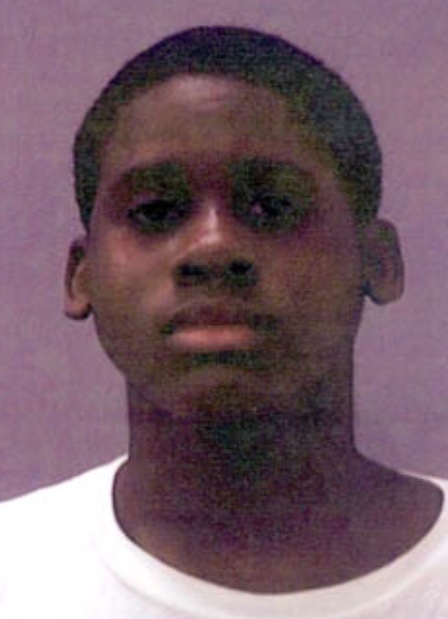
IMG_7406

“Come here with an ambulance, quick!”

15-year-old Ronald Alberto Hinton cries over the phone to the 911 operator just after noon. “My little cousin fell on the porch, hit her head, she ain’t getting up. Come on, hurry up!” Seconds later, he tells the operator she “fell and hit her head on the ground.” When the responding medics and police arrive, Hinton, who is the baby sitter, tells them that 4-year-old Ja’niya Ebony Woodley fell while jumping on the bed.

Hinton is at 2908 Goodwood Road in Northeast Baltimore, a house rented by his uncle Leland Slater and Slater’s longtime companion, Deborah Wall, who are the unconscious girl’s grandparents. Daikwon Eaddy, the girl’s 7-year-old brother, is the only other person at the house when the authorities arrive. He corroborates the fall from the bed, but his version differs from Hinton’s on where she landed.

The first responders quickly conclude the child’s extensive injuries–the most obvious are that her face is black and blue and swollen, her lower lip is busted, and there are bite marks on her chest and thigh and bruises all over, especially on her thigh and back–resulted from child abuse, some of it sexual. The boys’ stories don’t hold up. One of the medics, according to her statement in the Baltimore Police Department (BPD) homicide file of the case, says that “seeing the bruises, I knew that no matter how high the bed was, the bruises were older than what [Hinton] made them appear to be.”

Shortly after 1 p.m. on June 21, 2006, the victim is transported by ambulance to Johns Hopkins Hospital in East Baltimore, where Dr. Jamie Schwartz examines her and tells Baltimore police detectives that her injuries “are not accidental,” noting her condition: “critical with minimal brain activity, a bite on her nipple, old bites on chest, and left thigh.” Injuries to the vaginal area are also observed, and a kit used to gather evidence of rape is administered, including a swab to test for genetic material left in the bite marks on the left thigh.

Also arriving at the hospital are several of the victim’s relatives, and a chaotic scene soon erupts when the child’s actual parentage becomes known to shocked family members for the first time. Her name is not Ja’niya Woodley, it turns but, but Ja’niya Williams. Tempers flare as the child’s mother, Joy Eaddy, is caught having lied to Keenan Woodley, who up until that moment thought he was Ja’niya’s father, and John Williams, the child’s actual father, who learns suddenly that Keenan Woodley was also helping to raise the child. The shift in the family tree also means Hinton is not Ja’niya Williams’ cousin, as he thought when he called 911 a couple of hours earlier, and that Slater and Wall are not her grandparents.

A city Department of Social Services (DSS) social worker attempting to interview family members reports that she encounters rage and indignation as they start “yelling they did not abuse” the victim. Joy Eaddy does “not show any signs of remorse, sadness or concern” over her daughter’s injuries, and is “quickly angered” and refuses “to answer any more questions.” A distraught Wall tells paramedics and the police that the child is not abused and that her only injuries occurred the day before, when she fell into a fan and hurt her head. Another DSS caseworker informs police that Joy Eaddy “has a DSS history of child neglect,” without providing details, but tells them that Daikwon Eaddy “was to have no contact with his mother . . . until further notice.”


At police headquarters downtown, at 10 p.m. later that night, Hinton sits in a waiting room with his mother, Francine Toney; he’s been there since shortly before 5 p.m. Daikwon Eaddy is there, too, in Slater’s care. They are waiting to speak with two detectives–William Wagner of the child-abuse section and homicide investigator Todd Corriveau–who have just arrived after spending the afternoon and evening at the hospital, gathering information about Ja’niya Williams’ injuries and family circumstances. At quarter to midnight, after taking a statement from Slater, the detectives start to tape their interview of Eaddy.

Eaddy, the detectives write, says Hinton was “slamming [his sister] on the bed” and “kept on messing with her,” even though “she kept crying for me” to help and Eaddy was telling Hinton to “Stop! Stop!” He describes his sister as “unconscious,” “bleeding from her nose and mouth,” and as having “many bruises on her body.” Eaddy recalls Hinton “was holding his sister’s hands and shaking her,” and also “dragging his sister on the steps inside the home.”

At 12:06 a.m. on June 22, right after Eaddy’s statement is taken, Corriveau writes in his log of the investigation that “Ronald Hinton is now a suspect,” though Hinton and his mother do not know this.

At 12:35 a.m., Hinton is advised of and waives his Miranda rights in the presence of his mother, who is then ushered away. The detectives begin an hourlong preliminary interview, which is not tape-recorded. At 1:36 a.m., they turn on the tape recorder and go over it all again for posterity.

Wagner writes in the charging papers that Hinton confessed to “performing cunnilingus on the victim, fondling and digitally penetrating the victim’s vagina with his fingers, and putting his penis partially in the victim’s vagina. The defendant also bit the victim on her right breast and bit the victim twice on her left thigh. He struck her multiple times with an open hand to the face. At one point the victim ran downstairs and he pursued. He caught her and carried her back upstairs, retrieved a black belt from a closet and beat her with it.”

The detectives note that “Hinton provided information that only he–the suspect–had knowledge of, such as the exact injury to the victim’s body and how her injuries were inflicted,” though the detectives, too, know Williams’ injuries.

At 3:15 a.m., Hinton is charged with rape and assault and put in temporary lockup at the Central District police station. At 4:10 a.m., Corriveau checks to see if Ja’niya Williams is still alive. She is, though she never regains consciousness and dies of her brain injuries on June 23. The next day in the early evening, after the medical examiner rules her death a homicide, murder is added to the list of Hinton’s charges.

When Hinton is transferred to the Central District Intake Facility and is preparing for his bail-review hearing on June 26, his cousin, correctional officer Robin Smith, recognizes him. She looks at his paperwork and listens to what he has to say. “They said I tried to murder somebody,” Smith recalls Hinton saying. “I didn’t do it,” he continues, crying. “They made me sign something, and [said] if I didn’t I would never get to see my mother again, and I’d never go home. They forced me. They made me say I did it, but I didn’t do it.”

After listening to Hinton’s story, Smith gives him some advice: “Don’t talk to no one if they’re not your mother or your lawyer.” She also tells him not to show his charging papers to anyone, warning him that “papers like that can get you killed in here.”


When Ja’niya Williams’ autopsy is conducted on June 24, the medical examiner, Dr. Laron Locke, fills out a diagram with front and back views of a human body. It is used to indicate and describe her external injuries, and it is crowded from her head to her knees with circles and dots connected with lines and arrows to short descriptions of what is observed at various locations. Regarding the head, the notes say: “Whole forehead = general bruise,” with “minor scratches” and a “bruise” around the eyes, while both cheeks are described as “swollen” and the left lower lip is “swollen” with a “small cut” inside.

Corriveau attends the autopsy and compares the findings with Hinton’s confession. He learns that she died as a result of suffering a subdural hematoma, in which veins inside her cranium ruptured, causing blood to constrict and ultimately shut down her swelling brain. Corriveau writes in his summary of the autopsy that this, along with “general blunt force injury to her head,” is “consistent with suspect’s confession that he `beat’ the victim about her head.” He also points out that “skull not fractured; no specific contact `point of impact’ on victim’s head,” and that there are no signs “of any type of strangulation/smothering.”

Corriveau continues his comparison. He notes “abrasions to outside of vagina,” and is reminded that Hinton said he “put his fingers/penis in/on and `rubbed’ victim’s vagina.” He finds the bruising observed at the entry of her vagina, along with the fact that her hymen is intact, consistent with Hinton’s admission “that he `only put it in a little bit.'” Hinton said “he hit her in her bottom lip with his hand,” which explains the swollen, cut lip. The bite marks–on the right breast and on the left thigh–correspond to Hinton’s statement that he “bit her `on her right breast'” and “repeatedly” on the left thigh. The “small linear abrasion to lower back,” Corriveau surmises, is “possibly caused by belt striking her, per suspect’s confession,” and the “bruising and/or possible faded bite marks to right rear buttock” is “consistent with suspect’s confession that he struck her in buttocks with belt.”

Many of Williams’ injuries do not directly correlate to Hinton’s confession, Corriveau notes. The “swollen cheeks,” the “general redness/bruising to forehead,” the “minor scratches/bruising to eyes & in between eyes,” the “bruising to right shoulder,” the “scratch on right arm,” the “bruise to front of right thigh,” the “abrasion to left clavicle,” the “abrasions/contusion to left rear shoulder,” the “bruising to inner left bicep/outer left bicep,” the “bruise” on the “left forearm,” the “scratches/bruise to left hand/wrists,” and the “large contusion/abrasion to middle top back”–these aren’t explained by Hinton’s description of how he injured Williams.

The bite marks on Williams’ body, Corriveau writes, “appear more similar to severe `hickeys’ than to actual puncture wounds or tears to her skin.” But, he adds, “the shape of a mouth is clearly seen on the bite marks, with some spots having clear indications where teeth touched the victim’s skin.” So Corriveau has the medical examiner prepare photographs of them, to scale, “for future comparison purposes to the suspect’s teeth.” The photos, he explains, “will be a better indicator” for comparison that “actual cut-out samples of the victim’s skin,” given the skin “not being drastically broken by the bite marks.”

Two days after the autopsy, Corriveau contacts forensic odentologist Warren Tewes, of the University of Maryland, and discusses with him the possibility of getting “dental molds of the suspect’s teeth, via search warrant, for comparison purposes to the photos of the bite marks on the victim.” On June 28, Corriveau meets with Tewes, who says that dental molds of Hinton’s teeth–which ultimately were not obtained–“are not applicable” for comparing to the photos because the bite marks “have a `lack of definition’ that is necessary for effective and conclusive comparison purposes.” However, Corriveau continues, “Tewes provided general, basic information regarding the bite marks on the victim’s skin that may or may not be of relevance for court and/or testimony purposes” at trial.


The day of the incident, police seize all manner of property from Slater and Wall’s home: sheets, pillows, towels, comforters, a washcloth, a T-shirt, a pair of panties, a pair of flip-flops, a cap, and a pair of shorts with blood on them. They also take swabs of suspected blood from a dresser, a bathroom, a foot stool, and a wall. On June 24, they return and retrieve a belt with “possible blood stains.” Hinton told police about the belt during his confession two days earlier, but the warrant is served only after the autopsy “corroborated the suspect’s claim that he beat the victim with a belt (mainly a 2-3 inch linear abrasion on her back, as well as other bruises on her body),” Corriveau writes in his reports.

After getting the blood and DNA profiles of Ja’niya Williams and Hinton, whose fingerprints are also obtained, Corriveau on July 5 asks for lab work to be done on the seized property. He orders that the belt be analyzed for possible fingerprints and blood, and also asks for the blood on the shorts and the four blood swabs taken from the house be compared to Hinton’s and Williams’ blood. The DNA comparisons he asks for are from a hair found on a sticky pad from the victim’s body at the hospital, and from the swabs taken from Williams’ bite marks, vagina, and anus. He explains that these swabs, which were taken “approximately four hours after” the incident, “are most likely better samples for comparison purposes” than those taken at autopsy three days after Williams arrived at the hospital.

Meanwhile, Corriveau spends the midmorning of June 24 canvassing neighborhood residents. He writes in his report that several of them say they already told news reporters their thoughts about Ronald Hinton, which are, as Corriveau summarizes them, that he “has a history, over the past 4 years (approximately), of violence, lying, abusive language, and sexually charged comments to neighborhood women.” The residents request anonymity and don’t give recorded statements, though Corriveau has their names and contact information. Later that day, he phones a DSS Child Protective Services worker and e-mails BPD public-information officer Donny Moses to inform them of his findings.

Twice more, on July 3 and July 9, Corriveau visits the neighborhood to collect firsthand knowledge of Hinton’s past behavior from four more nearby residents. They, too, ask to remain anonymous. They tell him Hinton is “easily argumentative,” “very confrontational,” and that he “has been seen `beating on’ his `little brothers and sisters’ in his front yard until they either ran away or until `his big brother’ physically stopped him from doing so.” They recall that Hinton “strangled their son approximately 5 years ago, by using both his hands to squeeze their son’s throat, and that suspect had to be physically pulled from their son.”

(Toney reacts to the details of the neighbors’ anonymous accusations with indignation. “It makes me furious,” she says. “We weren’t really welcome to the neighborhood when we moved” there in the mid-`90s, she observes, and alleges that her family has periodically been subjected to racist comments from neighbors. She says her son has taken his share of guff around the neighborhood over the years, and that at times he’s taken the bait–such as the time several years ago that another neighborhood child “hocked spit in his face,” and they fought. But as for the contention that he beat up his younger siblings, Toney says “that didn’t happen.” And she dismisses the suggestion that he makes sexually inappropriate comments as the neighbors “just trying to make him out to be a monster. He did things some children do, he’s not perfect, but that he’s this monstrous thing–I won’t accept it.”)

Corriveau finds that Hinton has no prior juvenile criminal record, though he was the victim of an alleged aggravated assault two years earlier. And a review to see if he has a record of any “citizen contact receipts”–documentation of police-initiated interactions that don’t result in charges–turns up nothing.

On July 10, Corriveau joins the prosecutorial team handling the case–Baltimore assistant state’s attorneys JoAnne Stanton and Temmi Rollack–to interview Daikwon Eaddy at his mother’s home. He arranges the meeting “in order for Stanton and Rollack to meet” the young boy, “ask him preliminary questions regarding the incident in question, and to obtain a `feel’ for him, in terms of his pending court testimony.” The star prosecution witness has a surprise for them.

“During the meeting,” Corriveau writes, Daikwon Eaddy “disclosed that on the day of the incident in question, suspect Ronald Hinton beat him with a belt (previously undisclosed).” Two other people, whose names are redacted from Corriveau’s report, recall that “each observed marks on his back, consistent with being hit with a belt” when Eaddy returned to his grandmother’s house after his June 21 interview with police.


In December 2006, Francine Toney calls City Paper. It is not the first time she’s been in contact with the paper. More than a decade ago, City Paper published an extensive, investigative cover feature and two follow-up news articles about the 1992 death of her husband, Baltimore police trainee Sean Hinton, who was Ronald Hinton’s father (“Dead in the Water,” May 8, 1996; “Another Look,” Mobtown Beat, Dec. 4, 1996; “Questionable Death,” Mobtown Beat, June 4, 1997). Over the intervening years, she stayed in touch, but attempts to reach her after Ronald Hinton’s confession had been fruitless: She’d changed her phone number and moved. Now she’s on the phone, and the emotions are running high.

“The DNA [analysis of evidence in Williams’ homicide] came back, and Ronald couldn’t have done things he confessed to,” Toney explains. “The detectives told me, `The DNA will show everything,'” she continues, in tears. “Now it’s back, and it shows he didn’t do it!” She asks if police would go out and find who killed Williams, now that it was obvious her son didn’t. When asked why he confessed, she says, “he’s afraid of police because of what happened to Sean [Hinton]. The detectives balled up their fists and threatened him, and told him he could go home if he said he did it. He just wanted to be out of there.”

Toney says she does not have all the details, but she knows this much: Ronald’s DNA was not in the bite marks; somebody else’s was. “He didn’t bite her,” Toney says. “Somebody else did. And there’s other people’s DNA at other places, too, different people.” She adds that since her son has been held in jail, turmoil between the two families has been taxing, but the new DNA findings are “going to make things worse. Who did these things to that poor child?”

Toney takes out a second mortgage on her house to hire Janice Bledsoe as her son’s criminal-defense attorney in early 2007. She invites a City Paper reporter to go with her and several members of her family for a February 2007 meeting about the case at Bledsoe’s office. Color photographs of Ja’niya Williams lying face up in a Hopkins hospital bed are reviewed, prompting remarks (including by this reporter) that some of the bruises look less than fresh. No one in the room is an expert on such matters, but everyone bruises, and therefore knows that bruises change color over time. Some of Williams’ many bruises appeared to have a greenish-yellowish hue, suggesting some time had passed since they were sustained.

If someone’s DNA other than Hinton’s is in the bite marks, and if Williams’ sustained earlier injuries when Hinton was not present, then Toney and the rest of Hinton’s family have hope that perhaps his confession can be overcome at trial. The jury is going to need an explanation of why Hinton confessed falsely, and the one that Toney suggests–his deep-seated fear of police, because of what he believes about his father’s death when he was an infant–is the only one available.

During the weeks after the incident, the issue of prior injuries to Williams is brought up during Corriveau’s interviews with family members, as transcribed in the homicide file. He asks the witnesses if Hinton has been the children’s baby sitter on prior occasions, and if any injuries were observed at those times. He learns that Hinton has, and that no injuries were noticed before–except on the day before the incident, and Corriveau gets different versions of the story.

Deborah Walls, at the hospital on the night of the incident, is on record mentioning that Williams had injured her head in an accident with a fan. But when she’s interviewed later by Corriveau, she tells it differently. “When I got home I noticed a hickey on her forehead, on her left side,” Walls says during a July 1, 2006, taped interview. “I said, `Where did you get that?’ And she said she had fallen getting a towel, and I got right on the phone immediately and called her mother and let her talk to her mother. I tell her mother any time they got injured playing or anything, that’s the first thing I did.” By “hickey,” she explains, she means “a bump, as a bump on the head.” She says Ronald Hinton told her that “[Ja’niya] fell.”

Leland Slater is also interviewed on July 1, and in his version, it’s the fan that hurts Williams, but on her back rather than her head. He recalls he was in the kitchen with other family members on the night before the incident, and somehow Williams’ shirt rode up her back. He says he saw “marks on her back,” and when Williams was asked about them, he recalls Ja’niya saying that “I was upstairs” and “I fell over the fan.”

The conflicting explanations of the nature and cause of Williams’ injuries the day before raises the question: Are there any other indications that some of Williams’ injuries may have happened before June 21? And there are. The medic, for instance, who helped treat Williams before she arrived the hospital, and who told police she thinks some of the “bruises were older.” And Dr. Schwartz at Hopkins, who described “old bites on chest, and left thigh,” a phrase that was used in the charging documents and search-warrant affidavits in the case against Hinton. Corriveau himself, in his report about the autopsy, describes “bruising and/or possible faded bite marks to right rear buttock” (emphasis added).

Corriveau clearly suspected Hinton had abused Williams before, but witnesses didn’t corroborate that idea. As a result, his investigative record suggests Williams had older injuries–including at least some of the very bite marks that Hinton confessed to giving her.

Raising the importance of the bite marks even further is the fact that the ones on the upper left thigh were swabbed and came back positive for the presence of DNA belonging to an unknown person other than Hinton. Yet the homicide file has nothing in it to suggest investigators even considered taking steps to try to identify that person. Nor are there any indications in the file that attempts were made to learn the source of the DNA recovered from a variety of other locations on the tested evidence belonging to people other than Hinton.

After all, who needs DNA when you already have a confession?


“Ronald Hinton is the son of Sean Hinton and Francine Toney,” Bledsoe tells the Baltimore City Circuit Court jury. She’s five minutes into her opening statement on the first day of the trial, April 23, 2008, and she is trying to tell the jurors why, if Hinton didn’t rape and beat Williams, he would tell the police he did. “The Hinton family has an unusual history,” Bledsoe says. “Sean Hinton was a police officer–”

“Objection,” Stanton says.

Bledsoe shrugs in frustration as she and Stanton approach the bench to argue before Judge John Addison Howard. Stanton hardly says a word in the ensuing debate, though, as it is apparent that Howard has already made up his mind: Bledsoe won’t be allowed to discuss Hinton’s father in front of the jury.

“It’s a bunch of hooey and a lot of hearsay,” Howard tells Bledsoe during the bench conference, “and you’re not going to be able to go into it.”

Bledsoe explains the situation to Hinton and his family out in the hallway–that the main thrust of his defense was just yanked out from under him. She adds that it is even worse than that, because the jury, having heard only half of her sentence, is left with the impression that since Sean Hinton was a police officer, his son would have strong reasons to trust the police, not to fear them. The last guilty-plea offer from the prosecutor, prior to the beginning of the trial, was 20 years of imprisonment, but Hinton and his family still don’t want to take the deal. Ronald is innocent, they say, and they want a trial. So the trial continues.

The tape of Ronald Hinton’s confession is played. Though it doesn’t appear in the transcript–and though Corriveau and Wagner testify that once they turned on the tape recorder, they never turned it off again until the confession was over–Bledsoe points out to the jury that the very beginning of the tape has a split-second of a human voice loudly saying, “Stop messing with me!” It sounds like Hinton’s voice.

Corriveau insists that he didn’t use leading questions when interviewing Hinton, didn’t suggest Williams’ injuries so that Hinton had the information he needed to admit to details about the injuries that Corriveau knew from visiting her in the hospital–and then Bledsoe proves he did on two occasions, when Corriveau asked Hinton whether or not he put his hands between Williams’ legs and his fingers in her vagina. Corriveau explains that Hinton had already provided that information in the preliminary interview.

Wagner testifies that he took notes rather than record the preliminary interview in order to have a complete record–and then admits that, yes, recording the preliminary interview, too, would have provided a more complete record of what transpired in the interview room. (Hinton’s false-confession claim was included in a City Paper article [“Fess Up,” Mobtown Beat, Jan. 23] about a law that passed in Maryland’s 2008 General Assembly session requiring police to videotape all aspects of interviews with suspects in murder and sexual-assault cases. The law is intended to help create foolproof confessions, while also assuring police interviews are on the up-and-up.)

Corriveau’s theory that Hinton had abused Williams on prior occasions does not come up at the trial. In fact, other than the “hickey” on Williams’ forehead, no one–not Corriveau, not the medic, not Dr. Schwartz–testifies that they observed any signs that some of Williams’ injuries may have occurred before the harm Hinton confessed to inflicting. Under cross examination, though, the medical examiner admits the possibility that Williams’ death could have been caused by more than one brain injury in succession. In other words, it’s theoretically possible that whatever harmed Williams’ head on June 21 may have worsened a brain injury that occurred earlier.

The conflicting stories used to explain Williams’ hickey–was it tripping on a towel, falling into a fan, or both?–are not brought up for the jury. Nor is there any mention of the marks on her back that Slater said he observed in the kitchen the night before the incident. In fact, Slater doesn’t testify at all. Whatever became of Corriveau’s attempt to compare Hinton’s dental pattern to Williams’ bite marks also is not in evidence at the trial.

Daikwon Eaddy, now 9, gives confusing testimony broken up by bathroom breaks and a tearful inability to answer questions. He says nothing about Hinton beating him with a belt, and though his testimony describes menacing behavior by Hinton, he does not say Hinton committed the violent acts he’d told investigators about the night of the incident.

At one point, Judge Howard comes down off the bench, crouches next to Eaddy, and has a quiet conversation with him in front of the jury. “You’re doing good,” the judge tells him. When Bledsoe asks twice for a recess, so the jury won’t continue see Howard giving Eaddy a pep talk, the judge gets testy: “I heard you the first time, Ms. Bledsoe.”

The DNA evidence is presented, including a dramatic cross examination of the DNA expert by Bledsoe’s partner, Sandra Goldthorpe, who reveals to the jury that the DNA in the bite marks not only isn’t Hinton’s but that it’s a female’s. All told, six of the analyzed items excluded Ronald Hinton’s DNA, but included the DNA of others, male and female. If any of the jurors want a solid basis on which to build reasonable doubts about Hinton’s guilt, it is the DNA evidence. But they still have the confession to consider, and they still don’t have an explanation for why anyone would lie about such things.


The prosecution team wraps up its case, and Ronald Hinton takes the stand in his own defense. He accuses Corriveau and Wagner of threatening to beat him up in the interview room if he didn’t confess. “That’s when I kept on telling them, like, `Leave me alone,'” Hinton testifies. “And that’s when I said I didn’t do nothing. That’s when they said, `If you tell us you did it, we’ll let you go home.’ I thought I was going to go home, because I was scared, because I thought something was going to happen to me, because I don’t like police officers, and the reason I don’t like them–”

“Objection,” the prosecutor says.

“Sustained,” the judge says.

Bledsoe tries to elicit Hinton’s response in a variety of ways and is blocked two more times by sustained objections before the judge allows her line of questions to continue.

Bledsoe turns to Hinton and asks, “Why were you afraid?”

“Because my father,” Hinton answers, “he was killed by policemen, even his own partners.”

That’s all Ronald Hinton’s jury heard about his father’s story: two mentions on either end of the trial, with no details, no context, and no questions asked or answered. It’s a case that stands out in the memories of many Baltimore police officers, and it has deeply haunted the Hinton family.

Sean Hinton was 22, weeks away from his city police academy graduation, and had just undergone field training in the Western District with police officer Stanley Gasque. On Oct. 24, 1992, a Friday night, Hinton had a minor car accident downtown and was arrested and charged with driving under the influence of alcohol. The next day, after getting his car out of the tow lot, he walked out of his home. His last contact with his family was a phone call from the Amtrak station in Baltimore to his family.

Ten days later, his body was recovered from the New York Harbor off Battery Park in lower Manhattan. His wrists were bound tightly in front of his body with the drawstrings of a jacket, and though the autopsy report did not note head trauma, it appeared evident in the accompanying photos. His fingers and hands still had skin on them, though it had slipped a bit, but his swollen, misshapen face was devoid of skin from the scalp to below the chin.

New York medical examiner Mark Flomenbaum, after three weeks of consideration and after learning from the Baltimore police that what was characterized as a suicide note had been found, on Nov. 27, 1992, ruled the case a suicide by drowning. He attributed the condition of the body to the postmortem effects of floating in the water.

City Paper published photos from Hinton’s autopsy, with his family’s permission, in the 1996 article titled “Dead in the Water.” It explored a variety of facts that Flomenbaum did not have at his disposal when he made the suicide ruling, including the contents of the letter he left for his family and the very suspicious circumstances involving Hinton and Gasque that occurred the week he disappeared. Those circumstances involved accusations that together they robbed a drug dealer in West Baltimore, and that federal law enforcers suspected Gasque was protecting a drug organization known for torturing and robbing other drug dealers. It took years of investigating before, ultimately, nothing came of the accusations against Gasque and Hinton.

The members of Sean Hinton’s family, though, say they have no doubt that he was murdered before he shared information about unaddressed police corruption. The story is fact in the Hintons’ minds, even if it never can be proven. And their interpretation of the fact that the BPD mounted a 21-gun salute at Sean Hinton’s funeral–a rare police honor–is that they’re not the only ones who believe Hinton was killed in the line of duty.

Not so the jurors, who learn nothing of the family’s story, nor of the facts about Sean Hinton’s death. They also have no expert testimony to explain the female DNA in the bite mark–though Stanton, in closing arguments, assures them that it was attributable to contamination during Williams’ medical treatment. And she points out that, at the end of his confession, Hinton apologized–something, she argues, an innocent suspect would not do. After four hours of deliberation, the 12 jurors unanimously decide Hinton’s confession was true and voluntary, and on May 5, 2008, they convict him on all counts.

On July 21, Ronald Hinton is sentenced to life in prison, plus 25 years. He files an appeal the same day, and in June he sends a letter from jail to the Innocence Project, a group that uses DNA and evidence of false confessions to work for the release of innocent convicts. To date, Toney says, Hinton has not heard from the organization.

“If the DNA matched, I would accept that he did this,” Francine Toney says of the case. “It doesn’t, so I still believe he said he did it because he’s so afraid of the police.”

If the appeal succeeds, Hinton might get a crack at another jury. If not, he’s in for the long haul, serving life for the rape and murder of a child–crimes that tend to put an inmate convicted of them in low esteem among fellow prisoners. If he didn’t do it, that’s a particularly hard position to be in. If he did, well, prison authorities are responsible for keeping him safe, as best they can.

“I got a letter from him,” Toney explains over the phone on July 25. “He’s in a cell by himself, with two shelves and a bed. The bed is comfortable, and there’s enough room for him to pace back and forth and pray to God.”

She starts to cry. “It hurts me, because I feel so helpless now that I can’t help him. It’s so sad. Ja’niya is gone, and that hurts me, too. But what about the DNA? The prosecutor said [to the jury] don’t worry about the DNA, the DNA doesn’t matter in this case. Well, what’s so different about Ronald’s case?

“I am so tired of the falsehoods about my family–my husband killed himself, Ronald did this to Ja’niya, Ronald is abusive. I am just not going to accept it. If the DNA matched, I’d have no choice to accept it. But it didn’t, and I won’t accept it.”

Ja’niya Williams’ father, John Williams, speaks to a reporter on July 26, while working at his job as a drug-store security guard. He has no doubts whatsoever that Hinton did it. Asked about prior wounds on his daughter’s body, especially any bite marks, Williams says: “I know about that. She got bit on her arm, playing with her cousin a few days before,” indicating his left bicep. When informed that others observed older bites and bruises at other locations, and that the jury did not hear about that evidence, Williams sticks to his guns. He’s 100-percent certain they’ve got the culprit behind bars.

“That boy boxed himself in,” Williams observes. “I would never, ever say I did anything I didn’t do–especially something like that.”


Dead in the Water: In 1992, the Body of a Baltimore Police Trainee Was Found Floating Off Manhattan, Wrists Tied Together. It Was Ruled a Suicide. But Did Anyone Besides Sean Hinton Want Sean Hinton Dead?

By Van Smith

Published in City Paper, May 8, 1996

IMG_7399

A 22-year-old Baltimore police trainee, married with three children and living in a public-housing apartment, has a career-shattering week that includes being arrested for drunken-driving and being accused of involvement in police corruption. He disappears after leaving a cryptic good-bye note to his wife.

Ten days later, he turns up dead in New York, floating facedown in the water off the southern tip of Manhattan. No one knows how he got there. His wrists are tied together in front of him. Initial reports filed by New York officials who recovered the body describe head trauma and a possible bullet hole in his cheek, but the autopsy report notes no signs of injury or a struggle. Three weeks later, a New York medical examiner rules the case a suicide by drowning.

The Sean Hinton case is a tantalizing riddle with very few clues. The Baltimore City Police Department (BCPD) recently released Hinton’s personnel file, which includes the results of a questionable-death investigation. BCPD’s Internal Investigations Division (IID) conducted probes and there may have been other Baltimore-based investigations as well, but the results haven’t been released. The New York Police Department (NYPD) won’t comment, saying the case is still under investigation. Hinton’s family wants answers. But a limited number of documents and other pieces of evidence, and the recollections of a few reliable sources, are all they have to go on.

Considering the clues that are available, there are only two plausible explanations for Hinton’s death: suicide or homicide. It is possible to reconstruct, blow by blow, the verifiable events that led the medical examiner to conclude – with some speculation – that it was a suicide. It is also possible to find oversights and misinterpretations – at least one of which bears strongly on the suicide ruling – in the autopsy report.

Autopsy photos show an obvious dent above Hinton’s right temple. Today, the medical examiner says the injury occurred after death. But he did not describe it in his autopsy report three-and-a-half years ago, even though the head trauma was noted when the body was pulled out of the water. This oversight leaves open the question of whether the dent occurred before or after Hinton’s death – a question that is vital to determining whether or not Hinton killed himself.

Judgment calls are a necessary part of a medical examiner’s work; not every death can be explained based only on the physical evidence and the known circumstances. But not all deaths have a possible murder motive, either. Hinton’s did. And the medical examiner didn’t know about it when he ruled on Hinton’s death.

Two nights before Sean Hinton disappeared, his family recalls, he spent about eight hours at home preparing extensive police paperwork. Two days before that, he had made a drug bust with BCPD Officer Stanley Gasque, whose career has been marked by complaints of alleged corruption, according to published news accounts and court records. After the arrest, the suspect filed a complaint with IID alleging that Gasque, Hinton, and another officer burglarized his house. Within a year of this incident, the eight members of the Western District drug-enforcement unit to which Gasque belonged had been reassigned, although no criminal charges were ever filed against them. Hinton’s family now believes that Sean knew something and was planning to report it.

BCPD Lieutenant Robert Stanton, who worked on the Hinton case for the homicide department, says his investigation ended after the suicide ruling, a week after he started. His December 10, 1992 report on the case concludes: “It is obvious that a number of questions concerning this incident will long linger and possibly remain unanswered. The fact that the body is found out of jurisdiction and never viewed by anyone from this agency puts us at a disadvantage from the start.”

Stanton says he “wasn’t made privy to most of” the IID investigations of Hinton’s death and the alleged burglary. “IID is a separate entity,” he explains, adding, “I didn’t find anything that made the connection” between his investigation and theirs. Once the death was ruled a suicide, Stanton’s investigation was closed.

Had the manner of death been listed as “undetermined,” Stanton would have pursued the questionable-death investigation further. Perhaps he would have turned up more clues or discovered the possible murder motive; the case for ruling the death either a suicide or a homicide might have been bolstered. As it is, based on what little information has been made available to them, Hinton’s family is convinced Sean was murdered and the truth covered up.

IMG_7400

It is Saturday, October 24, 1992. Hinton returns to his Lafayette Courts apartment after getting his car out of impoundment. The young police trainee is due to graduate from the academy in a few weeks, but his fledgling career is suddenly a shambles.

A drug suspect Hinton helped bust on Tuesday the 20th has filed a complaint alleging that Hinton and two officers burglarized his house after the arrest. The night of Friday the 23rd, Hinton had been arrested on drunken-driving charges. Saturday morning, still in the police lockup, he called his friend, 67-year-old Forrest Lee Moore – the man Hinton called “Granddaddy” – and said he expected to have to beg to remain with the police department. (In fact, three days after Sean disappeared, he was fired for misconduct, according to documents in his personnel file.)

Back at home, Hinton opens a spiral notebook and writes a letter to his wife, which she finds eight days later. “24 Oct 92, 540 pm time written. Francine you have dealt with me 4 years, and you never seemed to believe I really loved you – I do love you. You have Jehovah on your side. I have no one. I need Jehovah but I just can’t seem to reach him. So I guess I’ll see someone. Please take care of our children for me. 1744 hrs. Sean Hinton.”

Then he walks out of the apartment and heads toward Orleans Street, leaving his car behind. About an hour later, he calls home to say he’ll be right back. When he fails to show, his mother, Jean Hinton, consults her caller-ID system and discovers he had called from Pennsylvania Station at 6:48 P.M. Shortly after midnight, the Hintons report Sean missing.

Ten days later, on Tuesday, November 3 – the same day Bill Clinton is elected president – Hinton turns up dead. His body is found floating facedown in the water behind New York’s Batter Park Coast Guard Station, the wrists tied up in front with the drawstring of his jacket. His wallet contains $42.95 and several pieces of identification, including a Fraternal Order of Police membership card.

It is around 10:30 A.M. when the body is taken out of the water. An investigator from the New York Medical Examiner’s Office arrives at the scene. He writes in his report, “Decedent is an app. homicide victim. Hands are bound, and head trauma noted.” Several New York police officers also are present on the dock. One files a report at 10:55, noting the body is a “Poss. homicide, hands tied together with black cord and poss. bullet hole left cheek.” When the body is transported to the medical examiner’s office, it is labeled with a tag that reads HOMICIDE.

Five hours later in Baltimore, Joseph Kleinota, BCPD missing-persons detective, who up until then had no breaks in the Hinton case, reports that he has spoken to New York homicide detective Joseph Burdick. His report documents Burdick as saying that a “preliminary investigation reveals that subject committed suicide. … It appears that the person had tied his own hands.”

Burdick also files a report of the conversation. He writes that Kleinota told him Hinton had left a note and that he “had recently become despondent over an arrest and a dept. Disciplinary hearing he was due to attend regarding this arrest.”

The next day, November 4, New York medical examiner Mark Flomenbaum conducts the autopsy. Given the level of decomposition, he figures Hinton has been dead for several days at least. He notes fluid in Hinton’s chest, abdomen, and lungs, indicating drowning as the cause of death. Examining the bound wrists, he jots on his autopsy work sheet: “Comment: appears to req. great deal of facility to do by self.” He describes “soft metal fragments” lodged in the victim’s windpipe. Other than the effects of decomposition, Flomenbaum notes nothing else remarkable about the body.

After the autopsy, Flomenbaum decides the case is a possible suicide. But he isn’t sure yet, so he files a death certificate stating the cause as drowning and leaving the manner of death open, “pending further studies.” On November 27, convinced after consultation with various New York and Baltimore investigators that Hinton intended to and was capable of tying his own wrists to hinder his ability to swim, Flomenbaum changes his ruling to suicide by drowning.

IMG_7401

In a nutshell, that is the story of Sean Hinton’s demise. According to Francine Hinton, the police department expressed its sympathy by covering the funeral costs, paying out insurance money, and outfitting their children – Ronald, Sean, Jr., and Shatia, then one, three, and five years old – with some new clothes.

She isn’t satisfied with the explanation that Sean committed suicide, though. Neither are his mother, sisters, brothers, and friends.

That is to be expected; authorities say family members and friends almost always respond to suicide with disbelief. But Sean Hinton’s case is not like most suicides. First, there is a possible motive for murder.

On October 20, 1992, Hinton was working with Gasque, who had returned several months before to the Western District drug-enforcement unit after being moved to patrol because federal officials suspected he was connected to a drug ring, according to a 1993 Sun article. Why a police trainee was working with this particular officer is unknown, but it is a question the family would very much like to have answered.

After receiving information from a confidential informant, Gasque and Hinton arrested Eric Thomas on drugs and firearms charges in a school zone in West Baltimore. Shortly after the arrest, Thomas complained to IID that Gasque, Hinton, and another, unnamed cop confiscated his keys while booking him and went to his house and stole property, including money. A Baltimore City grand jury heard testimony from several witnesses who said they saw the burglary, but no indictment was handed down. BCPD Lieutenant Stanton explains that one of the witnesses was considered unreliable because of a murder conviction.

The drugs and firearms charges against Thomas were dropped after his attorney subpoenaed records of the investigations of Gasque’s conduct and Hinton’s disappearance and death. On November 5, 1992, Thomas was arrested again, this time on a charge of robbery with a deadly weapon in connection with an October 10, 1992 incident at the Money Service Center on West Baltimore Street. According to sources close to the case, Thomas was arrested at his house by Detective Arnold Adams just as IID detectives were arriving to tell Thomas he had passed the polygraph test he took in connection with his complaint against Gasque and Hinton.

According to court records, the armed-robbery charges against Thomas were dismissed by a Circuit Court judge after prosecutors refused to provide eyewitness’ statements given to Adams on November 3, 1992 (the day Hinton’s body was found), when Thomas was allegedly picked out of a photo array.

(Adams is no longer with the BCPD; his career ended last summer when he was caught collecting rewards for having an accomplice call in crime tips to Metro Crime Stoppers’ anonymous tip line, according to accounts in The Sun.)

In May 1994, Thomas was arrested again on drug-conspiracy charges. This time, the charges stuck and he was sentenced to federal prison. Before the case was moved to federal court, Thomas wrote a letter to Baltimore Circuit Court Judge John Themelis. After naming officers connected to his case whom he believed were under IID investigation, Thomas pleaded: “I pray that your honor sees these views on my behalf before this puzzle goes any further. There are things that the courts and your Honor should know especially [sic] about some Dead Police Officers [emphasis is Thomas’].”

Eric Thomas’ burglary claim is the only known allegation of police misconduct involving Hinton. Gasque, on the other hand, has weathered several investigations, according to a 1993 Sun article by David Simon. In late 1991, federal officials linked Gasque to a telephone pager being used by a member of a drug organization, and suspected he was in regular contact with the group. In 1992 came Thomas’ complaint. In the summer of 1993, after serving a search warrant based on informant information, Gasque refused to produce the informant for an interview with prosecutors, who suspected the informant did not exist.

Federal officials say they suspected that Gasque was protecting the “Strong as Steel” drug organization. According to federal court documents, Strong as Steel – which operated out of West Baltimore from 1991 to 1993 – was known for robbing and torturing members of other drug organization, and using a former police cadet disguised as a police officer in many of its crimes.

The allegations against Gasque and other Western District drug officers led officials in the Baltimore state’s attorney’s office to urge the BCPD to reassign the entire unit, which the police department did in July 1993. After the purge, Gasque served in another plainclothes unit, the Western District’s “flex unit,” which mostly does street-level drug work. Later, he was reassigned as a Western District turnkey, letting booked suspects in and out of lockup.

The fallout from the allegations against Gasque didn’t end with his reassignment, though. Prosecution of westside drug cases suffered as a result of his reputation. Defense attorneys on cases involving Gasque – staring with Eric Thomas’ attorneys – found that prosecutors tended to dismiss cases or make attractive plea offers if the defense subpoenaed records of the investigations into Gasque’s conduct and Hinton’s death.

In all, between August 1993 and May 1994, 14 of 38 Circuit Court defendants in cases involving Gasque and other former Western District drug-enforcement-unit officers saw their charges dropped or placed on the inactive docket, according to a 1994 Sun article.

Two days after the Eric Thomas arrest, Hinton’s family remembers, Sean came home after work and spent about eight hours doing extensive police-related paperwork in the kitchen. They say they never asked what he was working on, out of respect for his professional need for confidentiality. Stanton notes that Hinton could have been writing up field-training reports rather than reporting police corruption, but Hinton’s family says they had never seen him concentrate so extensively on police paperwork at home. They now believe Hinton was preparing to report alleged corruption to the authorities. If so, someone may have had a motive to shut him up.

IMG_7402

The autopsy report sets down the anatomical evidence on which the suicide-by-drowning ruling was based. The report describes no injuries to the body whatsoever. In an interview at his office last month, medical examiner Flomenbaum asserted that initial reports of a possible bullet hole in the left cheek and apparent blunt trauma to the head were mistaken. “There was no trauma to his body,” he said adamantly while reviewing the autopsy report.

Looking at the autopsy photos on a slide project, though, Flomenbaum is asked to zoom in on an obvious dent in the right side of Hinton’s forehead, just above the temple. “This is not anything but decompositional changes,” he says. “Any pathologist worth his salt would see that.” The body probably got knocked around a bit while floating in the water or while being retrieved and transported for autopsy, he says.

But the autopsy report did not note this dent. Regarding the postmortem condition of Hinton’s head, the report notes “red discoloration of the face and anterior aspects of the scalp” and “bloating of the lips, eyelids, and tongue.” During the internal examination of the body, the medical examiner reported “the scalp has no contusions … the skull has no fractures … [and] there are no grossly apparent focal lesions.” Thus, if the dent caused internal damage to the head, it wasn’t found during the autopsy.

After looking at the dent in the slide-projector photos, Flomenbaum qualifies his earlier statement. “There was no trauma at autopsy that couldn’t be accounted for by submersion,” he says. But why didn’t the autopsy report note any trauma at all, even that for which there was a postmortem explanation? “We never would describe things like that if it is just denting of soft tissue,” Flomenbaum explains. “Unless there is something that can be confused with something else, we just tend to give a general description.”

There were other apparent omissions in Flomenbaum’s autopsy report that don’t necessarily bear on how Hinton died, but might call into question the report’s thoroughness. Though it mentions “slippage of the skin at the waist, back, wrists, and ankles,” the report doesn’t point out skin slippage on the face, noting only the “red discoloration.” In fact, the face lacks most of its skin. As one former law-enforcement official who viewed the photos says, “This is more than just red discoloration of the face – the skin has slipped right off.”

Flomenbaum agrees that the skin on Hinton’s face “just wasn’t there.” He explains that he didn’t describe skin slippage on the face because the term applies only where you can still see the skin is in the slipped position.” Since the facial skin was mostly gone, he didn’t describe it at all. The report also makes no mention of Hinton’s shirt, although it lists all other clothing he was wearing. (“I must have missed that,” Flomenbaum explains.)

The autopsy report also describes two half-inch-by-half-inch “soft metal fragments (of unidentified origin) in the right main bronchus, just below the carina.” The objects do not appear in the X-rays of Hinton’s chest, which would clearly show them were they actually metal. During the April interview, when Flomenbaum opened a specimen bottle containing samples of Hinton’s tissues, two objects of approximately the same size were included. They appeared to be fragments of a bivalve shell, not soft metal.

“If these were what was in his [windpipe], they must have looked like metal at the time,” Flomenbaum says. He speculates that the solution in which they were stored dissolved the metal away from the surface of the objects.

Finally, Flomenbaum acknowledges that, as a rule, “there is nothing that can prove drowning.” This was confirmed by other medical examiners, who say that drowning cases don’t always display the tell-tale signs of drowning. Flomenbaum explains that he ruled that Hinton drowned because “the body was found in the water and any other anatomical explanation has been excluded.” But his autopsy report overlooks a point some pathologists say bears on the question of drowning – whether there was water in the sinuses.

John Smialek, Maryland’s chief medical examiner, explains that “there are certain indications that are usually present but not always present” in drowning cases, such as “water in the stomach and air passages, especially the sinuses, which confirms the person was breathing in the water.” The Hinton autopsy report notes “blood-colored watery liquid in the chest and in the abdomen” and that “both lungs contain abundant clear fluid,” but the condition of the sinuses is not described.

The gaps in the autopsy report are not unusual. Mistakes happen in medical examiners’ offices, as anywhere else; they are part of the tricky business of examining dead bodies. And in New York, where in 1993 the medical examiner’s office had an average caseload of 5.3 autopsies per week (the National Association of Medical Examiners recommends no more than 3.8 per week), the high volume of work can be expected to cause difficulties.

Due to possible oversights, corpses are sometimes exhumed for second autopsies which can reveal previously overlooked details that help solve mysteries. In a celebrated early-1980s case, for instance, an Illinois coroner missed three skull fractures on the head of a woman named Karla Brown. The fractures were discovered after Brown’s body was exhumed four years later, a step that led to a murder conviction.

IMG_7403

In addition to a possible murder motive and the questionable autopsy, the Hinton case is curious because of the manner and cause of his death. Only one or two percent of all suicides are by drowning, according to the National Center for Health Statistics.

And there is the larger question of Hinton’s bound wrists. Flomenbaum, looking at slides of Hinton’s wrists, concludes, “This is not somebody trying to immobilize him. It is a simple knot that is possible to do by yourself.” He says reliable sources involved in investigating the case informed him that Hinton could have done it himself. And he dismisses as naivete his comment in his initial autopsy notes that the knot would require a “great deal of facility to do by self.” The autopsy report says the wrists were tied together with a square knot, a knot that seems impossible to use in binding one’s own hands. (This reporter tried several times and could not do it in a way that would adequately bind the wrists.) Perhaps Hinton tied the knot, then twisted his wrists up tight into the knotted drawstring. Either way, if Hinton bound himself it took considerable dexterity and effort.

When Flomenbaum ruled the case a suicide on November 27, 1992, he was not aware of the allegations of corruption surrounding Hinton. The first he heard of them was in March 1996, when a reporter called him to discuss the case. At the time of the ruling, he said during the April interview, all he knew was that Hinton disappeared after being charged with drunken driving and after leaving a note for his wife. “People kill themselves for a lot less than DWIs,” he says.

Flomenbaum describes Hinton’s note as “very weird. … There’s no mention that he’s going to kill himself.” But he says he still believes it “very strongly supports suicide.” And the new information about Hinton’s circumstances at the time he died, Flomenbaum believes, only bolsters his initial ruling.

“It looks like he was probably involved with some big-time, major shit,” Flomenbaum says. “He saw no way out. He probably wanted to do something right, but was so trapped, it seemed [suicide] was his only option.”

Besides, Flomenbaum continues, “if someone did have a motive to kill him, how did they do it? This is not a homicidal drowning. Homicidal drownings are very, very rare.” He’s right; they are even more rare than suicideal drownings. According to the FBI’s Criminal Justice Information Services Division, in 1992 there were only 29 murders by drowning in the country, about one-10th of one percent of the more than 22,000 killings committed that year.

“I think the circumstances of why he disappeared should be investigated,” Flomenbaum concludes, “but the physical evidence of the ruling is compelling for suicide. I don’t have an anatomy of a murder. There was no struggle. He had his wallet on him. Everything we’ve seen is what happens when people are in the water. …

“If I can be convinced in a reasonable way that I was wrong [in ruling it a suicide by drowning], I will change it to a homicide,” Flomenbaum says. “I am more than willing to have my mind changed. But, right now, these are exceptionally good reasons to make it a suicide. There is nothing physical that suggests someone else did this to him.”

Moreover, Flomenbaum sees no reason to change his manner-of-death ruling to “undetermined,” which would reopen the questionable-death investigation. “’Undetermined’ is usually when we have ambiguous findings at autopsy. The more I hear about the circumstances, the less ambiguous [this case] seems.”

Cyril Wecht, a Pittsburgh medical examiner who is nationally known in the field, reviewed Hinton’s autopsy report and judged it a “fairly decent report.” But Wecht also says, “I don’t understand how they call it a suicide. How does this guy go about tying these things and jumping in the water? It just doesn’t make sense.” He says most forensic pathologists would call it a homicide or undetermined, “absent information from homicide investigators that would indicate suicide.

“There is no basis to challenge [drowning as] the cause of death,” Wecht concludes. “But the manner? You have to wonder.”

IMG_7404

On the Saturday morning after the drunken-driving arrest, Hinton could have been pondering several options. He could come clean, reporting whatever he might have known about police corruption. He could “turn” – go criminal, that is, and do what federal court documents describe the Strong as Steel organization as having had former police cadet Doncarlos Williams do: Dress up as a cop and rob rival drug dealers. Or he could take his own life.

The suicide scenario is easy enough to imagine from the standpoint of Hinton’s likely emotions. Hinton comes home that Saturday, despondent over his arrest and a possible disgraceful end to his police career. He is the great hope of the Hinton family – about to become a police officer and take his wife and kids out of the projects. But the dream has faded in the course of one extremely bad week. So he leaves a good-bye note for his wife, takes the train to New York, ties himself up, and hurls himself in the river. What raises questions for Hinton’s family are the presence of a possible murder motive, the location of Sean’s death in New York, and physical evidence they believe argues against suicide, most notably the bound wrists.

Going criminal could also have ended up with Hinton’s death, but that scenario doesn’t comport with the portrait his friends and family paint of his character. Hinton was interested in law enforcement since boyhood. He completed the Baltimore police department’s “Officer Friendly Program” and was honored with a Junior Citizen Award by the city. His friends and family say he was exceptionally reliable, loyal, and affable. He didn’t hang around on the corner when he was growing up; rather, he was always running home to be with his family. “He was kind of naïve about the world,” Robert Templeton, a friend of Hinton’s and his manager during a stint working at Pizzeria Uno at the Inner Harbor, recalls. This is not the picture of someone who enters the police department and almost immediately becomes involved in the drug trade.

So, suppose Hinton decided to come clean. That would explain the sudden flurry of off-duty paperwork a couple of days after Thomas’ arrest. The current whereabouts of the documents are not known, but the family believes Hinton must have taken them with him to work the next day. If they were police reports and Hinton turned them over to IID, then at some point he was going to have to testify about the allegations.

Francine remembers Sean saying to her, as they lay on their bed together the Saturday he disappeared, “I’m going to tell the truth. Them cops ain’t nothing but crooks. I’m going to do my time and get out of it.” She did not mention this conversation to Stanton during his investigation in late November 1992, and Stanton doesn’t recall asking the family if Hinton said anything before leaving.

Later that day, the family remembers, Sean took a long shower. He brought the phone into the bathroom with him and asked his brother Kevin, who is in a wheelchair, to get him his notebook and a pen. Kevin asked him if he still was planning to go to their sister Janet’s anniversary party that night, and Sean said yes. Then he got out of the shower, got dressed, and left the apartment, heading toward Orleans Street on foot. The family can’t recall if he said anything else.

Sean’s last call home was made from the train station. His mother, Jean, spoke with him. “When he called from Penn Station, he said he was coming home and that he wanted to talk to Granddaddy [Forrest Lee Moore], and Granddaddy was not home,” she says. Moore and Sean had worked together for a year in the late 1980s at Edenwald nursing home in Towson and had become close companions. They had been out drinking together the night before Hinton disappeared, but Moore says he doesn’t remember Sean saying anything about police corruption.

Hinton’s mysterious note can be interpreted as jibing with the come-clean theory. “I have no one,” he wrote. If was accusing a senior officer of corruption, he indeed would have been nearly alone. The IID detectives and prosecutors would protect him, but he would have few friends on the force. Whatever trouble he faced, it was police-related and he was facing it in virtual solitude.

“I need Jehovah but I just can’t seem to find him. So I guess I’ll see someone,” the note continues. As a corruption complainant ratting on cops, he would have to face the forces he was fingering eventually; perhaps he was pressured into meeting someone to discuss the charges. The pressure would have had to be severe enough to keep him cooperating – perhaps a threat to his family.

And Hinton closes his note with, “Please take care of our children for me.” As a cop-crime suspect coming clean, he figured he’d either be prosecuted, convicted, and do time, or something disastrous would happen to him at the hands of those he had exposed. Either way, he knew he’d be gone long enough that Francine would need to care for the children alone.

So Hinton went to Penn Station. No one knows what happened to him between his call home at 6:48 P.M. that Saturday and when his body was taken out of the water in New York 10 days later. It seems likely he took the train to New York, but he had no ticket stub when he was found. He did not have a credit card, and the family’s and investigators’ accounts differ on how much money Hinton had when he left home. (Francine disputes that he had enough to buy a $59 one-way ticket to New York.)

If the come-clean interpretation of the good-bye note is correct and he did meet with someone connected to corruption allegations, perhaps he was forced to accompany the person or person to New York and was told everything would be fine for everyone if he cooperated.

The killer or killers would have reasoned that, in Baltimore, a drowned 22-year-old city-police trainee would attract a lot of attention and a lot of press – and police here might quickly discern a possible murder motive. If he dies in New York, the case would probably get a lot less notice – and, with a waterlogged body and a wallet full of identification, it might look like a suicide.

The murder scenario continues like this: Arriving in New York, the party – with Hinton still cooperating – disembarks from the train without incident and heads for a desolate stretch of Manhattan waterfront. Hinton is knocked in the temple and falls unconscious without a struggle. The killers bind his wrists to make sure he can’t swim, throw him in the water, and walk away.

The come-clean scenario stand or falls with the question of when the trauma to Hinton’s head occurred. Did it happen before or after he drowned? And while the autopsy report says the skull isn’t fractured, medical examiners have missed skull fractures before.

IMG_7405

The question of suicide versus murder would be addressed, if not cleared up, by exhumation and a second autopsy to examine whether Hinton’s head injury occurred before or after death and whether the skull is fractured. “That would cost somebody thousands of dollars and not turn up anything,” Flomenbaum says. It’s a process, though, that the family considered initiating shortly after Hinton’s funeral in November 1992.

According to Mark Zaid, a Washington, D.C., attorney working on the John Wilkes Booth exhumation case currently pending before the Maryland Court of Special Appeals, “It is a simple process that can be made complicated if someone wants to make it so.”

First, all immediate family members must agree to request exhumation, then approach the cemetery with their request. If the cemetery agrees, all the family needs is permission from the jurisdiction’s state’s attorney’s office and money to pay for the exhumation and examination. If the cemetery rejects the request – and that doesn’t happen in most cases, according to Zaid – the family can go to court.

Another possibility for obtaining more clues to help solve the Hinton mystery is disclosure of more reports of investigations into the circumstances surrounding his police work and his disappearance and death. The autopsy report, Hinton’s police personnel file, and Stanton’s questionable-death report have been released. As Hinton’s court-appointed representative, Francine also plans to obtain copies of documents subpoenaed (but never released) in the Eric Thomas drugs-and-firearms case: two IID files (one on the alleged Thomas burglary, the other on Hinton’s death), and records of a probe by the Baltimore City State’s Attorney’s Office, including grand-jury testimony about the alleged Thomas burglary. She also intends to request all other Hinton-related police information to which her husband would be entitled if he were alive.

In New York, NYPD spokesperson Detective Julio Martinez told CP that “the case is under active investigation” and the report of its questionable-death investigation on Hinton will not be released. “Obviously, this is an unusual case and the chief of detectives is not going to comment on it until all aspects of it are cleared up,” Martinez says. He also declined a request to interview Joseph Burdick, the NYPD homicide detective who was assigned the case back in 1992.

In addition to the evidence reported here, the family’s suspicions of foul play are provoked by disputed facts, street talk, and innuendo-laden coincidences that suggest to them the documented record of Hinton’s disappearance and death is woefully inadequate. Recollections and questions about Sean are part of the Hinton’s daily routine. “There’s not a day that goes by I don’t think about Sean,” his mother Jean says.

Hinton’s friends also wonder about his death. “It’s hard for me to believe it was suicide because Sean wasn’t that type of person,” Forrest Lee Moore says. He believe Sean was more likely to face his career problems and start anew than to kill himself over losing a job, especially since he was so young, so hard-working, and so easy to get along with. “If you met Sean, you would like him right off the bat,” Moore comments. “Everybody liked him.” Robert Templeton, Hinton’s friend and former boss, is more adamant: “The whole thing stinks from beginning to end,” he says.

Hinton’s family and friends continue to believe that many of their questions will eventually be answered. “Sooner or later, it’ll all come out,” Jean Hinton likes to say. But neither she nor the rest like the wait.

“I haven’t had no comfort since Sean’s been dead,” Jean laments. “That prayer didn’t get answered.”