Deadwood Bust: Redwood Trust Nightclub Deal Goes to the Courts

By Van Smith

Published by City Paper, Apr. 28, 2004

IMG_7630.jpg

The past year has been a tumultuous one for Nicholas Argyros Piscatelli, the real-estate investor and developer who’s spent millions since 1999 turning a historic downtown bank building into a high-end nightclub called Redwood Trust. In April 2003, in a crime that is still unsolved, the club’s manager and one of its regular patrons were gunned down execution-style in the manager’s rented Fells Point rowhouse. Then, in May, the 54-year-old Piscatelli was convicted of drunken driving and barred for 24 years from getting behind the wheel with any amount of alcohol in his system. In June, he filed plans with the city liquor board to sell the nightclub business to one of the club’s DJs for $350,000, but that deal fell through without explanation from either Piscatelli or the DJ, Leonard Kern.

Another buyer emerged in August 2003: Omar Haughton, a 20-year-old from Ellicott City, who slapped down $200,000 in cash toward the total (and greatly inflated) price tag of $1,145,000, signed a promissory note for the balance, and renamed the club the Mint. The transaction rapidly soured and is now in the courts, with Piscatelli and Haughton suing one another amid accusations of conspiracies, lies, and coercion with threats of armed violence.

Piscatelli’s company, Redwood Trust LLC, sued first. On Jan. 7, it asked the Baltimore City Circuit Court to order Haughton and his company, Trustville LLC, to pay Redwood $1,100,495–the sum of the unpaid balance for the purchase of the club, plus late charges and litigation costs. The next day, the court granted the order.

But a month later, on Feb. 9, Haughton asked the court to vacate the order, arguing that the promissory note he signed was superseded by another one for $75,000 that Piscatelli signed in November 2003. In fact, Haughton contended through his attorney, Mike Henderson, that both notes were “obtained by fraud” and should be voided, allowing Haughton and his company to defend themselves in court–and also to countersue.

In mid February, Piscatelli’s attorney, Scott Tinney, responded to Haughton’s claim by alleging that the $75,000 note “was signed under duress in that Mr. Haughton forced Nicholas Piscatelli . . . to sign . . . with at least three armed individuals present.”

Attached to Tinney’s response was an affidavit from Piscatelli.

“On November 20, 2003, at the request of Omar Haughton, Paul Chrzanowski [Piscatelli’s partner in Redwood Trust] and I went to the Redwood Trust to discuss the now past due note payment” owed by Haughton’s company to Piscatelli, the affidavit states. It continues to describe how, after Piscatelli and Chrzanowski took seats in Haughton’s office, “at least three masked individuals with guns entered the room and stood behind Mr. Chrzanowski and me. Mr. Haughton stated that I was now going to sign new documents for what he deemed the club to be really worth.”

Piscatelli’s affidavit says that the reason he signed the $75,000 note was because he “believed that if I did not sign . . . I would be subjected to bodily harm.”

The alleged incident was committed to a police report, which was not submitted in the court case but was obtained from the Baltimore Police Department by City Paper. It reflects that the events in question took place on Nov. 25, not on Nov. 20 as Piscatelli stated in his affidavit. At that time, according to the police report, Piscatelli told police that Haughton and three masked men–one with a 10-inch-by-4-inch knife, one with a semiautomatic handgun, and one with “cocaine in a paper towel”–threatened him and Chrzanowski with the weapons while asking them to sample the drugs. Piscatelli told the police he signed the new note when they “made a threat to kill” him, adding that they proceeded to take $500 cash and his Maryland driver’s license out of his wallet before sending him and Chrzanowski on their way.

“Omar [Haughton] says the police report is false,” Henderson said in a recent interview with City Paper. “The whole thing was a conspiracy to get Omar in [as the business owner], relieve him of his money, then kick him out. And that’s how it stands.”

Haughton’s company was evicted from the Redwood Trust property over the winter, and its assets were sold to Piscatelli’s company at an April 7 auction.

“Piscatelli now has $200,000 of Omar’s money and his club back,” Henderson notes.

Neither Tinney nor Piscatelli returned messages left at their offices for this article.

Haughton’s claim of fraud was sufficient for the court, which vacated its earlier judgment against him. Now, he is countersuing over the matter. On April 20, Haughton and Trustville filed suit alleging that Piscatelli, Chrzanowski, and their lawyer, Melvin Kodenski, conspired to keep Haughton in the dark about the club’s revenues, duping him into purchasing it at “a greatly inflated price.” According to the complaint, they then held Haughton to a promissory note and rent obligations “they knew could not be paid from operation of the business”–although they told him otherwise–with the ultimate goal of taking Haughton’s $200,000 deposit and “regaining the business and the premises.” Haughton seeks to recover approximately $350,000 from Piscatelli and his co-conspirators, plus $2 million in punitive damages from Piscatelli, Redwood Trust LLC, and Kodenski.

Haughton also claims damages of $2 million arising from the police reports about the masked men filed by Piscatelli and Chrzanowski, reports that Haughton contends they knew to be false.

“A search warrant was executed [and] no weapons or contraband were found,” the complaint asserts, adding that Haughton “subsequently met with the police and the State’s Attorney to respond to the allegations. No charges have been or are expected to be filed.”

Finally, Haughton seeks $350,000 and another $2 million in punitive damages from Kodenski for legal malpractice. The complaint alleges that Kodenski represented both Piscatelli and Haughton in the nightclub transaction but failed to provide meaningful “care and diligence in handling the purchase” on behalf of Haughton. Kodenski did not return messages left at his office for comment.

Henderson expects to take the case to a jury trial, which has been scheduled for next April.

Club Trouble: Redwood Trust for Sale After DWI Conviction of Owner, Murder of Manager

By Van Smith

Published by City Paper, June 11, 2003

IMG_7624-2

Nicholas Argyros Piscatelli, owner of the posh downtown nightclub Redwood Trust, plans to sell the business to one of the club’s DJS for $350,000, according to a transfer-of-ownership application filed at the Baltimore City Liquor Board on June 3. The transfer proposal comes a month after Piscatelli was convicted of drunk driving in Baltimore City District Court, and six weeks after Redwood Trust manager Jason Convertino was murdered in an execution-style double homicide at his rented Fells Point home. Piscatelli appealed his drunk-driving conviction, and the murders remain unsolved.

On May 2, Piscatelli pleaded not guilty to driving while impaired by alcohol before Baltimore District Court Judge Askew Gatewood. The judge found him guilty and handed him a 60-day suspended sentence, supervised probation for one year, a $200 fine, and a 24-year alcohol restriction on his driver’s license. According to court documents, the lengthy alcohol restriction means Piscatelli is “to not drive a motor vehicle after having consumed any amount of alcohol.” Piscatelli appealed the conviction to Baltimore Circuit Court on May 29. While a drunk-driving conviction on a liquor-license owner’s record doesn’t look good, it is not sufficient cause for losing one’s liquor license, according to Liquor Board deputy executive secretary Jane Schroeder. “The only thing that is an absolute bar [to holding a license] is a felony conviction,” she says.

The 55-year-old Piscatelli also has a prior criminal record. In Howard County in 1996, he pleaded guilty to the possession of cocaine and driving while under the influence of drugs and alcohol, and received probation. In the summer of 2001, Piscatelli sought twice to have his Howard County criminal record expunged and was denied both times.

As of press time, Piscatelli had not returned calls for comment. Attorney Peter Prevas is representing him on the drunk-driving appeal, and when asked if the conviction and the proposed Redwood Trust liquor-license transfer are related developments, he said, “I’m not aware of the transfer application, so I don’t know how to answer the question.” Melvin Kodenski, Redwood Trust’s Liquor Board attorney, declined to comment, saying, “Nick hasn’t authorized me to talk to anybody” about the pending application.

Other than Redwood Trust, Piscatelli has significant interests in Baltimore real estate. As he explained in a letter to the Liquor Board in 2000, he is a developer with a yen for investing in historic commercial properties–including the Jackson Towers in Bolton Hill and the Standard Oil building on St. Paul Place. One of his companies, American Dream Homes, won a contract in 2001 from the U.S. Department of Housing and Urban Development to handle listings of HUD-owned properties in Baltimore.

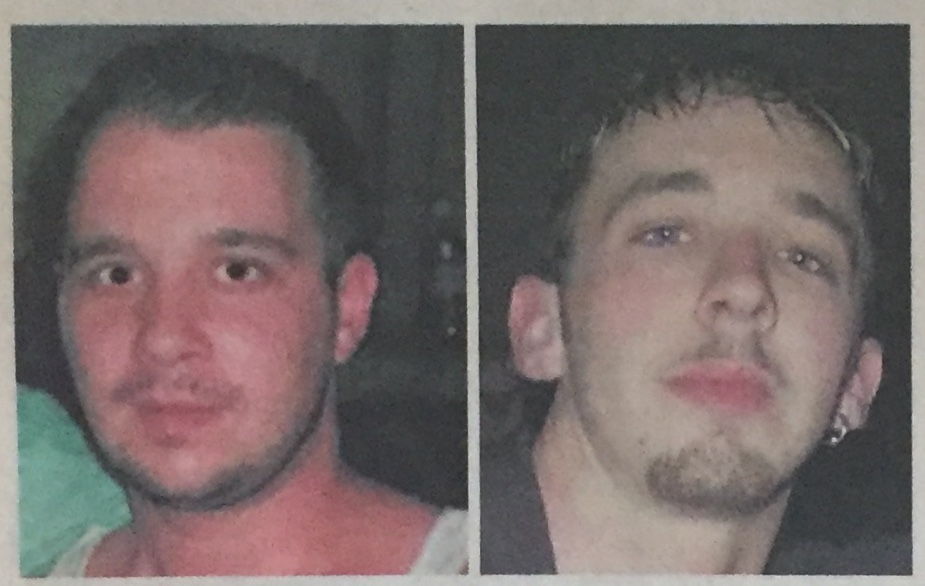
The murder of 31-year-old Redwood Trust manager Convertino (pictured, above left) was discovered on April 16, when three friends kicked in the door to his residence at 1917 Gough St. and found two dead bodies: Convertino’s and that of 22-year-old Sean Wisniewski (pictured, above right). A single bullet to the head had killed each. The crime has sent shock waves of concern through Baltimore’s nightlife community, and speculation as to the reason for the murders has been rife.

Convertino moved to Baltimore from Rockville last fall and, in addition to managing Redwood Trust, had recently started a nightlife promotions company called J. Michaels Entertainment. Previously, he had been owner or co-owner of several clubs in Binghamton, N.Y., according to press accounts there. Wisniewski, a Virginia resident, worked for Buzzlife, a nightlife promotions company based in Washington, D.C., that holds Saturday-night events at Redwood Trust.

Redwood Trust, housed in the historic Mercantile-Safe Deposit and Trust building on East Redwood Street downtown, has periodically been the subject of controversy since shortly after it opened in the fall of 2001. In December of that year, liquor inspectors raided the establishment for operating after 2 a.m., despite the fact that the city zoning board had given its approval for the club to remain open, alcohol-free, until 4 a.m. The early-morning raid, during which Redwood staff threatened and intimidated liquor inspectors, sparked a legal battle that still endures. The Maryland Court of Appeals heard arguments in March, but has yet to issue an opinion on whether Redwood has the right to host after-hours dancing.

In February 2002, Redwood Trust made headlines again, when Baltimore Ravens defensive end Michael McCrary told police he was assaulted by patrons at the club and suffered a cut to his nose that required stitches. Within days, the Baltimore homicide unit, which investigated the case because of McCrary’s high-profile status, executed a search-and-seizure warrant at Redwood. Backing the homicide unit were members of the police vice squad, which seized small quantities of cocaine and other drugs at various locations inside the club. As a result of the drug find, the Liquor Board charged the club with a narcotics violation, but found it not guilty.

“The fact [is] there were drugs there, obviously,” Liquor Board Commission Chairman Leonard Skolnik said at the June 6, 2002, hearing on the narcotics violation, according to a hearing transcript. “There’s no question. Even though, whatever you call it–it’s not guilty. There’s no way that we can hold the licensee responsible for some drugs that were on the floor. Obviously, you got to be careful, your people are careful, you got to make sure they understand people can’t use drugs in your establishment. That’s it.”

In addition to the controversies surrounding the club and its owner, there is also some question about who, exactly, owns the club. From Redwood Trust’s earliest beginnings in 2000, Piscatelli has represented himself to the Liquor Board as the sole owner of the club and the real estate where it operates. The reality, as reflected in press accounts, Liquor Board documents, and interviews, is that Piscatelli appears to have partners in both the nightclub and the property.

The company that owns the building, 200 East Redwood St. LLC, purchased it for $500,000 in May 2000 and reportedly sunk at least another $1 million in improvements–work that last year garnered a historic-preservation award from Baltimore Heritage, a local preservation-advocacy group. Press reports and records in the Liquor Board files, however, reflect at least one other partner in the real estate: Paul Chrzanowski. In several Liquor Board reports on the club, inspectors reported that Chrzanowski represented himself to them as the property owner.

Chrzanowski also holds the liquor license for Club 2314 on Boston Street in Canton (formerly Fusion and, before that, the Spot) and owns 1722 N. Charles St., which houses after-hours club 1722. In the fall of 2001, 29 patrons were arrested at 1722 and police seized 41 bags of cocaine, 183 doses of Ecstasy, and 82 small plastic bags of the club drug ketamine. Michael Kohl, who has worked as a manager of Redwood Trust, runs 1722.

Redwood Trust LLC is the company that owns the nightclub. Piscatelli has repeatedly claimed 100 percent ownership of the company in Liquor Board documents. A brief conversation with the proposed new owner, Redwood DJ Leonard Kern–who formerly worked as manager for Chrzanowski at 2314 Boston St.–reflects otherwise.

“I’m presently one of the owners there,” Kern told City Paper on June 3, even though the transfer of ownership has yet to be approved by the Liquor Board. “I filed to be added to the license,” and Piscatelli is to be “taken off the license,” he explained before cutting short the interview and saying he’d call back after conferring with his attorney.

In a June 5 follow-up interview, Kern said, “It’s really nobody’s business” who owns the club. The transfer application reflects that Kern has put $5,000 down on the $350,000 purchase price, and that he will lease the building for five years at $12,000 a month–twice the $6,000 monthly rent the business was paying previously. Kern’s attorney, Melvin Kodenski, told City Paper that “it’s probably better to talk to the principals” about the proposed sale of the club.

The Liquor Board’s Schroeder says applications for transfers are made “under penalty of perjury,” so ownership information provided in the application is presumed to be true.

“It was always my understanding that Piscatelli was the 100 percent shareholder,” she says. Information to the contrary “suggests that the person has lied” in the application, she says, and “we would follow up” to ascertain whether that in fact happened.

If it were determined that ownership of the club was misrepresented, the Liquor Board could charge the club with a violation and bring it before the board’s commission for a hearing. When asked about Kern, Schroeder says, “I don’t think he’s shown up as an owner prior” to the pending application.

The Lonely Killer: Anthony Jerome Miller Got 60 Years For Double Murder, But Questions Still Remain Over Whether Or Not He Acted Alone

By Van Smith

Published in City Paper, June 20, 2007

unnamed-1

Tarsha Danielle Fitzgerald was a 34-year-oldsingle mother when she married Anthony Jerome Miller, then 27, in the spring of 2003. The two had met only recently, not long after Miller’s mother had died of cancer, and the relationship quickly grew serious. Both were congregants at West Baltimore’s New Psalmist Baptist Church in Uplands. Fitzgerald sold advertising for Magic 95.9 FM, a Radio One station, while Miller–well, Fitzgerald’s friends hardly knew anything about her fiancé, much less what he did for a living. But they knew he did a lot of nice things for her and that she was crazy about him. He fast became like a father to her two children after he moved into her Owings Mills townhouse, and they later had a child of their own. Miller even paid for the honeymoon in Mexico. He used an acquaintance’s credit card to make the final payment, claiming it was the friend’s wedding gift to the couple.

The card belonged to 31-year-old Jason Michael Convertino, the general manager of the now-defunct downtown nightclub Redwood Trust. Miller used Convertino’s card on April 12, 2003, the day after Convertino and 22-year-old Sean Michael Wisniewski, a DJ who sometimes spun vinyl at Redwood Trust, were shot to death. Nearly three years later, in January 2006, Miller was charged with the murders. In June of this year, he was sentenced to 60 years in prison. Immediately afterward, Miller appealed his conviction and filed a motion to modify the sentence.

At the time of the murders, Convertino had been arranging hip-hop celebrity appearances at Redwood Trust and was planning to take his crowd-gathering skills to another Baltimore venue, the now-defunct Bohager’s Bar and Grill. He and Wisniewski were killed on a Friday evening inside Convertino’s Gough Street rowhouse apartment, just across the street from General Wolfe Elementary School in Upper Fells Point. Their bodies were discovered five days later, after Wisniewski’s friends kicked in the door to the apartment, discovered the carnage, and called the Baltimore Police Department.

The police investigation stagnated shortly after it began, when the initial lead detective resigned from the force. That investigator, Blane Vucci, found that Miller had used Convertino’s credit card and had pawned Convertino’s laptop after the killings, but the evidence was not enough to bring charges. The investigation revived in 2005, after detective William Ritz was assigned it as a cold case and, in a matter of months, established that Miller’s DNA was found at the crime scene. Ritz, following official policy, has declined to speak on the record about the case.

Miller was on a trip with Fitzgerald in Atlanta when the murder charges were filed, and he immediately returned to Baltimore to surrender and declare his innocence. His attorney, Paul Polansky, pleaded for a speedy trial, but the proceedings were delayed when the prosecutor assigned to the case took a private-sector job and another prosecutor, Sharon Holback, took it over.

When the trial finally took place in March 2007, evidence showed that Miller and Fitzgerald both knew Convertino, whose nickname was Jay. Miller had worked briefly on Redwood Trust’s security staff, having been hired by Convertino, who knew Fitzgerald because, as a promoter, he knew who was who among the Radio One sales staff. Holback presented evidence that Miller came to Convertino’s apartment to kill him and steal his credit card and laptop in order to pay for the honeymoon, and that Wisniewski was shot dead simply because he happened to be there when Miller arrived.

On March 15, after two and a half days of deliberations, a Baltimore City Circuit Court jury found Miller guilty of two counts of second-degree murder–the non-premeditated kind–but acquitted him of handgun, robbery, and first-degree and felony murder charges. Afterward, jury members asked Judge Robert Kershaw to seal their names, so they can’t be contacted to explain their decision. The verdict seems to suggest, however, that they believed Miller killed the two, but, despite the prosecution’s evidence and arguments to the contrary, he didn’t plan to. What’s more, the jury evidently decided that he didn’t use a gun, even though that’s what killed the men, and that he didn’t rob Convertino, even though he used Convertino’s credit card and pawned his laptop. It probably wasn’t exactly what the prosecutor was hoping for, but it was a conviction.

Holback described the jury’s decision as a “compassionate verdict.” But there is room to wonder whether Miller found his way to Convertino’s apartment on his own initiative, and whether access to a stolen credit card and a laptop to hock was enough to prompt a double murder. Whether the investigation remains open is a can’t-confirm-or-deny matter, as far as law enforcement is concerned. But, despite Miller’s conviction, the Redwood Trust double murders remain mysterious.

Convertino came to Baltimore in the fall of 2002, hired to manage Redwood Trust after a couple of short gigs managing other venues in the region, including Jillian’s at Arundel Mills Mall. His résumé already boasted substantial experience managing and owning clubs in his native Binghamton, N.Y. He got his start in the business there from a club owner named Bill Uhler, who hired him in 1996 to manage a place called the Shark Club.

“He was the first to bring major DJ acts to the [Binghamton] area,” Uhler recalls in a recent phone conversation, and lists appearances by hip-hop luminaries such as Funkmaster Flex and DJ Skribble as promotions handled by Convertino. Uhler says he watched Convertino develop as an entrepreneur, both as a club owner and as an entertainment promoter, and they became close friends. By the time Convertino left for Maryland, Uhler recalls, he was a fixture in Binghamton: “Everybody in town knew him.”

Having landed at Redwood Trust, Convertino quickly consolidated the contacts necessary for successful club promotions and started his own company, J. Michaels Entertainment. He specialized in bringing in big names from the hip-hop world, who would draw throngs of paying customers happy just to be in the same venue as the featured celebrity. The star, who would have already performed elsewhere that night, would show up and hang out at the club for a while. These “after act parties” cost up-front money to arrange and carried with them the ever-present risk that the celebrity might not show or make only a fleeting appearance. In arranging these gigs, Convertino had to cross paths and make deals with a host of people in the entertainment business.

“I remember him as a wannabe promoter who was trying to be something that he’s not, and going about it in a shady fashion,” Mike Esterman recalls of Convertino. Esterman represents celebrity talent on a nonexclusive basis out of Washington but also works in the Baltimore area. “He’d say, `I’ve got $10,000 to spend on an artist,'” Esterman continues, “not telling me that he actually has $20,000, which I come to learn later. So he would try to pocket the difference. He didn’t do it to me, but I almost did deals with him that I found out about later. I come across those kinds of deals all the time, and it makes us all look bad, but he was no different than a lot of promoters.”

Baltimore-based entertainment consultant David Geller recommended that Redwood Trust owner Nicholas Argyros Piscatelli hire Convertino as the club’s manager and has a different take on Convertino’s dealings. “He was a harmless, hard-working, motivated, ambitious guy, and he was trying to be clever in a business setting,” Geller says. “Maybe Jay was networking himself to the talent, bypassing the local promoters, and it pissed somebody off. This guy, whatever his flaws were, he was just harmless. Whatever he did, he didn’t deserve to be shot.”

The idea that Convertino had angered others in the promotions business came up during Miller’s trial, when Scott Henry–owner of BuzzLife, a D.C.-based concert-promotions company, and Wisniewski’s boss–testified. Henry was one of the group of people who discovered the murder scene, and immediately afterward he was interviewed by police. During that interview, he discussed “heated arguments” that promoters had been having with Convertino. “I’d say there was maybe a deal gone bad,” he testified during Miller’s trial. Henry remains convinced there is more to the murders than Miller killing to get a credit card and a laptop. “I hope this is only the beginning, because you and I both know there is a lot more to this,” he said after his March 6 testimony.

“Jay tried to work around middlemen a lot of times,” Uhler observes. “If he met somebody through a promoter, the next time he tried to do it without [the promoter]. That may have caused problems in Baltimore. One thing I know, people with a lot of money don’t like to lose any–that’s how they ended up with a lot of money.”

Another old Binghamton friend of Convertino’s is Jason Smith, better known as DJ Boogie. Now an international artist based in New York City, he got his start doing gigs with Convertino. “Maybe Jay just went to compete against the wrong guys, and they hired somebody to kill him,” Smith says. “There are parts of Baltimore you really don’t want to mess with.”

Many tantalizing questions about Convertino’s business dealings and their possible role in his death are likely to remain unanswered–take the cash. Convertino’s body was found on his bed. Weeks later, the landlord’s cleaning crew threw the bed out into the alley to break it up and put it in a truck to haul away. When it hit the ground, a bundle of $7,900 in cash fell out of the mattress. The information about the money came out at trial, but no one testified what it was for, where he got it, whether anyone else knew about it, or how it fits into any theories about the murders. It was just a bundle of cash, stuffed in the mattress underneath Convertino’s dead body, discovered by happenstance, weeks after the crime.

IMG_7624

During his sentencing hearing, Miller spoke publicly about the case for the first time. In the middle of his statement, his shackles jangled as he suddenly turned around to face Convertino’s mother, Pam Morgan, who was sitting about 15 feet away on a courtroom bench. Miller, an imposing, broad-shouldered man, is much bigger than the diminutive Morgan, a 55-year-old retired nutritionist from upstate New York. Over Holback’s vigorous protests and Polansky’s just-as-vigorous counterprotests, Judge Kershaw allowed Miller to continue addressing Morgan face-to-face, as well as Wisniewski’s family.

“I knew your son for a short time,” Miller said to Morgan, adding that Convertino was “a good man” and claiming that “I never had no intentions at all to hurt your son.” Miller then turned to the Wisniewskis, who, like Morgan, had come in from out of town for the sentencing, and said, “I never knew Mr. Wisniewski.” He forgave Holback for prosecuting the case, asked Kershaw for mercy, and declared, “I did none of these crimes.”

Moments later, Kershaw gave Miller the maximum sentence: 30 years for each of the two murder counts, one term to be served after the other. Under state sentencing guidelines, and barring any changes from appeals, Miller can apply for parole after serving half his prison time.

“I think justice has been served, and I’ll leave it at that,” Wisniewski’s father, Michael Wisniewski, said after Miller was led away by sheriff’s deputies. Morgan, contacted by phone the next day from her home outside of Binghamton, also said that justice was served. She has believed Miller committed the murders since shortly after they occurred, when she first learned he had used her son’s credit card to pay for his honeymoon. But Morgan, unlike Michael Wisniewski, is not prepared to leave it at that.

“I was just in shock [Miller] was even talking to me,” Morgan recalled. “I was in such awe that I don’t know if he said that he didn’t kill Jay, but the overall thing sounded like [Miller said] Jay was his good friend and that he wouldn’t have done that.”

Reminded of the exact words Miller had uttered, that he “never had no intentions at all to hurt your son,” Morgan softly said, “Oh.” She paused briefly before continuing: “Ooh, now that came out funny. That, to me, is saying that he did it, but didn’t mean to.”

Morgan recalls that, right after the murders in 2003, she was led to believe by the initial homicide investigators that the killings were done by more than one person. “From day one, they all seemed to give me the inkling that the crime scene led to at least two people being in the apartment,” she says. “I never was told any facts about how they got that. I don’t know. But that’s all they’ve all led me to believe–that, and that there was no evidence, and that they didn’t think the case would ever be solved. Up until, of course, detective Ritz took over.”

The idea that more than one person was involved in her son’s death has stuck with Morgan. Even though Miller is now serving time, she says, “I don’t know if [the truth] will come out” about the full circumstances surrounding the crime. “I hope it does, because this is the hardest thing–to live without knowing if Miller was alone, or if someone else really was the cause of Miller doing this. I really want to know the whole truth, no matter who it comes from or whatever they discover. Once I know the whole truth, I think then I’ll be OK for whatever life I have left.”

Not present at the sentencing hearing–or for most of the trial, including the verdict–was Miller’s wife, Tarsha Fitzgerald. On the fifth day of the trial, Fitzgerald arrived to assert her spousal privilege not to testify against her husband, who mouthed, “I love you,” to her as she left the courtroom without looking at him. (Fitzgerald has adamantly refused to discuss the case publicly, and has threatened to sue if her name is included in media reports about the charges against her husband.)

The son Fitzgerald and Miller had together is a toddler now and was in the courtroom for his father’s sentencing. The child was held in the arms of Miller’s brother Samuel Lester Miller III. When Holback called Anthony Miller “the ultimate sociopath” and “a cold-hearted con man,” Sam Miller stood up and left the courtroom with the baby. After the hearing, he walked down Saratoga Street outside the courthouse, still carrying Miller’s son, and declared to a reporter that “it’s not over.”

Sam Miller was reiterating a point he made at length during a phone conversation days earlier. “I hope the investigators won’t be satisfied with this,” he said of his brother’s conviction. “These murders were a conspiracy,” he continues. “Anthony might have known something about it, but sometimes people feel they have to keep their mouth shut. Do I believe he knows something? Possibly. Do I believe he’s a murderer? No. We all can be fooled, but I don’t see it in him. He’s no angel, don’t get me wrong, but I honestly just don’t see that.”

IMG_7625

As any trial attorney who’s not in the middle of trying a case before a jury will tell you, trials aren’t really about the truth. They’re about competing interpretations of presented facts, and the jury is instructed to sort out the resulting mess. The jury’s hesitance to throw the book at Miller in its verdict may have been because of facts presented at trial that raise questions about why Convertino was murdered.

Take, for instance, the motive that Convertino’s boss may have had. Convertino was hired to manage Redwood Trust by Nicholas Piscatelli, a successful Baltimore real-estate developer. Piscatelli meticulously restored a historic downtown bank building that had survived the Great Baltimore Fire of 1904 to house his posh nightclub. Convertino, witnesses testified at Miller’s trial, was planning to take his proven skills as a scene-maker to one of Redwood Trust’s competitors, Bohager’s Bar and Grill, when the murders happened. More specifically, Convertino was scheming to take a P. Diddy event that was scheduled to happen at Redwood Trust on April 13, 2003, to Bohager’s instead; after the murders, on April 11, P. Diddy appeared at Redwood Trust, as originally planned. What’s more, Piscatelli suspected Convertino of stealing not just shows, but money from Redwood Trust.

Holback took on this nettlesome situation directly during the trial: She called Piscatelli to testify. His attorney, Peter Prevas, was present in the courtroom. Piscatelli is short and a sharp dresser–he wore a dark blue shirt and a shiny dark suit, and he hung his overcoat over the side of the witness stand as he sat down. After a few questions about his background and the Redwood Trust restoration, Holback got to the meat of the matter.

“OK,” she began, “I’m going to ask you, please, sir, to look at the jury. Did you have anything to do with the murder of Jason Convertino?”

“No, I did not,” Piscatelli responded. He didn’t so much look at the jury as quickly glance at them, and then up, down, and anywhere else but at them as he continued to answer questions. He appeared exceedingly uncomfortable but exhibited no outward outrage or anger that he was being asked if he was a murderer.

“Did you have anything to do with the murder of Sean Wisniewski?”

“No.”

“Did you have any knowledge that they were going to be murdered?”

“No.”

“Did you have any information that they might be murdered?”

“No.”

“Did you ask anyone to murder them?”

“No.”

“Did you ask anyone to murder either one of them?

“No.”

“OK. Now, do you know Anthony Miller?”

“No, I don’t.”

“Have you ever seen him?”

“No. I thought I might recognize him today, but I don’t.”

In a December 2006 interview with City Paper, however, Piscatelli recalled that Miller had asked to borrow money from him to pay for the honeymoon, but he didn’t make the loan (“Late Discovery,” Mobtown Beat, Dec. 6, 2006). While Piscatelli may not have met Miller face-to-face, he at least knew him as someone who once asked him for money.

Holback went on to ask Piscatelli about Convertino’s employment situation at Redwood Trust, about how the club was run, about the hip-hop events that Convertino was bringing in. Then she asked if he knew Tarsha Fitzgerald, and Piscatelli responded, “Sounds familiar, I don’t remember in what capacity.” Holback suddenly launched back into the hard questions:

“Did you ever ask Anthony Miller to hurt or kill Jason Convertino?”

“No.”

“Would you?”

“No, of course not.”

“Any reason to hurt him?”

“No.”

Holback went on to ask him how successful the Redwood Trust had been, and he explained that he sold the business in summer of 2003, not long after the killings. “It just wasn’t doing a lot of business,” he explained, adding that it had been a success before and during Convertino’s tenure as manager. In Piscatelli’s previous interview with City Paper, he claimed that Redwood Trust had never done well, since he’d banked on changes in the law that would have allowed it to stay open past 2 a.m., but the law wasn’t changed as he’d hoped.

Piscatelli handled Holback’s questions for 25 minutes before facing Miller’s attorney, Paul Polansky. Piscatelli described his relationship with Convertino as “good,” and added that “I liked Jason. He was a great guy. We’d go out to dinner once in a while.”

When Polansky asked whether or not Piscatelli argued with Convertino over stolen money, Piscatelli said, “I think I got upset with him when I heard that that was happening,” and testified that the argument occurred “maybe a month before” the murders. Asked when he first learned Convertino was trying to take acts to a different venue, Piscatelli said, “We just found out about that the week that he was missing, really.”

Then Polansky asked if Piscatelli had “an argument with Jason in the office in the presence of other people about the theft of the money and the fact that he was hustling business to another club?” Piscatelli responded: “You know, we were aware of it, we discussed it, we weren’t happy about it. But our feeling was, as the owners of the club, that he was bringing in money that we wouldn’t be earning, so, you know, we let it go.”

Polansky had made his point: Convertino’s skills as a nightlife manager and promoter were valuable to Redwood Trust. If Convertino went to work for a rival–Bohager’s, as he was about to do–Redwood Trust would be competing against him in the nightlife market. It might not seem like a suitable motive for murder, but neither does the theft of a credit card and a laptop. (Piscatelli has not been charged with any crime in relation to Convertino and Wisniewski’s deaths.)

Polansky had one last question for Piscatelli. Piscatelli’s answer–“No, I didn’t go to his funeral”–hung in the air as he left the courtroom.

Miller said he intended no harm, yet the victims’ bodies displayed signs of brutally intentional violence. What was found in Convertino’s apartment, after Wisniewski’s friends kicked in the door, screamed cold, calculated murder.

Wisniewski’s body was sitting in a living-room chair, his hand propping up his head. A burned-out cigarette butt lay on the floor next to him, and the television was on. He died instantly from a single bullet fired from a gun that was nearly touching the side of his head. Whoever fired the shot likely did it while coming up behind him, and Wisniewski probably never knew it was coming.

Upstairs in the bedroom, Convertino’s body lay face down on his bed. Unlike Wisniewski, he knew he was facing a violent death. The bathroom door was bashed in, evidently because Convertino had sought refuge there, though whoever killed him entered the apartment without force. He fought back, judging by his bruises. He took one bullet through his arm and another into the back of his skull, which exited through his jaw. A vase filled with pennies was broken over his head. A third bullet lodged in his cranium after being shot from close range into the back of his head. His bedding had been used to quiet the sound of the gun.

The evidence at Miller’s trial was circumstantial but strong. His skin cells were recovered from inside a latex glove found on the bedroom floor and mixed with Convertino’s blood in another piece of a latex glove that was left on the bed next to Convertino’s body. Cell-phone records put Miller near the scene at the likely time of the murders. The next day, Convertino’s credit card was used to pay for Miller’s honeymoon and purchase gasoline. A week or so before the murders, Miller’s cell phone was used to call Convertino’s immediate next-door neighbor, who testified that someone resembling Miller came to his apartment, claiming to be working for the cable company, and asked if the guy living next door made a lot of noise–ostensibly trying to determine whether gunshots might go unnoticed.

A handwriting expert who testified for the prosecution couldn’t say for certain whether Convertino’s signature on a form submitted to the travel agency authorizing Miller to use the credit card was a forgery penned by Miller, but he was pretty sure it wasn’t Convertino’s handwriting. The day after the bodies were found, Miller pawned Convertino’s Gateway laptop for $250, presenting his driver’s license to document the transaction at a Randallstown pawnshop where he was a regular customer. Two days later, he returned to the pawnshop to bring in the laptop’s power cord, which fetched another $150. How Miller ended up in possession of Convertino’s laptop was never addressed during the trial by the defense.

Polansky told the jury that if Miller did the killings, then “he’s the world’s dumbest, stupidest murderer of all time” because he left behind so much evidence for investigators. No witnesses, no recovered gun, no fingerprints, and a hugely out-of-proportion motive–robbery of a credit card and a laptop–but the trail led directly to Miller. Even his criminal record–he ducked a double-murder rap in an incident that resulted in his conviction for assault in 1993, and in 1997 he was convicted of forgery–seems to foreshadow the crime. Yet it took nearly three years for the homicides to be cleared with his arrest. And nowhere along the line did Miller act like a guilty suspect: He cut short his honeymoon to be interviewed by detectives in 2003, freely submitted his blood and handwriting exemplars in ’05, returned to Maryland to surrender immediately after the charges were filed in ’06, and steadfastly asserted his speedy-trial rights rather than delay the start of the trial.

But it’s hard to argue with DNA evidence that places Miller at the scene, wearing latex gloves. Any explanation other than that he was there, with the gloves on, when the murders were committed hasn’t been offered. Short of that, Polansky tried to convince the jury that it was a massive frame job, emphasizing how long it took to come up with the DNA evidence.

“They now say his DNA fits, years later,” Polansky argued in his opening statement at the trial. Miller “was set up for this crime,” he continued. “What would you do,” he asked the jury, if confronted with evidence “appearing that you know nothing about, and you know couldn’t have existed? I suggest that you would do exactly what Anthony Miller has done. Plead not guilty in the belief, in the prayer, that during the course of the trial the truth will emerge, and the truth will set you free.”

For a long time, Pam Morgan suspected that Nick Piscatelli had something to do with her son’s death. Her radar went up early on, when she met with detective Blane Vucci–the first lead investigator on the case–on her first visit to Baltimore, right after the murders in 2003. Morgan had thought of Piscatelli as nothing more than her son’s employer prior to the murders. But she recalls that when she told Vucci that she thought that the murders must have something to do with Redwood Trust, “because if Jay knew anybody, it would have been through the business,” Vucci’s heated reaction surprised her.

“He informed me that Nick did everything for my son, yelling at me,” Morgan says. “He told me there was no evidence, that the case would never be solved, and made it seem like somehow Jay did something wrong. And I left feeling hopeless.” (Attempts to reach Vucci for comment were unsuccessful.)

Morgan went back to upstate New York, and began to investigate the case on her own. She went through her son’s records that she had, calling any contacts she could find, and tried to share any information she developed with the Baltimore Police Department.

One of the things she shared with the police had to do with Piscatelli. About a month after the killings, in May 2003, a benefit was held near Binghamton to raise money for Convertino’s young daughter. About 500 people showed up, and while it was going on, Morgan says she was approached by a man she’d never seen before and hasn’t seen since. “He said that Nick Piscatelli was behind my son’s murder,” Morgan recalls, “that [Piscatelli had] hired someone to do it, and that he’d covered his tracks.”

Since then, Morgan had kept Piscatelli close. She says she maintained a phone relationship with him, never letting on that she suspected his involvement.

Morgan and Piscatelli spoke every few months throughout 2004 and ’05, she recalls, and more frequently in ’06 to discuss whether either of them had heard of any new developments in the case. Neither of them had. This past December, after her account of the encounter with the man at the benefit was published in City Paper after it surfaced in court papers in the Miller case (“Late Discovery,” Mobtown Beat), they spoke once more, and Morgan says she told Piscatelli that she hadn’t brought her suspicions up with him because they were based on rumor, not fact. “I never spoke with him again,” she says. (Informed of Morgan’s story about the mysterious tipster during a December 2006 interview with City Paper, Piscatelli said, “Oh boy! She said that? That’s unfortunate.”)

Morgan was not present when Piscatelli testified at Miller’s trial–it was the first and only day of the trial she missed. Now that Miller’s been convicted, she says she feels less certain about her suspicions than ever.

“If I knew Nick actually did it, if I actually had the proof” that he was somehow involved in Convertino’s death, Morgan says, “I don’t know what I would have done differently. As long as I still had a doubt and could speak to this man, I did so. So many other things are surfacing, and sometimes we are led to believe one thing when it is the opposite. Now, I have doubts that Nick is responsible. Before, I could go either way on this whole thing. But right now, it’s like I don’t know anymore.

“Don’t forget,” she continues, “[the police] told me they felt two people were involved. And of course, I’m thinking, Well, somebody came [to the benefit] and told me that. Was he the second person? Now, I don’t know.”

Or it might have been Miller, acting alone, killing two people simply to get a credit card and a laptop in order to pay for his honeymoon. If so, barring a successful appeal, Miller will be paying for that honeymoon for a long time to come.

Dismemberment Plan: Gruesome murder case highlights violence in the pot trade

By Van Smith

Published in City Paper, July 25, 2012

1883588079_e98b54b95c_b

Peter Blake shouldn’t have been in the United States on the evening of Dec. 16, 2009, much less at an apartment on Daybrook Circle, near White Marsh Mall in Baltimore County. Blake, now 54, had been deported back to Jamaica, his homeland, in 2004, after serving a lengthy federal prison sentence for 1990 drugs-and-firearms convictions in Texas. Yet, by his own admission in court documents, Blake was there at the apartment, where he participated in a brutal contract murder and dismemberment (“The Scarface Treatment,” Mobtown Beat, Dec. 10, 2010; “Reefer Madness,” Mobtown Beat, March 9, 2011).

The victim, 50-year-old Michael Paul Knight, was a bulk-cash transporter for a massive Baltimore-based marijuana-dealing enterprise and had been entrusted with $1 million in the business’ proceeds, but more than $200,000 of that money had gone missing. He was killed after failing to explain the missing money, despite being beaten until one of his eyes came out of its socket and being threatened with a gun. Ultimately, Blake helped hold Knight face down in the apartment’s bathtub, and Blake and another man stabbed him until he died, according to Blake’s guilty plea. Over the next three days, Blake and two others sawed up Knight’s body and discarded the pieces in two or more dumpsters around the Baltimore region. Blake’s plea says the top conspirator in the killing, Jean Therese Brown, paid $100,000 to have Knight killed and have his body disposed of.

Blake, during his 1990 trial in Texas, was alleged by prosecutors to have admitted to “killing 10 people, two of which were police officers in Jamaica” in the past, though on the stand he denied making this admission, according to court documents. He unsuccessfully appealed his conviction based on the prosecutors’ inclusion of the multiple-murder suggestions raised before the jury, but the appeals court ruled that Blake had impeached his credibility in so many other ways while testifying that the prosecutors’ fast-and-loose conduct on this score was a wash.

The charges against Blake in the Maryland case—one count of “conspiracy to commit murder and kidnapping in aid of racketeering” and one count of “aggravated re-entry of a deported alien”—were filed in February, and he pleaded guilty to them in April, before U.S. District Judge William Quarles, Jr. The maximum sentence for the murder-conspiracy count is 10 years in prison. The others alleged to have been involved in Knight’s murder—Brown, Hubert “Doc” Downer, Dean “Journey” Myrie, and Carl Smith, who is also known as Mario Skelton, Jr.—are in much more serious trouble.

Brown, Downer, and Myrie face mandatory life sentences for murder in aid of racketeering if convicted of Knight’s killing. They are fortunate not to be facing the death penalty, which, until early July, when the U.S. Department of Justice declined to pursue capital punishment in this case, had been a real possibility.

Smith, meanwhile, was murdered in Tijuana, Mexico, in April 2010. He allegedly was shot in the head by Leo Alvarez Tostado-Gastellium, one of three defendants in a separate pot-distribution indictment filed in April in U.S. District Court in Maryland. That indictment, which does not include a murder count, also charges two other men—Julio Carlos Meza-Mendez and Gabrial Campa-Mayen—with participating in the Baltimore-based pot conspiracy involving Brown, Smith, and others, which prosecutors have dubbed “the Brown Organization.” After Smith’s murder, the indictment says, Brown called Meza-Mendez to confirm Smith’s murder.

Myrie had been a fugitive until early July, when he was picked up in New York City as a result of an America’s Most Wanted segment that aired recently. At his first appearance at Baltimore’s federal courthouse on July 17, the tall, barrel-chested Myrie, who has a close-cropped beard and a shaved head, appeared unmoved as U.S. Magistrate Judge Paul Grimm explained his rights.

Numerous others have been charged in federal court for their part in the Brown Organization, which court records say grossed $1-$2 million per month, selling weed for $1,000 per pound. The other codefendants in the main conspiracy case are Tamara Henry, Robert Henry, Dmytro “the Russian” Holovko, Jason Carnegie, and Anthony Hendrickson. Two other men—Mowayne McKay and Shamar Dixon—were arrested at their Ellicott City residence in March 2011, charged separately, and pleaded guilty in July and August 2011.

The scope of the Brown Organization’s alleged pot-distribution scheme was enormous and long-lasting and was orchestrated from Baltimore and Miami, Fla. The indictment says it started by 2000, at the latest, and continued until Oct. 2011, and other court documents state that it moved as much as 1,000 pounds of pot at a time, once or twice a month. Brown owned and operated trucking companies, including one called Full Range Trucking, to move the shipments of marijuana from Arizona and California to Maryland, Pennsylvania, and New York, and make shipments of cash payments back to Arizona and California. Another Brown trucking company, called Coast to Coast Express LLC, was based in an office at 6400 Baltimore National Pike in Catonsville, according to its business records.

Brown “concealed” some of the profits in Baltimore, court records say, and some of the money was carried to her native Jamaica by couriers, including Knight. Once the money was in Jamaica, authorities say, some of it was converted to real estate held by Brown, Smith, and their relatives.

When Brown was charged in the pot-conspiracy indictment in Feb. 2011, she pleaded guilty to bulk-cash smuggling and received a 37-month prison sentence. Her codefendant in that case, Debbie Ann Shipp, also pleaded guilty but has yet to be sentenced.

Prior to her indictment in the pot conspiracy, Brown cooperated with authorities investigating the case against her and her codefendants—though her attorneys, Gary Proctor and Thomas Crowe, have moved to have her statements suppressed. According to their filings, “Ms. Brown has given extraordinarily detailed statements to law enforcement officers implicating Messrs. Downer and Holovko, among others, which include, but are not limited to, three audio-video statements with a combined running time slightly in excess of seven hours.” Proctor and Crowe argue that two interviews of Brown, conducted by Baltimore County police detectives in Oct. and Nov. 2010, were involuntary, even though they were given with the permission of her attorney at the time, Sebastian Cotrone of Florida, who was not present when the interviews took place.

The shocking violence that Blake has admitted to not only implicates the others accused in Knight’s murder, it also serves as a reminder that the pot trade, though often thought to be a more peaceful enterprise than dealing cocaine, heroin, or other harder drugs, can prove tragically lethal.

“The organizations that distribute marijuana often engage in the same kind of violence that we see in any drug gang,” says Maryland U.S. Attorney Rod Rosenstein. “Maybe the users aren’t as dangerous,” he adds, “but sometimes the dealers are.”

Reefer Madness: One woman’s terrifying pot-smuggling saga

By Van Smith

Published in City Paper, Mar. 9, 2011

marijuana-2766343_960_720

Jean Therese Brown’s undoing began on Christmas Day 2008, when she arranged for about a half-million dollars in cash to be flown by couriers from Baltimore-Washington International Airport to Jamaica. Since then, court documents show, the 41-year-old received a 37-month federal prison sentence for bulk-cash smuggling and was hit with new drug-conspiracy charges that tie her to Mexican suppliers, and two people close to her have been murdered.

One of the murder victims, Carl Smith, who is also known as Mario Skelton Jr., was the father of Brown’s child and was killed in Tijuana, Mexico, in April 2010, according to court documents. The other, Michael Paul Knight, who was one of the couriers Brown used to carry cash to Jamaica, was beaten and slain over missing drug money and then dismembered with a power saw in an apartment near White Marsh Mall in December 2009 (“The Scarface Treatment,” Mobtown Beat, Dec. 10, 2010). Knight’s body, which Brown told investigators was disposed of in trash bags over a two-day period, has never been found.

That’s a lot of heartache and carnage over moving pot, which is what Brown is accused of doing.

The drug-trafficking scheme, court documents state, involved using a trucking company to distribute marijuana in California, Arizona, Pennsylvania, Maryland, New York, and Florida. Under the new indictment—unsealed on Feb. 24 after it was first filed on Feb. 1, the same day Brown was sentenced in the cash-smuggling case, to which she pleaded guilty—Brown and four others are accused of moving more than 1,000 kilograms of pot since 2000.

The docket in the drug-conspiracy case indicates that none of the defendants has an attorney. Brown’s lawyer in the cash-smuggling case, Sebastian Cotrone of Florida, says he did not know Brown had been charged again. “I wish I could be of more help to you,” Cotrone says, “but I haven’t heard from her since her sentencing, and she has not hired me” to represent her in connection with the new indictment. The assistant U.S. attorney prosecuting the case, Peter Nothstein, declined to comment.

What is known about Brown’s criminal activities, both alleged and admitted, comes strictly from court documents, and there is virtually no available information about her background—except that she also is known as Jean Therese Lawrence and was first arrested in Florida, where she has a court record in Miami under that name.

The cash-smuggling indictment against Brown and her co-defendant, Debbie Ann Shipp, who was arrested in New York and awaits sentencing after pleading guilty in December, was filed last summer. It revealed that large sums of undeclared cash were transported to Jamaica under Brown’s direction by Shipp and two others, including Knight (who was identified in the indictment only by his initials, “MPK”).

In November, a search warrant issued to Baltimore County investigators hoping to solve Knight’s disappearance provided the first public glimpses of the breadth of the investigation, giving details of the two murders, the cooperation provided to law enforcers by Brown and other unnamed co-conspirators, and the alleged pot-smuggling operation’s ties to the bulk-cash smuggling case against Brown and Shipp.

The new indictment unsealed in February shed little light on the nitty gritty of Brown’s alleged conspiracy, other than to name the defendants, say how long it operated, and state the quantity of marijuana involved. Brown’s co-defendants are Hubert “Doc” Downer (also known as Michael Reid), Tamara Henry, Robert Henry, and Dmytro Holovko, whose nickname is “the Russian.”

Most recently, though, on March 1, federal prosecutors moved for a court-ordered forfeiture decree against one of the trucks allegedly used in the operation, and that document unveiled new details—including the assertion that Brown was the leader of the enterprise, and that it dealt directly with Mexican suppliers.

The forfeiture states that Brown’s outfit “used trucks to transport marijuana from Arizona to Baltimore and transported the cash proceeds of the marijuana sales from Baltimore back to Arizona where it was used to pay her Mexican suppliers and to purchase additional marijuana.”

Based on information provided by confidential sources, the forfeiture describes Holovko as one of Brown’s truckers and gives details about numerous trips in which Holovko hauled drugs and cash back and forth between Arizona and Baltimore. One of the sources, the forfeiture recounts, “stated he and Holovko would drive to a predetermined destination on Liberty Road in Baltimore,” where “they would offload the marijuana into one of Brown’s vehicles.” The source “stated that on one occasion he loaded approximately 38 boxes of Marijuana, with each box weighing approximately 20 to 25 pounds.”

City Paper was able to locate phone numbers for Holovko and a trucking company that New Jersey business records indicate is associated with him, but no one had answered either phone as of press time.

The forfeiture filing adds to mounting indications that Baltimore traffickers have direct links to Mexican cartel suppliers. The use of trucks and other large vehicles to move massive quantities of drugs and cash back and forth between Baltimore and the Mexican border, as is alleged in Brown’s case, was recently detailed in a federal drug trial (“Corner Cartel,” Feature, Feb. 23) featuring a cartel witness who greatly enhanced the already-established picture of Baltimore’s ties to Mexican suppliers (“Direct Connections,” Mobtown Beat, March 3, 2010). The danger of such dealings is suggested by the murders of Smith and Knight.

The truck that is subject to the forfeiture filing was seized when Holovko was arrested in New Jersey in mid-February, at around the same time Tamara Henry and Robert Henry were arrested in Florida. Downer faces a separate Maryland indictment, filed in December, accusing him of illegally reentering the United States after having been deported due to a prior aggravated-felony conviction. The dockets in his cases suggest he has yet to be arrested.

Direct Connections: Evidence mounts that foreign sources, including the Los Zetas cartel, deal directly with Baltimore traffickers

By Van Smith

Published in City Paper, Mar. 3, 2010

mobs

“The goal of any drug dealer is to cut out as many middle men as possible in order to increase profits.”

That statement was made by Maryland U.S. Attorney Rod Rosenstein a year ago, when he unveiled Operation Xcellerator, a U.S. Justice Department initiative aimed at laying low the long reach of the Sinaloa Cartel in Mexico. “I do believe,” he said at the time, “there are Baltimore drug dealers who do this by having connections with drug distributors outside of the U.S.” He vowed to “continue to trace the drugs back to the source, work our way to the top, and ultimately indict the major players.”

Since then, law enforcers here have successfully ferreted out some international ties to Baltimore’s entrenched drug economy. Though Rosenstein’s office points to only one Xcellerator case in Baltimore–a conspiracy with ties to Hollywood and Baltimore City Hall (“Mexican Connection,” Mobtown Beat, March 4, 2009)–City Paper has found three recent examples of evidence filed in U.S. District Court that indicate direct ties between Baltimore and foreign sources of supply, including the fearsome Los Zetas cartel (whose symbol is pictured above) in Mexico.

The Los Zetas connection arose on Feb. 17, when a superseding indictment was filed in a conspiracy case involving 44-year-old Jamaica-born Baltimorean Wade Coats (“Armed Drug Dealer for Steele?” Mobtown Beat, June 17, 2009). Coats and his co-defendants–43-year-old Ronald Brown of Baltimore and 42-year-old Jose Cavazos of Midlothian, Texas–were snared by law enforcers last April, when Coats and Cavazos used a room at the Baltimore Marriott Waterfront hotel to conduct an alleged high-dollar cocaine and heroin deal. The superseding indictment names a fourth defendant, 38-year-old Baltimorean James Bostic, whose presence in the case added evidence of dealings with Los Zetas.

Prior to the superseding indictment, the government’s case seemed tenuous, since the Baltimore police detective who swore out the initial complaints in the case–Mark James Lunsford–has since been charged federally with lying and embezzlement (“Costly Charges,” Mobtown Beat, Nov. 11, 2009).

Investigators learned of Bostic’s alleged acts involving Los Zetas in December, according to court documents, when a confidential source said that Bostic “would be making a large cash payment to a representative of the Los Zetas Mexican Drug Cartel for previously obtained cocaine and marijuana on December 29, 2009 at the Marriott Residence Inn in White Marsh.”

After receiving the information, the documents say, investigators “pre-wired a room for audio and visual recording” at the hotel. Bostic arrived at the appointed time, allegedly carrying a suitcase containing $590,000, which he gave to cartel representatives at the meeting. The documents say he complained to them about “the poor quality of the marijuana he had received and asked when he could expect his next shipment of cocaine.” Cartel representatives then allegedly counted the money, placed it in heat-sealed bags, and hid it in a Ford Explorer. According to the documents, as the cartel representatives were leaving the state the next day, “a vehicle stop was conducted of the Ford Explorer,” and the same amount of money Bostic had turned over was recovered.

The investigation continued on Feb. 2, according to the documents, when the confidential source told law enforcers “that a multi-kilogram drug transaction” involving Bostic and a cartel representative was about to occur at the same White Marsh Marriott. The investigators again pre-wired the room. Bostic and a cartel representative met and “the representative produced a suitcase.” Bostic opened it, “began counting kilograms of cocaine,” then left with the suitcase. After a short foot chase in the hotel’s parking lot, Bostic was arrested and “recovered from his person was a large hunting style knife and a large sum of U.S. currency.” The suitcase, which Bostic had dropped when the chase began, contained approximately 12 kilograms of cocaine.

The court documents do not say what became of the Los Zetas representatives who met with Bostic. According to the Justice Department’s 2008 National Drug Threat Assessment, Los Zetas is “the enforcement arm of the Gulf Cartel” and some of its members are former Mexican Special Forces soldiers who “maintain expertise in the use of heavy weaponry, specialized military tactics, sophisticated communications equipment, intelligence collection, and counter surveillance techniques.” More recently, according a 2009 U.S. Drug Enforcement Administration (DEA) press release, Los Zetas has “evolved into not only a security force but a drug trafficking organization in their own right,” merging with the Gulf Cartel to become a powerful entity known as “The Company.”

None of the attorneys representing defendants in the Coats case would comment for this article, since it involves an ongoing matter.

Another recent federal drug case involving Baltimore and Mexico nabbed Santiago Vargas-Ponce, who was charged Feb. 17. The case against him, like the one against Bostic, was built on information provided by a confidential source, followed by recorded surveillance. That source, according to court documents, was “in negotiations” in January with “a Mexican drug-trafficker . . . to deliver a large quantity of cocaine to Baltimore.”

Vargas-Ponce, the court documents say, arrived in Baltimore on Feb. 15 with a drug-laden vehicle, met with the confidential source, and arranged to do the drug deal the next day. After the source picked Vargas-Ponce up at a hotel and “gathered tools to extract the cocaine from the vehicle,” the two headed to “a secured garage located in Owings Mills,” which investigators had equipped with a hidden camera. Once the source dropped Vargas-Ponce off at the garage and left the area to go get money, agents watched Vargas-Ponce “disassemble the vehicle” and “extract a large object from the engine compartment.” The agents then arrested Vargas-Ponce and proceeded to discover another object in the engine compartment. In all, the two objects held approximately six kilograms of cocaine, the court documents say. Vargas-Ponce’s attorney from the federal public-defender’s office, who was appointed on Feb. 24, did not wish to comment for this story.

The third recent case is a Nov. 2009 DEA search warrant for two Baltimore storage lockers leased by a Baltimore man named Paul Sessomes. The warrant relates DEA intelligence-gathering by its offices in New York and Bogota, Colombia, dating to 2008, and names recently convicted drug-dealer Thomas Corey Crosby, who in turn was tied to (but not charged in) a 2007 federal case involving convicted drug conspirators who used Fat Cats Variety store in Southwest Baltimore (“All the Emperor’s Men,” Mobtown Beat, Aug. 27, 2008).

The November search warrant turned up $535,200 in cash stuffed in a large dufflebag, and mortgage documents in Sessomes’ name. The items were retrieved from a Public Storage locker near Security Square Mall. The affidavit supporting the warrant describes how Sessomes used a cell-phone to discuss “the delivery of drug proceeds” with targets of a DEA heroin-trafficking-and-money-laundering investigation conducted by DEA New York and DEA Bogota. “In fact,” the affidavit states, “during September 2008, Paul Sessomes was observed by the agents meeting with Diego Neira and Maria Espitia-Garcia, known money launderers for the Bogot?, Colombia based Espitia heroin organization under investigation, in Baltimore.”

Public records show that Sessomes has a used-auto dealership, Westport Auto, and owns real estate in the area, including a house in Columbia and a condominium at 414 Water St. in downtown Baltimore. State court records show that Westport Auto has been a defendant in four Baltimore City forfeiture cases brought by Rudolph Drayton of the Baltimore City State’s Attorney’s Office since 2005. Co-defendants in each of the cases were charged or convicted drug dealers.

Sessomes’ attorney, James Gitomer, says he doesn’t “have anything to say about” the search warrant, but points out that Sessomes has not been charged with a crime and that “there has never been a claim made for that money” seized from the storage locker leased by his client, suggesting that it might not belong to Sessomes.

The three recent instances of alleged direct Baltimore ties to foreign drug-world suppliers suggest that Rosenstein’s office, even after prosecuting the Sinaloa-tied Xcellerator case, is still finding that some Mobtown dealers are indeed able to cut out the middle-men in the global drug game and go straight to source.

Plot Device: Equal Parts Rant and Amateur Investigation, “The Midnight Ride of Jonathan Luna” Looks For a Conspiracy Behind the Death of a Local Prosecutor

By Van Smith

Published in City Paper, Feb. 23, 2005

“There’s time for a second edition,” says William Keisling, a 46-year-old Pennsylvania writer whose 515-page The Midnight Ride of Jonathan Luna was just published by his own Harrisburg, Pa.-based house, Yardbird Books. He’s defending the fact that the book is nearly devoid of interviews, and instead relies on court documents from the final case prosecuted by Jonathan Luna, an assistant U.S. attorney in Baltimore until his death on Dec. 4, 2003, when his body was found in a Lancaster County, Pa., stream, stabbed 36 times. But readers can easily be left wondering whether to trust Keisling to give a solid interpretation of the events leading up to Luna’s death. And trusting the writer is paramount here: In Midnight Ride, Keisling finds the most likely suspect in Luna’s death to be an FBI agent.

“People will know where I’m coming from, if I don’t get totally destroyed over this,” Keisling worries as he finishes a crab cake at Mamie’s Café at 911 W. 36th St. in Hampden—an address the restaurant once shared with Stash House Records, the rap studio at the center of a drug investigation that was the last case Luna worked on. “I really put myself out here with this book,” Keisling continues. “I really hung myself out. But I really care about what’s going on in this city, and I really care about what happened to [Luna] and his family.”

Keisling is guileless in his attempt to construct a theory of Luna’s death. He’s flabbergasted by the lack of attention given to the story so far, he says, and he’s outraged by leak-fueled media coverage that the case may be a suicide, or that Luna had a sordid personal life that had something to do with his fate. But the result of Keisling’s effort to put the pieces together is a display of fantastic logic, as hard to believe as it is, at times, to read.

Court transcripts (and, by Keisling’s estimate, 200 to 300 pages of Midnight Ride are taken up with them) give raw narration recorded under oath, but they don’t give insights into body language, inflection, and the things that go on when the recordings stop. Instead, Midnight Ride riffs freely off the court record and ends up pointing the finger at a federal agent as the likely culprit—without even providing the accused an opportunity to respond. (Due to that lapse in protocol, this review won’t mention the agent’s name.)

Of course, Keisling’s theory could end up being the right one. Since the book itself presents this theory in convoluted layers, here it is in Keisling’s spoken words: “It points to an internal courthouse murder. He’s stabbed 36 times, once for every thousand bucks missing from the safe. Coincidentally, [that is] also the number of times that the Dawsons called 9-1-1. The theory of the case is that he was covering up FBI and Justice Department culpability in the Dawson murder[s].”

Some explanation is necessary. As the book points out, in a previous Luna case from October 2002, $36,000 used as evidence went missing between the courtroom and the nearby evidence storage area, and Luna, another prosecutor, and federal agents were the only ones who had access to it. Midnight Ride assumes that an agent who worked with Luna on the Stash House Records case also figured in that unsolved theft case. This same agent, Midnight Ride claims, bungled the handling of a cooperating witness in the Stash House case, allowing a violent drug offender to go free, discharge a firearm, and deal drugs while on the FBI payroll as a paid informant.

The public furor over the arson murders of the seven members of the Dawson family in East Baltimore, who died at the hands of a repeat offender while the FBI was working the Stash House case, made the misadventures of the Stash House informant a sensitive issue for Baltimore’s federal law-enforcement bureaucracy, Midnight Rideasserts. The local police, with its corrupt leadership, didn’t help the Dawsons in time, so where were the feds? the book asks. Paying criminals to continue committing crimes, it answers.

Compounding the public-relations threat alleged in Midnight Ride were congressional investigations that were pulling the covers off of FBI informant scandals. On the morning that Luna’s body was found, the mishandling of the Stash House witness would have come to light in the courtroom—unless a plea deal could be reached, and Luna was preparing those agreements when he suddenly left his office to meet his demise. But, Midnight Ride discloses, the plea deal—which was accepted by the court the next morning—was patently improper, flouting federal rules by letting a suspect off the hook for a drug-related murder. After Luna’s death, the leaks began, disparaging the prosecutor’s character and throwing the public off the scent of what the book concludes is manifest: that the feds killed Luna. Presumably, Luna had balked at finishing the questionable plea deals and thus was going to let the Stash House embarrassment come out in court the next day.

In the end, Keisling says, Luna’s death was like that of Christopher Marlowe, the early English dramatist and spy whose death, centuries later, remains a much-argued mystery. Keisling, with Midnight Ride, is the first to fire a salvo in the neglected debate about Luna’s mysterious death, and he begs for others—especially Congress—to enter the fray. Fourteen months of federal investigation have gone by, without any answers—not even a hint about what the motive may have been. At some point—especially given the facts Keisling dug out of the courthouse about the Stash House case—Congress has a duty to step in and take a close look at how the Justice Department has handled Luna’s death. Maybe then Keisling’s inventive theory will be exonerated. Or maybe, by then, Midnight Ride’s second edition will come out—with its literary flourish replaced by the fruit of hard, investigative labor.

Bringing It Back Home: Baltimore Looms Large in West Coast Drug Case

By Van Smith

Published in City Paper, Feb. 2, 2011

Everyone knows Baltimore has a drug problem, with a high demand for narcotics fueling an active and violent drug trade. But how the drugs get here often goes unnoticed, since local drug cases overwhelmingly focus on corner boys serving street-level customers. Instead, the details of Baltimore’s supply chain tend to come out in major federal cases—including those brought by law enforcers elsewhere.

A recent California drug-trafficking and money-laundering case accomplished just that, showing how hundreds of pounds of cocaine allegedly reached Baltimore’s streets last year thanks to Hollywood-based traffickers, and how millions in drug proceeds left town: by private jet, shuttling between California and Martin State Airport in Essex.

As first reported in The Washington Times last year, the case, which stemmed from a U.S. Drug Enforcement Administration investigation dubbed operation “Snow Bird,” alleges that glitzy Hollywood types may fuel Baltimore’s drug game along with more low-key traffickers. It also is emblematic of how “hometown boy does good” stories may not always hold water, since the case features three defendants with strong Baltimore ties who appear to have gotten some legitimate traction in the Hollywood entertainment industry.

The amounts of drugs and cash involved in the case are staggering by Baltimore standards, where a 40-kilogram bust is considered historic. Investigators produced evidence that the scheme transported nearly 400 kilograms of cocaine and more than $4 million in cash during a six-week period last fall. Of that, law enforcers were able to seize nearly 300 kilograms and $1.1 million in cash. Whether from their success in entertainment or drugs, the defendants became wealthy enough to own expensive vehicles, including two 2010 Aston Martin Rapides, a 2008 Mercedes CL63 AMG, and a 2009 BMW 750Li, all of which were seized in the investigation, along with a trove of weapons.

Three of the 14 defendants in the case—Ricky James Brascom, Charles Dwight Ransom Jr., and Darrin Ebron—have roots in Baltimore. Court records show that one of the main phones tapped in the case, used by Brascom, was subscribed to by a man named Thomas Jackson at an address at Reisterstown Road Plaza in Baltimore, and that Brascom had an Owings Mills address when he received a Baltimore County traffic violation in 2009. Ransom and Ebron both have Maryland arrest records dating from the 1990s, and Ransom owns real estate in Baltimore City. Ransom was released from federal prison in 2008, after a 2003 conviction for shipping cocaine to Baltimore and money back to Los Angeles in Federal Express packages.

All three went to California and entered the entertainment industry. But, if law enforcers are correct, they also exploited Baltimore’s appetite for drugs to enrich themselves, using five other Baltimore-based co-defendants—the indictment identifies them only by their nicknames, “Cuzzo,” “O.G.,” “S.O.,” “M,” and “SM”—as local distributors.

Brascom, Ransom, and Ebron “have ties to what appears to be legitimate music-industry business,” says Assistant U.S. Attorney Rob Villeza, the California prosecutor who’s handling the case. “But it is not uncommon for criminals to have legitimate businesses. They may profit from the business, but they can make substantial profits on the criminal side and it gets infused into the legitimate business.”

As for the alleged Baltimore distributors, indicted under their nicknames, Villeza says, “It’s an ongoing investigation.”

For Brascom and Ransom, the main vehicle for their entertainment careers appears to be a company called Behind Da Scenes Entertainment. Villeza calls them the “CEOs” of Behind Da Scenes, which promotes Paypa, a Chicago rapper who was signed last fall by SRC/Universal.

But Behind Da Scenes, which was formed last year in Maryland and lists its principal office on Church Lane in Pikesville, does not list Ransom or Brascom on its incorporation papers. Instead, it has one director: a real estate investor and construction company owner named Gerald Lamont Jones. Real estate records show that Jones’ construction company, JBL Construction, gave two Baltimore City properties—2705 Ashland Ave. and 815 N. Kenwood Ave., both in the Madison-Eastend neighborhood—to Ransom in 2007.

“I know that Mr. Jones would not want to speak to you,” says Behind Da Scenes’ Pikesville-based attorney Diane Leigh Davison. “He has no involvement in or awareness of” the drug-trafficking accusations against Ransom and Brascom. The “unfortunate” indictment, Davison adds, has “dragged in and affected an emerging artist”—Paypa—and “also affected other people in the business who have nothing to do with the two individuals under indictment.” Furthermore, she adds, “the real estate transactions have no relation to the recent allegations or to Behind Da Scenes Entertainment, Inc. Mr. Jones . . . has always tried to assist and mentor family and friends in business, and tried to do the same for his former college fraternity brother, Charles Ransom.”

In sum, Davison says, Behind Da Scenes “has nothing to do with any of these allegations.” Villeza echoes that conclusion, saying the company “has nothing to do with the evidence against” the defendants.

Ebron (“DJ Darrin Ebron Takes a Fall,” The News Hole, citypaper.com, Nov. 10, 2010), however, has brought Behind Da Scenes into the drug-trafficking case in his efforts to be released on bond pending trial. He is arguing, in ongoing hearings on the matter, that the wiretapped conversations the government is using to accuse him of drug trafficking were actually about his music-industry work on behalf of Behind Da Scenes Entertainment.

To support this contention, a declaration was entered into the court record from Virgil Roberts, a Harvard-educated entertainment lawyer and former president of SOLAR Records, who reviewed the wiretap transcripts. Roberts concluded that “all of the conversations . . . clearly pertain only to the work” Ebron was doing on behalf of Behind Da Scenes and its artist, Paypa, and “has no relationship to any other activity.” Roberts wrote that Ebron “was retained” by Behind Da Scenes “to produce music” and “was paid in cash for all of his work.” The disputes over money captured on the wiretap were over payments for this work, not drugs. To support this argument, Roberts attached as an exhibit “a copy of the budget and handwritten notes prepared by Mr. Ebron as he worked on the PayPa project.” (Davison says that Behind Da Scenes Entertainment “has no knowledge of these purported expenses.”)

The charging documents also include celebrity references, caught on wiretaps recording the defendants’ conversations. The alleged traffickers used jets owned by a Las Vegas company called Marquez Brothers Aviation; one of the pilots, Leonardo Concepcion, is named in the indictment. Concepcion spoke of a scheduling conflict in his alleged work for the traffickers because he needed to fly Janet Jackson somewhere. And Drew Sidora Jordan, an actress and singer who is Brascom’s girlfriend, allegedly tells him that she’s worried he’ll get arrested, after he told her law enforcers seized some of the group’s cocaine.

When the charges were first filed on Nov. 2, 2010, Ebron remained a fugitive until he voluntarily surrendered in New Jersey, where he had his first court appearance on Nov. 19. The judge at that hearing released him on $500,000 bail, secured by two pieces of real estate, including one on Maryland’s Eastern Shore. (That property, in Grasonville in Queen Anne’s County, is owned by a Baltimore funeral director, John L. Williams IV, who could not be reached for comment.) When Ebron appeared in California on Dec. 6 to face the indictment, though, the judge ordered him temporarily detained as arguments over the issue are debated. The next hearing on whether Ebron remains in custody or goes free on bond is scheduled for Feb. 7.

Ebron’s criminal-defense attorney, Winston McKesson, says “we do not think the underlying charges [against Ebron] have any basis in fact,” and states that “Mr. Ebron has no experience with drugs.” (The charging documents say Ebron was caught sending five kilograms of cocaine to New York in 2008, yet was not charged to avoid undermining an ongoing investigation, but McKesson says those facts are “not accurate.”) McKesson says Roberts’ interpretation of the wiretap evidence—that “the conversations are consistent with music-industry talk, not slang for drug sales”—carries the weight of Roberts’ reputation as “one of the best known, if not the best known, entertainment lawyers in the world.” Whether that will convince the judge to let Ebron go free pending trial remains to be seen.

Attorneys for Brascom did not return e-mails seeking comment, and the case docket does not list an attorney representing Ransom.

“Mr. Ebron can certainly claim these [wire-tapped conversations] were music-related,” Villeza says, “but we have strong evidence that they were about drugs and that he was involved in the cocaine conspiracy.”

The “Scarface” Treatment: Missing Baltimore man believed killed and dismembered in large-scale pot conspiracy

By Van Smith

Published by City Paper, Dec. 10, 2010

Michael Paul Knight, 50, was last seen around 8 P.M. on Dec. 16, 2009, when he left his Woodlawn home driving a green 1991 Honda Accord after telling his family “he was going out to meet someone,” according to a Baltimore County Police missing persons flier. “Police and his family are concerned for his well-being, and do not know of any remarkable medical issues with Mr. Knight,” the flier continues.

If investigators are right about Knight’s fate, he was beaten, tied up, and murdered, and his body was then dismembered “with a power-type saw” and disposed of, according to Detective Carroll Bollinger of the Baltimore County Police homicide unit, who believes the alleged crime is related to a cross-country marijuana trafficking organization.

Bollinger’s suspicions about Knight’s case are contained in an affidavit for a search-and-seizure warrant filed in U.S. District Court on Dec. 9. The warrant was used in mid-November to collect evidence from a Rosedale apartment—especially its bathroom, which is believed to be the scene of the dismemberment—and a vehicle where he had allegedly been beaten prior to the murder. Knight’s body “has not been recovered,” Bollinger’s affidavit states, and the warrant was needed to help develop leads about its whereabouts.

At precisely whose hands Knight was murdered remains unclear, though Bollinger’s affidavit names two people—Jean Therese Brown and Carl Smith, who is also known as Mario Skelton Jr.—as present when Knight was beaten in a vehicle and taken to the apartment where he is believed to have met his death. Smith is no longer around to help solve the crime, because he “was murdered on April 26, 2010, in Tijuana, Mexico,” the affidavit states. Brown, meanwhile, recently pleaded guilty in federal court to bulk-cash smuggling and is due to be sentenced in February.

Bollinger’s affidavit says the alleged details about how Knight died were obtained from Brown and “others closely associated with the events.” Those others remain unnamed “due to the violent nature of the individuals involved in this investigation and the magnitude of the drug operation.”

Who killed Knight—or even if he was killed—and where his body might be remain undetermined, but Bollinger’s affidavit draws a clear picture of why he may have been killed. He was “holding as much as a million dollars” for Brown and Smith—money that “was being held for an upcoming drug transaction”—and “possibly as much as $250,000, was missing.” The missing money, the affidavit suggests, may have cost Knight his life.

Brown and Smith were participating in “a large scale marijuana smuggling and distribution operation,” the affidavit states, “which included the states of California, Arizona, Pennsylvania, Maryland, New York, and Florida,” and used a “trucking company to transport the marijuana and money across the country.” Knight’s prior dealings with Brown include a Dec. 25, 2008, trip to deliver cash to Jamaica for Brown, Bollinger’s affidavit says. Knight and two others—including Brown’s co-defendant in the bulk-cash smuggling case, Debbie Ann Shipp—were stopped as they entered Jamaica that Christmas day, and $565,035 in U.S. currency was found on them.

City Paper’s attempts to contact Knight’s sister, who is named in the affidavit as the person who reported him missing last year, were unsuccessful.

Clocked: Baltimore port timekeepers convicted of fraud over no-show work

By Van Smith

Published by City Paper, Oct. 6, 2010

IMG_7616

A federal jury in Baltimore returned a guilty verdict on Sept. 30 against three union port workers, finding that they conspired to defraud their employer, the stevedoring company Ports America Baltimore, Inc., by submitting payroll information that caused them to get paid for time when they weren’t on the job. The jury found that federal prosecutors proved that International Longshoremen’s Association (ILA) Local 953 members William Richard Zichos Jr., Dale Martin Kowalewski, and Joseph Ross Bell intentionally engaged in a mail-fraud conspiracy that, from 2004 to 2008, netted them nearly $42,000 in wages and benefits for work they did not perform.

The convictions are likely to send a strong message to waterfront workers that the practice, which was described during the trial as longstanding and commonplace, is illegal and can be successfully prosecuted.

“The evidence showed that the defendants used their positions as timekeepers to falsify their attendance reports and receive salary payments for lengthy periods of time when they were not at work, including many occasions when they were on vacation overseas,” U.S. Attorney Rod J. Rosenstein said in a statement issued after the verdict.

“We thought—and still think—there wasn’t any intent to defraud Ports America out of anything,” Zichos’ attorney Steven Wrobel said after the verdict. “Ports America is not a victim, but the jury didn’t see it that way.” Ports America, through a spokeswoman, declined to comment. The attorneys for Kowalewski and Bell did not return messages seeking comment. Messages left at the Local 953 office and for ILA President Richard Hughes Jr., who testified at the trial, also were not returned.

The case against the three men, whose timekeeping duties involve logging hours worked by themselves and by others who help load and unload ships, stemmed from an August 2008 raid on their office, Building 1200A at the Dundalk Marine Terminal, which is known as the “timekeepers’ shack.” The target of that raid was not the timekeepers, but Milton Tillman Jr., an ILA Local 333 member who is also a politically connected bailbondsman and real estate investor (“Collateral Catch,” Mobtown Beat, March 31).

Tillman Jr. and his son, Milton “Moe” Tillman III, were charged early this year in a wide-ranging indictment for tax evasion, illegal insurance-writing, and, in respect to Tillman Jr., mail fraud for getting paid for no-show work at the docks. As the Tillman investigation progressed, the timekeepers were interviewed by law enforcers and brought before the grand jury, and as a result ended up charged themselves.

In an Oct. 4 phone interview, Rosenstein acknowledged the connection between the Tillman investigation and the timekeepers’ case, saying the latter were pursued, in part, because “sometimes you’re not looking for fraud, but you come across it and can’t ignore it.” He also said the case was important because the timekeepers’ fraud scheme raised questions about “the integrity of the entire process” of payroll on the docks.

While never explicitly permitted, drawing pay for work not performed—known along the waterfront as “covering” —has been seen as a victimless practice, according to Baltimore longshoreman John Blom, a member of ILA Local 333, who was interviewed shortly before the timekeepers’ verdict was returned.

“Everybody [who works at the port] has been covered at one point or another in their working careers,” Blom says. “It happens all the time, and [Ports America] knows that. Formally, it has never been that covering is allowed, and I don’t condone it either. But I can’t see how Ports America was harmed—under [union contracts] it is obligated to hire ‘X’ number of workers to get the job, so they just would have to hire somebody else instead. The only person who should be complaining is the guy who didn’t” get called up to replace an absent worker.

Blom claims that last year’s indictment of the timekeepers, even before their conviction, prompted a change in behavior on the waterfront. “Covering doesn’t happen nearly as much as it used to,” he says.

Assistant U.S. attorneys Martin Clarke and Stephen Schenning, who are also prosecuting the Tillmans, handled the case against the timekeepers. During final arguments, Clarke told the jurors that “the evidence is overwhelming” that the defendants submitted fraudulent paperwork to get paid for unperformed work. He recounted the voluminous exhibits in the case, proving that the defendants had been paid for working when in fact they were elsewhere: Zichos and Kowalewski had taken vacations abroad, for instance, while Bell had been out getting and recovering from surgery.

“And so,” Clarke continued, “we’re at the next stage—they’re caught. And having been caught, they really can’t mount a defense that they didn’t do it.” Rather, “they circled the wagons” and, during the trial, attempted to create a factual basis that they had a “good-faith belief that it was all right” to engage in covering.

In fact, Clarke argued, the defendants “had their own little union within a union,” engaged in a “well-known corrupt practice” of covering—and “they paid who they wanted to pay, to keep them in the club” of no-show timekeepers.

The government’s case involved testimony from two other Local 953 timekeepers who had engaged in covering too. Both—Michael Schaeffer, who was granted immunity from prosecution in exchange for taking the witness stand, and George McKenzie Jr. —told jurors that the practice was wrong, and they knew it was wrong when they did it.

Bell’s attorney, William Butler, attempted to persuade jurors that his client had nothing to hide and was only doing what port workers had done for a long time—that he “merely complied with past practices.” He said Ports America and other stevedoring companies knowingly tolerate covering because all they want to do is “get the job done, mission accomplished,” and this ages-old practice serves that end. Nonetheless, the federal government stepped in, so the timekeepers ended up “charged criminally for activities that have been going on for many, many, many years.”

John Bourgeois, Kowalewski’s attorney, demonstrated a deep sense of outrage over the charges during closing arguments, stressing that the defendants’ conduct harmed no one, that Ports America never protested the well-known practice until the law enforcers started to build a criminal case, and that the amounts involved were “a pittance.” Bourgeois kept repeating “$41,656 among three men over five years,” adding that Kowalewski’s take amounted to 17 days of work, or about four days a year. “Would these men throw away their livelihood, their honor, for four days a year?”

Evidently, the jury’s answer to that question was, “Yes.”