
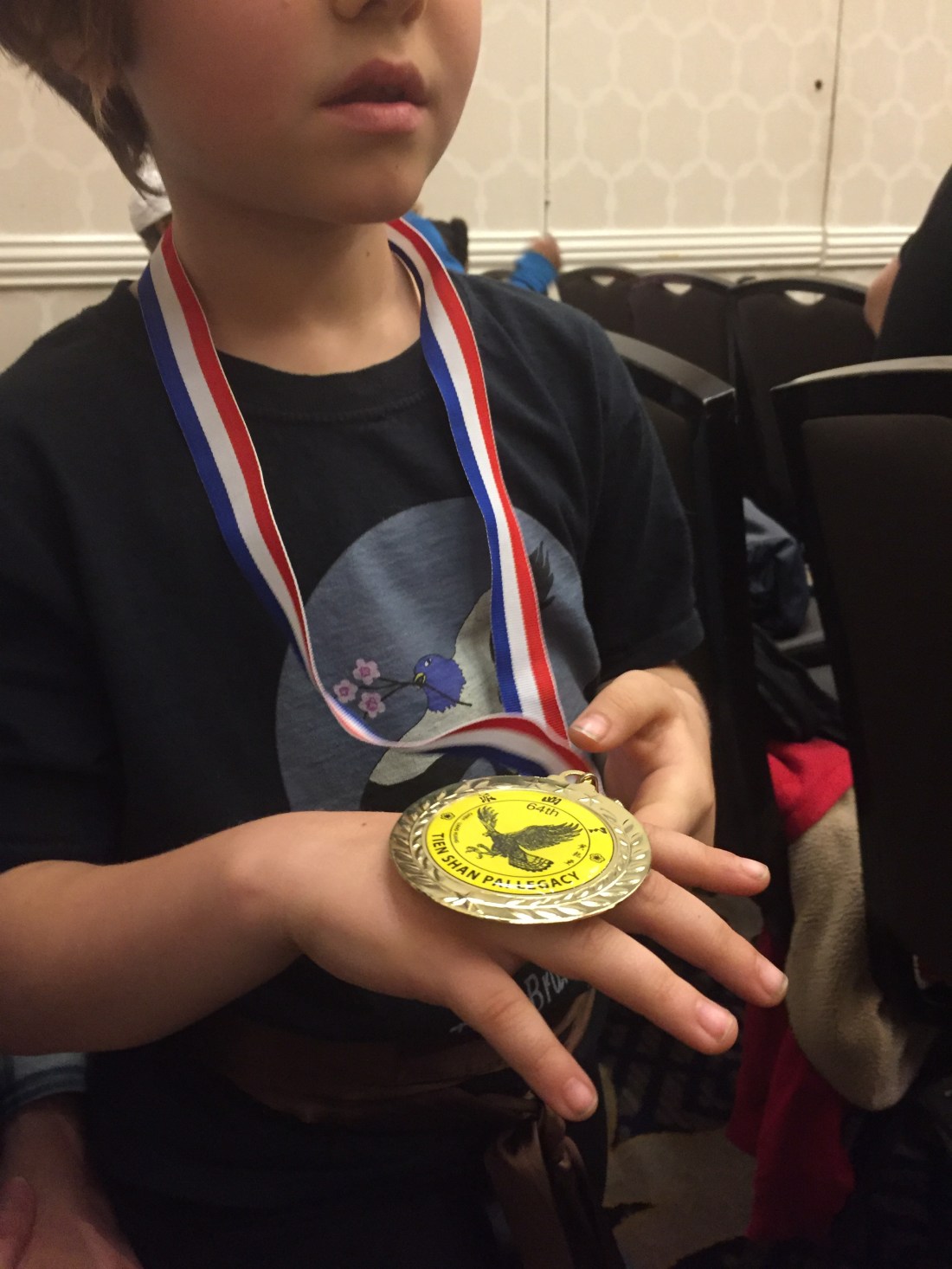
The 7yo nailed her Kung Fu form in competition, taking the top award.
The 7yo nailed her Kung Fu form in competition, taking the top award.

Draw your own analogy.
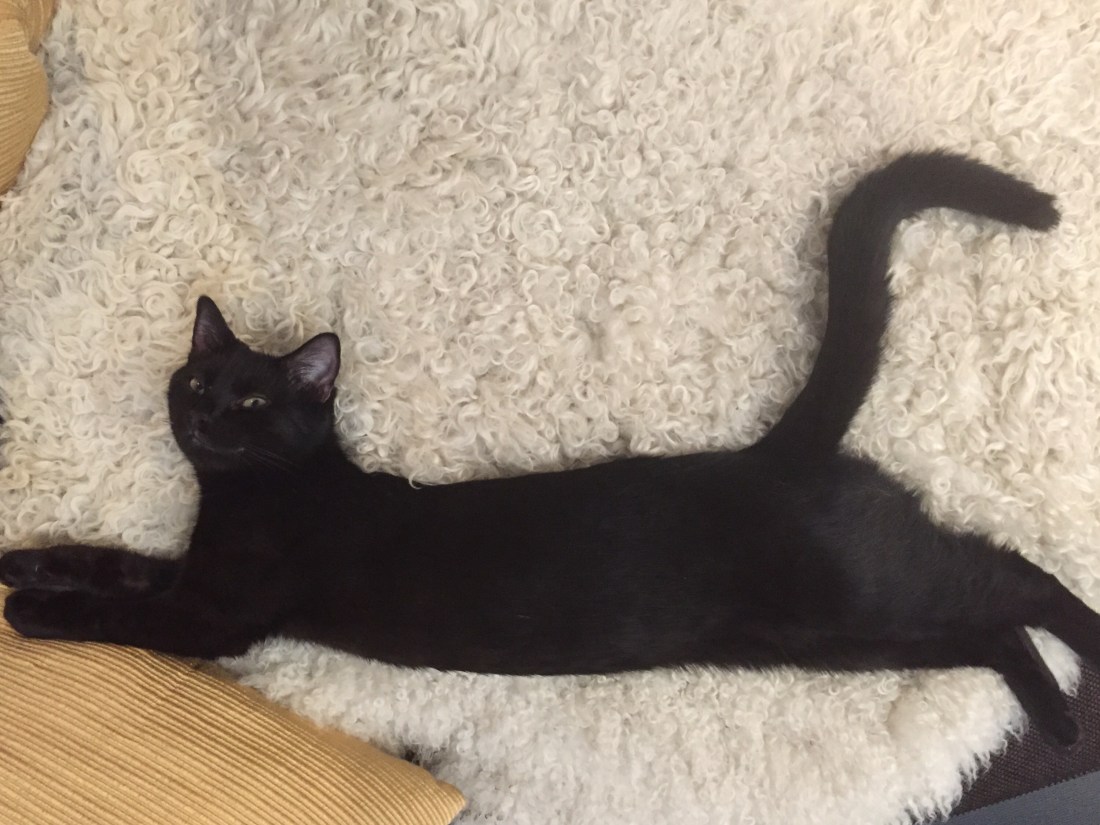
Three feet long and chillin’ like Dylan.

The 9yo’s class wrote this song together – I’m told this came together with virtually no adult supervision.
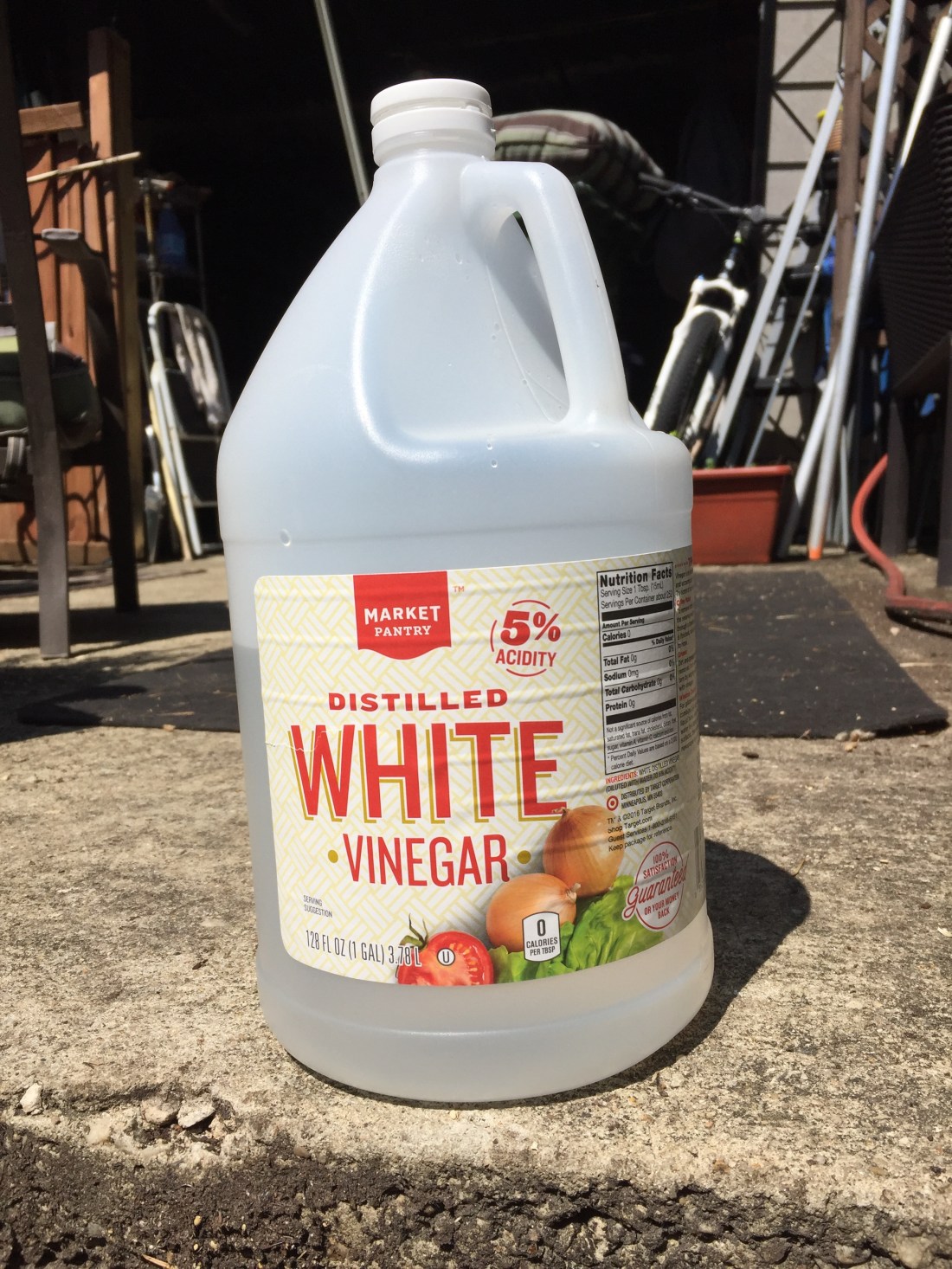
My HVAC guy, here for the spring appointment under our maintenance plan, suggested our outdoor unit’s coils needed cleaning, adding that he had the chemicals right in his truck.
I asked, “Does that entail spraying the chemicals onto the coils, letting them soak in for awhile, and then hosing them off?“
“Yeah, basically,” he responded.
“White vinegar would probably do the trick,” I remarked.
“Sure,” he agreed.
“Then I’ll just do it myself.”
Later, when we were closing the transaction, he showed me how much I would’ve saved as a plan member had I opted for the cleaning service: $200 off the $400 price.
I just finished the procedure and the amount of black effluent they came gushing out as I hosed off the vinegar treatment was truly astounding. Now my unit is totally clean.
White vinegar is the duct tape of household cleaners, while also serving as a useful culinary standby. It costs about $2.50 per gallon.
By Van Smith
Published by City Paper, July 3, 2013

The Baltimore City Archives (BCA), the repository of city records going back centuries to the local government’s earliest days, is abuzz with the work of about a dozen employees scanning historic documents, cataloging records, and otherwise tending to collections. Yet only one—records administrator Gerald Roberts—is on the city payroll. And while computers sit on tables all over the facility, located just east of Greenmount Avenue off 27th Street, Roberts says the city owns only one of them—and none of the six scanners used to digitize the BCA’s holdings.
Though the city rents the office-and-warehouse space that houses the archives and pays all utilities and other incidental costs, such as cleaning crews, Roberts explains, the Maryland State Archives (MSA)—a state agency headed by Edward Papenfuse, who is set to retire this fall after nearly two generations at the helm of the state’s repository of similar materials—covers the salaries of all other workers and, with the exception of that one computer, owns all the digitization and computer technology at BCA that modern archives management requires.
The resource-sharing arrangement began in 2009, according to city records, when MSA received permission to store some of its Baltimore-related records at the BCA in return for providing the BCA with technological services. The agreement was expanded in 2010, when, in return for $90,000—the equivalent of the salary and benefits of a BCA position that had recently become vacant—the MSA agreed to provide day-to-day management and staffing for the BCA.
On June 26, the Baltimore Board of Estimates approved a new agreement, which, according to city documents, “will consolidate the two previous agreements and extend their terms” for five years, until 2018.
It wasn’t always like this. Until it moved to its current location in 2008, Roberts explains, BCA was located at 2165 Druid Park Drive. There, Roberts says, “there was mold and mildew, due to the nature of the building,” and, according to Robert Schoeberlein, the MSA’s director of special collections, who now helps Roberts run the BCA’s day-to-day operations, there was “plastic over the tops of the stacks because of the roof leaks.”
More colorful descriptions of BCA’s prior facility were published in this spring’s issue of Baltimore Gaslight, the newsletter of the Baltimore City Historical Society. Matthew Crenson, an emeritus Johns Hopkins University professor who’s working on a comprehensive history of Baltimore City’s government, described it as a “dank, leaky, vermin-infested warehouse,” while Garrett Power, an emeritus University of Maryland law professor, wrote that the BCA had fallen into “disuse, disorganization, and decay” as records “had been placed in a leaking, decrepit warehouse that posed a clear and present danger to both the papers themselves and the intrepid researchers who used them.”
On a recent visit to the new location, Seattle University professor Emily Lieb was at BCA, going through housing data for a book she’s writing about the impact of a 1970s-era Baltimore City housing program on the Rosemont neighborhood in West Baltimore. She used to put in long hours at BCA’s Druid Park Drive warehouse, and, while she misses it in some respects, she appreciates the importance of the BCA’s revitalization and modernization at its current location.
“What was really wonderful about working over” at Druid Park Drive, Lieb says, was that “essentially they were open stacks, so I could just poke around and see what I find and just stumble across stuff,” which is “not something I would be able to do in a place managed like every other archive is managed, and like this is now managed. I realize it was not the best way to run an archive for preservation purposes,” she adds, “but, for me, I got a lot done. I was thinking just this morning, What kinds of things am I missing now because I don’t know that they exist and I don’t know to ask for them?”
Lieb says the Druid Park Drive location would get “very, very hot” and “very cold,” and, since she has “an irrational phobia of large insects, I was always a little worried I’d run into them there. But here, they definitely don’t have giant bugs.” She also appreciates that she no longer works alone: “I don’t think I ever saw another person” at Druid Park Drive other than Roberts, she says, “and here, I’ve seen all kinds of people really making use of the stuff, which is great—that’s what it’s for. It’s great that it’s more accessible and that people feel comfortable using it.”
As Roberts and Schoeberlein give a tour of the office and warehouse, they describe some of BCA’s holdings. Behind the office, in the warehouse stacks, Schoeberlein pulls out what he describes as “records that detail the payments and the outreach to widows and children” of Civil War soldiers in Maryland, and part of a “survey of buildings in the 1930s, early 1940s, that were in the path of possible slum clearance, and a lot were pulled down.” He describes a collection of “studio portraits of Baltimore firefighters with their uniforms on” just after the Great Baltimore Fire of 1904, and “a series in the 1890s of Russian-Jewish street peddler applications with some demographic information about them.”
Most recently acquired, Roberts says, are “maps laying out where all the storm drains and sanitary systems are under the streets,” as well as “engineers’ field books for sewer connections to houses sometime in the early 1900s” and, Schoeberlein adds, “an aerial survey of Baltimore City from 1927.” Soon, says Roberts, “we’ll be taking in 65 pallets of 40 boxes on each pallet of Law Department files” that date as far back as the 1890s.
“In the past,” Schoeberlein explains, “a city agency might request to have files returned, and it’s troubling because the idea of getting them back or keeping track of them while they’re gone—well, files might not be returned.” Now, says Roberts, “we pull it, scan it, and send it to them as a PDF, and the actual file will never leave here.”
To Roberts, “the situation today—it can’t be improved,” he says. “The tools are here to lay our hand on anything we have, almost immediately. When we were on Druid Park Drive, we didn’t have the computer programs or the computers, so every search we made was on paper and pencil, and then we’d go out and look for it. Now, it’s all right there on the computer, no matter what you want.”
Published by City Paper, Sept. 11, 2013
The lyrics of Brad Paisley’s country-Western song, “Mud on the Tires,” strike a chord with the Nose: we’re as partial as the next desk-bound yahoo to getting out to the middle of nowhere and spreading a blanket as the sun sets, listening to crickets and watching the stars blink on. And so, apparently, is Team Hell, a Baltimore-based off-road truck-racing outfit that fields its vehicle—a 1966 El Camino body affixed to a 1977 Chevy Blazer frame—at events in the area. Its YouTube video of the near-monster truck’s reconstruction is set to Paisley’s number-one Billboard hit from 2003.
Here’s the rub, though: Team Hell’s driver/owner is Richard Preston, the self-described imperial wizard of the Confederate White Knights, a Rosedale-based Ku Klux Klan group that’s emerged recently to hold protests at Antietam National Battlefield and Gettysburg National Military Park, with some members wearing Klan robes.
No wonder, then, that online photos of Team Hell’s El Camino feature it festooned with a Confederate flag.
The Nose has, over the years, made efforts to keep tabs on Maryland’s “active hate groups,” so dubbed by the Southern Poverty Law Center (SPLC). As of Sept. 6, the SPLC listed 17 of them in the Free State—but the Confederate White Knights isn’t one of them. Preston’s creation, then, has either been flying under the radar—until suddenly making national news with its protest plans—or is a newly minted Klan group. Either way, the group’s website touts its motto—“Save the land, Join the Klan!”—has photos of a cross burning, and implores members to “always do your duty for the preservation of the white race.”
The Nose is broadly tolerant of our neighbors, no matter how much they may appall us. Team Hell, after all, is not the Confederate White Knights—even if they do share a leader—and is known for its efforts to support cleaning up the degraded water in Bear Creek and other Chesapeake Bay tributaries in our area.
But lest, dear reader, you find this an outlier—that Baltimore, or Maryland for that matter, a state built on tolerance and, in these times, held up as a bastion of political liberalism—be reminded: we have a history of hate too, so don’t be surprised.
Remember: Last year the Human Rights Campaign dubbed Pasadena debt-collections attorney Michael Peroutka, a former Constitution Party presidential candidate and an influential supporter of ultra-conservatives such as Maryland State Del. Donald Dwyer, “an active white supremacist and secessionist sympathizer.”
Remember: In 2009, white supremacist Calvin Lockner and two others savagely beat up an elderly African-American fisherman at Fort Armistead Park, just for kicks.
Remember:In 2009, Annapolitan James von Brunn, a white supremacist and Holocaust denier, opened fire at the United States Holocaust Memorial Museum in Washington, D.C., killing security guard Stephen Tyrone Johns.
Remember: In 2003, Highlandtown resident Lovell Wheeler, reportedly a white supremacist and member of the National Alliance hate group, was arrested when police with a search warrant found an arsenal of guns, ammunition, gunpowder, and gun-making machinery in his house.
Remember: In 1991, Hampden’s Robert Poole Middle School was beset with white-supremacist threats thanks to skinhead parents.
Remember:In 1990, a white-supremacist skinhead group was granted a permit to march through Hampden.
Remember: In 1989, five Ku Klux Klan activists were convicted of assault or weapons charges in Baltimore’s federal court.
Remember: In 1988, two Hampden men were convicted of throwing bricks and stones through the windows of a black family, the Boyce-Beys, who’d moved into the neighborhood.
Remember: In 1964, segregationist George Wallace nearly won the Democratic presidential primary in Maryland.
All of which is to say the Nose is aware of a long history of racially troublesome neighbors here in the Mobtown region. Just like the Confederate White Knights, they’re entitled to their views—just not to commit crimes while trying to force them on others. So have a nice protest, Preston, and enjoy getting mud on your tires—just don’t get any on the rest of us.
By Van Smith
Published by City Paper, Nov. 13, 2013
Close to midnight on Jan. 16, a SWAT team used a battering ram to break down the front door of 4823 Aberdeen Avenue, a rowhouse near Herring Run in Frankford. Inside, they found their man: 19-year-old Kyle Brandon Wills, a suspect in two armed robberies in Howard and Baltimore counties. After two days in jail, Wills made bail in Howard County, but was immediately arrested by Baltimore County police and spent another day locked up there.
Turns out, though, it was the wrong man. What’s more, in order to convince a judge to sign the raid warrant leading to Wills’ arrest, the detectives on the case—Mark Claypoole of Baltimore County and Wade Zufall of Howard County—falsely claimed Wills had recently been arrested with the other suspect in the armed robberies, according to a lawsuit filed Nov. 6 in Baltimore City Circuit Court.
After prosecutors in Howard and Baltimore counties learned of “the terrible mistake that had been made,” the lawsuit explains, the charges against Wills were dropped and another man—Wills’ cousin, Stanley Berry—was charged instead. But the damage wrought by the raid and Wills’ detentions, all based on the detectives’ allegedly false claim, had already been wrought: three days in jail, two strip searches, a required medical intravenous injection, emotional trauma, still-ongoing monthly payments to pay back the bail money, and an arrest record for serious charges in two jurisdictions.
As a result, Wills, his mother, Vickie Wills, and brother Calvin Clifton—the three people present when the SWAT team came through their door—are suing Claypoole, Zufall, and their police forces for false arrest, assault, battery, false imprisonment, and intentional infliction of emotional distress, seeking $75,000 in compensation and another $75,000 in penalties. Their attorney, Charles Curlett says Wills, a 2012 Patterson High School graduate, is employed at University of Maryland Hospital, helping prepare operating rooms for surgery.
“I don’t see how this could be an honest mistake,” says Curlett, adding that the detectives’ allegedly false claim that Wills had been arrested was the “lynchpin of probable cause” in the affidavit that supported the raid. “I think it is a very strong case.”
Howard County prosecutors declined to pursue the charges against Wills on Feb. 13, and two days later his Baltimore County charges were dismissed. The cases against Berry and Michael Elliott Dickey—the man who was originally charged with Wills—remain intact, though. Both pleaded guilty in their Howard County cases, receiving 10-year sentences with five years suspended, and both are scheduled for trial in their Baltimore County cases.
Howard County initially was proud of the detective work in the case, issuing a press release on Jan. 24 announcing the charges against Dickey and Wills—and repeating the detectives’ false assertion that Wills had previously been arrested with Dickey.
“Wills is a known associate of Dickey’s,” the press release states, “who was recently arrested with Dickey for an unrelated incident in another jurisdiction. Surveillance video in both cases show Dickey and Wills together, each wearing the same clothing in both incidents.”
The details of how Claypoole and Zufall pursued the case are spelled out in the lawsuit. The two-county probe was spawned after two men robbed an Exxon gas station in Columbia by throwing hot coffee on the clerk’s face and then taking cash out of the register while brandishing guns. That was on Jan. 5—three days after the exact same tactics were used by two men in an armed robbery of a Quick Mart in Cockeysville.
Dickey’s fingerprints were found on the coffee cup at the Exxon, and it was soon discovered that he’d been arrested the day after the Quick Mart robbery for petty theft at a Walmart store—and at that time had been accompanied by a man who had not been arrested, but who identified himself as “Kyle Wills.” So Claypoole showed the Wal-Mart security officer Wills’ driver’s license photograph, and the security officer confirmed it was the same man who’d been with Dickey during the theft.
At that point, Claypoole and Zufall wanted to raid Wills’ home and arrest him—“but they had a problem,” the lawsuit explains. In order to get a warrant, they “needed to establish a likelihood that Dickey’s friend from Wal-Mart was also Dickey’s accomplice in the coffee robberies,” yet “nothing had been done to reliably confirm that person’s identity.” The security officer’s confirmation was not sufficient—but an arrest would be, since “his identity would have been established through fingerprinting, and they would have been able to rely on the arrest to tie that person to Dickey,” the lawsuit explains.
Absent an actual arrest, Claypoole and Zufall allegedly made one up. “Rather than admit what they did not know,” the lawsuit states, “they misled the court” with the following information that was stated in the raid-warrant affidavit: “Arrested along with Dickey during the Theft at Wal-Mart was the following individual: KYLE BRANDON WILLS BM 507 150 DOB = 9/18/1993.”
“When I saw the affidavit” for the raid warrant and saw the assertion that Wills had been arrested, Curlett recalls, he looked for it on the online court records and couldn’t find it. “‘Where is it?’” he says he asked himself. “‘Why isn’t it here? It is there for the other guy.’”
Not only was Wills not arrested at the Walmart, he wasn’t even there. But, according to the lawsuit, his cousin Berry—a man who was wanted on several open warrants—was, and told the security guard that he was Wills, who has no prior criminal record.
Based on the detectives’ “perjured testimony,” the lawsuit continues, a no-knock warrant was issued for the Wills home and a SWAT team “broke through the door of the suspect’s Baltimore City home and restrained his family at gunpoint and in handcuffs while they searched the house.”
Given that anyone, including a judge who’s considering signing a warrant, can check online to see if someone’s been charged with a crime, it seems a risky proposition for detectives to lie about such a thing. Curlett speculates that such “hubris may be borne of the unlikelihood that anybody’s going to challenge” the information. “So many cases plead out,” he continues, “the risk of airing dirty laundry like this is slim.”
With the Wills’ lawsuit, though, Claypoole and Zufall have run headlong into that risk.
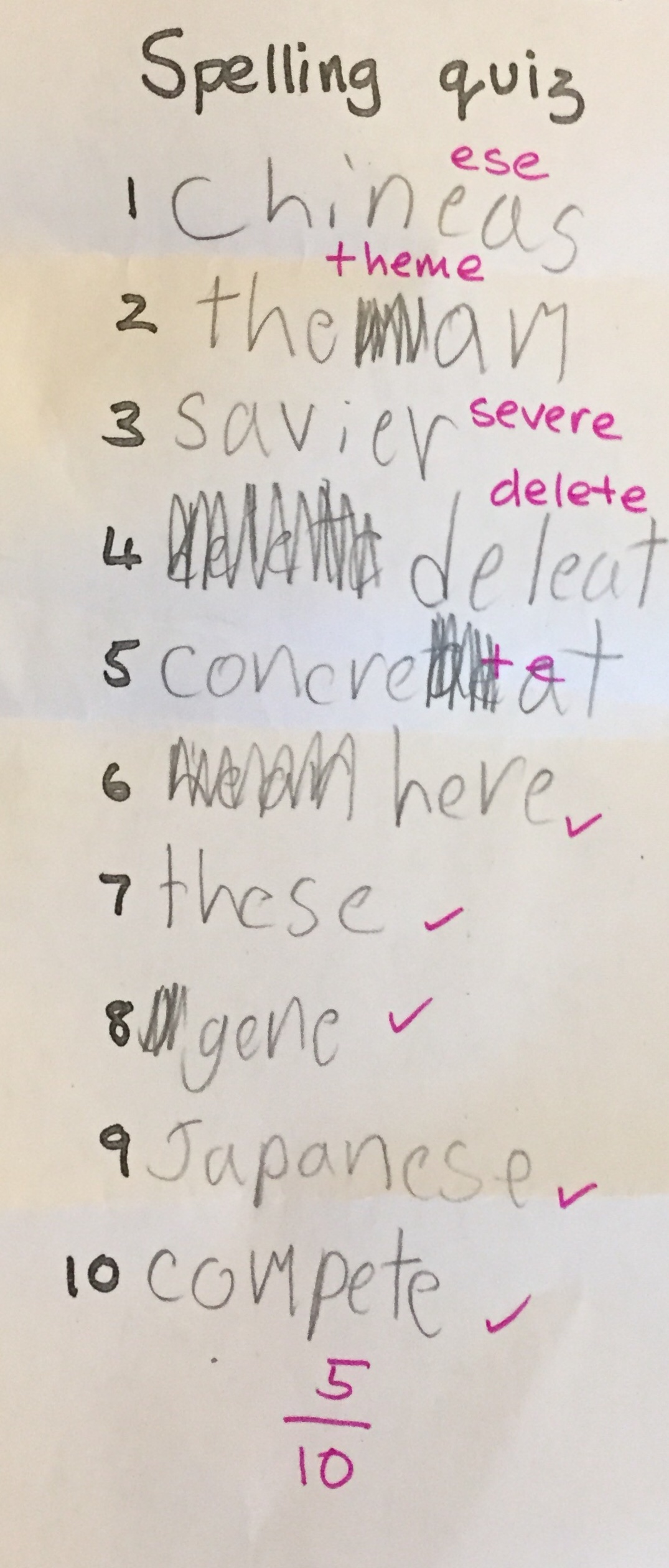
The 1st-grader has aced her spelling quizzes, until this one. She says it’s because we’ve been overly focused on the 4th-grader’s learning, and ignoring hers. I say that’s a hard test for a 1st-grader! Still, point taken.

Kicked off the couch and the armchair, but still chilling.
 Van Smith