By Van Smith, with additional reporting by Jeffrey Anderson
Published by City Paper, July 14, 2008
The Double T Diner in Catonsville is an odd place for the mayor of Baltimore to go for a breakfast meeting. Located about 10 miles west of City Hall on Baltimore National Pike, just outside the Beltway, the Double T is a large retro-styled restaurant serving diner food–the same schtick, albeit in a scaled-down space, can be had one block north of City Hall at the Hollywood Diner.
Yet at 7:30 a.m. on Monday, July 16, 2007, according to Mayor Sheila Dixon’s official desk calendar, she was at the Double T, having a “follow-up meeting” with five powerful men. Three months later, on Oct. 16, at 9:30 a.m., Dixon’s calendar says she was there again with the same five men, along with several other influential people. Those were the only two visits to the Double T recorded in Dixon’s calendar since she became mayor in January 2007.
The five whom Dixon’s calendar lists as present at both meetings are Ronald H. Lipscomb, Brian D. Morris, Owen M. Tonkins, Daniel P. Henson, and Talmadge Branch. Three of them–Lipscomb, Morris, and Tonkins–figure in state and federal probes that in recent years have been examining the city’s dealings with minority developers. Neither Dixon, nor the men at both meetings, nor the remaining people listed as attending the second meeting, would confirm their presence at either get-together, much less answer questions about what was discussed there.
Both Double T meetings coincided with important developments in Maryland State Prosecutor Robert Rohrbaugh’s ongoing, two-year investigation into Dixon’s affairs. Last July 14, the Saturday before the July 16 breakfast at the Double T, law enforcers interviewed furrier Richard Schwartz and learned that gift certificates were used by a Lipscomb associate to purchase furs for Dixon. And Dixon’s former campaign manager, Dale G. Clark, whose company formerly ran the City Council’s web site, was interviewed last Oct. 16, the same day as Dixon’s second Double T meeting. Clark has since pleaded guilty to failing to file tax returns. During the interview, Clark was asked about financing for a group trip to the Bahamas to celebrate Dixon’s 50th birthday.
The dates and details of the Schwartz and Clark interviews, along with information about many other dealings involving Lipscomb and Dixon, are contained in a search-warrant affidavit for last November’s law-enforcement raid on the East Baltimore offices of Lipscomb’s Doracon Contracting. The affidavit surfaced in a June 24 Sun article, which included Dixon and Lipscomb admitting to a past affair. The 46-page affidavit spells out evidence of gifts and trips to then-City Council President Dixon from Lipscomb and suggests that his companies benefited as a result. Lipscomb is a highly successful minority developer participating in projects that continue to reshape the Baltimore skyline.
The affidavit describes matters occurring largely in 2003 and ’04, when Dixon and Lipscomb say their affair occurred. The latest step in Rohrbaugh’s investigation occurred on June 17, when a search-and-seizure warrant was served on the mayor’s home.
Two of the others at both Double T meetings, Morris and Tonkins, surfaced in a federal probe in 2003 and ’04 that focused on minority developers tapping into the city’s program to promote minority participation in business. That investigation, which also explored the Dixon-Lipscomb nexus, collapsed in 2004 without indictments when then-U.S. Attorney for Maryland Thomas DiBiagio lost his job for appearing to behave politically in pushing for public-corruption indictments.
Morris is a developer who sometimes partners with Lipscomb on projects. In early 2004, he and Lipscomb were subpoenaed by DiBiagio to produce records of financial benefits their companies received from the city, and of any gifts they gave Dixon or other city officials. Morris, who in 2000 served as the interim chief of the Office on Minority Development under then-Mayor Martin O’Malley, has been on the Baltimore City School Board as an O’Malley appointee since 2003 and has been the board’s chairman since ’05. Messages for Morris left at the school board office were not returned.
Tonkins came from Paterson, N.J., in 2001 to replace Morris as O’Malley’s minority-business chief. He stayed in that position until his resignation in December 2003. After he left, The Sun reported that DiBiagio’s investigation was looking into whether Tonkins received gifts from Lipscomb, Morris, and other developers. The paper also reported that Rohrbaugh’s office had a grand jury looking into Tonkins’ dealings with developers, including one who claimed Tonkins penalized him for refusing to hire two New Jersey men for no-show jobs.
Tonkins appears not to have been charged in either investigation. He did not respond to phone messages and e-mails sent to his business, A.R.T. Enterprises, located on Hillen Road. Since 2004 Tonkins has been quoted in the press as the executive director of the Washington, D.C.-based National Association of Minority Contractors (NAMC), and a 2006 court judgment against NAMC was served on Tonkins at A.R.T.’s Hillen Road address. However, calls to NAMC’s listed phone number were answered by an operator who had not heard of Tonkins and could not refer a reporter’s questions to anyone from the association. The operator suggested going to the NAMC web site, http://www.namcline.org, to leave an e-mail, but the site, which sells office supplies and industrial equipment, says nothing about NAMC and has no e-mail links.
The remaining two men listed on Dixon’s calendar as present at both Double T meetings, Henson and Branch, are not known to be tied to any of the Dixon investigations. Henson was then-Mayor Kurt Schmoke’s housing commissioner in the mid-1990s and is now a developer. Reached for confirmation that he was there for both meetings, Henson said, “I have no idea what you’re talking about. Goodbye,” and hung up the phone. Branch is the majority whip of the Maryland House of Delegates, representing East Baltimore 45th District. He did not respond to messages left at his office.
Also listed in Dixon’s calendar as present at the second meeting are attorneys William H. Murphy Jr. and Michael A. Brown, Baltimore County state Del. Adrienne Jones (D-10th District), and Terry Speigner, chairman of the Prince George’s County Democratic Central Committee.
Brown’s law firm, Brown and Sheehan, merged with Murphy’s firm last year. Murphy is a former judge and longtime criminal-defense attorney. One of his current clients is Prince George’s County state Sen. Ulysses Currie (D-25th), chairman of the powerful Budget and Taxation Committee. Currie’s home was raided May 29 by federal agents looking for evidence involving Currie’s undisclosed employment with a grocery-store chain. Currie’s other attorney is Dale Kelberman, who also is representing Dixon. Murphy, when reached by phone, declined to answer questions or confirm his presence at the Double T breakfast last October.
Brown’s firm employed Martin Cadogan, O’Malley’s longtime campaign treasurer. Between 2000 and ’06, when The Sun reported on the situation, the firm got $1.2 million in work as outside counsel for the city. Brown also was tapped in 2000 by newly elected O’Malley to head up a committee of civic leaders tasked with recommending public-safety reforms in city government. In recent years, according to state business records, Brown has been doing corporate legal work setting up companies for Lipscomb; he is listed as the resident agent of many of the 52 Lipscomb-related companies listed in last November’s affidavit for the Doracon search warrant. Messages left on Brown’s cell phone and at his office were not returned.
Jones phoned City Paper in response to an e-mail asking whether she attended the Double T breakfast meeting, but the call was missed; she did not respond to follow-up messages. Speigner did not respond to an e-mail but answered his phone, saying he was in a meeting and to please call back in a half-hour. He, too, did not respond to follow-up messages.
Rohrbaugh, reached at his office, declined to confirm or deny the existence of any investigation his office may or may not be conducting, which he does routinely. This time, though, Rohrbaugh was more specific in declining to confirm anything. When asked about the Doracon affidavit, and whether he could share the times of day when the Schwartz and Clark interviews occurred, he said, “I don’t even acknowledge that that is a true or accurate affidavit.”
The mayor’s official desk calendar, though, is a different kind of document. City Paper obtained it using the Maryland Public Information Act, and before it was released by the mayor’s office, many entries were redacted. There also are many appointments listed as “private,” with no details provided. City solicitor George Nilson explains in an e-mail that such entries are “not pertaining to city business.” Since the Double T meetings were not redacted, and not listed as private, the reasonable conclusion is that they pertained to the mayor’s official duties. Yet, as of press time, Dixon’s office declines to confirm her presence at the meetings or describe their nature and purpose.
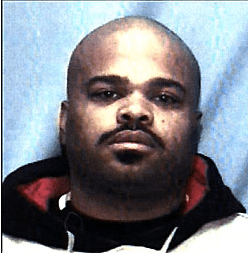
A booking photo of Shawn Michael Green, dating from the 2000s.
By Jeffrey Anderson and Van Smith
Published in City Paper, March 12, 2008
For more than two decades, East Baltimore clothing store Total Male has been associated with fashionable urban attire. Located on a bustling block of Monument Street, not far from the Johns Hopkins Medical Institutions, the popular store has also sold tickets to concerts and hip-hop DJ events.
But a federal drug and money-laundering indictment unsealed last year against 41-year-old fugitive Shawn Michael Green, who was the president of an affiliated West Baltimore store called Total Male II, complicates Total Male’s image as simply a place for scenesters to buy clothing and tickets to parties.
The indictment also opens a window into two well-connected East Baltimore businessmen with interests in Total Male–and in politics: Milton Tillman Jr., a sizable figure in real estate, nightclubs, and bail bonds, who was part of the company that owns Total Male, which is located at 2330 E. Monument St.; and Noel Liverpool Sr., a former football star at Morgan State University who has had interests in bars, apparel, and real estate, and who helped Green open Total Male II, in Mondawmin Mall in 1996; Total Male II has since closed.
The ties between these two men and Green suggest an overlap in the city’s legitimate business economy and the drug underworld.
Green suddenly disappeared sometime around March 26, 2007, when federal agents attempted to bring him in on drug charges after arresting his mother, Yolanda Crawley, and serving search warrants on a number of their Maryland and Florida properties. As a result, the investigation was disrupted, but the unsealed indictment accuses Green of drug trafficking since 1998 and calls for forfeiture of $4 million in cash, property, and other assets. On March 20, a four-story Reservoir Hill apartment building owned by Green is scheduled for auction as a result of the forfeiture.
Though Green remains at large, three of his co-conspirators–lawyer Rachel Donegan, mortgage broker David Lincoln, and Green’s mother–pleaded guilty last year for their parts in his alleged drug and money-laundering scheme and await sentencing in the coming weeks. All three copped to wire fraud that allowed Crawley to purchase luxury homes in Maryland and Florida using false loan applications. The probe into Green’s alleged conspiracy is ongoing, according to the Maryland U.S. Attorney’s Office, and the indictment mentions “others” who are allegedly involved, in addition to Green, Crawley, Donegan, and Lincoln.
Green’s case is intriguing in part because he fled, but also because of the stature of Tillman Jr. and Liverpool Sr. Nothing to tie Tillman Jr. and Liverpool Sr. to Green’s alleged conspiracy has come to light publicly so far.
To some, these two businessmen are icons in the underserved communities of East Baltimore. Together, the two are fully in charge of large swaths of property that bear the scars of inner-city poverty. Between them, Tillman Jr., Liverpool Sr., and their family members, along with their various companies, own scores and scores of properties around the city and surrounding counties, including more than a few along East Monument Street. On a recent afternoon on Monument, for example, near where Total Male operates, there was a palpable sense of disorder along the strip of liquor stores, carry-outs, bail-bonds companies, and tax-service providers that populate the block. A Baltimore police officer was writing up an older gentleman for what appeared to be loitering while ignoring a crew of young street-bike riders as they tore off down the street popping wheelies.
The trade name Total Male was registered from 1993 until it lapsed in 1998 to All Pro Sports Enterprises Inc., which was formed in 1985 with Tillman Jr. as a board member. In 1996, Liverpool Sr. helped Green set up Total Male II, according to the attorney who filed the incorporation papers, with the written permission of Total Male’s resident agent.
Green is listed in incorporation papers as president of Total Male II, and his mother and his father, Michael Green, are also listed as officers of the company. Corporate records list the principal office as 2339 Eutaw Place–the address of Green’s forfeited apartment building scheduled to go to auction, which also served as home base for Green’s Platinum Hill recording studio.
Among the many mysteries surrounding Green and Total Male is the claim to the brand name. Anthony J. Dease of Royal Supreme Motors, an auto dealership and tag-and-title service a block away from Total Male’s East Baltimore location, claims that “I was in Total Male long before Shawn Green was there. I started the business like 25 years ago.” Dease was convicted for stealing city funds in the mid-1980s, but adds, “I work for the city now.”
Confusion about Total Male’s ownership structure is only partly cleared up by state business records. The trade name was owned by All Pro Sports, and in 1992 Dease was listed as the company’s president. In 1993, John H. Bates Sr.–who owned the Monument Street property that houses Total Male and other Tillman businesses–became the resident agent. The property is now owned by Tillman Jr.’s son Milton Tillman III, who bought it in 2005. Reached by phone in early March, Bates contends that he is “one part of Total Male, the one in Mondawmin Mall,” and when asked if he knows Shawn Green says, “Yes, I do,” but declines any further comment.
The formation of Total Male II comes with its own backstory. Attorney Leronia Josey drew up its corporate papers in the mid-1990s. She recalls dealing not with Shawn Green but with Noel Liverpool Sr. in setting up the company. Though she confirms that Bates gave Green written consent to use Total Male II as a business name, she says she never met Green.
“I remember [Liverpool] as an enterprising person who wanted to own a piece of the American Dream,” says Josey, a former member of the University System of Maryland Board of Regents who currently sits on the Maryland Higher Education Commission. “I do a lot of work for churches and small businesses. There was a big push for economic development at the time.”
According to Josey, Liverpool saw a market for fashionable urban apparel. “I went to Mondawmin Mall and said, `I need to see what you’re doing with this store,'” she recalls. “There were all these nice coats and jackets.” She says she hasn’t had contact with Liverpool in more than a decade.
Green’s indictment potentially sullies the images of Tillman Jr. and Liverpool Sr. as community leaders and raises questions about whether Baltimore’s illicit economy is intertwined with its legitimate business and civic landscape.
Most emblematic of this, perhaps, is their ties to politicians. One of Liverpool’s companies, Liverpool Enterprises Inc., has donated $4,000 to each of the campaign committees of Baltimore Comptroller Joan Pratt and state Sen. Joan Carter Conway. Conway’s CIG Professional Tax Services is located directly across the street from Total Male, at 2331 E. Monument St., and her husband, Baltimore City Liquor License Board employee Vernon Conway, is her partner in that business.
One of Tillman Jr.’s real-estate companies, New Trend Development, has donated $1,000 to Baltimore County Executive Jim Smith’s campaign and $500 each to former Baltimore City Councilman Keiffer Mitchell and former Baltimore State’s Attorney Stuart O. Simms, who ran for Maryland attorney general in 2006. Tillman’s 4 Aces Bail Bonds has contributed $4,750 to politicians since 2001, including $1,200 to Maryland Del. Talmadge Branch and $1,000 to state Comptroller Peter Franchot.
Though Liverpool Sr. has a clean criminal record in Maryland, Tillman Jr. has twice been convicted in cases that reverberated in Baltimore political circles. The first, in 1993, was an attempted $30,000 bribe of Gia Blatterman, then the acting chair of the Baltimore City zoning board. In 1996, shortly after Tillman was released from prison in that case, a jury convicted him of tax evasion for his use of front companies to hide hundreds of thousands of dollars in nightclub revenue. Most recently, Tillman Jr. and others were acquitted of illegally using property to underwrite bail bonds in criminal cases.
Attempts to reach Liverpool Sr. and Tillman Jr. for this article were unsuccessful. Jeffrey Chernow, an attorney for Liverpool Sr., did not return several calls. Tillman Jr.’s attorney Gregory Dorsey said he would relay a message to his client, who did not return the call.
Much less is known about Shawn Green. Despite being indicted as a longtime major drug trafficker, he has managed to fly below the radar. Federal court records in Florida indicate he has had previous drug arrests, but in Maryland he’s only been charged before with one crime: a 1992 disorderly-conduct charge in Baltimore City. In 2006, according to court documents, federal law enforcers seized more than $900,000 in cash from people they identified as Green’s associates. Federal law enforcers decline to say how the cash seizure helped investigators move the conspiracy case forward–or any other details or insights about the case against Green.
Maryland U.S. Attorney Rod Rosenstein insists that Green’s sudden disappearance last March is not unusual. “Usually we catch them in a week or two,” he says. “About five or 10 suspects a year remain at large.” He says he has no idea when Green fled but believes it was after federal agents arrested his mother and served search warrants at six properties on March 26, 2007. Rosenstein also does not seem flustered by Green’s flight. “There were two priorities,” he says, pointing to the intended arrest of Green and seizure of drugs, money and documents. “The main priority was to execute the search warrants.” He adds, “We have lots of evidence that we won’t disclose unless or until we go to trial.”
Which means there’s more to Shawn Green than what’s in the public record. And though Josey may have been satisfied that Total Male was simply helping its owners chase the American Dream, court records show that some of its employees and principals have engaged in illegal activity. Other than Dease and Tillman Jr., who have criminal backgrounds, those records show at least two Total Male employees were convicted on federal drug trafficking charges.
And then there’s Shawn Green, indicted for major drug-related crimes, but yet to be caught or convicted.
From the looks of Lavern Whitt’s Myspace page, the Baltimore native is not only making it in Hollywood–she’s living the dream.
The former stunt woman, now a TV, film, and video producer, poses for photos with celebrities at resorts from Cancun, Mexico, to California. Her list of acquaintances includes fellow Baltimore native Jada Pinkett Smith and husband Will Smith, comedian Cedric the Entertainer, and actress Lisa Raye, the former first lady of Turks and Caicos Islands and star of the sitcom All of Us. In one photo on MySpace, Whitt cuddles with “my partner,” Baltimore Ravens star Ray Lewis.
But Whitt’s pretty-people world came crashing down around her on Aug. 28 when another man she refers to as “my partner” on her web site–a lesser-known figure named Lawrence Schaffner “Lorenzo” Reeves–was indicted in federal court in Baltimore on drug-trafficking charges.
The indictment of Reeves, along with a Harford County resident with East Baltimore ties, Devon Anthony Marshall, and an Annapolis man named Justin Santiago Gallardo, has prompted Whitt to pull the plug on two media projects linked to Baltimore City Hall. One is an unfinished documentary on the lives of the four black women who govern the city, titled Women in Power. The other is a seminar called Hollywood in a Bottle, designed to educate youngsters on how to get into the film business.
Reeves, a co-founder of Hollywood in a Bottle LLC, appeared in federal court on Sept. 3 along with Marshall, where prosecutors described wiretap evidence of Reeves employing Marshall as a menacing street enforcer tasked with inflicting violence over drug-money disputes.
Whitt’s business ties to Reeves expose an intersection of two worlds: one populated by entertainers, financiers, lawyers, and politicians, the other by people accused of facilitating large shipments of cocaine to the Baltimore region.
Baltimore’s top elected officials–Mayor Sheila Dixon, City Council President Stephanie Rawlings-Blake, Comptroller Joan Pratt, and State’s Attorney Patricia Jessamy–were interviewed on camera last fall by Whitt. The resulting seven-minute promotional film for Women in Power was screened earlier this year at the Senator Theatre.
All four say they have never met Reeves. Some are distancing themselves from Whitt, who tells City Paper she was driven to launch Hollywood in a Bottle by the urge to “give back” to her community. She and Reeves formed it in March with Reeves as the resident agent, using an Odenton address. Whitt says she brought in Reeves because “he seemed like a cool brother” who could help finance her vision.
Hollywood in a Bottle held a seminar at a Baltimore City public school on July 26. It cost more than $100 per attendee and featured seasoned Hollywood veterans coaching youngsters on various paths to stardom and behind-the-scenes success. Within a day of learning of the indictment of Reeves, Whitt’s web sites for Hollywood in a Bottle and a YouTube promo clip of Women in Power came down.
Official desk calendars obtained by City Paper show that Rawlings-Blake, Pratt, and Dixon each met with Whitt late last year to be interviewed for Women in Power.
Following the Sept. 3 meeting of the city’s Board of Estimates, on which Dixon, Rawlings-Blake, and Pratt serve, Dixon refused to answer questions about Whitt. However, in a telephone interview later that day, mayoral spokesman Sterling Clifford says he vetted Whitt when she pitched the City Hall film project and found nothing amiss. Asked if the mayor is concerned about revelations that Whitt is partnered with an indicted cocaine trafficker, Clifford replied in an e-mail, “That will depend largely on what we learn of what Whitt knew and when she knew it.”
Approached by a reporter after the same Board of Estimates meeting, Council President Rawlings-Blake asked, “What kind of connection are you trying to make?” and characterized Whitt’s documentary pitch as a routine media matter.
In response to City Paper‘s written inquiries, Pratt writes in an e-mail that she met Whitt through a neighbor, and that she provided T-shirts for the Hollywood in a Bottle seminar on July 26. Public records show that Pratt, a certified public accountant, filed incorporation papers on behalf of Hollywood in a Bottle’s publicist, Synergy Communications. Pratt and her private attorney Sharon King Dudley, whom Baltimore City recently hired to investigate employee-discipline matters, are two of the four listed sponsors of Hollywood in a Bottle.
A spokeswoman for Jessamy confirms that the city state’s attorney met with Whitt on Nov. 26, for an on-camera interview. “It was sold to us as something totally legitimate, and something that would promote Baltimore,” writes Jessamy spokesman Margaret Burns in an e-mail.
On Sept. 3 Reeves and Marshall, both 37, appeared before U.S. District Court Judge James K. Bredar for detention hearings. Both men have criminal records: Reeves was convicted in 2001 of drug trafficking in Arizona and in ’02 in Maryland; Marshall has a prior conspiracy conviction and numerous criminal charges in Maryland for drugs and violence dating to the 1990s.
Reeves, short, balding, and wearing a maroon jumpsuit, enters the courtroom and opts not to fight his detention pending trial. But Marshall–six and a half feet tall, heavily tattooed, and upward of 300 pounds–seeks pretrial release.
Assistant U.S. Attorney Stephanie Gallagher tells the judge the government tapped Reeves’ phone from June until late August. The drug shipments came in “large quantities,” she says, describing numerous intercepted telephone conversations between Reeves and Marshall, who allegedly served as a violent “enforcer-collector” for Reeves. The indictment accuses the two men, along with Justin Gallardo, of conspiring with “others known and unknown to the grand jury.”
According to the prosecutor, a recent search of Marshall’s Abingdon home produced three loaded weapons, including one she describes as an assault rifle containing 20 armor-piercing bullets. Marshall’s attorney argues that the weapon belongs to Marshall’s wife, and urges his client’s release because he has four children and a job prospect at the Sparrows Point steel-making complex.
Judge Bredar points out that Marshall has used multiple aliases, dates of birth, and Social Security numbers, and has a remarkable criminal history involving violence, though few convictions. He orders Marshall held in custody.
When first contacted on Aug. 29, Whitt enthusiastically describes her endeavors but expresses dismay at news of Reeves’ indictment. She says Hollywood in a Bottle is her attempt to reach out to youngsters who might not have the wherewithal to launch a career in Tinseltown.
To finance her vision, Whitt says she intends to channel corporate donations through nonprofit organizations, such as Say It Loud, a California 501(c)(3) listed on Hollywood in a Bottle’s web site as its “fiscal sponsor.” “I kicked it off in Baltimore because that’s my hometown,” Whitt says, adding that she plans to hold seminars in Virginia, North Carolina, and Tennessee.
Whitt, who also has an interest in fancy cars and music videos, says she met Reeves through a mutual associate at a Mercedes dealership. “I needed help, so he came on board,” she says.
Until news of Reeves’ indictment surfaced, Hollywood in a Bottle and Women in Power held promise for Whitt. Executive vice president of Warner Music Group, fellow Baltimore native Kevin Liles, partnered with Whitt as co-producer of Women in Power. Whitt’s publicist, Sharon Page of Synergy Communications, tells City Paper on Aug. 29 that the documentary is gaining interest: Film and TV producer Tracey Edmonds (Soul Food, Who’s Your Caddy?)–the ex-wife of Kenneth “Babyface” Edmonds and Eddie Murphy–may want to turn it into a sitcom. “It’s a major story,” Page says.
Now, however, Whitt’s endeavors seem up in the air. Businesses associated with her risk being tainted by her connection to Reeves. Her California production company, Journey Entertainment LLC, lists Maryland state Sen. Catherine E. Pugh (D-40th District) as a publicist for Women in Power. (Pugh did not respond to calls for comment.) Whitt’s other Hollywood in a Bottle partner, Freeman White III, a Los Angeles-based screenwriter and the director of Women in Power, has his own entertainment company, A Free World Productions LLC, also based in California.
Then there’s Whitt’s “partner” Ray Lewis. While their relationship is unclear, another of Whitt’s production companies, Journey T-52 Productions LLC, based in Encino, Calif., contains the Ravens linebacker’s jersey number in the company name. Photos of Whitt and Freeman White posing separately with Lewis suggest the three are close. Lewis did not return calls for comment.
On Sept. 5 Baltimore criminal defense attorney Warren Brown, who represents Whitt, downplays her involvement with Reeves: “He is a guy who invested some money, unbeknownst to [Whitt], as he was about to be indicted.”
Visitors to Liberty Ford in Randallstown would probably have a hard time imagining Robert W. Koopman, a bespectacled, gray-haired customer service manager, mixed up with an alleged international drug trafficker. Sitting behind his desk inside the service bay, Koopman, with his quiet demeanor and warm handshake, seems more grandfather than gangster.
But through his acquaintance with a woman named Querida Lewis, who was indicted with two co-conspirators in Maryland last July for running a marijuana-trafficking operation from Mexico to Baltimore via Texas, Koopman’s life has become complicated. After buying a house in Owings Mills from Lewis in 2004, Koopman says Lewis got him to rent the house to Milton Tillman Jr., a politically connected bail-bonds impresario and two-time felon with a fearsome reputation who is under investigation by the IRS, the FBI, and the U.S. Department of Labor.
Now Koopman is suing Tillman. In a case filed late last year in Baltimore County Circuit Court, Koopman alleges that Tillman, who is listed as the sole lessee, owes him $12,400 for four months of unpaid rent at 9833 Bridle Brook Drive, a two-story home in the upscale Rolling Ridge subdivision. Yet public records show that after Lewis sold the property to Koopman, she continued to use the house as a residence and business address into 2008. Forfeiture documents springing from the criminal case against Lewis state that “drug traffickers very often place assets in names other than their own to avoid detection.” Tillman allegedly stopped paying rent in August, right after Lewis was arrested.
Court records show that Lewis was involved in a drug operation that extended to Corona, Calif.; McAllen, Texas; St. Paul, Minn., and Philadelphia. The investigation has led to seizure of more than $100,000 in cash and a car belonging to others tied to the alleged scheme, some of whom have not been charged. An unindicted co-conspirator has a trucking company that leased a warehouse and back lot at 300 South Kresson St. in East Baltimore, which wire-taps show were used to move drugs.
Lewis’ alleged activities, spelled out in court documents and other public records, also involved cocaine trafficking (though she is charged only with marijuana); residences on two coasts; a trucking company; a courier service; a Reisterstown Road funeral home; her mother, who has a church and nonprofit foundation; and a FedEx driver who handled drug packages addressed to Johns Hopkins University, where his wife works as an administrator. Lewis’ trial in U.S. District Court in Baltimore was scheduled to start Jan. 20, but has been delayed. She did not return calls for comment. Law-enforcement documents in the Lewis case do not indicate that Tillman is part of the drug investigation
After Lewis was arrested, Koopman posted a $50,000 bond for her in August, helping to secure her release pending trial. She has no criminal record, although in the mid-1990s her name came up in court documents when her then-husband was charged as a drug dealer, fled, and later was convicted.
“You’ll have to talk to my lawyer,” Koopman says when reporters visit him at Liberty Ford, where his colleagues seem amused by his plight. He says he is aware of Tillman’s reputation, which includes a history of ties to drug dealers, but won’t say much more. “I’ve read all the articles in City Paper” about Tillman, he says.
Tillman’s attorney Greg Dorsey, who has requested a jury trial in the lawsuit against Tillman, declines to discuss the relationship between Tillman, Lewis, and Koopman. “Those questions should be posed to Mr. Koopman,” he says. When reached by phone, Koopman’s lawyer, Norman Polovoy, hangs up.
After Koopman bought the Bridle Brook Drive house and listed it as his principal residence, state records show that Lewis’ mother, Beverlie Woodland, ran Arrival Messenger Couriers, a company Lewis started in 1994, out of the house. Though Woodland is not charged in Lewis’ case, court records state she “is aware” of her daughter’s criminal activities and “is taking an active role in collecting and hiding” Lewis’ drug money. In August, Lewis was released to Woodland’s custody pending trial. The U.S. Attorney’s Office would not comment.
Woodland and her husband, Bishop Robert F. Woodland, are incorporators of Destiny of Hope Apostolic Ministries and officers of the nonprofit Talent Exposition Foundation, which works with children. They answered the door at their Pikesville home on Jan. 7 wearing robes, and referred questions for this story to Koopman. As for the now-defunct messenger service, Beverlie Woodland says “I took it over when Querida moved to California in 2004. She said ‘Mommy, please.'”
On June 16, court records say, Lewis began orchestrating nationwide drug transactions from Corona, Calif., including instructions to have her mother handle the drug money. “They need to be very careful on who was giving us money,” Beverlie Woodland told her daughter on a wiretapped call, after bank officials had spotted two counterfeit $20 bills among the deposited cash.
Lewis and a Pennsylvania woman, Inga Bacote, then traveled in a motor home to McAllen, Texas, near the Mexican border, where Lewis owned one stash house and was looking to buy another. Once in Texas, court records state, Lewis shipped marijuana to Baltimore from a Kinko’s FedEx store, where Ruben Arce let her use his employee discount to ship the drugs. Bacote and Arce are also indicted in Lewis’ case.
Back in Baltimore, on July 8 FedEx driver Robert Wilson prepared to receive an 80-pound shipment of Lewis’ marijuana at a Johns Hopkins University address, according to court documents. Wilson’s wife, Amanda Wilson, works for Hopkins as an education assistance program manager. Investigators concluded that Wilson used his wife’s business address and described him as an “active co-conspirator” in the Lewis case.
Amanda Wilson tearfully denies any knowledge of these matters in a conference call, during which her husband admits delivering “packages” to Lewis. Though Robert Wilson is not charged in the case, investigators seized $78,490 in cash from the Wilsons’ Abingdon home.
Koopman’s life has been disrupted by Lewis as well. On a second visit to Liberty Ford, he steps outside his office to speak with reporters and says he is unclear about how he got tangled up in Lewis’ affairs.
“She came in to buy a car about eight years ago,” he says, declining to explain why he posted a $50,000 bond on her behalf when she was arrested. “I never knew [Tillman] before all of this,” Koopman says. “Ms. Lewis made all the arrangements.”
My HVAC guy, here for the spring appointment under our maintenance plan, suggested our outdoor unit’s coils needed cleaning, adding that he had the chemicals right in his truck.
I asked, “Does that entail spraying the chemicals onto the coils, letting them soak in for awhile, and then hosing them off?“
“Yeah, basically,” he responded.
“White vinegar would probably do the trick,” I remarked.
“Sure,” he agreed.
“Then I’ll just do it myself.”
Later, when we were closing the transaction, he showed me how much I would’ve saved as a plan member had I opted for the cleaning service: $200 off the $400 price.
I just finished the procedure and the amount of black effluent they came gushing out as I hosed off the vinegar treatment was truly astounding. Now my unit is totally clean.
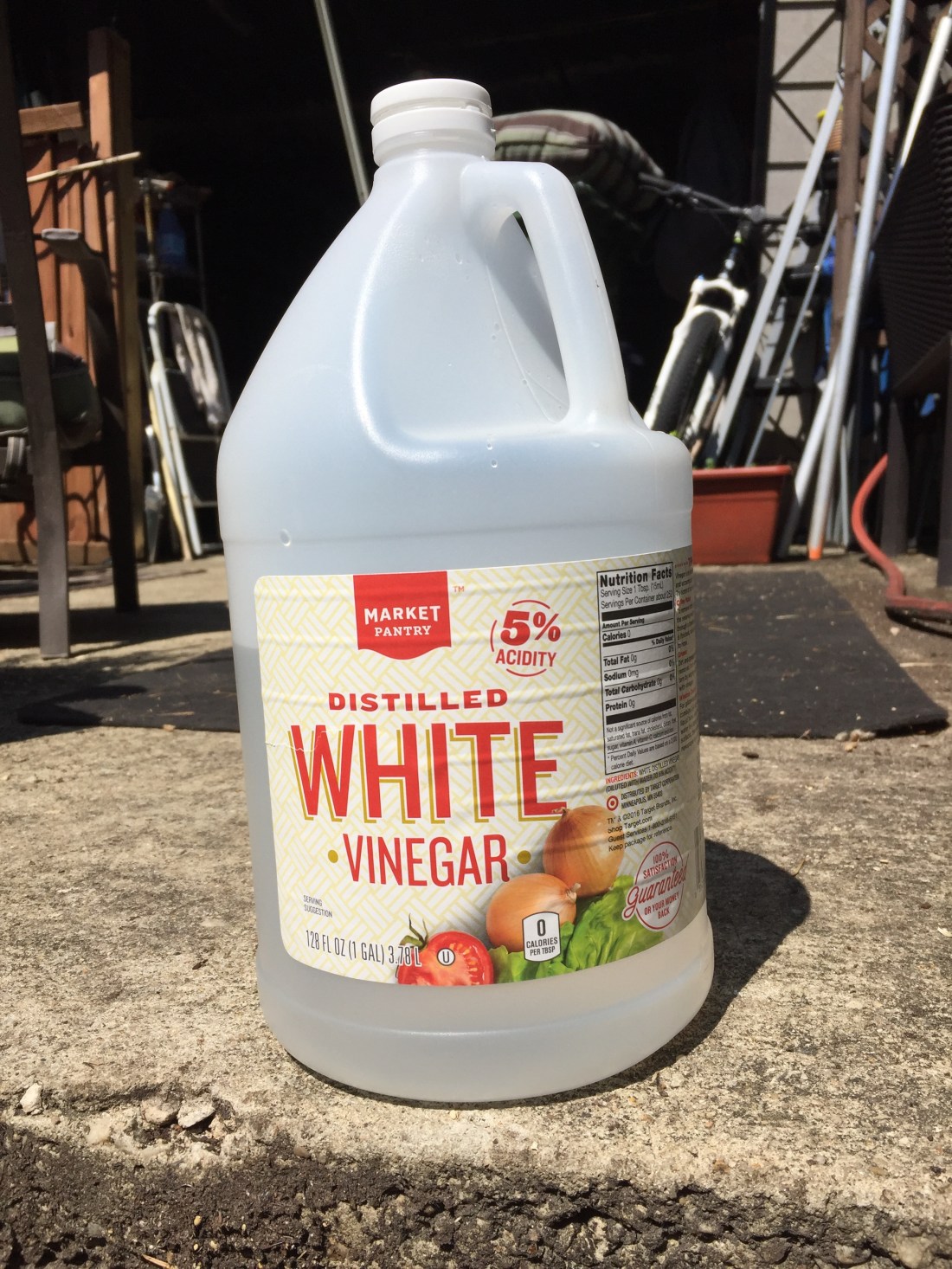
White vinegar is the duct tape of household cleaners, while also serving as a useful culinary standby. It costs about $2.50 per gallon.
Tread carefully when messing with turtles. (Photo credit: Van Smith)
Matt and Mike look to be in their 20s. They are keeping warm from the mid-January cold in Turtle Deluxe, Inc.’s stark office trailer, nestled between its loading dock and warehouse in Millington, a small town near the headwaters of the Chester River on Maryland’s Eastern Shore. An electric heater hums, casting an orange glow on the room’s many bare surfaces, as Matt sits behind the expanse of a clean metal desk and Mike stands, the shelving behind him also empty. They say their boss, Turtle Deluxe owner Mike Johnson, is out of town on vacation.
Yes, Matt and Mike confirm, Turtle Deluxe processes common snapping turtles (Chelydra serpentina) and sells the meat for people to cook and eat, but not at this time of year, and usually not for over-the-counter sales. Turtle Deluxe products typically end up shipped through other suppliers to restaurants in Philadelphia and Louisiana, they contend, and no, they don’t know of any Maryland restaurants that serve its turtle meat.
“Kind of unusual,” Matt says of the stuff, “but it sells.”
Maybe in the spring Turtle Deluxe will have some turtle meat, Mike and Matt say. Then again, maybe not.
“It’s hard to say,” a bemused Mike observes as he takes a business card. “Call again in a few months and see.”
For a company called Turtle Deluxe, which sells turtle meat, it seems curious that the forecast would be so uncertain. But the reason is found in U.S. District Court filings in Baltimore: Turtle Deluxe is under federal criminal investigation.
The company’s owner, whose full name is Michael Vincent Johnson, is suspected of buying poached out-of-state snapping turtles from New York trappers, and the feds are trying to make a criminal case out of it. Agents entered Turtle Deluxe’s doors on Jan. 15, armed with a warrant describing why, and carted off voluminous business records.
Johnson has not been charged as a result of the raid. A reporter’s second visit to Turtle Deluxe on Jan. 29, though, made clear that he is under a lot of pressure. Johnson is something of a politician, having lost the Democratic primary in the 2006 Kent County Commissioners race, despite winning more than 1,000 votes–16 percent of the total–in a five-way race, so there must be moments when he is charming. This isn’t one of them.
“Get the fuck out of here,” Johnson commands a reporter. He emerges from behind a storage trailer next to the parking lot, molten anger pulsing through his spry, compact frame. For a split second, there’s hope that the gentle politician hiding under Johnson’s gruff exterior will emerge. A second plea to discuss Turtle Deluxe softens him enough to say, “Have a nice day,” but then another round of venom quickly spits out from behind his graying goatee. “Get the fuck out of here!” he repeats.
There’s no need to risk a third invitation to scram, though the prospect of Johnson resorting to violence seems remote. He looks to be in enough trouble already.
Mike Johnson’s troubles started when a fellow named Kenneth Howard, who lives near the Alabama swamps in western New York, talked too much. They got worse when Mike Johnson did, too.
Believe it or not, there are laws against what Howard and Johnson are alleged to have done. Common snapping turtles have survived some 200 million years, but, common as they are, New York and other states have moved to protect them. Though Howard and Johnson have not been charged with a crime, the Turtle Deluxe raid warrant contends they knew what they were doing was illegal.
Here’s the law, in a nutshell: The New York State Assembly in 2006 clamped down on trapping live common snapping turtles. While it is OK, for personal use and consumption, to take up to five turtles a day and no more than 30 per 10-week season from July to September, it is not OK to trap them; instead, they must be shot dead with a gun or a bow and arrow. That means live snappers trapped in New York are contraband, and if they are transported across state lines, the federal Lacey Act–which prohibits interstate transport of contraband items–can come into play.
Authorities in New York wasted no time getting down to enforcement of the new law. In January 2007, New York State Department of Environmental Conservation (DEC) investigator Daniel Sullivan “initiated contact with Howard in his covert capacity,” according to the Turtle Deluxe raid warrant, “portraying himself as a trapper of turtles looking for a buyer.” Howard, being helpful, told Sullivan all he knew on the subject.
Howard “transports about two hundred turtles to the ‘turtle factory’ located in Millington, Maryland three or four times per year,” the warrant explains. He “knows several other guys in New York who trap Common Snapping Turtles and he drives their turtles down to Maryland with his own. He keeps half of the money paid for the turtles he transports for the others.” As for the legality of this activity, the warrant continues, Howard “stated that he knew there was a season for Common Snapping Turtles in New York State and that all turtles were protected.”
Sullivan was off and running. He hit the internet, found that Turtle Deluxe “offered to buy turtles from the general public,” and on Jan. 30, 2007, called and left a message there, saying “he was from Western New York and had turtles he wished to sell.” Three days later, Mike Johnson called back and told Sullivan “he would buy every turtle he could get his hands on.”
According to the warrant, Johnson went on to say that “he has two suppliers in New York State” and “the turtles he bought were mainly processed for their meat and sold to domestic and foreign buyers. Some were sold live to foreign buyers. He stated that prices fluctuated, but he usually paid between $1.00 and $1.50 per pound.” Johnson said he “buys from so many states that he couldn’t keep track of the laws,” so “he buys turtles based on what was legal where he lived (Maryland).”
Sullivan arranged a shipment, and on Oct. 2, 2007, he drove from New York to Millington with 835 pounds of live snappers and 20 painted turtles to be sold to Johnson, who met him when he arrived. While the turtles were being unloaded, Sullivan flat-out told Johnson what they were doing was illegal. “The season never opened in New York this year,” the warrant has Sullivan saying, adding that “it was illegal to trap live turtles” there now.
Johnson’s response isn’t memorialized in the warrant, but the details of the transaction are. He gave Sullivan a receipt for the turtles and a check for $1,212.20 and told him “to go to the Peoples Bank down the street, where he could cash the check and leave no paper trail.”
The following summer,on June 24, 2008, Sullivan called Johnson about bringing down another load of New York snappers. This time, Johnson was wary. He didn’t want any illegal turtles brought down, he said, but he “needed his turtles live and preferred them caught in traps,” according to the warrant.
Johnson admitted knowing that the New York laws had changed. He told Sullivan that, now that he knew that Sullivan knew the turtles were illegal, how was Johnson supposed to know Sullivan “did not work for the Federal Government?” There was “no way he would buy” Sullivan’s turtles now, and Sullivan “should not have made the mistake of telling him that the turtles were illegal” because now he “could not buy them.” Johnson said “it would be insane for him to knowingly violate the Lacey Act.”
Enter Randy Cottrell, special agent of the U.S. Fish and Wildlife Service Office of Law Enforcement, based in Amherst, N.Y.
Cottrell’s investigations typically make use of the Lacey Act, but they tend to involve creatures more exotic than snappers. In one, for instance, a couple was nabbed for bringing endangered African leopards to New York from an Ohio seller. But Cottrell has busted people for reptilian trafficking, too, such as a guy bringing two endangered species–a spotted turtle and two eastern massasauga rattlesnakes–to New York from Canada.
But the ubiquitous common snapping turtle? Well, why not, now that it’s contraband?
According to the warrant, Cottrell had been involved in Sullivan’s Turtle Deluxe investigation from the beginning, working with Sullivan and others from the DEC. Now, though, he’d do the field work like Sullivan did, going undercover as a trapper trying to sell New York common snappers.
Cottrell set up a shipment to Turtle Deluxe, and arrived in Millington on Oct. 20, 2008, with 80 live turtles. Cottrell helped Johnson and another employee unload them to be sorted and weighed. Johnson gave Cottrell a check for $1,045.50 and told him to go cash it at the Peoples Bank down the road, just like he’d told Sullivan a year earlier.
Having invested nearly two years, Cottrell and Sullivan were now ready to take it to the next level–executing a search and seizure warrant. U.S. District Court Magistrate Judge James Bredar signed it in Baltimore on Jan. 14, and the next day, Cottrell and his crew went down to Millington and began taking away Turtle Deluxe documents. In all, they seized 22 items, including nine boxes of records, notebooks, an address book, a phone list, checkbooks and stubs, receipts, business cards, and the contents of a laptop computer.
No one from the various agencies involved in the ongoing investigation would comment about the raid, the warrant, or anything about the case. Neither would Matt Esworthy of Baltimore, the lawyer Johnson recently retained to represent him as the investigation continues. Attempts to reach Kenneth Howard were not successful, though court records in New York indicate he went bankrupt last year after his self-employment income suddenly crashed.
There’s an old saying: “Behold the turtle, he makes progress only when he sticks his neck out.” That’s also when the butcher cuts off the turtle’s head, so the saying is flawed. But it still makes a good point: The turtle’s progress can also be its undoing.
The same may be said of Johnson and Howard. Their livelihoods stood to gain as they stuck their necks out to get turtle meat to market, and now it remains to be seen whether the axe will fall–and whether they’ll still be able to make turtle-meat money at all.
The Turtle Deluxe raid is part of a global phenomenon, affirms James Gibbs, after he is given the details by City Paper. The State University of New York biology professor is an international expert on turtles of all kinds, but has a keen interest in common snapping turtles in New York–which he says are abundant now, but due to growing global demand for turtle meat, could see their numbers plummet quickly.
“The global market is expanding,” Gibbs explains, “and now it is beginning to affect us, because one can make a pretty good living today in the United States selling live snapping turtles to the Asian market. States that have banned trapping, like Maine and New York, are trying to get a jump on something that could really decimate our stock. In Asia over the last two or three years, they have depleted their own turtle populations and have been looking elsewhere around the world to meet the demand, so prices have been rising. These are forces that are beyond our control here, so shutting down commercial trapping is a pre-meditated attempt to forestall the plummeting of our own stock’s numbers.”
Gibbs is no stranger to turtle meat himself, and doesn’t oppose the capturing, butchering, and eating of turtles. Its appeal in the United States is largely limited to cultural outposts in the South and Midwest, he says, where old-timers still like to run their traps. It’s back-breaking work, bringing big snappers home for butchering, Gibbs observes, but “it’s pretty good meat, once you get past the leeches and the algae and whatnot that grow on them.” Careful about the PCBs, though, because the meat of turtles from some contaminated areas have “levels off the charts,” he adds.
There are still big cities where restaurants serve turtle dishes–the best known, perhaps, being New Orleans, where Commander’s Palace and Brennan’s both have turtle soup on their menus, and Philadelphia, where Bookbinder’s has its “famous snapper soup.” Baltimore’s Maryland Club, a private social club, is renowned for terrapin stew, but that’s a different kind of turtle–and a whole other City Paper story (“Shell Game,” Eats and Drinks, Sept. 17, 1997).
Restaurants’ needs, along with those of swamp chefs and other turtle-eating enthusiasts, don’t add up to much pressure on snapping turtle populations currently, Gibbs goes on. But if demand climbs–as has been happening with the growing Asian market for U.S. snappers–the results could be devastating.
Gibbs says snappers, like many turtles, don’t reach sexual maturity until 10 years, and can live another 30 past that. Each year, 95 percent or more of those adults must survive for the population to stay at viable levels, otherwise it will plummet because of very high juvenile mortality. The youngsters’ long odds of reaching adulthood have gotten longer with the proliferation of mid-sized predators, like raccoons and foxes, brought on by the declining numbers of their own predators.
The New York population of common snapping turtles is “huge” right now, Gibbs says, “but they are not reproducing well at all, and that doesn’t bode well for the future.” Turtles, he explains, need loose soils in sunny areas to have successful hatches, and the reforestation of New England over the last several decades has shaded much good turtle-nesting habitat. Thus, large-scale trapping of live adults–including egg-bearing females–could add up to a very real threat to survival.
If Johnson and Howard were up to what Cottrell and Sullivan are out to prove, and were good for say, 600 to 800 adult New York snappers being trapped for butchering at Turtle Deluxe each year, then, according to Gibbs, they probably haven’t done much damage to the snappers’ overall well-being. Even if there are only six or eight trappers operating at that level in New York, Gibbs continues, it still wouldn’t be a problem. But “if there are 200 or 300 trappers–and there may be that many, I just don’t know–there’s a problem,” though he adds that “it’s not likely to have gotten to that level or someone would have noticed.”
Harlon Pearce,proprietor of the Louisiana seafood processor and supplier Harlon’s LA Fish, knows Mike Johnson and Turtle Deluxe. “There aren’t too many turtle processing plants around–there’s him, and then there’s some in Louisiana, Oklahoma, and Iowa that I’m aware of,” Pearce explains. “There’s only a smattering of people around the country doing it, and he’s a pretty large processor. He does do a lot of turtles. And based on his pricing, he’s for sure shipping a lot of those turtles overseas.”
Pearce, who’s a member of the Louisiana state government’s Seafood Standards of Identity Task Force and the advisory board of the Louisiana State University Department of Food Science, has a pretty good grasp of the global turtle picture, too. “The Asian market,” he says, “has helped the [common snapping turtle] industry get a lot stronger very quickly over the last couple of years.” He’s no fan of Johnson and Turtle Deluxe, though. In 2004, he sued them in Kent County court over money he’d given Johnson in advance for turtles that Pearce says he never got. He lost–“that kangaroo court they got down there backed him, if you can believe it,” he says–and moved on. Now he’s intrigued by the news that Johnson may have Lacey Act problems.
“If Turtle Deluxe is taken down by the Lacey Act,” Pearce predicts, “it will affect the U.S. supply of snapping turtles, and it’ll make more demand in Asia because there will be less turtles to satisfy that market.” Snappers are common–“there certainly is not a problem of overfishing,” he contends–but the meat “is not an easy commodity to handle because the laws are just varied in states across the country.” The loss of one processing plant like Turtle Deluxe, he says, can make a big difference until new avenues for bringing the turtles to market open up lawfully.
Pearce is of the opinion that states like New York and Maine, which have shut down commercial snapper trapping, are engaging in “a lot of knee-jerk reactions based on environmentalists saying we are decimating our resources. I’m not privy to the science of those states, but, no, you don’t have a problem with turtle numbers. There are plenty out there, and these laws are just overreactions. Plus, there are a lot of farm turtles, too.”
Nonetheless, “you got to obey the law, or try and change it,” Pearce continues, “or you’re an idiot and you deserve what you get.”
But it’s still sad, he adds, that people lose their livelihoods over the passage of such laws. “Like that old turtle trapper out there,” he says. “It’s been legal his whole life, and then suddenly it isn’t and he’s supposedly some kind of criminal. I don’t think we should take away jobs like that.”
Tom Frisch of Ohio, a 79-year-old retired snapping turtle trapper, got out of commercial trapping in the 1980s. “Now I just do it for my own, or when someone calls wanting to get a turtle out of their pond. And I’m the Johnny Appleseed of snapping turtles,” he adds, because he also raises them for release in the wild. And though he still processes turtles for people on occasion, “I won’t butcher females anymore. It’s just not good practice.”
Frisch has a sense that, despite the ever-restrictive regulatory environment surrounding commercial snapping-turtle trappers, some have been able not only to keep working, but to make a good living at it. He says he knows a snapper trapper still in business, though he won’t give his name, who’s been going gangbusters compared to what Frisch used to do in his day.
“In Ohio, back when I was doing it, you could trap for a month, maybe take a ton of turtles,” Frisch recalls. “But this guy goes to New York State, along the St. Lawrence Seaway, and after four days there he comes back with a ton of turtles in his truck, and that’s maybe 200 turtles. New York has really been a good trapping area for the last few years. And then he goes up to Maine, and comes back with the biggest turtles you’ve ever seen. He does a lot of traveling, going down into Kentucky, too. But he does not trap anymore until after the turtles have laid their eggs. In other words, he’s a conservationist, too.”
Gibbs, the biology professor in New York, hears about Frisch’s story of the prolific trapper and remains nonplussed. “You’re talking about some guy from out of state with a big truck that he fills up, then trundles on down to some factory somewhere,” he says. “That’s not trivial, dealing in actual tons of turtles and doing it illegally, and if you had a lot of people doing this, it would be a terrible problem. That’s why the enforcement end of the new no-trapping rules is so important, to keep that from happening.”
Ron Fithian is one of Kent County’s three commissioners who beat out Mike Johnson in the 1996 election, and he heard about the Turtle Deluxe raid shortly after it happened. “All we ever heard,” he recalls, “is that a bunch of law enforcement officers showed up at his place, but we never heard anything more about it, so we figured nothing came of it.”
Fithian has been in the seafood business on the Eastern Shore for 27 years, he says, and he’s also the town manager of Rock Hall. He used to sell rockfish to Johnson, “but then he sort of got out of it,” Fithian recalls, “and the next thing I knew, he was in the turtle business in Millington. And there are not that many people that are in the turtle business around here, because there was never much money in it. You’d get maybe a quarter, thirty-five cents a pound, and that was the price forever, no fluctuations for years. Just not worth the effort, at that price.”
But all that changed, Fithian said, when Johnson “discovered a market overseas, and I heard he started paying upward of $1.50 per pound for live snapping turtles. That was just unheard of.”
Now that Fithian knows Johnson is caught up in a Lacey Act turtle investigation out of New York, all he has to say is, “I always have looked upon him as a law-abiding citizen. He’s been somewhat of an activist at times in the community, and he always wants you to think he’s Mr. Environmentalist. I do know him, and I know him well. But there isn’t much I can say, other than this isn’t the type of thing he’s wanting to be known as.”
And perhaps Johnson won’t be known that way, depending on how the Turtle Deluxe investigation wraps up.
After two and a half years of fighting a lawsuit against Baltimore County police, gun collector David Bord’s pursuit of justice appears poised to bear fruit. Nearly all of the $250,000 worth of historic firearms, mostly machine guns, seized from him in a December 2009 raid on his home and business, were returned to him in December 2012. What remains to be determined is the how much damage his collection suffered during the three years they weren’t in his possession—and how badly law enforcers behaved in claiming a legal right to seize them in the first place.
“We’re going to do Baltimore like Fast and Furious,” says Bord, referring to the scandalous Bureau of Alcohol Tobacco and Firearms (ATF) operation that allowed illegally purchased firearms to continue in circulation, “but it’s going to be The Fast and the Stupid, because that’s how they handled this.”
“We are absolutely on the warpath,” adds Bord’s wife, Robin Bord. “How dare they do this to my family?”
The lawsuit (“Gun Trouble,” Mobtown Beat, June 6, 2012) claims that detective Erik Socha and Cpl. Anthony Kidwell led raids on the Bords’ home and auto-repair business that were based on a bad warrant “in order to intimidate” David Bord and cause him “economic injury.” The operations also were undertaken “for gratuitous sport rather than for proper law-enforcement purposes,” according to court documents, and Socha and Kidwell, when presented with all the proper firearms paperwork after the raids, said “save it for court,” that the paperwork was “wrong” or “bull***t,” and “words to the effect” that David Bord “would never get his property back.”
Now that the guns have been returned, a trial in Baltimore County Circuit Court before Judge H. Patrick Stringer Jr. seeks to determine the value of the damages the weapons suffered between the time they were seized and returned, as well as establish the costs borne by Bord for bringing the lawsuit and for legal representation while he was unsuccessfully prosecuted for gun crimes, according to statements made during the proceeding by William Butler, David Bord’s attorney. The trial so far has spanned three days, from March 19 through March 21, and is scheduled to resume on April 29.
The delay, says David Bord, is due to the sudden emergence of photographs of the guns as they were being seized, the existence of which he says Baltimore County previously had denied. Once the photographs have been properly analyzed, he explains, the trial will resume with better evidence to determine how badly the firearms were damaged during the three years they were gone.
While David Bord awaits Stringer’s determination of how much money Baltimore County should pay him, he can already enjoy some level of satisfaction from testimony about the cops’ missteps during the firearms seizure and its fallout. “Money is not my overriding issue,” he says, adding that Socha “spilled his guts” while testifying.
“He admitted on the stand that he has tire tracks on his back from being pushed under the bus” to take the fall after the ill-advised raids, which were based on a warrant in which Socha swore to having machine-gun expertise, yet “he never knew anything about machine guns,” David Bord says. “He signed his name on the warrant,” Bord continues, “and they knew it was all bad, and now they left him out to dry. By his own admission, he’s probably going to have to go get a new job.”
The county attorney handling the trial, Shawn Vinson, declined to comment, saying “the case is still ongoing,” while Butler was unavailable for comment before press time.
At the beginning of the trial, on March 19, Vinson told Stringer that “Baltimore County acknowledges that the plaintiff is entitled to possession” of the seized machine guns, but asserted there was “no admissible evidence” that they were damaged while in the county’s hands, pointing out that the seized collection also spent time with the ATF before they were returned. Butler, meanwhile, said the “wrongful taking and detention” of the collection, which was “mistreated” by law enforcers, means Bord “needs to be compensated.”
The collection’s seizure was the result of an ATF tip that Bord had a Hatton Industries machine gun he’d purchased at the Armory, a gun store in Annapolis, that agents thought was part of an allegedly fraudulent gun-registration ring based in Arizona that “harvested” serial numbers from older machine guns not covered by a federal ban, and welded them onto new guns they manufactured and then sold as pre-ban guns (“Blunderbusted,” Mobtown Beat, Aug. 5, 2010). The Arizona case ended in December jury convictions for the two defendants—including Marylander Randolph Rodman—who hadn’t previously pleaded guilty.
Given the long-struggling state of the economy and the society’s shrinking social safety net, the suggestion that Baltimore City’s homeless population is in rapid decline may seem like a pipe dream. But here are the latest figures, according to Baltimore City’s recently released report on its biennial homeless count, conducted on Jan. 27: 35 percent fewer people were sleeping in homeless shelters or outdoors this year than in 2011. The tally’s steep drop is in stark contrast to the 2011 count, which found a 20 percent rise—and 50 percent increase in homeless youth—over 2009.
In reality, though, the report—which was released quietly, posted on a city website without announcement or press release—undercuts its own numbers by asserting that the extent of homelessness in Baltimore has likely remained static in recent years.
The report, entitled the “2013 Homeless Point in Time Count Report” and released by the Homeless Services Program of the Mayor’s Office of Human Services, explains that an effort this year to account for inaccuracies in prior tallies due to inconsistent methodologies “suggests that the total count of homeless persons in Baltimore did not undergo large changes during the period from 2007 to 2013.”
Thus, though “there were 2,638 homeless persons identified during the count, a 35 [percent] decrease from 2011,” when 4,088 homeless people were counted, the number “does not precisely reflect the actual number of homeless persons in the City” because the “methodology [used] in Baltimore is imperfect and has varied across the years,” the report states.
As Health Care for the Homeless’ executive director Kevin Lindamood quips, “rumors of the demise of homelessness have been greatly exaggerated,” adding that the report was released to the public “very silently.”
Lindamood says “the city this year is pressing the reset button” on how it conducts its point-in-time (PIT) homeless count, and “I applaud the direction,” with “its intent to improve the methodology.” He worries, though, that “some people use the number from the PIT count as the data point measuring homelessness,” even though “it is an incomplete measure if we are going to look at the broader issues of homelessness.”
In September, for instance, USA Today ran a story under the headline, “Homeless population dips,” reporting on numbers released by the National Alliance to End Homelessness, which uses federally required PIT counts from around the country to track trends in the nation’s homeless population—and found it has dropped 17 percent since 2005.
Lindamood, though, says his experience working with Baltimore’s homeless population belies the downward trend, because he has watched the demographics of his group’s clientele change over the last 20 years in ways that suggest more people, not less, are without a stable place to live.
“Twenty years ago,” Lindamood says, “85 percent of our clients were single adult men between the ages of 25 and 44. This year, 35 percent were women, and in the past five or six years, we’ve been seeing more intact families and children. As safety nets have been eroding, we start to see other populations—children and families and even seniors—who we used to be able to find housing for but now are on the streets in greater numbers.”
Homeless advocates say counting homeless young people is a particularly challenging task, and in prior years the city’s PIT-count report was accompanied by a parallel study conducted by the Center for Adolescent Health (CAH) at the Johns Hopkins University’s Bloomberg School of Public Health. Rather than seeking to count homeless youth on a single night, the center worked with service providers over a period of weeks to try to gain a firmer grasp of the population—and its data showed this population had increased 135 percent between 2007 and 2011. No such study was conducted this year, though, according to the center’s lead investigator for its 2011 study, Nan Astone, who left for another job in May—after the parallel study would have been done.
This year’s PIT count does, however, try to account for homeless people under 25 years old. It identified “2,030 who self-reported (or whose parents self-reported) to a service provider or to the school system that they were homeless or unstably housed during or at some point prior to the PIT Count,” the report states. However, most of them were not included in the official tally because of incomplete records about their housing status. In the end, the count included 555 young people, 431 of them under 18 years old, and six of those unaccompanied by a parent or guardian. They comprised 20 percent of all the homeless people counted.
Astone, in an email to City Paper, was astounded that only six unaccompanied homeless children were counted, asking, “Are they kidding?” In 2011, the CAH study found more than 200 unaccompanied homeless youth under the age of 18, almost a third of the 640 young people it found between 13 and 25 were homeless in Baltimore.
Lara Law, program director for Youth Empowered Society, a safe haven in Charles Village for homeless youngsters that opened in 2012 and, according to Law, has since served 140 people who are 25 or younger, calls the report “a dismal undercount of homeless adolescents and young adults,” who number “in the hundreds, if not thousands” at “any given time in Baltimore.”
A telltale gauge of how undercounted children were in this year’s homeless tally is the number of students enrolled in Baltimore City Public Schools (BCPS) that the system identified as homeless: 2,716 in the 2012-2013 school year, according to its official enrollment data. That’s 78 more homeless people than the PIT count found in the entire city this year. The discrepancy arises due to differences in how homelessness is defined. The PIT count’s definition of homelessness—those sleeping in shelters or outside—is more restrictive than the school system’s definition, which includes all students who “lack a fixed, regular and adequate night-time place of residence,” according the BCPS website.
Despite advocates’ concerns about undercounting, the report says “the 2013 PIT Count is the most comprehensive to date,” is “more useful for planning and policy decisions” than past efforts, and has helped identify “the most vulnerable homeless individuals and families in the City in order to connect them with housing and supportive services.” In the future, the report states, the city’s PIT counts will seek to maintain “consistency in the counting methodology” while improving “the thoroughness and accuracy of the count.”
Since the mid-2000s, when Baltimore police officers William King and Antonio Murray were busted for robbing drug dealers and received combined sentences totaling hundreds of years, the string of corruption scandals involving the Baltimore Police Department (BPD) has been notable for its persistence.
Since 2005, prosecutors have brought cases against BPD law enforcers for rape, murder, theft, gambling, fraud, stalking, lying, obstructing justice, extortion, drug dealing, assault, and prostitution. And the cases keep coming—the latest was unsealed on May 31 against Ashley Roane, a BPD officer accused in a gun, drugs, and fraud case investigated by the FBI (the News Hole, May 31).
Sometimes the crimes were committed while on duty, other times not, but all point to a powerfully intriguing characteristic of corrupt cops: their split personalities, manifesting the human capacity for both good and evil that all people share yet few exhibit to such a trust-busting extreme. Though sworn to uphold the law—which they did on a daily basis—they also broke it, sometimes in shockingly egregious ways, perhaps due to a sense of impunity borne of being an armed badge-holder.
In Roane’s case, her alleged criminal conduct, the evidence of which spanned several months, occurred on two days when she also busted alleged lawbreakers. The proximity in time of her law-enforcing and alleged lawbreaking activities brings the duplicitous nature of police corruption into stark contrast.
Though the accusations against Roane are fresh and unproven, the evidence is weighty, based on the FBI’s observations of her conduct and interactions with what court documents call a “Confidential Human Source” (CHS) who she first approached, but who thereafter conspired with her under the FBI’s watchful eye. She thought the CHS was a high-level drug dealer with a job as a tax preparer and she allegedly offered to provide protection for his supply-side drug transactions while also getting him names, dates of birth, and Social Security numbers from law enforcement databases which she thought he would use to file fraudulent tax returns.
On the afternoon of April 24, Roane was on the job, patrolling the 500 block of South Catherine Street—an area of the Mill Hill neighborhood known for drug activity—with another officer, Richard Pinheiro, when she noticed a woman, 33-year-old Sariah Parker, enter the yard of a vacant house that had previously been the target of burglaries.
When the two officers got out of their patrol car and entered the yard, court documents say, they heard voices coming from inside the house, so Pinheiro knocked on the back door. A man—48-year-old John Toomer—opened the door and said he lived there, and while the officers waited for him to produce verification, they saw Parker and another man, 24-year-old Ricky Warren, standing around the kitchen table. After admitting he couldn’t prove he lived there, Toomer took two gelatin capsules out of his pocket and put them on the kitchen table, and all three people were placed in custody.
In a subsequent search, Roane and Pinheiro recovered from the suspects two sandwich bags of pot, a pill container with six ziplock bags of crack, 10 gelatin capsules of heroin, and a folded-up piece of paper containing heroin, according to court records. All three have criminal convictions in their past—including an armed-robbery conspiracy for Parker—and Warren has since been charged in two separate Baltimore City circuit court cases involving drugs and weapons charges. On the day before the federal charges against Roane were made public, though, state prosecutors declined to proceed with the case against Parker, Toomer, and Warren.
The same day Roane and Pinheiro arrested the three drug suspects, the FBI says Roane called and texted the CHS to arrange payment for having previously provided the CHS with the identification information of 10 people so that fraudulent tax returns could be prepared in their names. The payment occurred later that day, in front of Roane’s Pikesville house while Roane wore a tan bandana and a white T-shirt, according to court documents.
“Roane expressed her displeasure at only receiving $1,500,” court documents state, since “she thought she would have received $3,000,” but she stated that “she was preparing for next tax season and wanted to provide CHS with the names earlier in the tax season.” The money, she said, would be used “to pay her traffic tickets.” When the CHS said he would soon need her protection during a drug meeting in the upcoming week, Roane said “she was still working evenings next week and would be able to assist CHS during the meeting.”
On the day of the meeting, April 30, the CHS called Roane to explain the details—to look for a certain brown Ford Explorer in the parking lot of the Westside Shopping Center and that the CHS “would pay her for her assistance,” according to court documents. Roane texted back: “Ok sound good.”
When the time came, Roane called the CHS to say she saw the Explorer—in which agents had placed “a blue backpack containing a brick-shaped package of white powder wrapped in tan tape which resembled a kilogram of heroin,” according to court documents—and then she drove a patrol car, with another woman in plain clothes and a yellow baseball cap in the passenger seat, and parked behind the Explorer. The CHS then drove up, took the backpack out of the Explorer, and drove away, as did Roane and her passenger.
Minutes later, Roane, now alone and in a different patrol car but still in uniform and carrying her holstered service firearm, met the CHS in the 400 block of South Longwood Street. There, according to court records, she “hugged” the CHS, “acknowledged that she saw CHS retrieve the bag,” and received $500 in payment for her services.
Later, according to court records, the CHS texted Roane: “Wassup lady dat my bag was real good it’s was a fucking whole boy for 60K thanks boo the time hope u can start helping me more and I will bless ur pocket So we cool.” Roane texted back: “awesome…. Yup.”
Also on April 30, Roane and Pinheiro were again patrolling the 500 block of South Catherine Street, which is right next to the Westside Shopping Center parking lot where she’d provided protection for the CHS. As they were driving in the patrol car, they noticed a man who, when he noticed them, quickly stepped out of their view into the yard of a vacant property.
Roane and Pinheiro got out of their patrol car, approached the man, 61-year-old Richard Floyd, and eventually found he had a baggy of suspected crack and a gelatin capsule of suspected heroin in a small container attached to his key ring. Floyd—whose record of petty, drug-related criminal charges in Baltimore City stretches back nearly 20 years and suggests he has long struggled with substance-abuse problems—was once again charged with drug possession. He’s scheduled for trial in August.
Thus, if the charges Roane is facing are proven true, on April 30 she thought she was using her police powers to facilitate the distribution of addictive drugs in Baltimore. And on that very day—and in nearly the same location—Roane’s routine policing handed Floyd yet another entry on his ever-growing rap sheet that appears to have resulted largely from the distribution of addictive drugs in Baltimore. That would be a perverse and cynical twist on the “good cop/bad cop” routine.



 Van Smith