

Grabbed from his crazed post-midterm presser.
(Update: This has been discussed in detail: https://twitter.com/drgjackbrown/status/969467081266638848?lang=en.)
Grabbed from his crazed post-midterm presser.
(Update: This has been discussed in detail: https://twitter.com/drgjackbrown/status/969467081266638848?lang=en.)
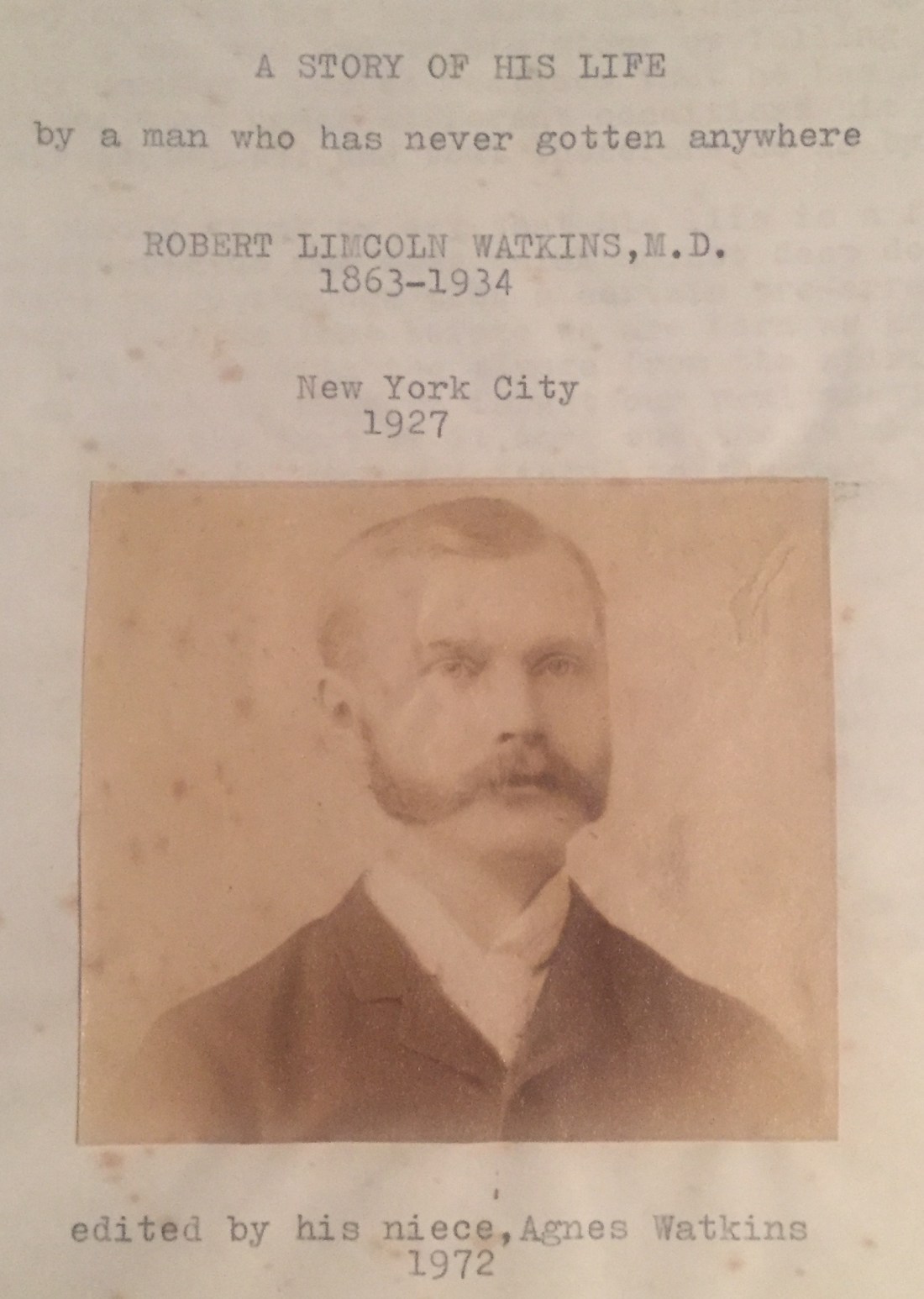
Whenever anyone complained of being lonesome to the man with the bulldog jaw, he would rave and tear himself, sputter and talk, and finally settle down to a medium state of mind, and his tongue would rattle off like water running out of a spout.
They say the wealthy and well-known restaurant man, Mr. Mink, is lonesome. A fine man, by the way. He got a divorce from his wife, and they say has joined the Lonesome Club.
A young man once staying in New York on business for a few months, and the business was slow, wrote home to his girl in the country that if she wanted to feel something lonesome she should come down and feel of him.
Husbands die; their wives get lonesome.
But by Gee Whitaker, talk is cheap stuff. It’s the man that has had an experience of months and YEARS of it. The one who has been through the mill, who knows what the term lonesome means.
All this penny talk about being lonesome reminds him of the imaginary fairy stories of children, and the lies the newspapers often tell, of prosperity, and of wars, when they do not exist.
It’s the single man or woman, starting in business, perhaps for the second time after a failure, one with the bulldog jaw, born in the month of May or April, who is compelled by nature, yes, in spite of himself, to hang on to the job at which he started, who knows what lonesome means.

He was born with a talent for sticking, he knows not how to turn back no matter at times how discouraged he may talk. It’s in his bones, in his nature. He never turns back., he doesn’t know the way. Three times a day, and at night when nothing is doing, he hears from all quarters the still small voice: “stick to your job.”
No matter if you stick to your office all day long, getting only one-cent matter in the mail when looking for two; no matter if no business comes in from morning till night, and scarcely anyone enters week in and week out: Hang on to your job.
Occasionally a sympathetic friend drops in with perhaps a promise of work. None turns up. And Uncle Sam still brings the one-cent mail.
You think to yourself: My business is honest, I’m no sport, my habits are good, and my cause is just. My friend Jones has said it, and so has Mrs. Brush. Another friend turns up. He knows your cause. He believes in it and in you, and can help both himself and you if he will.
As he leaves he quotes for your comfort, for he thinks the man with the bulldog jaw is healthy, rough, and ready: “Molasses catches more flies than vinegar. It’s a long lane that has no turning. Everything comes to him who waits. There is always a calm after the storm.”
The lonesome man with the bulldog job says to himself: “It’s been some time since Mr. J. and Mrs. B. were going to send others for my work. They tried, I know. Their work was skillfully done. But do their recommendations count?”
Dreamily, he says to himself: “How long have I got to live, anyhow?”
Mrs. James has said, “Sympathy is all right, but it does help the cause.”
A business man posted in his office a verse: “When all the world has gone to pot, and business’s on the bum, A two cent grin with uplifted chin, Helps some, my son, helps some.”
And the molasses man – why, I’ve seen just as many successful vinegar men as molasses, just as many successful pessimists as optimists.
But the man with the bulldog jaw, born twixt April and May, still gets his one-cent mail in his lonesome den. And sticks to his job both night an day. He writes till he’s tired, plays cards till he’s blind, for the spade is as red as the heart, the heart as black as the spade.
He learns poetry, which he’s never liked. Sings, and plays his guitar. He makes his own bed, scrubs his own floor. But the business walks by his door. And the still small voice when he dreams in the night says, “stick to your job.”
Did you ever have the experience – I don’t ask if you ever heard of it, but did you ever have it?- of waiting in a well-equipped office, in a good location, in a BIG city, for business, possessed of little cash and no rich uncle to back you, just waiting – it’s the only thing you can do – day after day, month after month, even for years?
No one comes, scarcely, for days. Except the postman to deliver your once-cent mail. Then suddenly the telephone rings. Did you ever then involuntarily – I repeat involuntarily – holler out, “Thank Goodness!” and say to yourself, “I don’t care who that is or what he wants, I’m just glad to hear the ring. It gives me a brace for another long wait”?
Did you ever call up on the phone a friend, when you were lonesome, and just listen to the tone of the voice without giving yourself away, just for the sake of hearing somebody’s voice? Imaginary misunderstandings are now all cleared up.
But the man with the bulldog jaw is by nature a sticker. And when in brighter years business slacks off a bit, and some poetry floats by his door, he swipes it and reads it, for it reminds him of the years before.
What matter if I stand alone? I wait with joy the coming years. My heart will reap where it has sown And garner up its fruit of tears.
The stars come nightly to the sky, The tidal wave unto the sea, Nor time nor space, nor deep nor high, Shall keep mine own away from me.
Asleep, awake, by night or day, The friends I seek are seeking me. No winds can drive my bark astray, Nor change the tide of destiny.
And he says, “BY GEORGE, that’s me. I’ll stick to my job.”
[Background: here’s the preface, forward, and notes from the editor of R.L.W.’s memoir; here’s his account of his upbringing through medical school; here’s when he self-inoculated with tuberculosis and went off to Paris with a charlatan; here’s where he treated typhoid, learned to dance, theorized, and sutured guinea pigs together; here’s where he contracted cholera and hooked his uncle up with testicular juice; here are his misadventures in self-publishing while treating a slow-motion suicide-by-drinking; here’s where he hung out with a magician and a vaudevillian; here’s where he recounts his singing career; here’s his ode to a Fulton Market butcher; here’s where he explains his profound love of music; here’s an account of a hard-partying man named Emrich; here are his escapades with a reporter, landing him at Carnegie’s house; here’s where he gets rooked by a crook of a partner; here’s where he lost his shirt working on an invention for 15 years; here’s where he traveled south during the World War and became a DuPont physician who was present for a mass industrial accident; here’s his description of complications involving his patients and practice; here’s his take on syphilis, polio, avoiding impositions, and the nature of success; here’s his description of making a coats-of-arms lantern-slide lecture; here’s his encounter with the Gaekwar of Baroda; here’s when he hung out with a hard-drinking Know Nothing Mason; here’s an encounter with Magic; here’s where he describes a Socratic philosopher/preacher who’s also a topnotch croquet player; here’s where he surveys the NYC restaurant landscape; and here’s a piece I wrote for New York Press upon first reading the memoir.]


This section is headed RELAYS, and we all know that a relay in a telephone or telegraph line or circuit is for the purpose of boosting the current so as to get the message over a longer distance. In other words, to add strength to it. So these recollections may do the same for what I am trying to get across here.
I had found, perhaps naturally, from boyhood days that getting away by oneself and reading or thinking or walking, or traveling over a strange country, revived me. I once told this to a girl who desired me to take her out in the city, and she gave me a good tongue lashing. When I left her the second time at her home she said I was one of those cranks, etc., and that she had seen enough of them. I have since thought that if a woman or a man wants to get rid of the other, make them think you’re crazy. In fact, a married man told me that once, come to think of it.
All my life, even when a boy going to school and when working at the factory vacations, I’ve had longings to be in the woods, to roam about by myself. Perhaps most people do. When on a bright summer day I would have to get up early and go to the shop, I really believed that I had the money to live on I would have gone to the woods instead, but at the same time the thought would occur to me as I trudged off to work that there was lots of time ahead.
Now as I write this, I think there was always in my mind the persistent idea that my life could not go on without money – that is, that I would have to find some way of making it before I could do anything like other people. That I couldn’t get a girl, get married, settle down, for instance, till I had a good living that i was sure of. So I never let the girls seriously bother me.
My grandmother used to tell this story about my uncle when he was a boy. He would say, “When I’m a man, I’ll buy” this thing and that, and when she would ask him where he would get the money to do it with, he would reply, “Why in my pocket, of course.”
So in later life, when I would bet a few dollars ahead, I would plan to use that to do something bigger, something substantial, that would guarantee me income, or a much bigger bunch of cash. But those bigger bunches never came.
I recollect a charming widow with money who probably had me in view, and I would have popped to her, too, if a certain apparatus I was trying to finish went through properly and in time. It didn’t, and the interest on my part died out.
I had the habit some years back of going to the seashore, New York is so handy to it. I went to the Oriental Hotel, although that was a swell place and required fine clothes. I didn’t have the clothes, and could not afford the price, but I went and just looked on, not caring what they thought of me. For I got the quiet of mind that I desired, and that served as a form of relay for me.
Tom Platt, the Republican boss of New York State, and then the owner of the U.S. Express Company, now extinct, had his summer headquarters there. I can see him now, sitting on the veranda in his chair, always talking to three or four people about him. Many celebrities used to spend Saturday and Sunday there, as I did when my pocketbook allowed.
There was a candy man – Leffert’s – very rich they said, who would take sudden notions to scoot into the lobby or dining room through the open window instead of using the door. Of course, the windows were high and long, came down to the floor.
But I have thought often, when an enemy would remark of me for something out of the ordinary that I had done, that I was not so bad that way as either Tom Platt or Teddy Roosevelt. For the former in his old age married a woman – or did not marry her (the Jennings woman) – who got him into all kinds of trouble. And Roosevelt, in politics, turned on Taft, the man he put in for President – and we all know what he did: formed a new party and elected Wilson, his opponent.
I suppose the very first relay in my professional career came when I was in Paris and went to the Latin Quarter. But the most important one, in a negative sense, came after working on one of my machines and its being turned down.
It was culminated by my taking a 25 ampere rheostat, a very light and simple one, to the Biograph Company. They wanted to see it. It worked all right, and had cost me $200 to construct. But after showing it to them, there was no interest. I remember that I lit up a big arc lamp for them, and they then declared that they did not want lightness, the quality which this rheostat possessed, but something heavy.
So I was all in: no business, money wiped out, the woman I was thinking of dropped out of my mind. I became played out, thought enemies were working against me, did not know what to do.
[Background: here’s the preface, forward, and notes from the editor of R.L.W.’s memoir; here’s his account of his upbringing through medical school; here’s when he self-inoculated with tuberculosis and went off to Paris with a charlatan; here’s where he treated typhoid, learned to dance, theorized, and sutured guinea pigs together; here’s where he contracted cholera and hooked his uncle up with testicular juice; here are his misadventures in self-publishing while treating a slow-motion suicide-by-drinking; here’s where he hung out with a magician and a vaudevillian; here’s where he recounts his singing career; here’s his ode to a Fulton Market butcher; here’s where he explains his profound love of music; here’s an account of a hard-partying man named Emrich; here are his escapades with a reporter, landing him at Carnegie’s house; here’s where he gets rooked by a crook of a partner; here’s where he lost his shirt working on an invention for 15 years; here’s where he traveled south during the World War and became a DuPont physician who was present for a mass industrial accident; here’s his description of complications involving his patients and practice; here’s his take on syphilis, polio, avoiding impositions, and the nature of success; here’s his description of making a coats-of-arms lantern-slide lecture; here’s his encounter with the Gaekwar of Baroda; here’s when he hung out with a hard-drinking Know Nothing Mason; here’s an encounter with Magic; here’s where he describes a Socratic philosopher/preacher who’s also a topnotch croquet player; here’s where he surveys the NYC restaurant landscape; and here’s a piece I wrote for New York Press upon first reading the memoir.]
I suppose I have lived in restaurants for 30 years in the Biggest City in the World. I have claimed that one can live more healthy that way, for one can order what one wants and when one wants to. It is not necessary to health to eat regular.
I’ll bet the Child’s restaurant waiters or managers know me all the way from 14th St. to Harlem, that is by sight. I believe I was one of the first to find out that these restaurants were the most expensive in the city if you are hungry. If you’re not, all right. For reliability they are the best even today. But one does get sick of the all-fired whiteness and cleanliness of them. They are too clean.
I get crazy to find a dirty restaurant. That statement reminds me of the family I once called on. The wife was home and sat talking to me while rocking away in her chair, saying ,”My husband is always so calm, never upset, never angry, everything is always all right. I am sick of it. I want to have a good row.”
[Background: here’s the preface, forward, and notes from the editor of R.L.W.’s memoir; here’s his account of his upbringing through medical school; here’s when he self-inoculated with tuberculosis and went off to Paris with a charlatan; here’s where he treated typhoid, learned to dance, theorized, and sutured guinea pigs together; here’s where he contracted cholera and hooked his uncle up with testicular juice; here are his misadventures in self-publishing while treating a slow-motion suicide-by-drinking; here’s where he hung out with a magician and a vaudevillian; here’s where he recounts his singing career; here’s his ode to a Fulton Market butcher; here’s where he explains his profound love of music; here’s an account of a hard-partying man named Emrich; here are his escapades with a reporter, landing him at Carnegie’s house; here’s where he gets rooked by a crook of a partner; here’s where he lost his shirt working on an invention for 15 years; here’s where he traveled south during the World War and became a DuPont physician who was present for a mass industrial accident; here’s his description of complications involving his patients and practice; here’s his take on syphilis, polio, avoiding impositions, and the nature of success; here’s his description of making a coats-of-arms lantern-slide lecture; here’s his encounter with the Gaekwar of Baroda; here’s when he hung out with a hard-drinking Know Nothing Mason; here’s an encounter with Magic; here’s where he describes a Socratic philosopher/preacher who’s also a topnotch croquet player; and here’s a piece I wrote for New York Press upon first reading the memoir.]
One day many years ago I was in one of Barney McFadden’s restaurants and opposite sat a young man with pimples all over his face, red ones. They looked bad. He said, “I have that bad disease sand am taking the McFadden treatment of eating nothing but fruit.” I requested him to let me test his blood for the germs as he went along with the treatment. And he did, for quite a long time. Then I lost track of him.
But here a short time ago, a bald, or nearly bald, man about 35 years of age spoke to me in the 59th St. Childs restaurant. Says he, “Aren’t you the professor that looked me over some 15 or 20 years ago in McFadden’s restaurant?” I recollected the circumstances, but while he recognized me, I never would have known him. He said, “I never took any medicine that time ,but just the fruit, mostly apples, for 5 years I guess, and nothing else. And I do not regret the course I pursued.”
He said he was a carpenter, had always had plenty of work, and was a bachelor. He certainly had lost his hair, though some of it had come in. He looked fairly well, yet there was a bad look to his skin. Of course, some do pull through it, but I think in his case a touch of the regular mars medicine would have saved him his hair – and possibly some trouble in the future that he knows not yet.
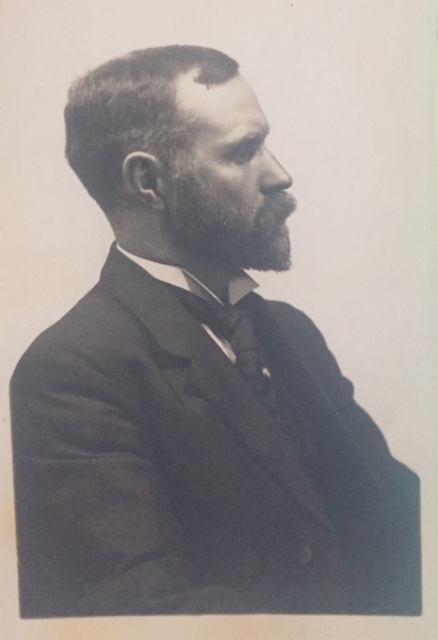
Another day while I was eating in a restaurant, I was irritated over some troublesome case or problem, and as the idea unconsciously arose I found I was talking a bit to myself. (It’s common for Wall St. men to be caught doing this.) The man opposite me looked up, plainly showing alarm. I said, “I’m all right,” and went on eating as if he were satisfied I wasn’t dangerous.
The Automat in my neighborhood (west 72nd St.) has been open about three weeks, and it is still full. I say full, for it’s now 1:30 and the group floor is still full, with more coming in as I came out. I noticed they were apparently country people. Some of the restaurants near by are now regaining some of the old customers who left when the Automat first opened. But still, the Automat is full. Where do they come from? I know one man who has closed his house and he and his family, at least, use the Automat.
This place is cool, much more so than any of the others in the city. And yet it’s not cool enough these hot days. For I notice that after being in there a while, it seems to get hot. I wonder about that.
As I dodge about a good deal in the city and visit Automats or other eating places, I have opportunity to criticize. For instance, I have never seen in a an Automat a boiled potato that was boiled enough, and I have noticed the fact in several. I also notice that while these places are clean, they could be cleaner, especially in the downtown ones where the rougher-dressed people come in. It is certainly a great attraction to have the floors scrupulously clean. This could be done by having a special boy with a mop doing nothing else all day.
There is another thing in regard to the quality of the food, which could be improved. Namely, Bickford’s has the best pies, especially apple pies, of any restaurant in New York. Now the Automat could do the same if they tried hard enough. They could be made from sour apples, which is not the case in the Automat. Childs used to have good apple pies, but they haven’t for several years – and I have lived in restaurants in New York for 35 years.
Boston beans are the best today in Bickford’s. They used to be all right in Childs. The Automat’s are good, but not the best.
Even today again, in an Automat way downtown, I noticed those hard-boiled potatoes.
A great advantage for the Automat is their toilet facilities. All one has got to do is to walk right in. No one to ask, no cashier to pass, help yourself either down or upstairs. And then eat as you choose, pie, or cake, or a nip of some kind. For anyone I’ve ever met agrees that these substitutes for the drinking place, one might say, have the best coffee in the United States, and only a nickel at that, hot or iced.
Aug. 29, 1931 at 6 P.M. I was in the Automat at about 27th St. and Fifth Ave. and the toilet was NOT scrupulously clean. The odor was bad.
Sept. 21st, a Jewish holiday, but the Automat is full as it was a week ago, another holiday. Not so with other restaurants around here.
Soya Flour, the most nutritious of all food products.




(Photo: Jim Burger)
By Rye Pierre
My Yaya, Christine Pierre, did so many great things for me, and she deserved to live a longer life. When I heard she only had a matter of days, from my mom, Catherine Pierre, I was shocked. But when Mommy came downstairs crying, and told us what happened, I knew it wasn’t fair. Yaya told me she was going to fight through her cancer, and I knew she would. She got really far in life.
She did so many things for everyone, and what she did for me that really stood out – she did so many things for me, but this stood out – was get us our trip to Orlando, Florida. She was so nice. She took us to Harry Potter World in Universal, and bought us FastPasses so we could skip through every line on every ride. She also bought us wands and Butterbeer (a butterscotch fizzy drink). She also took us to Clearwater Beach. We stayed at a hotel that was across the street from the beach that had silky soft sugar sand. Then she and Poppop also took us to Disney World, because who misses Disney when you’re in Florida? She got us fast passes there, too, and we had so much fun.
Poppop is probably feeling terrible. But since he has his family around him at all times, I know he’ll recover. I hope that when we really want Yaya in the years to come, we can always look at this and always remember she was a great person.
The best croquet player in the Union Croquet Club, and one of the few genuine spiritual advisers in the ministry, is Doctor William Flynn. He is both a philosopher and a preacher, and I truly believe he looks like the old man of Athens whom they called Socrates – only Dr. Flynn is better looking. I never saw that man riled up, and it’s the claim of the Club, as well as my own, that he’s a first-class paciifist.
You know it’s said of Socrates that he had a Demon he used to ask in cases of doubt what to say or do. Dr. Flynn does not require that. In these far later times of the evolution of the world, he has outgrown that need, and Demons are not required by the more perfect man of these days.
Dr. Flynn, nine times out of ten, can hit a croquet ball way across the field, and he does not take time to think of the next play, but stands erect, knocks, hits, places the balls for the next play, just as if he were walking around for pleasure, or down town on an errand.
Many of the players stop, aim a few minutes before they shoot, or look all about to see where the balls lie, and then stoop over and adjust and readjust the balls before playing. Not he. He apparently knows as he walks around, without looking, everything about the game that’s going on, and when his turn comes, he shoots, and shoots to hit.
But the unique and comforting quality of this 58-year-old philosopher of the gospel is that, when he plays with a partner, as we all at most times do, he lets this partner do as he likes. He doesn’t tell him which way to shoot, nor how to place his ball. But such is his skill that, no matter how badly the partner roams around the field, this man leads him down, east, south, west, and back north to the stake. He is said to the be the prettiest croquet player in New York.
[Background: here’s the preface, forward, and notes from the editor of R.L.W.’s memoir; here’s his account of his upbringing through medical school; here’s when he self-inoculated with tuberculosis and went off to Paris with a charlatan; here’s where he treated typhoid, learned to dance, theorized, and sutured guinea pigs together; here’s where he contracted cholera and hooked his uncle up with testicular juice; here are his misadventures in self-publishing while treating a slow-motion suicide-by-drinking; here’s where he hung out with a magician and a vaudevillian; here’s where he recounts his singing career; here’s his ode to a Fulton Market butcher; here’s where he explains his profound love of music; here’s an account of a hard-partying man named Emrich; here are his escapades with a reporter, landing him at Carnegie’s house; here’s where he gets rooked by a crook of a partner; here’s where he lost his shirt working on an invention for 15 years; here’s where he traveled south during the World War and became a DuPont physician who was present for a mass industrial accident; here’s his description of complications involving his patients and practice; here’s his take on syphilis, polio, avoiding impositions, and the nature of success; here’s his description of making a coats-of-arms lantern-slide lecture; here’s his encounter with the Gaekwar of Baroda; here’s when he hung out with a hard-drinking Know Nothing Mason; here’s an encounter with Magic; and here’s a piece I wrote for New York Press upon first reading the memoir.]
He has always been a preacher, and likes his work. One of the most interesting services I ever attended was when he allowed me to visit a concert of a colored church over which he had charge. And I heard the melodious voices of 500 Moravians sing their sacred songs from memory. That was natural music, as the timbre seemed to be produced by the winds breathing through a forest.
He is from Delaware, and white, and I understand is a “straightener-out” of difficult points and all friction in the colored churches of New York and vicinity.
One day at dusk, I came away from the croquet field in a hurry, grabbed the first coat I saw, put it on, and went home. After a time, I put my hand in the pocket – and found a letter addressed to Dr. Flynn. I thought that was strange, but on reconnoitering the coat decided it belonged to Dr. Flynn.
It took me until 11 o’clock to find him at his house, and he was as much surprised as I to find he had my coat and I his. The letters and papers in my own coat were never overhauled, and I vouch for the fact that the temporary wearer never would until doomsday have snooped into the coat’s contents, as I would have done when I found the coat wasn’t mine.
There would never have been any division in the Union Croquet Club if we all had imitated Dr. Flynn’s Socratic philosophy.
 Van Smith